
Test 13 of 25 · 20 questions · Free 2026
AL Permit Practice Test 13
Jump to the test ↓A fixed 20 question set from the Alabama bank with answers and plain English explanations.
Question 1 of 20 · 0 right so far
All 20 questions in test 13
Every question below comes from the Alabama question bank on this page. Open a question to see the correct answer and the explanation. Nothing here is hidden behind a signup.
1. A steady green arrow points down the lane ahead of you on an Alabama roadway, though a sign nearby bans one turn. What does the arrow allow?
- Drive against traffic in the next lane when empty
- Any movement, including the turn banned nearby
- Use that lane and still obey all other controls
- Ignore stop lines marked beneath the arrow
Show answer
Use that lane and still obey all other controls. A steady green arrow over a lane in Alabama permits a driver facing it to drive in the lane beneath the arrow, while still obeying all other traffic controls and normal safe driving practices. A nearby turn ban therefore still binds you, and pavement stop lines keep their force. The arrow opens its own lane; it never opens an opposing lane. Use the lane the arrow gives you, read every sign and marking around it, and leave banned movements for a lawful route.
Study this in the handbook: Traffic signals, arrows and lane use signals
2. Snow has fallen overnight in Alabama. Before driving off, what should you do while the engine warms up?
- Clear snow and ice off the car, especially the hood, and windows
- Leave snow on the hood so it slides off once you reach road speed
- Clear only a small patch of the windshield in front of the driver
- Drive off at once so the heater clears the windows on the way
Show answer
Clear snow and ice off the car, especially the hood, and windows. Winter preparation starts before the car moves. Let the engine warm while you remove snow and ice from the car, especially the hood, and from the windows, and continue warming until the heater and defroster are warm. A small cleared patch leaves blind areas, snow left on the hood can slide onto the windshield, and driving off at once means traveling with obscured glass.
3. In Alabama, lane use control signals are mounted over individual lanes on some streets, highways, and freeways. What do these signals tell a driver?
- The exact speed to hold while crossing the next bridge
- Which lanes the driver may use and which to stay out of
- When a school bus will stop to load or unload children
- How far ahead a railroad crossing stands from the lane
Show answer
Which lanes the driver may use and which to stay out of. Overhead signals manage lanes one by one, which helps where traffic direction or lane availability changes during the day. Because each signal faces traffic in a single lane, a driver can read the instruction for the lane below it and plan an early move when a change is needed. Lane signals never set a bridge speed, announce a school bus stop, or measure distance to a rail crossing. Watch them from far back, since a late lane change near the signal can cut across other vehicles. Follow the indication for your lane and obey the other controls around it.
Study this in the handbook: Traffic signals, arrows and lane use signals
4. Rain has made an Alabama road wet and slippery, and you are following a motorcycle. How should you adjust your following distance?
- Keep the normal dry road gap since a motorcycle stops shorter
- Close up slightly so the rider can see your vehicle in the mirrors
- Allow even more distance than you would leave on dry pavement
- Match the gap you would use behind a large truck on dry pavement
Show answer
Allow even more distance than you would leave on dry pavement. Inclement weather and slippery surfaces are real problems for motorcycles, which have only two wheels compared with four for a car. Skilled riders slow down in the dark, in rain, and on wet or slippery pavement. Because a rider may slow or need extra room, drivers should allow even more following distance for motorcyclists in those conditions than they otherwise would. Extra space gives both vehicles more time to react when grip is poor.
Study this in the handbook: Curves, bicycles, motorcycles and large vehicles
5. What tire habit does Alabama require about pressure and inflation?
- Check the pressure often and never drive with under-inflated tires
- Check pressure only when a tire looks flat from across a lot
- Drive under-inflated on short trips, since it harms tires only at speed
- Let air out on hot days so pressure stays low overnight
Show answer
Check the pressure often and never drive with under-inflated tires. Proper tires must carry the weight of the particular car at highway speeds. Check tire pressure often and never drive with them under-inflated. Waiting until a tire looks flat misses low pressure that is not yet visible, short trips on under-inflated tires still risk damage and poor handling, and letting air out on hot days creates the under-inflation the rule forbids.
6. A vehicle stalls on an Alabama railroad crossing and cannot move. After getting everyone out and away from the tracks, whom should the driver call for assistance?
- A tow company before anyone leaves the vehicle
- A family member who lives near the crossing
- No one, if the vehicle can be pushed later
- The local law enforcement agency
Show answer
The local law enforcement agency. A stalled vehicle on rails can become a train collision within seconds. Alabama orders everyone out immediately and away from the tracks, then directs a call to the local law enforcement agency for assistance. Lingering to arrange towing or attempting a later push keeps people near danger and delays warnings to rail operators. Move well clear along a safe path, account for every passenger, and report the exact crossing location. Stay away until officials confirm the tracks are safe.
Study this in the handbook: Phones, fatigue, following distance and crashes
7. At night in Alabama, how does the manual say a driver can relieve eye fatigue?
- Fix the eyes on the taillights of the car ahead until the strain passes
- Keep the gaze locked on the pavement just ahead of the hood at all times
- Keep the eyes moving from the road to the sides, and from near to far ahead
- Turn the dashboard lights completely off so the eyes stay adjusted to the dark
Show answer
Keep the eyes moving from the road to the sides, and from near to far ahead. Eye fatigue is common in night driving. The manual says it can be relieved by keeping your eyes moving, from the road to the sides and from near to far ahead. Moving the gaze this way keeps the eyes from tiring on one fixed point and helps you notice signs, pedestrians, bicycles, slow vehicles, and animals at the edge of the road. A driver who stares at a single spot gets more tired and sees fewer hazards.
8. For extremely icy conditions, hard packed snow, or very deep snow in Alabama, what gives the best traction?
- Reinforced tire chains, which give the best grip on ice and snow
- Snow treads alone, which grip ice in all winter conditions
- Letting air out of the tires so more rubber touches the ice
- Driving in a lower gear at normal speed so the wheels keep turning
Show answer
Reinforced tire chains, which give the best grip on ice and snow. Snow treads help in ordinary winter conditions, but they do not give proper traction on ice. On the hardest winter surfaces, reinforced tire chains are the best choice. Lowering tire pressure is not the stated answer, and holding normal speed in a low gear ignores the traction limit that makes chains necessary when the surface is icy, packed, or deep.
Study this in the handbook: Night and winter driving
9. What does this Alabama warning sign tell a driver about the road ahead?

- A side road leaves the highway toward a farm
- Another road crosses the highway ahead
- The highway splits into a divided roadway
- A driveway enters from a shopping center
Show answer
Another road crosses the highway ahead. A crossing road brings traffic from both left and right, unlike a side junction joining from one direction. A farm exit and a shopping driveway are private or minor entrances with different warning signs. A divided start changes your own roadway rather than adding a cross street. Slow slightly, scan both corners for turning or crossing vehicles, and cover the brake until the junction is clear.
Study this in the handbook: Warning, construction and guide signs
10. At an Alabama side street, a blind person steps toward the crossing with a white cane tipped in red, arm extended, while you approach in your car. What does the law require?
- Yield only if a guide dog is also present
- Slow down and pass behind the person closely
- Stop and give the person the right of way
- Honk once and proceed if the lane looks open
Show answer
Stop and give the person the right of way. Alabama law requires a driver to stop and give right of way at any intersection to a blind person carrying a white cane tipped with red and holding it with arm extended, or using a guide dog. Either aid signals the same duty, so waiting for both aids together misreads the rule. Passing closely or sounding the horn keeps a vulnerable person guessing about your path. Stop well back, stay stopped while the crossing is underway, and move only when it is clearly finished.
Study this in the handbook: Right of way and yielding
11. An Alabama driver must turn right across a bicycle lane. How should the driver prepare for that turn?
- Turn sharply from the travel lane across the bicycle lane
- Wait in the travel lane until the bicycle lane is fully built out
- Drive into the bicycle lane before making the turn
- Pass the rider first even if the turn is immediately ahead
Show answer
Drive into the bicycle lane before making the turn. Moving into the bicycle lane during preparation makes the car path obvious and avoids a sudden diagonal cut across a rider line of travel. The maneuver remains conditional on not crowding anyone already using that space. A sharp turn from the travel lane creates the classic right hook conflict. Waiting for construction changes nothing about present duties. Passing then instantly turning can place the rider at the rear quarter. Merge toward the turn early, check mirrors and shoulder, yield to riders, then turn.
Study this in the handbook: Curves, bicycles, motorcycles and large vehicles
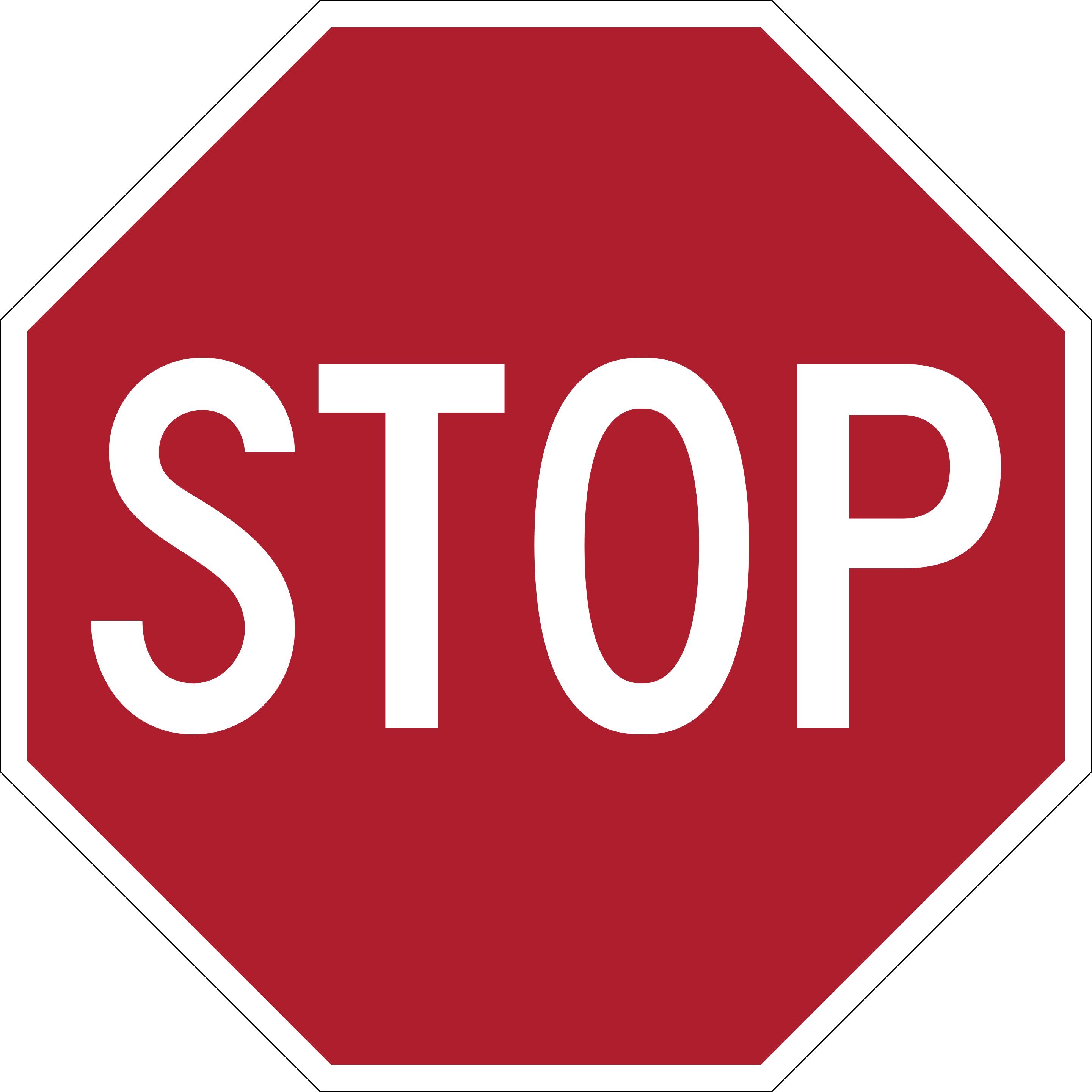
12. You roll slowly toward an Alabama STOP sign at an empty looking corner and consider continuing without fully stopping. What does that sign demand?
- A stop only when cross traffic is already moving
- A pause with the front wheels on the stop line
- A slow roll through when no cars are visible
- A complete stop before you enter the intersection
Show answer
A complete stop before you enter the intersection. A STOP sign in Alabama demands a complete stop before entering the intersection, whether the corner looks empty or busy. Rolling through at low speed still enters without the full stop the sign requires, and waiting for visible cross traffic reads a condition into the command that the sign does not carry. Stopping with wheels on the line also falls short of stopping before entry. Halt fully at the line or crosswalk area, scan every approach, and proceed only when the way is clear.
Study this in the handbook: Speed limits
13. Which hand signal shows an Alabama driver intends to turn left?
- Hand and arm extended straight out to the left
- Hand and arm extended downward
- Hand and arm extended upward
- Both hands held on the steering wheel
Show answer
Hand and arm extended straight out to the left. Extending the arm straight out points toward the side where the car will go, giving a clear daytime cue when sunlight washes out a lamp. Downward signals slowing or stopping, upward signals a right turn, and keeping both hands on the wheel communicates nothing to drivers behind. Use the signal early enough for others to plan, continue it until the turn is ready, then return both hands to the wheel for the turn itself. A signal announces intention; surrounding traffic still needs space and time to respond.
Study this in the handbook: Passing, backing, lane changes and loads
14. You use a cell phone while driving in Alabama. Which kind of conversation should you avoid on that call?
- Intense, emotional, or complicated conversations while driving
- A brief call reporting a crash, placed while safely stopped
- Any call made on a speaker phone while the car is stopped
- A call a passenger places while you keep both hands on the wheel
Show answer
Intense, emotional, or complicated conversations while driving. Phone use while driving is limited by the demand of the conversation itself. Avoid intense, emotional or complicated conversations, assess traffic conditions before calling, and pull off the road to dial or complete a conversation when needed. A stopped crash report, a hands free call made while parked, and a passenger placing the call all remove the divided attention that a demanding conversation creates.
Study this in the handbook: Losing your license, points and phone laws
15. In Alabama, what does an advisory speed plaque posted with a curve warning sign tell a driver?
- The minimum speed needed to stay in the curve
- The top safe speed for making the turn
- The speed limit for the whole route beyond the curve
- The speed to use only when pavement is wet
Show answer
The top safe speed for making the turn. An advisory plaque beside a curve warning points to a speed ceiling suited to that bend. It is advisory for the turn itself, not a route wide limit and not a floor that forces you to keep pace. Wet pavement calls for even more caution, so treating the plaque as a wet weather instruction misses its purpose. Scan for the plaque early, ease off before the curve begins, and enter at or below the advised figure while keeping a steady path.
16. In Alabama, what must a driver avoid doing with a crosswalk while stopped at a stop sign or waiting at a red light?
- Stopping with the vehicle blocking the crosswalk
- Stopping before the crosswalk when no one is crossing
- Yielding the crosswalk to a blind pedestrian
- Watching the crosswalk before starting on green
Show answer
Stopping with the vehicle blocking the crosswalk. People walking need the crosswalk kept open when traffic is held by a sign or red light. Position the car behind that marked area rather than nosing into it. Stopping early, yielding to a blind person, and scanning before a green launch all support pedestrian safety. A blocked crossing forces walkers around your bumper into another lane where drivers may not expect them. Roll forward only after the light and the crossing are both clear.
Study this in the handbook: Stopping rules, school buses and emergency vehicles
17. How does Alabama classify alcohol in terms of its effect on the nervous system and driving skills?
- A stimulant that sharpens reflexes
- A food that speeds alcohol removal
- A mild drink with no effect on judgment
- A depressant that slows reflexes and dulls judgment
Show answer
A depressant that slows reflexes and dulls judgment. People who feel livelier after drinking often mistake lowered inhibitions for sharper ability. In reality the nervous system slows, observation narrows, and self control loosens, a combination that inflates confidence while skill declines. That mismatch explains risky passes and late braking after only a few drinks. Alertness drops alongside coordination, so hazards register later and responses arrive weaker. No meal or beverage reverses the process once alcohol circulates. Recognizing alcohol as a depressant helps a driver refuse the myth that one more drink improves courage or steadies the hands for the trip home.
Study this in the handbook: Alcohol and the DUI law
18. Under Alabama's Mandatory Liability Insurance Law, what coverage must a motor vehicle have to be operated or registered for public road use?
- Coverage only for damage to the driver's own vehicle
- A liability insurance policy
- A bond posted with the county probate office
- Collision coverage for every registered vehicle
Show answer
A liability insurance policy. Liability coverage pays toward injury and damage a driver causes others, which protects crash victims who would otherwise face unpaid losses. Alabama ties that policy to operating, registering, and maintaining registration for vehicles designed for public roads. Coverage limited to the owner vehicle repairs personal property yet leaves third party claims unanswered. A county bond describes a different compliance route not named in this coverage statement. Collision protection concerns the insured vehicle itself and does not substitute for liability duties. Carry proof that an active liability policy covers the vehicle whenever driving or renewing registration.
Study this in the handbook: Traffic stops, insurance and window tint
19. Your windshield wipers fail in blinding rain in Alabama. What temporary way to see ahead is described?
- Speed up so rain blows off the windshield
- Lean across to look through a side rear window
- Use the mirrors only until the rain stops
- Slow down, look out the side window, then move off the highway
Show answer
Slow down, look out the side window, then move off the highway. A failed wiper can leave the windshield nearly opaque during heavy rain or snow. Reducing speed and getting a direct view through the open side window provides brief sight of the road edge while you leave the highway. Mirrors show only what is behind, and extra speed throws more water onto the glass. Use this only as a short move to safety, keep a firm grip, and stop where the vehicle is fully clear of passing traffic.
Study this in the handbook: Driving emergencies
20. You have just entered an Alabama roundabout when an emergency vehicle with lights and siren comes up behind you. What should you do?
- Pull onto the center island and wait
- Stop in the circle and let it pass around you
- Continue to your exit, then pull over for it
- Back out of the entry against the flow
Show answer
Continue to your exit, then pull over for it. A driver who has entered an Alabama roundabout should continue to the exit and only then pull over to allow an emergency vehicle to pass. Stopping inside the circle blocks the single circulating lane the emergency vehicle also needs, while reversing out or climbing the island breaks the design and risks a crash. Keep rolling at circle speed, take your exit without a sudden lane change, and pull aside on the exit street where room exists for both vehicles.
Study this in the handbook: Roundabouts
Every question is written from the official Alabama Driver Manual. Need paper? Printable AL practice test with answer key.
Last verified 2026-10-05. How we check every question · Study all 500 as flashcards
Frequently asked questions
How many questions are on this Alabama practice test?
This fixed set has 20 questions. It is test 13 of 25 from the 500 question Alabama bank.
How does this fixed test relate to the full Alabama bank?
Each numbered test is a fixed set of questions in a fixed order, so you can retake the same test later and compare. Every test mixes road signs and the other topics in about the same proportion as the full bank. Tests 1 to 25 together cover every question in the Alabama bank once. The full practice page mixes the whole bank at random.
Last verified 2026-10-05. See the Alabama DMV facts page for sourced state details.