
Test 5 of 25 · 20 questions · Free 2026
WA Permit Practice Test 5
Jump to the test ↓A fixed 20 question set from the Washington bank with answers and plain English explanations. The real WA exam is 40 questions, 80 percent to pass; take the full length version on the main practice page.
Question 1 of 20 · 0 right so far
All 20 questions in test 5
Every question below comes from the Washington question bank on this page. Open a question to see the correct answer and the explanation. Nothing here is hidden behind a signup.
1. A motorcyclist is riding far to one side of a wide lane. May you move into that lane beside the motorcycle?
- Yes, if the motorcyclist is near the edge
- Yes, during heavy traffic only
- Yes, if you signal first
- No, motorcyclists are entitled to the full lane width
Show answer
No, motorcyclists are entitled to the full lane width. Motorcyclists change position within their lane to see, be seen and avoid objects, and they are entitled to the same lane width as any other vehicle. The Washington guide tells drivers never to move into the same lane alongside a motorcyclist, even when the lane is wide and the rider is far to one side. Signaling or heavy traffic does not change that. Pass only by using a separate lane when it is safe, and leave extra following room.
Study this in the handbook: Large vehicles, motorcycles, bicycles and farm vehicles
2. When does the Washington guide recommend placing one hand at the 12 o'clock position on the wheel?
- When driving straight on the freeway
- Whenever making a sharp left turn
- Only when backing the vehicle
- When recovering from a skid
Show answer
Only when backing the vehicle. Washington describes one hand steering for backing up and for reaching vehicle controls such as wipers or lights. The 12 position is recommended only when backing, and you should turn your body to see the path of travel behind you. For normal driving, hands go at 9 and 3 or 10 and 2. Sharp turns, parking and skid recovery call for hand over hand steering, which starts from those same two handed positions, not a single hand at the top.
Study this in the handbook: Seat belts, child seats, steering and braking
3. What does a dashed yellow line at the center of a two-way, two-lane road indicate?
- Traffic travels in the same direction on both sides
- The lane is reserved for left turns
- Passing is forbidden in both directions
- You may use the oncoming lane to pass when safe
Show answer
You may use the oncoming lane to pass when safe. A dashed yellow centerline separates opposing traffic while permitting a driver to enter the oncoming lane for a pass when the view, traffic, and roadway conditions make that maneuver safe. It does not mean both lanes flow the same way, which is associated with white lane lines. A blanket no-passing rule is shown by solid or double solid yellow markings, not a dashed line alone. A reserved center turn lane uses arrows and different lane guidance. Before crossing, scan ahead and behind, signal, and be certain the pass will not surprise approaching traffic.
Study this in the handbook: Road markings, lanes and school zones
4. After pulling right for an emergency vehicle, how should you reenter traffic?
- Wait until it passes, then reenter in the order you were traveling
- Back into the lane before signaling
- Reenter immediately behind the emergency vehicle
- Use the left lane first regardless of traffic
Show answer
Wait until it passes, then reenter in the order you were traveling. After yielding to an emergency vehicle, wait until it has passed before signaling and reentering traffic. Return in the order you were traveling, which avoids cutting across vehicles that stopped with you or creating a new conflict. Following the emergency vehicle closely can interfere with its route, and backing into traffic is unpredictable. The left lane is not automatically the correct reentry path. Pull right, stop, watch the entire scene, and resume only after the emergency movement is complete and a safe gap is available.
Study this in the handbook: Railroad crossings, emergency vehicles and emergency zones
5. What do Washington roundabout signs mark?

- The entrance to a roundabout
- The end of a divided highway
- A mandatory passing zone
- A railroad emergency phone
Show answer
The entrance to a roundabout. Roundabout signs mark the entrance to a circular intersection. The guide notes that these locations can also have yield, pedestrian warning, and directional arrow signs, so the driver should slow down and prepare to yield before entering. A divided highway ending, passing permission, or railroad communication device is a different roadway message. Scan for lane guidance and people in crosswalks as the entrance approaches.
Study this in the handbook: Traffic signs
6. What does the maximum speed on a Washington Speed Limit sign assume?
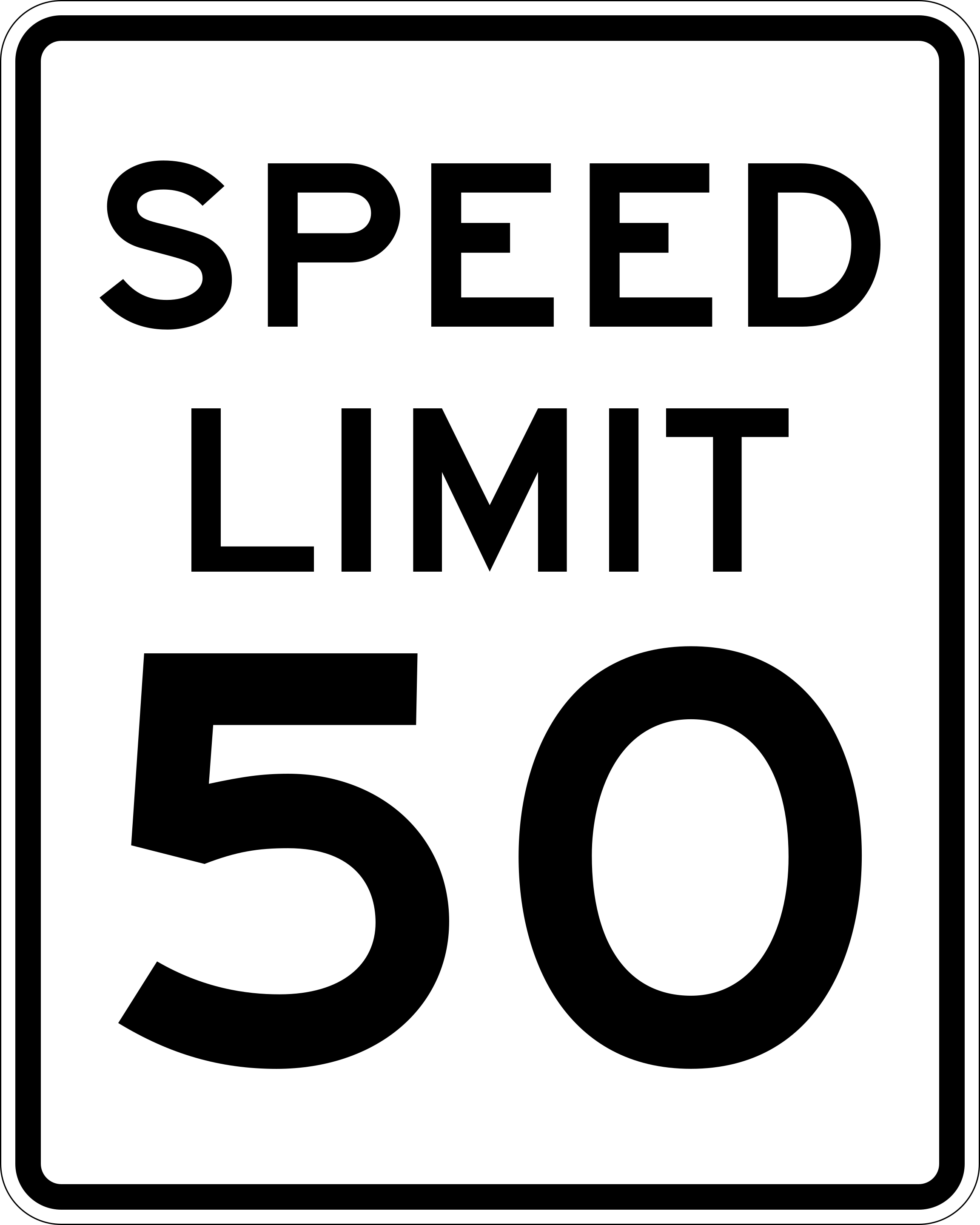
- Heavy rain and poor visibility
- The same condition on every road
- A speed that may always be exceeded
- Ideal road conditions
Show answer
Ideal road conditions. The maximum number on a Speed Limit sign is based on ideal conditions. Rain, fog, slippery pavement, or limited visibility can require a slower speed, and traveling below the posted number does not excuse driving too fast for the actual road. The sign is not permission to exceed the limit or a promise that every roadway has identical conditions. Reassess speed whenever weather or pavement changes.
Study this in the handbook: Traffic signs
7. If a vehicle’s engine shuts off while it is moving, what should the driver do first?
- Brake hard while keeping the vehicle in the traffic lane
- Keep a strong grip on the steering wheel and look for an escape path
- Open the door and jump out before the vehicle slows
- Turn the wheel sharply toward the nearest curb
Show answer
Keep a strong grip on the steering wheel and look for an escape path. When the engine stops, steering may become difficult, but the guide says the vehicle can still be turned. Maintain a strong grip, identify an escape path, use steady brake pressure, and pull off the roadway. Hard braking in the lane can create a sudden hazard, while jumping out exposes the driver to traffic. A sharp turn toward a curb may cause a collision or loss of control. The key is controlled steering and braking while moving toward a safe stopping place.
Study this in the handbook: Breakdowns, collisions and power lines
8. How should you enter a Washington roundabout?
- Stop in the center island until every approaching lane is empty
- Enter from the left and travel clockwise
- Slow down, look left, and yield to traffic already in the roundabout
- Accelerate into the circle because entering traffic has priority
Show answer
Slow down, look left, and yield to traffic already in the roundabout. Traffic already circulating in a roundabout has the right-of-way. Approach slowly, look left, yield to vehicles in the circle, and enter only when a safe gap appears. Stopping in the center island is not how the intersection operates and can block other users. Roundabouts are entered to the right and traveled counterclockwise, so the clockwise choice reverses the intended flow. Entering traffic does not have priority. Use the lane choice sign, stay in the selected lane, and exit at the intended street.
Study this in the handbook: Intersections, turns and roundabouts
9. When road conditions are poor, how should a Washington driver use the posted speed limit?
- Treat it as a minimum and accelerate to reach it
- Treat it as a maximum and reduce speed when conditions require
- Ignore it completely whenever rain begins
- Use it unchanged because conditions never affect legal speed
Show answer
Treat it as a maximum and reduce speed when conditions require. Washington describes a speed limit as the maximum legal speed under ideal conditions, while also requiring a speed that is safe for current conditions. Rain, snow, fog, traffic, and limited visibility can require a slower pace. The choice calling the limit a minimum reverses its meaning, and completely ignoring the sign is unnecessary. The practical cue is maximum under ideal conditions, then adjust downward. A driver can be below the posted number and still be traveling too fast if the roadway or visibility makes stopping difficult.
Study this in the handbook: Speed, following space and zipper merging
10. What does Washington's general driving guidance say about which side of the road to drive on?
- Choose the lane with the fastest vehicle
- Drive on the right side of the road
- Let the largest vehicle select the direction
- Drive left whenever no signal is present
Show answer
Drive on the right side of the road. The guide's general driving guidance tells Washington drivers to drive on the right side of the road. The only time a driver might temporarily travel on the left is when safely and legally passing another vehicle on a two-lane road. The lack of a signal does not authorize choosing the left side, and the largest or fastest vehicle does not decide where you drive. Keep right except to pass, and make lane decisions from signs, markings, and other road users.
Study this in the handbook: Large vehicles, motorcycles, bicycles and farm vehicles
11. What should you do if water builds up between your tires and the road surface?
- Shift into reverse while the vehicle is moving
- Brake hard and turn sharply toward the shoulder
- Accelerate until the tires cut through the water
- Ease off the accelerator and keep the steering wheel steady
Show answer
Ease off the accelerator and keep the steering wheel steady. Hydroplaning occurs when water separates the tires from the road, reducing traction and steering response. Washington guidance says to ease off the accelerator and keep the steering wheel steady while the tires regain contact. Hard braking, a sharp turn, or acceleration can make the loss of traction worse. The practical cue is a sudden light steering feel or sliding sensation: stay calm, hold your path, and let the vehicle slow smoothly.
Study this in the handbook: Night driving, slippery roads, skids and hydroplaning
12. Who may use an HOV lane in Washington?
- Any vehicle during off peak hours
- Any vehicle paying a toll
- Only buses
- Vehicles meeting the occupancy requirement posted on the signs, and motorcycles
Show answer
Vehicles meeting the occupancy requirement posted on the signs, and motorcycles. To travel in an HOV lane, a vehicle must meet the occupancy requirements posted on the signs, and motorcycles are also allowed to use HOV lanes. The lane is separated from the others by a solid white line, so cross only where permitted. Reversible and express lanes are a separate tool that switches travel direction when extra capacity is needed, typically on regular schedules that follow daily commuting patterns.
Study this in the handbook: Pedestrians, school buses and transit buses
13. What does a school zone sign identify?
- Roads around a school building or playground
- A highway rest area
- A railroad loading area
- A mandatory truck inspection station
Show answer
Roads around a school building or playground. A school zone refers to roads around a school building or playground. These areas may be identified by signs, pavement markings, and flashing lights, and they call for reduced speed and careful observation of children. A rest area is a motorist service location, a railroad area uses rail warnings, and a truck inspection station has a different regulatory purpose. Do not assume the zone ends when normal class hours end because students may take part in sports, activities, or playground use later. Scan sidewalks and entrances as you pass.
Study this in the handbook: Road markings, lanes and school zones
14. What does Washington's guide say speed limits indicate?
- A speed that must be maintained in every weather condition
- The minimum speed for every road
- The maximum speed legal under ideal conditions
- Permission to exceed the limit while passing
Show answer
The maximum speed legal under ideal conditions. A posted speed limit is the maximum legal speed under ideal conditions, not a promise that the same speed is safe in rain, ice, traffic, or poor visibility. The guide also says Washington law requires reducing speed when conditions are poor. Therefore the minimum-speed and always-maintain choices misread the sign, while passing does not create permission to exceed the posted maximum. Use the sign as a ceiling and adjust downward when the roadway demands it.
Study this in the handbook: Speed, following space and zipper merging
15. Which two conditions does Washington list for a teen's first driver license at ages 16 to 17?
- A permit held at least 6 months, plus age 16 and Washington residency
- Age 17 and five years of driving experience
- Age 15 and an out-of-state address
- Age 16 with no permit or residency requirement
Show answer
A permit held at least 6 months, plus age 16 and Washington residency. For a first license at ages 16 to 17, Washington requires the instruction permit to have been held for at least six months, and the applicant must be at least 16 and a Washington resident. The other choices remove the permit or residency requirement, use an out-of-state address, or add an adult experience standard that the cited rule does not state. Read the age range and the separate permit-duration condition together before deciding eligibility.
Study this in the handbook: Instruction permits and the intermediate license
16. For a Washington driver age 21 or older, which BAC is identified as a DUI threshold?
- 0.02% or higher
- 0.08% or higher
- 0.05% or higher
- 0.12% or higher
Show answer
0.08% or higher. The guide identifies a BAC of 0.08% or higher as a DUI threshold for drivers who are 21 or older. The 0.02% figure belongs to drivers under 21, so applying it to every adult would erase an important age distinction. A 0.05% reading may still affect safe driving, but it is not the threshold stated in this item. Treat the age in the question as part of the rule, then match it to 0.08%.
Study this in the handbook: DUI limits, implied consent and open containers
17. How far from a pedestrian safety zone must you park in Washington?
- At least 5 feet
- At least 20 feet
- At least 50 feet
- At least 75 feet
Show answer
At least 20 feet. Parking within 20 feet of a pedestrian safety zone is prohibited in Washington. Five feet is the driveway rule, 50 feet is the railroad crossing rule, and 75 feet is the distance from a fire station driveway on the opposite side of the street. The glossary defines a pedestrian safety zone as an area where drivers cannot go, so people have a safe space away from traffic. The list also bans parking in an intersection or on a crosswalk.
Study this in the handbook: Parking rules and hills
18. How long is a Washington instruction permit valid before it must be renewed?
- Six months
- Two years
- Twelve months
- Until age 21
Show answer
Twelve months. An instruction permit remains valid for one year and can be renewed for a fee. The six-month period belongs to a different licensing requirement, such as holding a permit before a teen license, while two years describes how long a knowledge-exam result remains valid. Age 21 is unrelated to permit duration. Keep the permit expiration and knowledge-exam expiration on separate calendar reminders, because they are not the same deadline.
Study this in the handbook: Instruction permits and the intermediate license
19. Which Washington drivers receive an early warning letter from DOL after their first moving violation?
- Drivers ages 18 to 21
- Drivers age 65 and older
- Only commercial drivers
- Only drivers with a DUI
Show answer
Drivers ages 18 to 21. DOL sends early warning letters to all drivers ages 18 to 21 who receive their first moving violation, because a driver's chance of crashing doubles after that first violation. Parents and guardians of intermediate license holders get similar letters after violations or crashes. The letters are not aimed at older, commercial or DUI drivers. Their purpose is to cut repeat offenses among young drivers.
Study this in the handbook: Instruction permits and the intermediate license
20. How long is the temporary license good for after a Washington teen is licensed in person?
- 10 days
- 30 days
- 45 days
- 90 days
Show answer
45 days. Before leaving the office, a new driver receives a temporary license good for 45 days, and the official card arrives by mail. Ten days is the deadline to update an address, and 30 days is the time a new adult resident has to get a Washington license. Ninety days is not the stated validity. A teen who applies online prints a receipt as the temporary license instead, and it has no photo.
Study this in the handbook: Instruction permits and the intermediate license
QualitySpace is expanding to Washington
We are a California-based independent insurance brokerage working on licensing in more states. We cannot help with Washington insurance yet. Leave your email and we will let you know when we can.
Every question is written from the official Washington State Driver Guide. Need paper? Printable WA practice test with answer key.
Last verified 2026-10-05. How we check every question · Study all 500 as flashcards
Frequently asked questions
How many questions are on this Washington practice test?
This fixed set has 20 questions. It is test 5 of 25 from the 500 question Washington bank. The real WA exam asks 40 questions and you need 32 correct.
What is the passing score for the real Washington test?
32 out of 40 correct answers (80%) That figure comes from the official Washington source cited on the DMV facts page.
How does this fixed test relate to the full Washington bank?
Each numbered test is a fixed set of questions in a fixed order, so you can retake the same test later and compare. Every test mixes road signs and the other topics in about the same proportion as the full bank. Tests 1 to 25 together cover every question in the Washington bank once. The full practice page mixes the whole bank at random.
Last verified 2026-10-05. See the Washington DMV facts page for sourced state details.
Return to the full Washington practice test · Study road signs