
Test 3 of 25 · 20 questions · Free 2026
WA Permit Practice Test 3
Jump to the test ↓A fixed 20 question set from the Washington bank with answers and plain English explanations. The real WA exam is 40 questions, 80 percent to pass; take the full length version on the main practice page.
Question 1 of 20 · 0 right so far
All 20 questions in test 3
Every question below comes from the Washington question bank on this page. Open a question to see the correct answer and the explanation. Nothing here is hidden behind a signup.
1. How are bicycle lanes typically marked in Washington?
- Painted blue with double yellow lines
- Marked with orange cones only
- Painted green with solid white lines and a bicycle symbol
- Painted red with a dashed yellow line
Show answer
Painted green with solid white lines and a bicycle symbol. The Washington guide tells drivers to watch for bicycle lanes, which are typically painted green, use solid white lines and are marked with a bicycle symbol. The markings can vary in length, so drive as though the lane continues even where the paint stops. Yellow lines separate opposing traffic and are not used for bike lanes, and orange cones signal work zones. Look for riders in the lane before turning across it.
Study this in the handbook: Large vehicles, motorcycles, bicycles and farm vehicles
2. You want to pass a bicyclist on a road with two lanes in your direction. How far should you move over?
- Just enough to clear the handlebars
- One full lane
- Half a lane
- No move is needed if you slow down
Show answer
One full lane. Washington tells drivers not to pass a bicyclist until it is safe for both of you. When there are two lanes in the same direction, move over one full lane. On a road with one lane each way, move into the other lane only when there is no oncoming traffic, and always leave at least 3 feet between the rider and the widest part of your vehicle. Make sure you are well clear before returning to the lane.
Study this in the handbook: Large vehicles, motorcycles, bicycles and farm vehicles
3. The Washington Driver Guide says it is a crime to leave a child below what age unattended in a parked vehicle?
- Under 5
- Under 8
- Under 18
- Under 12
Show answer
Under 12. The answer is 12. Per the Washington Driver Guide, leaving any child younger than that alone in a parked car is a crime. A stricter rule applies when the motor is running: a child under 16 may not be left alone then. Animals also may not be left in a vehicle where heat, cold, poor ventilation or lack of water could harm them. If no one nearby can open the vehicle, law enforcement may remove the child or animal by any reasonable means.
Study this in the handbook: Parking rules and hills
4. Can a person be considered in physical control of a vehicle for DUI purposes when the vehicle is parked?
- Yes, if the person can take control of its engine or operation
- Yes, but only when the keys are outside the vehicle
- No, unless the vehicle is moving on a public highway
- No, a parked vehicle can never be involved in DUI
Show answer
Yes, if the person can take control of its engine or operation. Washington's DUI rule reaches physical control, not just motion on a roadway. A person who can take control of a parked vehicle's engine or operation may be considered in physical control. The choices saying a parked vehicle is always excluded or that movement is required contradict that broader standard. The key cue is ability to operate, rather than whether the tires are turning. Someone who has consumed alcohol or drugs should stay away from the driver's controls entirely, even if the vehicle is sitting in a parking space.
Study this in the handbook: License exams, renewal and losing your license
5. How soon must a Washington driver update a changed address?
- Within 10 days, through License Express
- Within 30 days
- Within 90 days
- Only at renewal
Show answer
Within 10 days, through License Express. If your address changes, update your information in License Express within 10 days of the change. A name change works differently: the guide says it must be made in a driver licensing office rather than online. The 30 and 90 day answers stretch the stated deadline, and waiting for renewal ignores it altogether. Washington lists this 10 day address rule under the additional services section of the driver guide, next to voter registration, so mark the moving date and finish the online update well before the tenth day passes.
Study this in the handbook: License exams, renewal and losing your license
6. For which age group does the Washington guide say vehicle crashes are a leading cause of death?
- People over 65
- Children under 10
- People ages 16 to 25
- People ages 35 to 50
Show answer
People ages 16 to 25. In Washington, vehicle crashes are a leading cause of death for people ages 16 to 25, a group more susceptible to fatal and serious injury crashes. The common factors in fatal crashes are speed, impairment, distraction, unrestrained occupants and inexperience. Risk awareness, the ability to spot present and potential hazards, is the skill the guide asks new drivers to build.
Study this in the handbook: Speed, following space and zipper merging
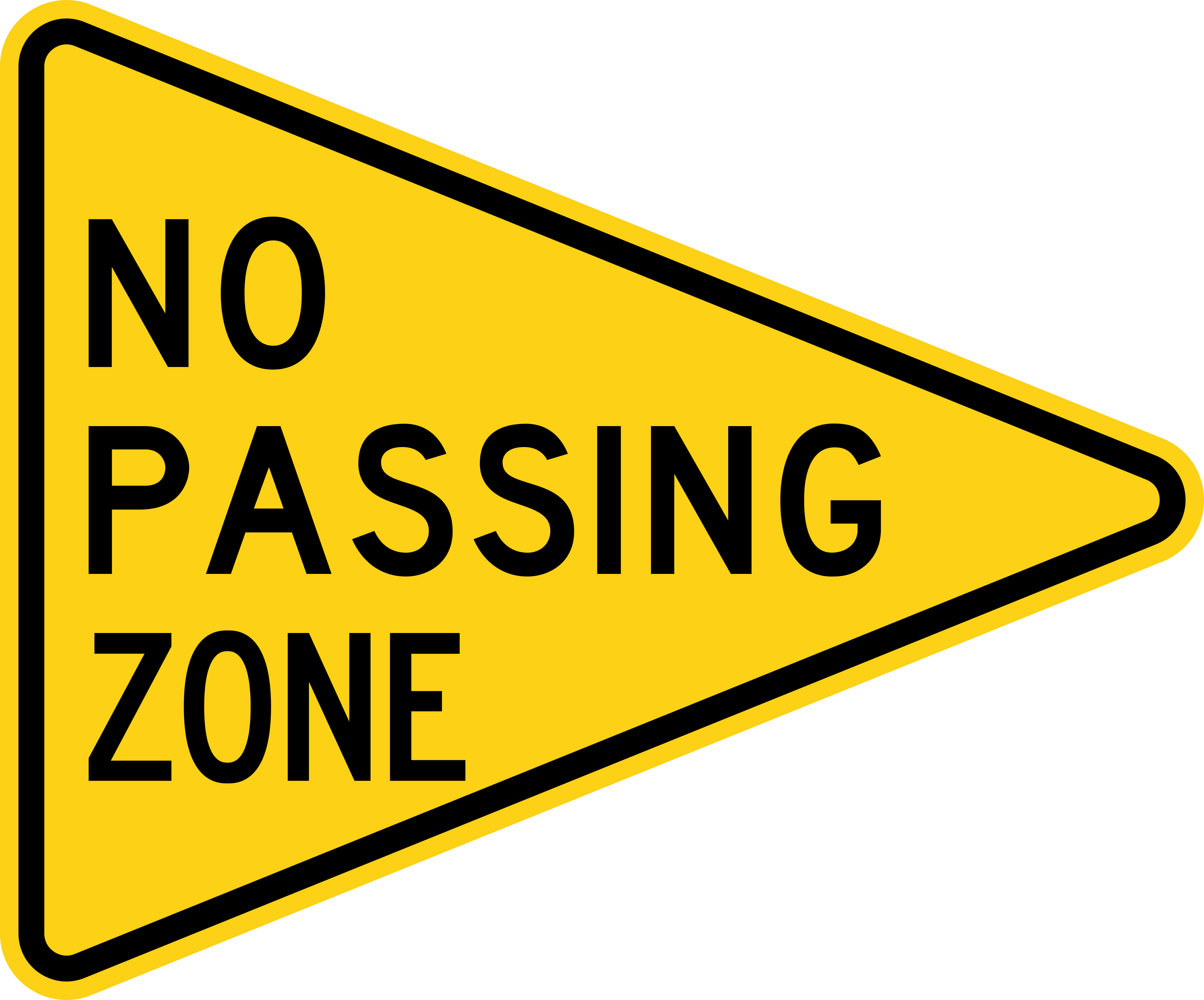
7. What do Washington signs in a no-passing zone prohibit?
- Passing is not allowed
- Drivers must use a shared center turn lane
- A school zone begins ahead
- A temporary work zone begins ahead
Show answer
Passing is not allowed. Washington no-passing signs identify places where passing is not allowed. The guide notes that these signs may appear near hills, curves, intersections, or other locations where a vehicle could enter the roadway. A shared center lane is reserved for left turns, while school and work zones use different warning signs and controls. Treat the no-passing message as a restriction on overtaking, especially where the road layout limits your view. Check the lane markings and wait until signs and markings show that passing is permitted again.
Study this in the handbook: Traffic signs
8. A tire suddenly blows out while you are driving. What should you do?
- Brake hard immediately and turn sharply
- Grip the steering wheel, keep straight, and slow gradually
- Open the door and jump out
- Accelerate to keep the tire rotating
Show answer
Grip the steering wheel, keep straight, and slow gradually. A blown tire can pull the vehicle and make a sudden correction dangerous. Grip the steering wheel firmly, keep the vehicle going straight, and slow down gradually by taking your foot off the accelerator. Hard braking is the wrong first move because it can upset the vehicle, while acceleration adds speed and opening a door creates another hazard. Once speed has fallen, pull off in a safe place if possible and turn on the emergency flashers. The practical cue is to stabilize the path first, then reduce speed and deal with the tire away from traffic.
Study this in the handbook: Breakdowns, collisions and power lines
9. What are the white stripes next to a Washington disabled parking space, and what is the rule for them?
- Overflow parking for compact cars
- A loading zone for deliveries
- An access aisle that must be kept clear
- A motorcycle space
Show answer
An access aisle that must be kept clear. The white stripes next to a reserved space are called an access aisle and must be kept clear. You can be fined for parking in a reserved stall without displaying the required placard and for blocking the access aisle. A placard should not hang from the mirror while you drive. These reserved spots are meant for vehicles with disabled parking plates or a disabled parking placard, and a person whose disability limits walking may apply for temporary or permanent privileges.
Study this in the handbook: Parking rules and hills
10. A Washington teen enrolled in a driver training course may apply for an instruction permit how early before the course starts?
- The same day only
- Up to 30 days before
- Up to 90 days before
- 1 to 10 days before the course starts
Show answer
1 to 10 days before the course starts. A teen enrolling in driver training can apply for the permit as early as 15, at a licensing office or online, 1 to 10 days before the course starts. Applying on the first day only is not required, and 30 or 90 days early is outside the window. The teen should have the WDL number ready for the driving school's records. A teen not in a course must wait until 15 and a half to take the knowledge exam.
Study this in the handbook: Instruction permits and the intermediate license
11. How much driving experience must the licensed driver have who supervises a Washington teen's 50 practice hours?
- 1 or more years
- 5 or more years
- 10 or more years
- 3 or more years
Show answer
3 or more years. A teen seeking a first license at 16 or 17 needs at least 40 hours of day driving and 10 at night with a licensed driver who has 3 or more years of experience. Five years is the requirement for someone supervising an adult permit holder 18 or older, so it belongs to a different path. One year is too little, and ten years is more than the rule asks. A parent or guardian must attest to the hours.
Study this in the handbook: Instruction permits and the intermediate license
12. What does a red X over a reversible lane mean?
- You cannot use the lane
- The lane is changing direction, so speed up into it
- The lane is open in your direction
- The lane is reserved for bicycles only
Show answer
You cannot use the lane. A red X means a reversible lane is closed to the driver. Entering it under that symbol risks traveling against the active direction or using a lane that has been removed from service. A green arrow indicates the lane may be used, while a steady yellow X signals a direction change and calls for moving out when safe. The bicycle-only choice is unrelated to reversible-lane control. Check overhead signs before entering and obey the displayed symbol.
Study this in the handbook: Pedestrians, school buses and transit buses
13. Where may open alcohol or cannabis products be transported in a Washington vehicle?
- In the glove box
- Only in a trunk or truck bed
- Under a seat
- In the center console
Show answer
Only in a trunk or truck bed. Open alcohol and cannabis products can only be transported in a trunk or truck bed. Containers cannot be kept in storage compartments accessible to the driver, and alcohol or cannabis in unlabeled or mislabeled containers is also prohibited. The rule applies to passengers as well. Keeping open products out of reach removes any question of consumption while driving and protects passengers from a citation.
Study this in the handbook: Alcohol, cannabis, medicine and fatigue
14. What does an Antilock Braking System (ABS) do during an emergency stop?
- Shortens the distance needed to stop
- Lets you pump the brakes faster than a person can
- Shuts off the engine to prevent a skid
- Lets you keep steering control, though it does not shorten stopping distance
Show answer
Lets you keep steering control, though it does not shorten stopping distance. An antilock braking system keeps the wheels from locking up during hard braking, so you can still steer around a hazard. The Washington guide is clear that ABS does not shorten your stopping distance. You may feel the vehicle shake a bit when it engages, which is normal. Practice firm braking in a large open paved area to learn how it feels. The system works through the brakes and does not turn off the engine, so keep steering toward a safe path while it works.
Study this in the handbook: Seat belts, child seats, steering and braking
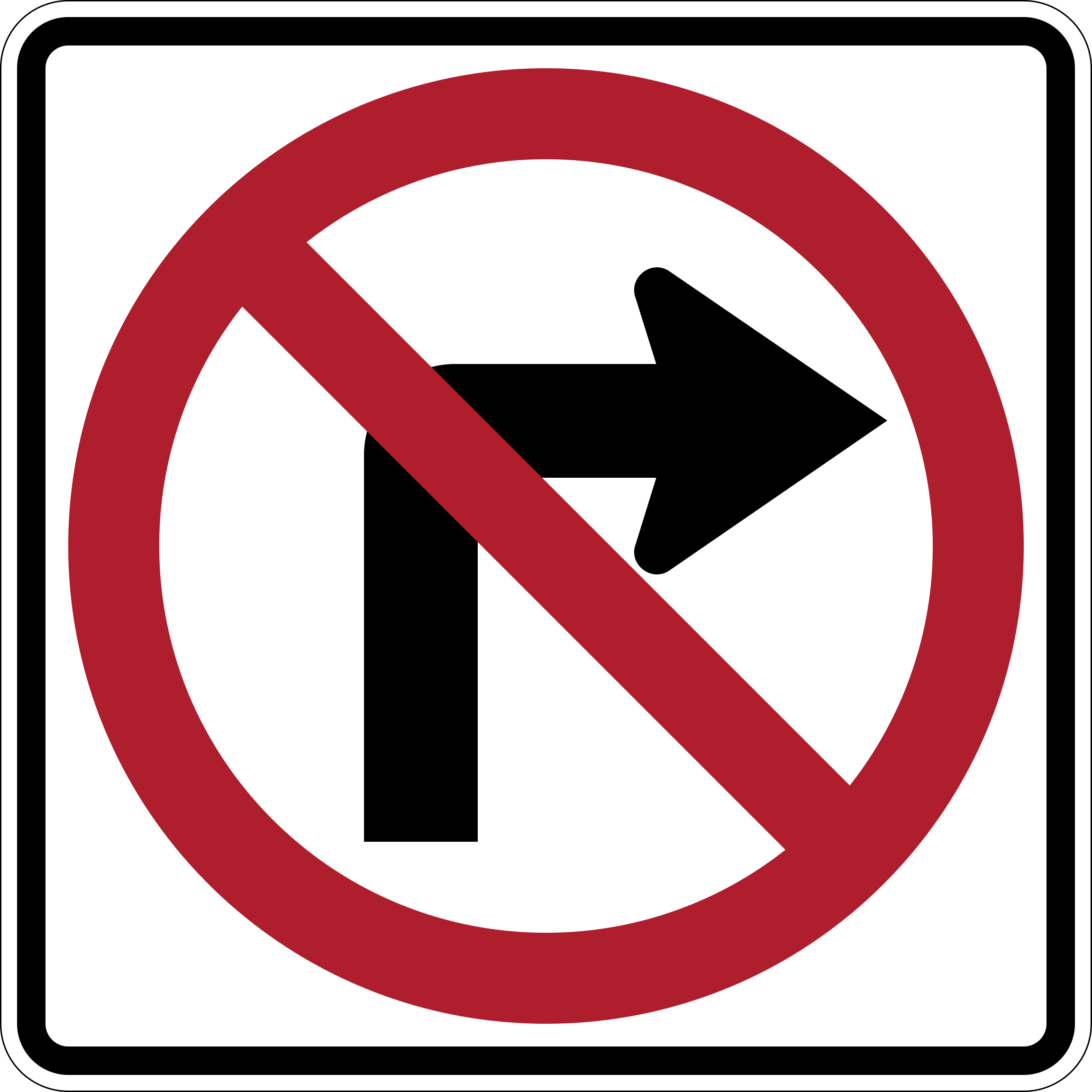
15. A red slash over a right turn symbol means that right turns are:
- Not allowed at that location
- Required after stopping
- Allowed only for buses
- Allowed only when traffic is heavy
Show answer
Not allowed at that location. The pictured movement controls the meaning of a prohibition sign. A crossed right turn arrow tells you that right turns are not allowed at that location. It does not make the turn mandatory, create a bus exception, or change with traffic volume. Slow and read the entire sign before choosing another permitted path. The red slash is a broad warning that an action is restricted, while the arrow tells you exactly which action is restricted.
Study this in the handbook: Traffic signs
16. What do the shape, color, symbols, and words on a traffic sign help a driver identify?
- The type of information the sign provides
- The driver’s insurance premium
- The vehicle’s engine size
- The age of the roadway
Show answer
The type of information the sign provides. Washington uses several visible features to help drivers interpret signs. Shape and color suggest the sign’s category, while symbols and words refine the message. None of those features identifies an engine, an insurance price, or the roadway’s age. Build the habit of looking at the whole sign rather than reacting to one color alone, especially when a warning or regulatory instruction is ahead.
Study this in the handbook: Traffic signals and rules of the road
17. What are the four levels of braking described in the Washington guide?
- Soft, hard, pump and lock
- Slow, stop, hold and release
- Light, medium, firm and emergency
- Foot, hand, engine and parking
Show answer
Light, medium, firm and emergency. There are four levels of braking: light, medium, firm and emergency. Ideally you only need light and medium braking, but firm or emergency braking is there when needed. The guide's technique is to imagine a cup of water in your lap that you do not want to spill. Unnecessary firm braking also surprises the drivers behind you, so plan stops early.
Study this in the handbook: Seat belts, child seats, steering and braking
18. In Washington, DUI rules can apply when a person is in what situation even if the vehicle is parked?
- Standing beside a locked vehicle
- Having a vehicle registered nearby
- Reading a map in a passenger seat
- Physical control of the vehicle
Show answer
Physical control of the vehicle. Washington's guide says DUI can apply to being in control of a vehicle even when that vehicle is parked. Physical control means the person has the ability to take control of the engine or operation. Merely standing beside a locked vehicle does not describe that ability, and registration or map reading alone does not establish control. The practical cue is that parking does not automatically remove the risk when an impaired person can operate the vehicle.
Study this in the handbook: License exams, renewal and losing your license
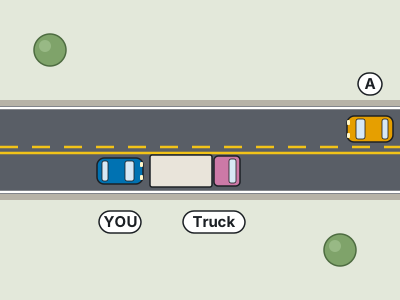
19. A solid yellow line is on your side of a two-way roadway. What does it mean?
- Cross it whenever traffic is light
- Do not cross it to pass another vehicle
- Use it as a bicycle lane boundary
- Turn into the opposite lane and continue traveling
Show answer
Do not cross it to pass another vehicle. A solid yellow line can mark a no-passing zone, so you must not cross it to pass another vehicle. Light traffic does not remove the restriction, and the line is not a bicycle lane boundary because yellow separates opposing traffic. Crossing to continue traveling in the opposite lane would create the same prohibited movement. Stay on your side until the marking changes or a lawful turn requires a different path. The combination of yellow and solid is the quick check: opposing directions and no pass across that line.
Study this in the handbook: Road markings, lanes and school zones
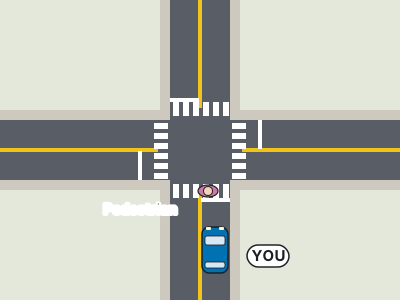
20. When a pedestrian is in or about to enter a Washington crosswalk, what is the driver's duty?
- Continue if the vehicle is already moving
- Sound the horn and hold course
- Yield to the pedestrian
- Yield only when the crosswalk has stripes
Show answer
Yield to the pedestrian. Drivers must yield to a person in or about to enter a crosswalk. This duty is not limited to painted crossings, because the guide separately explains that every intersection is legally defined as a crosswalk. Continuing simply because the vehicle is moving ignores the person's protected path, and a horn does not replace yielding. Slow early, check the full crossing, and proceed only after the pedestrian is safely clear.
Study this in the handbook: Pedestrians, school buses and transit buses
QualitySpace is expanding to Washington
We are a California-based independent insurance brokerage working on licensing in more states. We cannot help with Washington insurance yet. Leave your email and we will let you know when we can.
Every question is written from the official Washington State Driver Guide. Need paper? Printable WA practice test with answer key.
Last verified 2026-10-05. How we check every question · Study all 500 as flashcards
Frequently asked questions
How many questions are on this Washington practice test?
This fixed set has 20 questions. It is test 3 of 25 from the 500 question Washington bank. The real WA exam asks 40 questions and you need 32 correct.
What is the passing score for the real Washington test?
32 out of 40 correct answers (80%) That figure comes from the official Washington source cited on the DMV facts page.
How does this fixed test relate to the full Washington bank?
Each numbered test is a fixed set of questions in a fixed order, so you can retake the same test later and compare. Every test mixes road signs and the other topics in about the same proportion as the full bank. Tests 1 to 25 together cover every question in the Washington bank once. The full practice page mixes the whole bank at random.
Last verified 2026-10-05. See the Washington DMV facts page for sourced state details.
Return to the full Washington practice test · Study road signs