
Key points
At a four way stop, the first to arrive goes first; if two arrive at about the same time, yield to the one on the right.
Source: PDF page 48
“The first vehicle to arrive is the first to go. The second vehicle to arrive is the second to go, etc. If two vehicles arrive at approximately the same time, yield to the one on the right.”
Washington Driver Guide (plain-text version), PDF page 48A vehicle turning left must yield to vehicles going straight or turning right.
Source: PDF page 48
“Any vehicle turning left must yield the right-of-way to vehicles going straight or turning right.”
Washington Driver Guide (plain-text version), PDF page 48If your view is blocked at the stop line, edge forward slowly until you can see.
Source: PDF page 48
“If you stop on the stop line, but your view of a cross street is blocked, edge forward slowly until you can see.”
Washington Driver Guide (plain-text version), PDF page 48Signal at least 100 feet before turning across oncoming traffic.
Source: PDF page 48
“Put on your turn signal at least 100 feet before you turn left or right across oncoming traffic.”
Washington Driver Guide (plain-text version), PDF page 48U turns are generally allowed unless a sign prohibits them.
Source: PDF page 49
“In Washington, U-turns are generally allowed unless a sign is posted telling you a U-turn is not allowed.”
Washington Driver Guide (plain-text version), PDF page 49At an uncontrolled intersection, yield if a vehicle is already in it, or if you enter a state highway from a secondary road or a paved road from an unpaved one.
Source: PDF page 51
“A vehicle is already in the intersection. You enter or cross a state highway from a secondary road. You enter a paved road from an unpaved road.”
Washington Driver Guide (plain-text version), PDF page 51At a Y intersection, cars on the major road have the right of way.
Source: PDF page 49
“The cars on major roads have the right-of-way.”
Washington Driver Guide (plain-text version), PDF page 49Roundabouts are designed for 15 to 25 mph.
Source: PDF page 50
“Roundabouts are designed for speeds between 15 and 25 mph.”
Washington Driver Guide (plain-text version), PDF page 50Look left and yield to all traffic already in the roundabout.
Source: PDF page 50
“Look left and yield to all traffic already in the roundabout since they have the right-of-way.”
Washington Driver Guide (plain-text version), PDF page 50Traffic calming circles are meant for passenger vehicles and may not easily fit large vehicles.
Source: PDF page 49
“Traffic calming circles are intended for passenger vehicles and may not easily accommodate large vehicles like fire trucks, buses, or delivery trucks.”
Washington Driver Guide (plain-text version), PDF page 49
Numbers to know
| Number | What it means | Manual |
|---|---|---|
| 100 feet | how far before a turn to signal | PDF page 48 |
| 15 to 25 mph | design speed of roundabouts | PDF page 50 |
Recognize these signs

Roundabout ahead 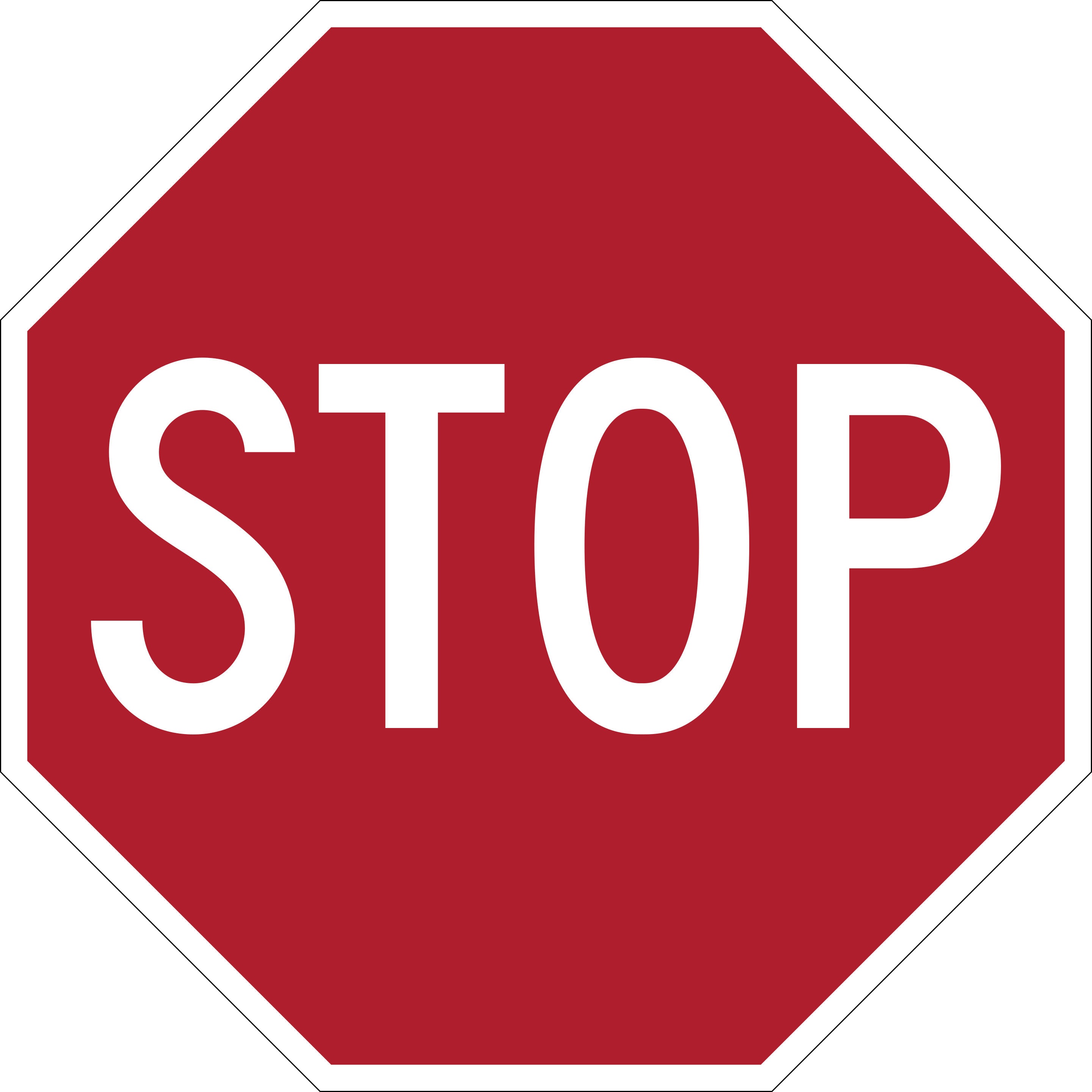
Stop
3 questions from the Washington practice test
1. Which is one circumstance under Washington rules when a driver must yield at an uncontrolled intersection?
- A vehicle has already entered the intersection
- You are traveling on the wider roadway
- You are approaching from the paved road
- Your vehicle is moving faster than the other vehicle
Show answer
A vehicle has already entered the intersection. At an uncontrolled intersection, Washington still applies normal right-of-way rules. One listed condition is that a vehicle is already in the intersection, so a driver entering must yield and avoid cutting across its path. Road width and vehicle speed do not decide this particular condition. Being on a paved road also does not automatically give priority, although a driver coming from an unpaved road has a separate duty to yield. Approach slowly, scan each direction, and check whether another vehicle entered first.
2. What should a Washington driver keep in mind about large vehicles at a traffic calming circle?
- Large vehicles are banned from circles
- Large vehicles always have the right of way
- Large vehicles must stop and reverse
- The circle is meant for passenger vehicles, and large vehicles may have to go clockwise to get through
Show answer
The circle is meant for passenger vehicles, and large vehicles may have to go clockwise to get through. Traffic calming circles are intended for passenger vehicles and may not easily accommodate large vehicles like fire trucks, buses or delivery trucks. Give larger vehicles plenty of space and be aware that they might have to go clockwise to get through the circle. Otherwise the same right of way rules apply as at any other intersection, and traffic flows counterclockwise around the island.
3. How should you enter a Washington roundabout?
- Stop in the center island until every approaching lane is empty
- Enter from the left and travel clockwise
- Slow down, look left, and yield to traffic already in the roundabout
- Accelerate into the circle because entering traffic has priority
Show answer
Slow down, look left, and yield to traffic already in the roundabout. Traffic already circulating in a roundabout has the right-of-way. Approach slowly, look left, yield to vehicles in the circle, and enter only when a safe gap appears. Stopping in the center island is not how the intersection operates and can block other users. Roundabouts are entered to the right and traveled counterclockwise, so the clockwise choice reverses the intended flow. Entering traffic does not have priority. Use the lane choice sign, stay in the selected lane, and exit at the intended street.
Practice this topic
Lock it in with right of way questions from the free Washington practice test. Every answer comes with a plain English explanation.
Source: the Washington Driver Guide (plain-text version), Chapter 4: Roads. This lesson is a plain English summary, not the law itself; where it differs, the manual and the statute govern. Last checked 2026-09-27.