
Key points
Keep right except to pass.
Source: PDF page 41
“Keep right except to pass. When there are multiple lanes traveling in the same direction, drive in the right lane.”
Washington Driver Guide (plain-text version), PDF page 41It is illegal to back up on a shoulder or freeway, even if you miss your exit.
Source: PDF page 42
“Don’t drive in reverse on the road, even if you miss your turn or exit. It’s illegal to back up on a shoulder or freeway.”
Washington Driver Guide (plain-text version), PDF page 42Police, construction workers and crossing guards can overrule signals, and you must follow them.
Source: PDF page 42
“These people can overrule traffic signals, and their orders or directions must be followed.”
Washington Driver Guide (plain-text version), PDF page 42If a signal is not working, treat the intersection as a four way stop and yield to traffic on your right.
Source: PDF page 42
“If a traffic signal isn’t working, treat the intersection like a four-way stop. Come to a complete stop. Yield to traffic on your right.”
Washington Driver Guide (plain-text version), PDF page 42After a complete stop at red, you may turn right, or left onto a one way street, unless a no turn on red sign is posted.
Source: PDF page 42
“After coming to a complete stop at a red light, you can turn right if you don’t see a “no turn on red” sign and you have plenty of room to enter traffic. After coming to a complete stop at a red light, you can turn left onto a one-way street”
Washington Driver Guide (plain-text version), PDF page 42A flashing red light works like a stop sign.
Source: PDF page 42
“A flashing red traffic light functions as a stop sign. Come to a full stop and then go when it’s your turn.”
Washington Driver Guide (plain-text version), PDF page 42At a yellow light, slow down and prepare to stop; if you are already in the intersection, continue at the posted speed.
Source: PDF page 42
“When you see a yellow light, slow down and prepare to stop. If you’re in the intersection when the yellow light comes on, continue through the intersection at the posted speed.”
Washington Driver Guide (plain-text version), PDF page 42A flashing yellow light has the same meaning as a yield sign.
Source: PDF page 43
“A flashing yellow light has the same meaning as a yield sign. Treat the intersection as an uncontrolled intersection.”
Washington Driver Guide (plain-text version), PDF page 43A green arrow gives you the right of way in the arrow's direction.
Source: PDF page 43
“A green arrow gives you the right-of-way to travel in that direction.”
Washington Driver Guide (plain-text version), PDF page 43You will not see a flashing green light in Washington.
Source: PDF page 43
“You won’t see a flashing green light in Washington state.”
Washington Driver Guide (plain-text version), PDF page 43
Recognize these signs
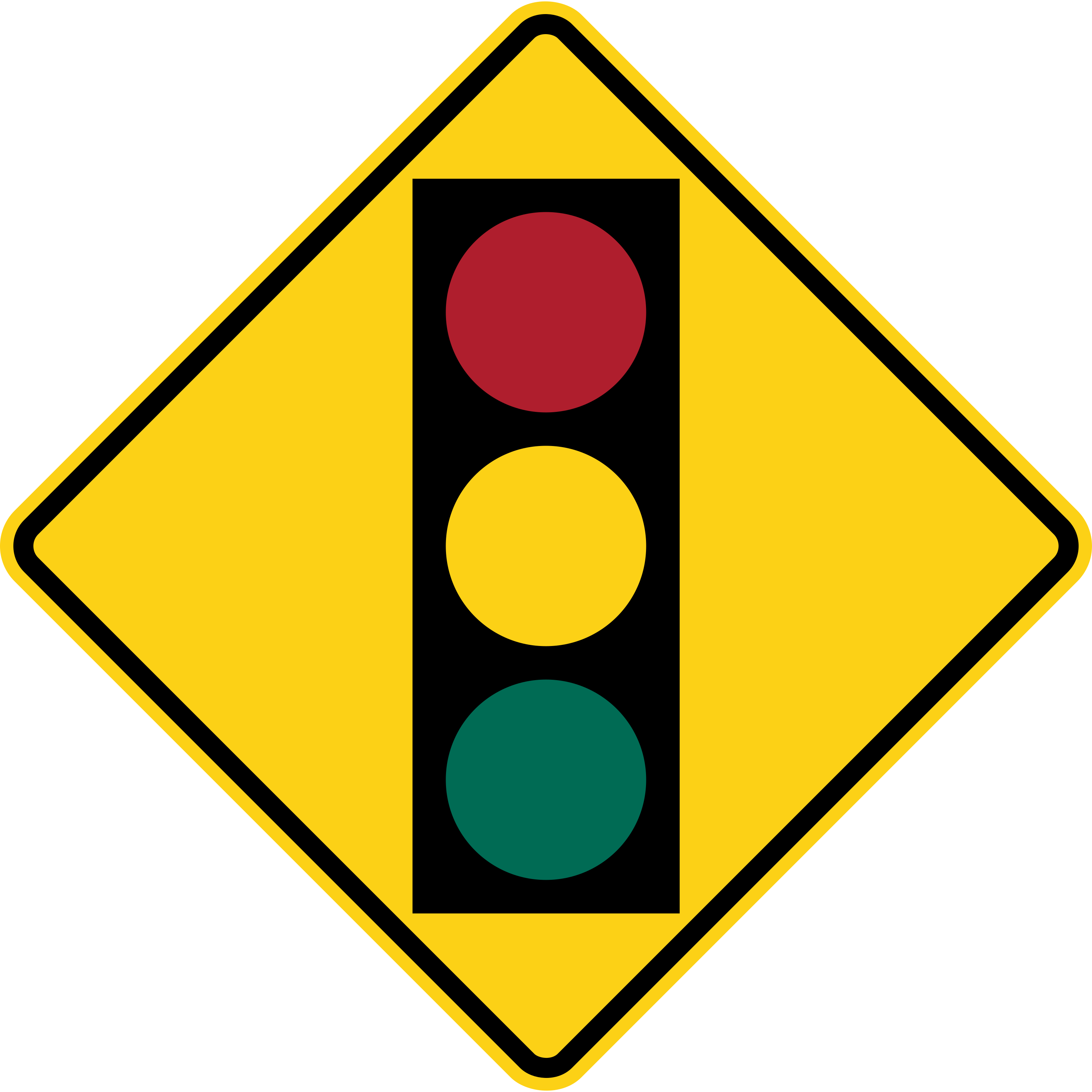
Signal ahead 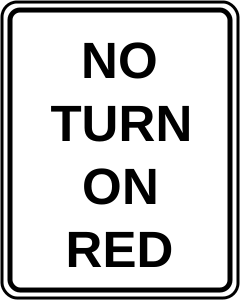
No turn on red
3 questions from the Washington practice test
1. How must a driver respond to a flashing red traffic light in Washington?
- Slow down and continue without stopping
- Stop fully, then proceed when it is the driver's turn
- Accelerate before the signal changes
- Treat it as a green arrow
Show answer
Stop fully, then proceed when it is the driver's turn. A flashing red traffic light functions as a stop sign. The driver must come to a full stop, then proceed when it is the driver's turn. Merely slowing leaves the required stop incomplete, and acceleration or a green-arrow response ignores the signal's meaning. At the stop, scan for vehicles, pedestrians, and other right-of-way users before moving. A helpful visual cue is the red flash paired with stop-sign behavior: complete the stop first, then continue only when the intersection is safe and the turn order allows it.
2. What is the proper response to a steady yellow traffic light before entering an intersection?
- Treat it as an unrestricted green
- Accelerate beyond the posted limit
- Slow down and prepare to stop
- Reverse immediately without checking traffic
Show answer
Slow down and prepare to stop. A steady yellow light means the signal is changing to red, so the guide tells drivers to slow down and prepare to stop. A driver already in the intersection should continue through at the posted speed, but a driver approaching should not accelerate beyond the limit to clear the intersection. Treating yellow as an unrestricted green encourages the wrong decision, and reversing creates another hazard. Look ahead early, ease off the accelerator, and stop if doing so is safe. The light is a transition warning, not an invitation to race.
3. What should you do when a traffic signal is not working?
- Wait for a police officer before moving under any circumstance
- Continue through because the signal gives no instruction
- Treat the intersection like a four way stop and yield to traffic on your right
- Use the intersection as though you have a green light
Show answer
Treat the intersection like a four way stop and yield to traffic on your right. A dark or malfunctioning signal does not give any driver priority. Washington tells you to make a complete stop, then yield to traffic approaching from your right and proceed cautiously when it is safe. The green light choice would turn a missing control into permission to enter, which is exactly the risk this rule prevents. Scan every approach, including bicycles and pedestrians, before moving. The key cue is four way stop behavior: stop first, then resolve right of way rather than guessing what the signal intended.
Practice this topic
Lock it in with signals and markings questions from the free Washington practice test. Every answer comes with a plain English explanation.
Source: the Washington Driver Guide (plain-text version), Chapter 4: Roads. This lesson is a plain English summary, not the law itself; where it differs, the manual and the statute govern. Last checked 2026-09-27.