
Test 11 of 25 · 20 questions · Free 2026
CT Permit Practice Test 11
Jump to the test ↓A fixed 20 question set from the Connecticut bank with answers and plain English explanations. The real CT exam is 25 questions, 80 percent to pass; take the full length version on the main practice page.
Question 1 of 20 · 0 right so far
All 20 questions in test 11
Every question below comes from the Connecticut question bank on this page. Open a question to see the correct answer and the explanation. Nothing here is hidden behind a signup.
1. A tractor-trailer combo passes your Connecticut exit slowly. How much road might passing it consume?
- About one car length beyond
- About 200 feet of clear road beyond the truck
- 65 feet long; over half a mile to pass
- Exactly one city block total
Show answer
65 feet long; over half a mile to pass. A truck and its tow can stretch sixty-five feet, and clearing it safely may take more than half a mile of open road. Judging that pass on car-length habits or a single block strands you beside the trailer as the gap closes. Two hundred feet vanishes in seconds at highway pace. Judge a pass on the truck's true length, and wait for far more clear road than you would need for a car.
Study this in the handbook: Motorcycles, Trucks and Slow Vehicles
2. Beside a truck you see only its trailer in the side mirror, never the driver's face. What should you assume?
- The driver sees your roof instead
- You are safely in the blind spot
- Mirrors are aimed for cars anyway
- The truck driver cannot see you
Show answer
The truck driver cannot see you. Mirror logic runs both ways: no face visible to you means no vehicle visible to the driver. Lingering in that blind area invites a lane change directly into your side. Roofs, mirror aiming, and safe blind spots are comforting fictions. Either complete the pass promptly or drop back until the driver's face, and your vehicle to them, comes into view.
Study this in the handbook: Motorcycles, Trucks and Slow Vehicles
3. A bike lane crosses your Connecticut street at a path junction ahead. A rider approaches on it. Who yields?
- You yield where the path meets the road
- The rider, at every road crossing
- Whoever reaches the paint later
- Nobody; lanes cancel the duty
Show answer
You yield where the path meets the road. Where a bicycle path or bike lane intersects a road, the driver yields the right-of-way to the bicyclist. The rider travels a lawful crossing stream just as surely as a vehicle on a side street. Paint order and lane markings suspend nothing. Where a bicycle path or bike lane intersects the road, you must yield the right-of-way to the bicyclist. Slow down, check both directions along the path, and let the rider cross before you go.
Study this in the handbook: Pedestrians, Bicyclists and Horses
4. Rain starts and your wipers sweep the Connecticut windshield. What else must switch on?
- Headlights, since wipers are on
- The hazard flashers
- Switch on the high beams at full power
- Interior dome light
Show answer
Headlights, since wipers are on. Connecticut law pairs wipers with headlights: whenever wipers run for rain or snow, headlights must burn as well. The lamps chiefly help others see your vehicle through spray and gloom. Hazards, high beams, and dome lights either confuse, glare, or do nothing for outside visibility. Remember, if you turn on your wipers, turn on your headlights. It is the law, and it also helps other drivers see your vehicle in rain or snow.
Study this in the handbook: Headlights, Horn and Turn Signals
5. A wide green panel lists towns and distances over your Connecticut freeway. Its job is to:
- Warn of hazards two miles ahead
- Direct you to roads and exits
- Set the legal speed for the stretch
- Announce services at the next exit
Show answer
Direct you to roads and exits. Green guide signs direct travelers to roads, distances, and specific exits, forming the navigation layer of the freeway. Hazard warnings wear yellow diamonds, speed law posts on white regulatory panels, and service information rides blue squares. Destination and distance panels share the green family with information signs naming state lines, city limits, streams, and landmarks you pass along the way.
Study this in the handbook: Sign Shapes and Regulatory Signs
6. Why should you never leave ignition keys inside a parked vehicle?
- Keys drain the battery while parked
- Police tow every vehicle found with keys
- It invites theft, so take the keys and lock up
- Keys overheat in a closed cabin
Show answer
It invites theft, so take the keys and lock up. Keys left in a parked vehicle make theft easy for anyone passing by. Taking them and locking the doors whenever you leave protects the car and everything in it. Battery drain, automatic towing, and cabin heat are not the stated concern. It is a good habit to lock the doors whenever you leave your vehicle, even for a short stop such as running into a store.
Study this in the handbook: Right of Way at Intersections
7. A truck ahead nears an intersection where it may turn right. Why should you not pass it on the right?
- You could be caught between the truck and the curb during its turn
- Right turns by large trucks are banned at intersections
- The curb lane closes whenever a truck signals a turn
- Trucks always swing wide without checking the right side
Show answer
You could be caught between the truck and the curb during its turn. A long vehicle swings wide and its rear wheels track inside the front path, so the space beside the curb can vanish during a right turn. Sliding up on the right puts your car in the closing gap between truck and curb. Trucks may turn right, the curb lane stays open, and drivers do check; the danger is geometry. Hold back until the turn finishes.
Study this in the handbook: Motorcycles, Trucks and Slow Vehicles
8. You feel sick with a bad cold and must travel in Connecticut. What is the safest choice?
- Drive slowly with the windows down
- Drive only on familiar local streets
- Take extra coffee and drive yourself
- Let someone else drive you there
Show answer
Let someone else drive you there. Even small health problems such as a stiff neck, a cough, a sore leg, or a bad cold can dull the complex skill of driving. When you feel unwell, handing the trip to another driver removes your slowed reactions from traffic. Slow driving, extra coffee, or familiar streets still place an impaired driver at the wheel. If you are not feeling well and need to go somewhere, let someone else drive.
Study this in the handbook: Distractions, Fatigue and Aggressive Driving
9. You want to merge into traffic on a Connecticut highway. How large an opening do you need?
- About two seconds of open space
- About eight seconds of open space
- About four seconds of open space
- Any opening longer than your vehicle
Show answer
About four seconds of open space. Merging puts you between vehicles ahead and behind, so the opening must protect both gaps. About four seconds of space lets you settle in the middle with roughly two seconds ahead and behind. Two seconds squeezes both buffers at once, and eight seconds is more than the guidance calls for. Vehicle length alone ignores speed, which is what the time gap measures.
Study this in the handbook: Motorcycles, Trucks and Slow Vehicles
10. You plan to turn into a driveway just past an intersection. When should you signal?
- Before the intersection, to give extra notice
- Signal only after starting the driveway turn
- Wait until you reach the intersection, then signal
- Use hazards through the intersection instead
Show answer
Wait until you reach the intersection, then signal. Signaling too early tells drivers near the intersection that you will turn there, and someone may pull into your path expecting you gone. Wait until you pass streets, driveways, or entrances before your target, then signal. If another vehicle waits to enter between you and the turn, pass it before signaling. Signal only once you are at the corner so drivers waiting there know your real plan.
Study this in the handbook: Headlights, Horn and Turn Signals
11. A bent-arrow warning repeats along the outside of a sharp Connecticut bend. What does it mark?
- The parking edge of the curve
- Where trucks must slow only
- A mandatory turn for all lanes of traffic
- A curve or direction change ahead
Show answer
A curve or direction change ahead. Chevron-style bent arrows trace an upcoming change in direction or narrowing, often lining the outside of a sharp curve or the approach to a narrow bridge. They guide your eye through the bend rather than ordering a turn or setting parking. Every driver must respect them, not truck operators alone. Slow before the curve so steering stays smooth inside it.
12. A green arrow points left while the main light stays red in Connecticut. What may you do?
- Turn left only after stopping for ten seconds
- Turn left or right as you wish
- Wait for the main green as well
- Turn left with no oncoming traffic expected
Show answer
Turn left with no oncoming traffic expected. A green arrow grants the turn it points to while opposing and crossing flows are held. You may turn left in the arrow direction expecting no oncoming or crossing traffic during the phase, while still watching for stragglers and walkers. Waiting for the main green wastes the phase, and the arrow authorizes only its direction, never a free choice of turns.
Study this in the handbook: Traffic Lights, Arrows and HAWK Signals
13. A yellow sign shows a roadway splitting around a median on your Connecticut route. What arrangement follows?
- One lane for both directions
- Median splits the road; keep right
- A reversible center lane at all hours
- A shared left-turn lane for stores
Show answer
Median splits the road; keep right. Beyond this sign a median or divider separates the highway into two one-way roadways, one for each direction. Keep right on your side and expect no lawful oncoming traffic until the divided section ends. Shared turn lanes and reversible lanes use different markings and lights. Crossovers and openings still demand care, since wrong-way entries remain possible. Wrong Way and Do Not Enter signs at ramps help keep drivers off the opposing roadway.
14. What do No Passing signs use to decide where passing is banned?
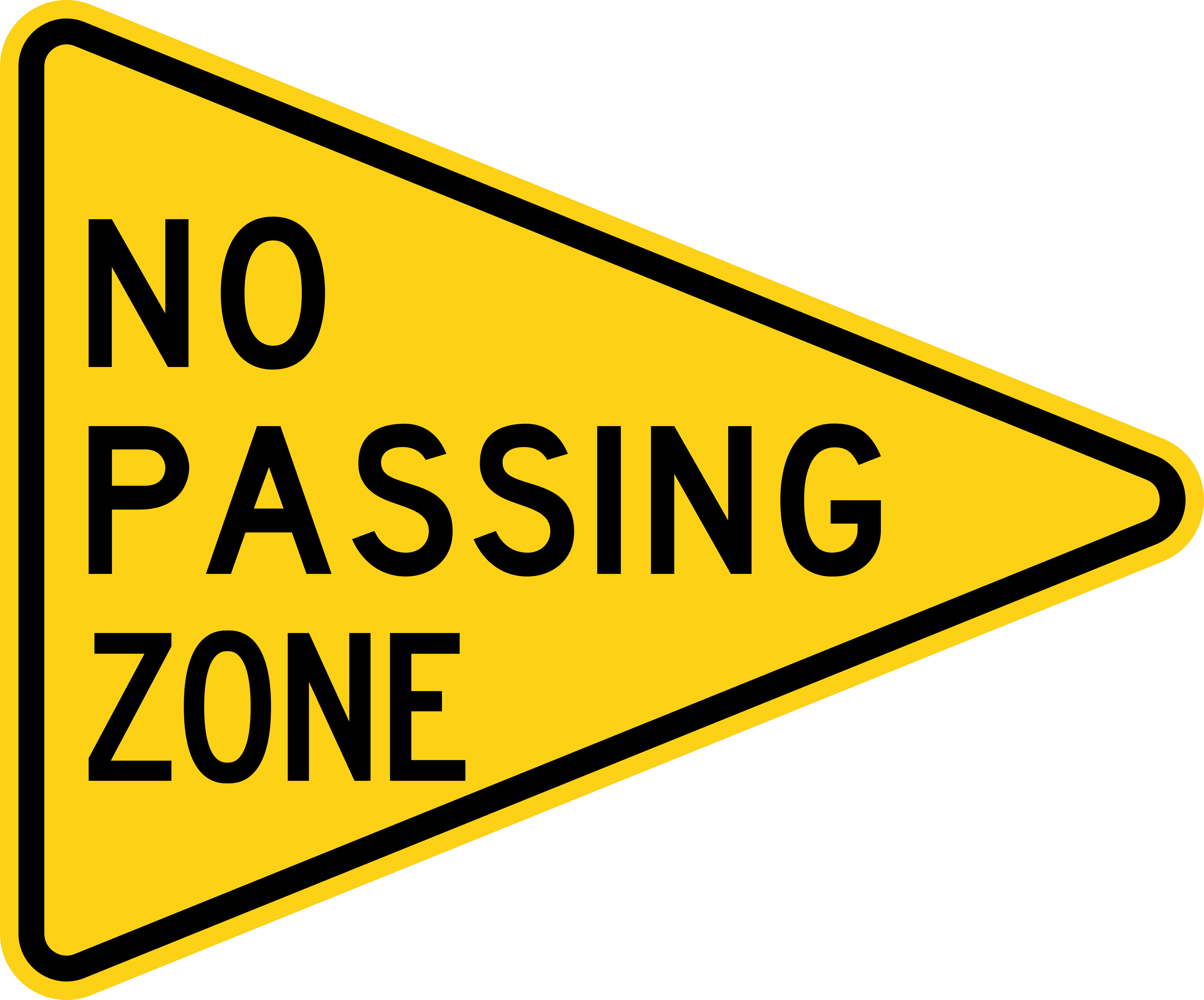
- The traffic volume at rush hour
- The width of the paved shoulder
- The average age of drivers who live along the road
- How far a driver can see ahead on that road
Show answer
How far a driver can see ahead on that road. Passing zones follow sight distance. Hills, curves, intersections, driveways, and other entry points hide hazards, so signs and markings ban passing where the view runs short and allow it only where the view and conditions make it safe. Traffic volume, driver age, and shoulder width do not set the zones. A permitted pass still demands your own safety judgment. Signs or lane markings that indicate a no passing zone tell you that you cannot see far enough ahead to pass.
Study this in the handbook: Sign Shapes and Regulatory Signs
15. Which pour counts as one standard alcoholic drink in Connecticut's manual?
- A 5-ounce glass of wine
- A pint of mixed specialty punch
- A double shot in one glass
- A 20-ounce bottle of beer
Show answer
A 5-ounce glass of wine. One drink equals five ounces of wine, twelve ounces of beer, or an ounce and a half of eighty-proof liquor. Pints of punch, doubles, and oversized beers multiply that standard silently, which is why specialty servings deceive drinkers counting glasses. Even honest counting, though, never makes drinking then driving a safe plan. Counting drinks by the glass can mislead you, because specialty servings often hold much more alcohol.
Study this in the handbook: Alcohol, Testing and DUI Suspensions
16. An ambulance approaches from behind with lights flashing on your Connecticut street. Where do you stop?
- Against the left curb for speed
- To the right edge of the road
- In the nearest driveway mouth
- Mid-lane with hazards blinking
Show answer
To the right edge of the road. Seeing or hearing an emergency vehicle from any direction means pulling to the right edge of the road, or as near right as possible, and stopping there. Left curbs, driveway mouths, and mid-lane hazard stops scatter vehicles unpredictably for the responders threading through. Remain stopped until the vehicle passes unless an officer or firefighter directs otherwise, then re-enter traffic carefully.
Study this in the handbook: Pedestrians, Bicyclists and Horses
17. On a multi-lane Connecticut road, what is the leftmost lane mainly for?
- Trucks and buses only at all times
- Passing slower vehicles
- Parking during heavy traffic jams
- Drivers traveling below the limit
Show answer
Passing slower vehicles. The leftmost lane exists so faster traffic can pass slower vehicles without weaving through the right lanes. Parking there, reserving it for trucks, or cruising below the limit all defeat that purpose. Use it to pass, then return right when the pass is complete and space allows. Connecticut law also requires drivers to use the right lane when their direction has fewer than three lanes, except when passing.
Study this in the handbook: Changing Lanes and Passing
18. Two solid yellow lines run down the center of your Connecticut street. What do they mark and allow?
- Opposite flows; left turns may cross
- A passing lane that opens at night
- A center lane for steady travel
- Parking for residents on both sides of it
Show answer
Opposite flows; left turns may cross. Double solid yellow lines divide traffic moving in opposite directions. Ordinary passing across them is barred, but they may be crossed to complete a left turn into or out of an alley, private road, driveway, or street. Night openings, center travel, and resident parking all contradict the separation the paint enforces. Shared turn lanes carry a different, mixed line pattern.
Study this in the handbook: Pavement Markings and Special Lanes
19. You must choose between running off the road or hitting another vehicle head-on. Which is safer?
- Head-on at low speed, since both slow
- Running off the road is generally safer
- Either choice is equally dangerous for everyone
- Stop across both lanes and wait
Show answer
Running off the road is generally safer. Combined closing speeds make head-on impacts the most violent common crash. Leaving the roadway, even into a ditch or field, usually trades that energy for a survivable slide or glancing stop. Parking across lanes keeps you exposed, and low speed head-on still doubles impact force. Aim for open space and keep steering until the vehicle settles. Remember that it is generally better to run off the road than to crash head-on.
Study this in the handbook: Vehicle Emergencies and Equipment Failure
20. During a police stop, how should occupants position their hands?
- Driver's hands hidden below the steering wheel
- Everyone holds documents up at once
- Hands on the wheel; passenger hands in plain view
- Passengers place hands on the roof
Show answer
Hands on the wheel; passenger hands in plain view. Visible hands calm a stop for everyone involved. The driver keeps hands on the steering wheel while passengers keep theirs in plain view, fetching license and registration only when asked and staying in the vehicle unless told to exit. Hidden hands, waving papers, and hands on the roof all muddy the officer's view of the cabin. Keeping your hands in view helps the officer feel safe.
Study this in the handbook: Teen Suspensions and Operator Retraining
Every question is written from the official Connecticut Driver's Manual. Need paper? Printable CT practice test with answer key.
Last verified 2026-10-05. How we check every question · Study all 500 as flashcards
Frequently asked questions
How many questions are on this Connecticut practice test?
This fixed set has 20 questions. It is test 11 of 25 from the 500 question Connecticut bank. The real CT exam asks 25 questions and you need 20 correct.
What is the passing score for the real Connecticut test?
20 of 25 correct (80%) That figure comes from the official Connecticut source cited on the DMV facts page.
How does this fixed test relate to the full Connecticut bank?
Each numbered test is a fixed set of questions in a fixed order, so you can retake the same test later and compare. Every test mixes road signs and the other topics in about the same proportion as the full bank. Tests 1 to 25 together cover every question in the Connecticut bank once. The full practice page mixes the whole bank at random.
Last verified 2026-10-05. See the Connecticut DMV facts page for sourced state details.
Return to the full Connecticut practice test · Study road signs