
Printable CT Permit Practice Test
25 questions in the real CT exam format, 80 percent (20 of 25) to pass. Answer key on the last page. Last verified 2026-09-05 against the official Connecticut driver manual.
1. Why should a driver leave a space cushion behind the vehicle ahead?
- To create time and room to react if traffic changes
- To prevent every other driver from merging
- To make the vehicle ahead travel faster
- To avoid using the mirrors while following
2. Under Connecticut's Move Over Law, what must drivers do when any vehicle is pulled over on a highway or road?
- Maintain the posted speed and stay in the same lane
- Move onto the shoulder without reducing speed
- Stop in the travel lane until the vehicle leaves
- Slow below the posted speed limit and move over one lane when safe
3. When may you continue past a school bus with flashing red lights traveling toward you?
- When you are within 100 feet of the bus
- Whenever the opposite lane is clear
- When a median or other physical barrier separates the roadways
- Only when the bus driver waves you through
4. During which period does the Connecticut manual allow studded tires?
- November 15 through April 30
- October 1 through February 28
- January 1 through March 1
- They are never allowed in Connecticut
5. What condition does a STOP AHEAD sign warn you to expect?

- The current stop sign has ended
- A stop sign is ahead, so slow down and prepare to stop
- Stopping is prohibited until the next signal
- A railroad gate will stop traffic immediately
6. How long does a Connecticut vehicle owner have to fix an emissions failure?
- 60 days to repair and have the emissions rechecked
- One year
- There is no deadline
- 10 days
7. On a one-way street, what does the black-and-white arrow sign require?
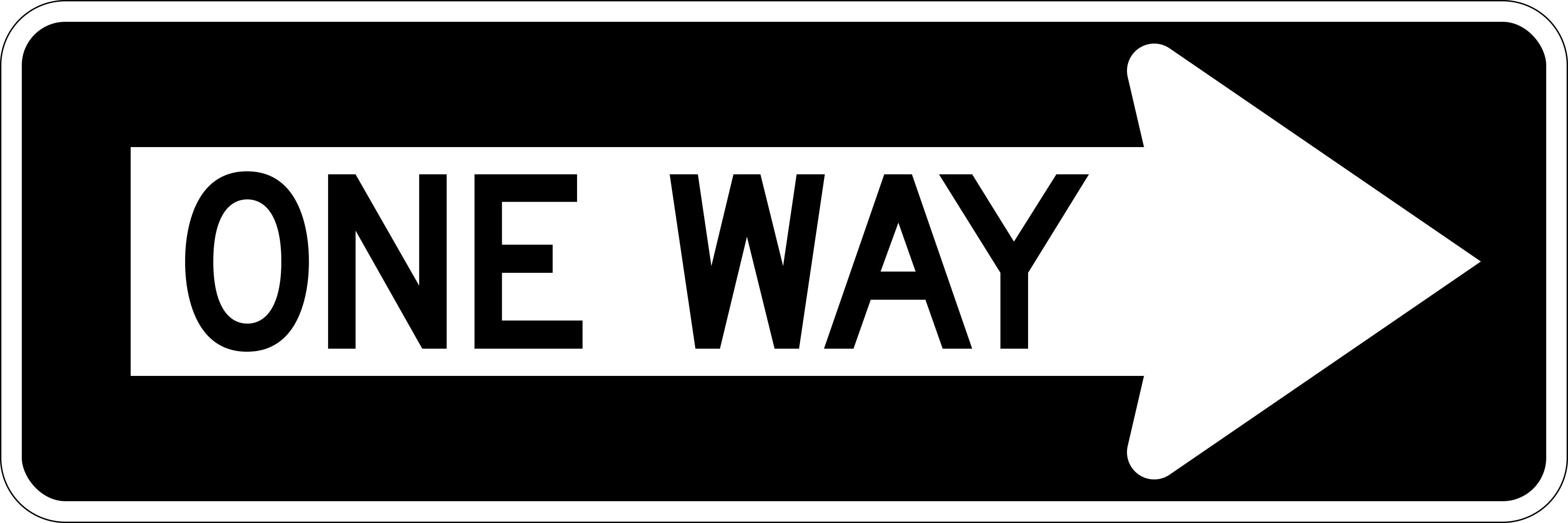
- Travel only in the arrow's direction
- Turn toward the nearest side street
- Reserve the lane for buses
- Reverse direction at the next driveway
8. How does stopping distance at 60 mph compare with 30 mph, according to the Connecticut manual?
- Over three times the distance, not twice
- Exactly twice
- About the same
- Half the distance
9. What roadway arrangement follows a DIVIDED HIGHWAY BEGINS sign?

- U-turns are required at the median
- All traffic will share one undivided lane
- A median or divider splits the highway into two one-way roadways
- The road becomes a four-way intersection
10. Before entering a roundabout, to whom must an entering driver yield?
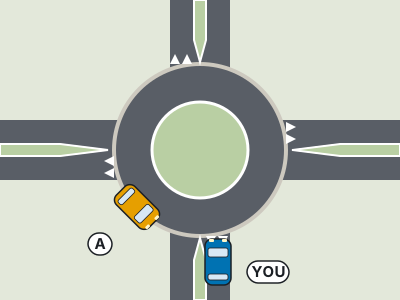
- No one when entering from the right
- Only traffic approaching from the left
- Vehicles waiting behind the entrance
- Traffic already circulating in the roundabout
11. How should a driver treat a flashing red traffic light?
- As a flashing yellow signal requiring no stop
- As a green light when the intersection looks clear
- As a stop sign, stopping fully before proceeding when safe
- As a signal to reverse away from the intersection
12. When may a driver cross a double yellow line to pass slow-moving traffic in Connecticut?
- Whenever the vehicle ahead is traveling below the posted limit
- When the pass is legal for that situation and there is enough sight distance to do it safely
- Only after driving on the shoulder first
- Whenever an oncoming vehicle is close enough to see
13. How should you respond to a pedestrian-crossing warning sign?

- Watch for people in your path and be prepared to slow or stop
- Accelerate so pedestrians have less time in the road
- Assume pedestrians must wait for every vehicle
- Use the sign as permission to park near the crossing
14. If the vehicle you are passing begins slowing or stopping, what must you do?
- Sound the horn and maintain speed
- Continue because the pass has started
- Move onto the shoulder to finish faster
- Yield to that vehicle
15. A curved arrow appears before the roadway bends. What does the warning identify?

- A change in road direction or a curve ahead
- A lane reserved for turning at a signal
- A mandatory detour around construction
- A one-way road beginning at the sign
16. At an intersection without signs or signals, which approaching vehicle has priority?
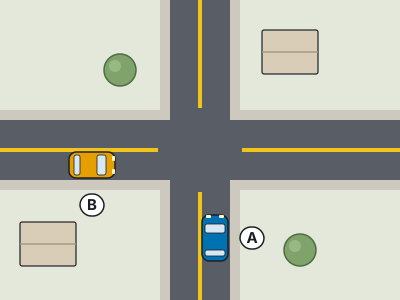
- The vehicle approaching from the right
- The vehicle approaching from the left
- The vehicle traveling at the higher speed
- The vehicle with its turn signal on
17. After stopping for an ice cream truck with its stop arm extended, how may you proceed past it in Connecticut?
- At a reasonable speed up to 5 mph, yielding to pedestrians going to or from the truck
- At the posted speed limit
- Only after the truck drives away
- At up to 25 mph with the horn sounding
18. What is the first response when the tires lose traction on wet pavement?
- Brake hard while turning toward the shoulder
- Ease your foot off the gas pedal
- Accelerate until the tires cut through the water
- Turn the steering wheel sharply back and forth
19. What road situation is identified by a five-sided pentagon sign?

- A school zone or school crossing
- A hospital entrance
- A recreational park entrance
- A pedestrian bridge only
20. What does a dashed yellow center line mean?
- Traffic travels in the same direction only
- Passing is forbidden in both directions
- Passing is allowed when safe
- The lane is reserved for buses
21. What warning equipment makes an approaching emergency vehicle entitled to the right-of-way?
- A siren, air horn, or red or blue flashing light
- A vehicle color of white or silver
- A four-way flasher without an audible warning
- A parking light used on the shoulder
22. How should a driver pass a horseback rider on the roadway?
- Drive close to the rider to remain visible
- Sound the horn repeatedly so the rider moves aside
- Accelerate past before the animal can react
- Slow down and leave at least three feet while passing
23. What does the shape of an arrow on a turn or curve warning sign tell a driver?

- The exact speed limit for the roadway
- What to expect ahead
- Whether the road is reserved for buses
- Whether the next intersection has a traffic signal
24. An emergency vehicle approaches while you are already in an intersection. What should you do first?
- Stop in the intersection immediately
- Back up to the previous stop line
- Drive through the intersection, then pull over
- Turn left and continue without stopping
25. When may a driver enter a signalized intersection during heavy traffic?
- Whenever the light is green, even if vehicles are stopped ahead
- Only when there is enough room to clear it without blocking traffic
- After stopping in the middle to wait for space
- When the driver can leave part of the vehicle in a crosswalk
Answer key
- 1. A
- 2. D
- 3. C
- 4. A
- 5. B
- 6. A
- 7. A
- 8. A
- 9. C
- 10. D
- 11. C
- 12. B
- 13. A
- 14. D
- 15. A
- 16. A
- 17. A
- 18. B
- 19. A
- 20. C
- 21. A
- 22. D
- 23. B
- 24. C
- 25. B