
Key points
Diamond signs warn of special conditions or hazards; be ready to slow down or stop.
Source: Handbook p. 46
“These signs warn you of special conditions or hazards ahead. Drive with caution and be ready to slow down or stop.”
Connecticut Driver's Manual, Handbook p. 46A pentagon (5 sided) sign marks school zones and school crossings.
Source: Handbook p. 46
“The pentagon (five-sided) shape marks school zones and warns you about school crossings.”
Connecticut Driver's Manual, Handbook p. 46A pennant sign on the left side of a two lane road marks the start of a no passing zone.
Source: Handbook p. 46
“When used, the sign is on the left side of a two-lane, two-way roadway. It is posted at the beginning of a NO-PASSING ZONE”
Connecticut Driver's Manual, Handbook p. 46A round sign means you are approaching a railroad crossing.
Source: Handbook p. 46
“A circular sign indicates that you are approaching a railroad crossing. Slow down, look and listen for trains.”
Connecticut Driver's Manual, Handbook p. 46At a merge sign, drivers in both lanes are responsible for merging smoothly.
Source: Handbook p. 49
“Two lanes of traffic are about to become one. Drivers in both lanes are responsible for merging smoothly.”
Connecticut Driver's Manual, Handbook p. 49A two way roadway sign means you are leaving a divided road for a two way highway.
Source: Handbook p. 49
“This sign tells you that you are leaving a divided roadway and will be driving on a two-way highway.”
Connecticut Driver's Manual, Handbook p. 49Green signs are guide signs; they tell you where you are, which way to go and the distance.
Source: Handbook p. 47
“Green is used for guide signs. They tell you where you are, which way to go and the distance.”
Connecticut Driver's Manual, Handbook p. 47Blue service signs show rest areas, gas stations, campgrounds and hospitals.
Source: Handbook p. 51
“They show the locations of various services, such as rest areas, gas stations, campgrounds, or hospitals.”
Connecticut Driver's Manual, Handbook p. 51
Recognize these signs

School zone 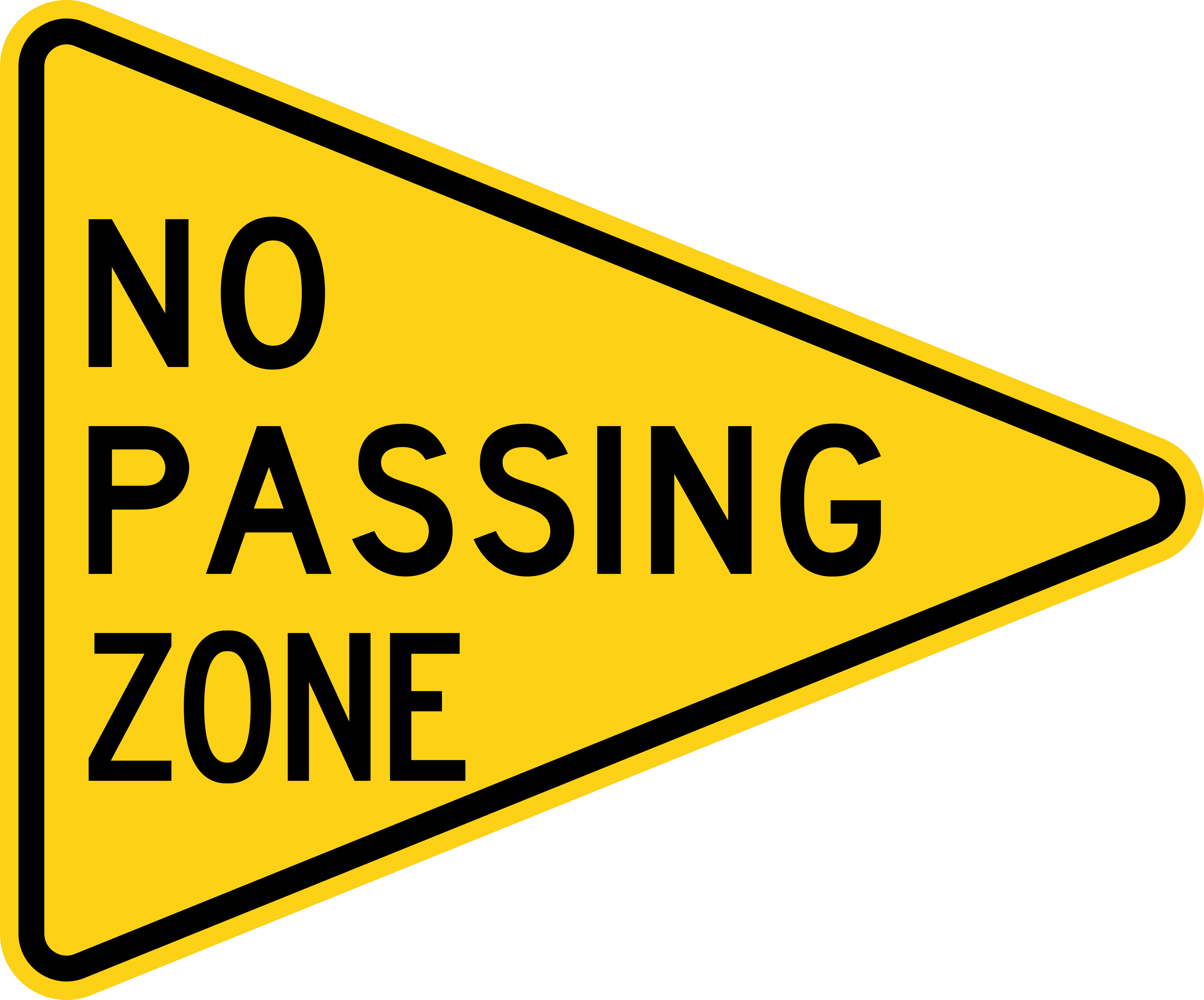
No passing zone 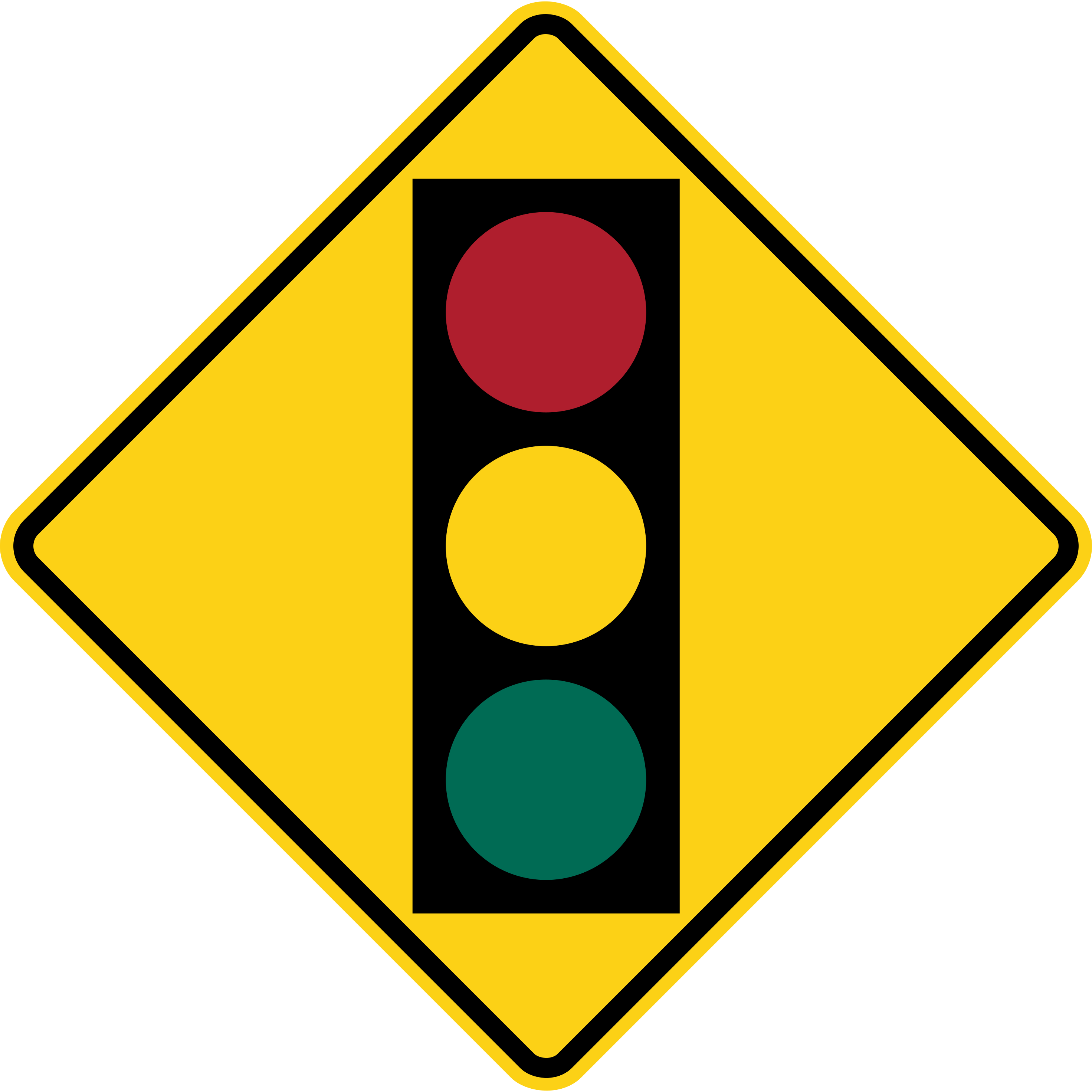
Signal ahead 
Stop ahead 
Reduction in lanes 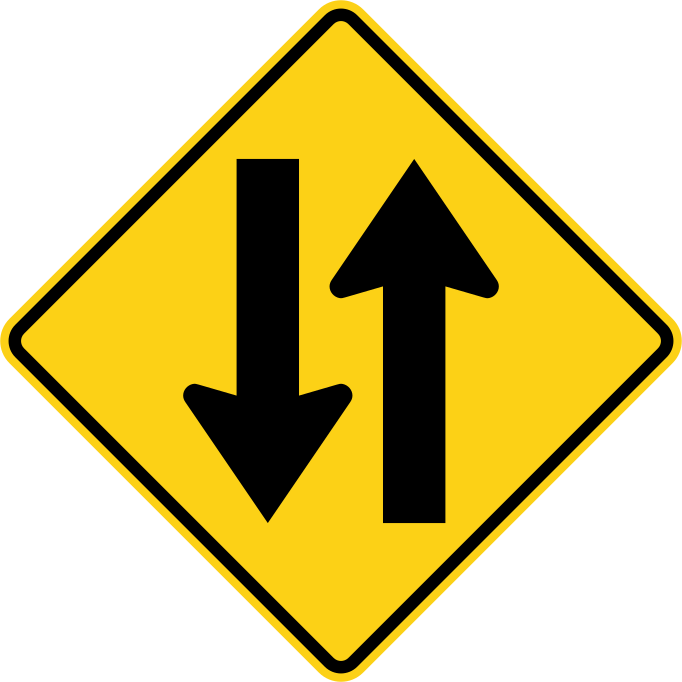
Two way traffic 
Slippery when wet 
Crossroad
3 questions from the Connecticut practice test
1. What can the shape and color of a route-number sign tell you?
- The number of open lanes ahead
- The exact traffic speed at that moment
- The age of the road surface
- Whether the road is interstate, U.S., state, city, or county
Show answer
Whether the road is interstate, U.S., state, city, or county. Route markers use shape and color to identify the roadway system, including interstate, U.S., state, city, and county roads. This helps you follow a planned route when different road systems meet. The marker is not a report of traffic speed, pavement age, or available lanes. Look for the combination of the route number and the marker’s appearance so you follow the intended road instead of assuming every sign carrying the same number belongs to the same system.
2. What road situation is identified by a five-sided pentagon sign?
- A school zone or school crossing
- A hospital entrance
- A recreational park entrance
- A pedestrian bridge only
Show answer
A school zone or school crossing. The five-sided pentagon marks school zones and warns about school crossings. Children may be crossing or playing nearby, so slow down, watch carefully, and be ready to stop. A separate downward arrow plaque can identify the actual crosswalk location. The shape does not indicate a hospital, park, or pedestrian bridge. Scan both sides of the road for children and obey any crossing guard or signal that controls movement.
3. What is the usual purpose of a green highway guide sign?
- To direct you to roads, distances, and specific exits
- To warn about a slippery pavement condition
- To prohibit a U-turn
- To identify a medical service
Show answer
To direct you to roads, distances, and specific exits. Green guide signs help drivers navigate. They can identify where you are, which way to go, the distance to a destination, and specific exits. They do not carry the general warning function of yellow signs, the prohibition function of a red slash, or the service function of blue signs. Read the wording early enough to choose the proper lane and exit without a last-second movement. The green background is a navigation cue: use it to plan direction and distance, not to interpret a hazard or command.
Practice this topic
Lock it in with road signs questions from the free Connecticut practice test. Every answer comes with a plain English explanation.
Source: the Connecticut Driver's Manual, Know the Road: Traffic Signs. This lesson is a plain English summary, not the law itself; where it differs, the manual and the statute govern. Last checked 2026-09-27.