
Key points
Entering traffic must yield to circulating traffic; each approach has a yield sign.
Source: Handbook p. 37
“Entering traffic must yield the right-of-way to circulating traffic. Each road approaching them is marked with a yield sign”
Connecticut Driver's Manual, Handbook p. 37Drivers entering a traffic circle or rotary must yield to drivers already in it.
Source: Handbook p. 36
“Drivers entering a traffic circle or rotary must yield to drivers already in the circle.”
Connecticut Driver's Manual, Handbook p. 36Slow down on approach and yield to traffic in the roundabout and pedestrians in the crosswalk.
Source: Handbook p. 37
“When approaching a roundabout, slow down. You must yield to traffic already in the roundabout and to any pedestrians in the crosswalk.”
Connecticut Driver's Manual, Handbook p. 37In a multi lane roundabout, follow signs and lane controls to choose your lane.
Source: Handbook p. 37
“follow the posted signs and lane-use controls to choose the proper lane for your intended movement.”
Connecticut Driver's Manual, Handbook p. 37Enter at a sufficient gap and signal right just before your exit.
Source: Handbook p. 37
“Enter the roundabout when there is a sufficient gap in traffic, use your right turn signal when you are about to reach your intended exit point”
Connecticut Driver's Manual, Handbook p. 37Do not stop inside the roundabout to let other traffic in.
Source: Handbook p. 37
“Do not stop within the roundabout to allow traffic to enter the roundabout from another leg.”
Connecticut Driver's Manual, Handbook p. 37U turns are not legal everywhere, and never on an expressway.
Source: Handbook p. 37
“U-turns are not legal everywhere. So before you make a U-turn, check for signs prohibiting them. Never make a U-turn on an expressway.”
Connecticut Driver's Manual, Handbook p. 37
Recognize these signs

Roundabout 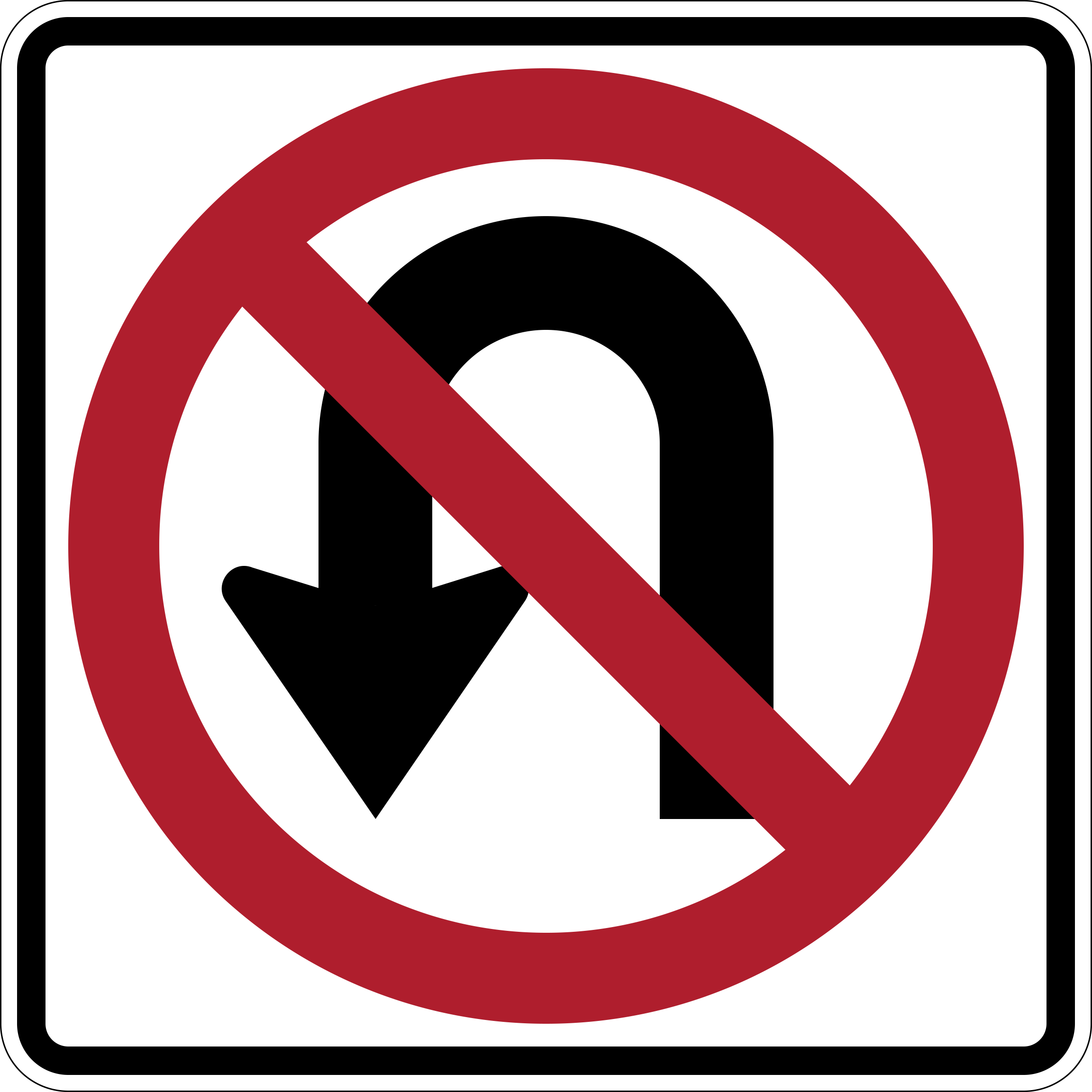
No U turn
3 questions from the Connecticut practice test
1. Before entering a roundabout, to whom must an entering driver yield?
- No one when entering from the right
- Only traffic approaching from the left
- Vehicles waiting behind the entrance
- Traffic already circulating in the roundabout
Show answer
Traffic already circulating in the roundabout. Entering traffic yields to vehicles already circulating in the roundabout. The entering driver should slow, assess the circulating lane, and wait for a sufficient gap. The direction of approach does not cancel the yield, and vehicles behind the entrance do not control the conflict. Once inside, do not stop simply to let another vehicle enter. Think of the circle as already occupied space that must be joined without interrupting its flow.
2. What must you do when approaching a roundabout with traffic already circulating?
- Yield, then enter when a sufficient gap is available
- Stop inside the circle to let entering traffic merge
- Enter immediately because entering vehicles have priority
- Drive clockwise until you reach your exit
Show answer
Yield, then enter when a sufficient gap is available. Traffic already circulating in a roundabout has priority over traffic entering it. Slow down as you approach, yield to circulating vehicles and to pedestrians in the crosswalk, then enter when there is a sufficient gap in traffic. Once inside, do not stop to let another vehicle enter from a different leg. Use your right turn signal when you are about to reach your intended exit, and yield to pedestrians in the crosswalk on the exiting leg. The entering vehicle must fit into the existing flow rather than force that flow to stop.
3. When entering a traffic circle or rotary, which traffic has priority?
- Drivers already in the circle
- Vehicles entering from the left
- The fastest approaching vehicle
- The vehicle that signals first
Show answer
Drivers already in the circle. A driver entering a traffic circle or rotary must yield to drivers already circulating. The vehicle inside the circle has an established path, so entering traffic must wait for a safe opening. Speed, approach direction, and signaling do not create priority over traffic already in the circle. Slow before entry, scan for vehicles and pedestrians, and yield until the circulating lane is clear. Where a modern roundabout has more than one approach lane, the manual says to follow the posted signs and lane use controls to pick the proper lane for your intended movement.
Practice this topic
Lock it in with right of way questions from the free Connecticut practice test. Every answer comes with a plain English explanation.
Source: the Connecticut Driver's Manual, Road Safety: Roundabouts and U-Turns. This lesson is a plain English summary, not the law itself; where it differs, the manual and the statute govern. Last checked 2026-09-27.