
Key points
The law says who must yield, not who has the right of way; always try to prevent a crash.
Source: Handbook p. 36
“The law says who must yield the right-of-way. It does not give anyone the right-of-way.”
Connecticut Driver's Manual, Handbook p. 36Drivers turning left must yield to oncoming vehicles going straight.
Source: Handbook p. 36
“Drivers turning left must yield to oncoming vehicles going straight.”
Connecticut Driver's Manual, Handbook p. 36Where there is no stop sign, yield sign or signal, yield to vehicles coming from the right.
Source: Handbook p. 36
“At an intersection where there is no stop sign, yield sign or oncoming traffic signal, drivers must yield to vehicles coming from the right.”
Connecticut Driver's Manual, Handbook p. 36At a four way stop, the first to arrive goes first; if two arrive together, the vehicle on the right goes first.
Source: Handbook p. 36
“At a four-way stop, the driver reaching the intersection first goes first (after coming to a complete stop). If more than one vehicle arrives at the same time, the vehicle on the right goes first.”
Connecticut Driver's Manual, Handbook p. 36Drivers entering from a driveway or alley must yield to vehicles already on the main road.
Source: Handbook p. 37
“Drivers entering a road from a driveway, alley or roadside must yield to vehicles already on the main road.”
Connecticut Driver's Manual, Handbook p. 37Do not enter an intersection unless you can get through without stopping.
Source: Handbook p. 37
“Drivers may not enter an intersection unless they can get through it without having to stop.”
Connecticut Driver's Manual, Handbook p. 37Yield to a bus traveling in your direction when the bus signals.
Source: Handbook p. 18
“Drivers are required to yield the right-of-way to a bus traveling in the same direction when the bus appropriately signals.”
Connecticut Driver's Manual, Handbook p. 18When overtaking a vehicle, yield to it even if it is slowing or stopping.
Source: Handbook p. 37
“Drivers overtaking a vehicle traveling in the same direction must yield to that vehicle, even if the vehicle is slowing or coming to a stop.”
Connecticut Driver's Manual, Handbook p. 37
Recognize these signs
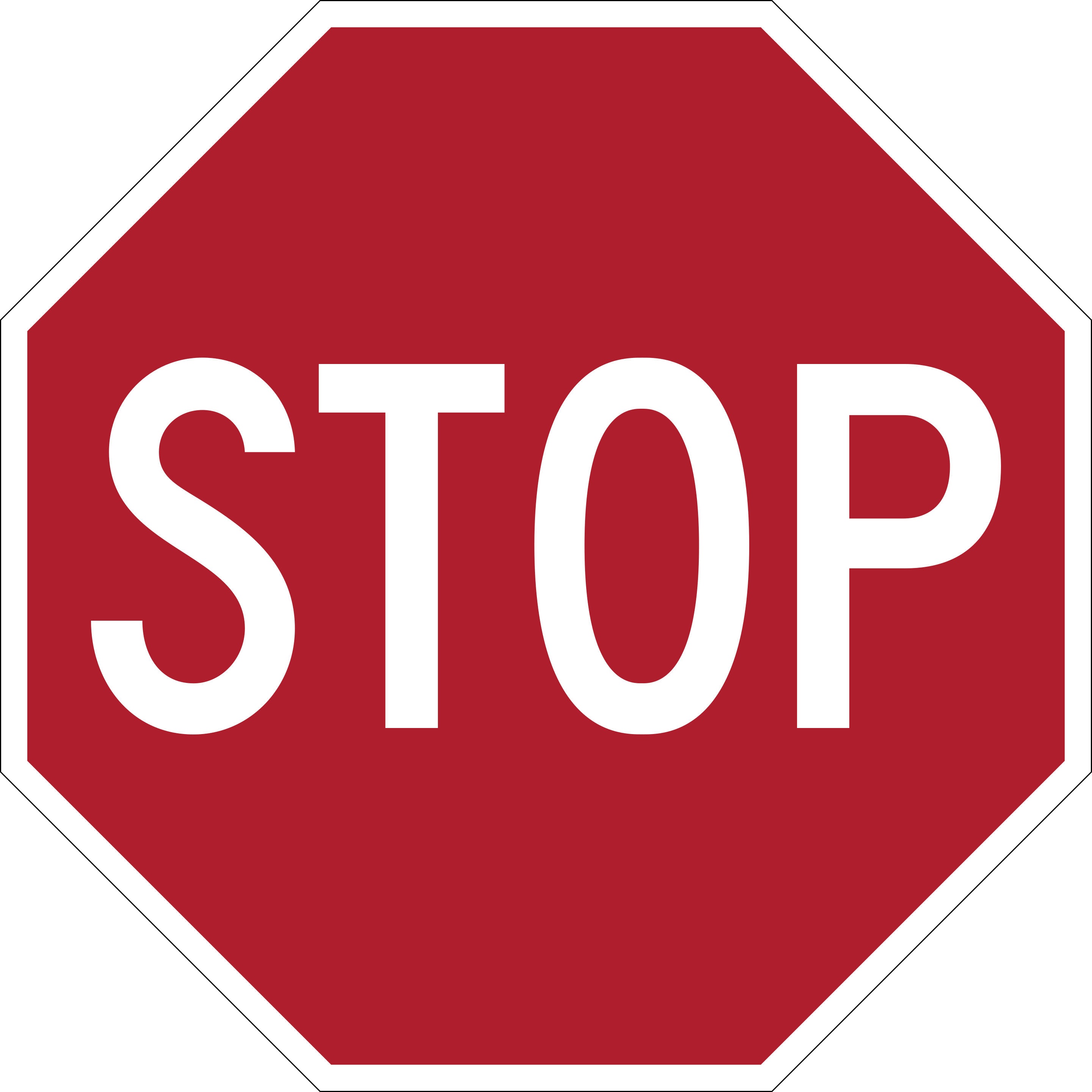
Stop 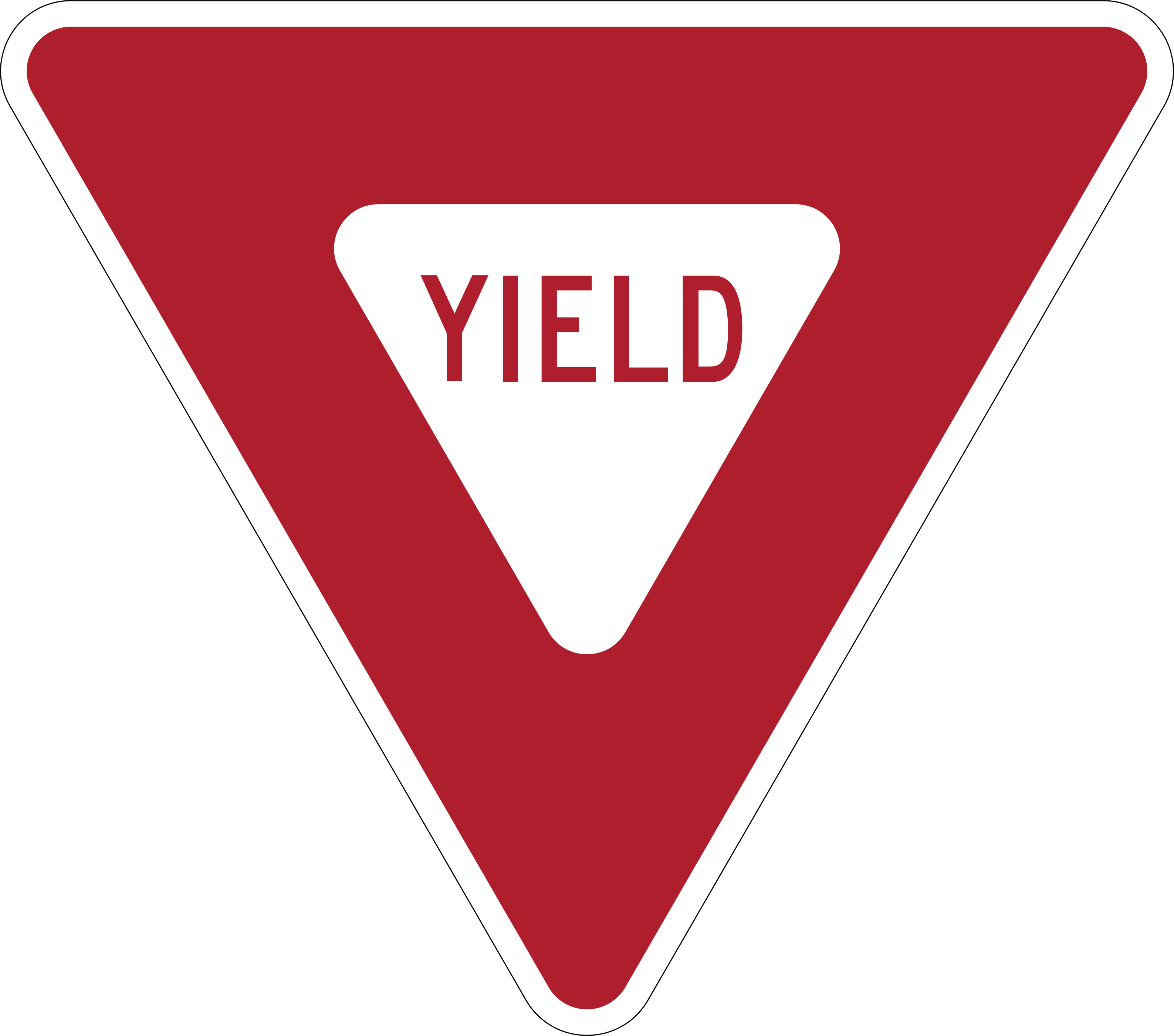
Yield
3 questions from the Connecticut practice test
1. At an intersection without signs or signals, which approaching vehicle has priority?
- The vehicle approaching from the right
- The vehicle approaching from the left
- The vehicle traveling at the higher speed
- The vehicle with its turn signal on
Show answer
The vehicle approaching from the right. At an intersection with no stop sign, yield sign, or oncoming traffic signal, the driver must yield to vehicles coming from the right. The manual stresses that the law says who must yield and does not give anyone the right-of-way, so the vehicle on the right should still drive carefully. Speed and a turn signal do not establish priority. Reduce speed, scan both directions, and be prepared to yield. The practical cue is to check the vehicle on your right before entering an intersection without traffic control.
2. Two vehicles reach a four-way stop at the same time. Which one proceeds first?
- The vehicle with more passengers
- The vehicle on the left
- The vehicle going straight
- The vehicle on the right
Show answer
The vehicle on the right. When vehicles arrive simultaneously at a four-way stop, the vehicle on the right proceeds first. The ordinary first-arrival rule does not settle a tie, so the right-side rule resolves it. A vehicle going straight does not automatically outrank a turning vehicle in this circumstance, and passenger count has no bearing on the order. Come to a complete stop, confirm the tie, let the right-side vehicle move, then proceed when the intersection is clear.
3. A driver turning left at an intersection must yield to which traffic?
- Oncoming traffic going straight through
- Traffic waiting behind the turning driver
- Only pedestrians on the left sidewalk
- No traffic if the turn signal is on
Show answer
Oncoming traffic going straight through. A left turn crosses the path of vehicles coming toward the driver, so the turning driver must yield to oncoming traffic that is proceeding straight. Signaling communicates intent but does not grant priority. Vehicles behind the turning driver are not the controlling conflict described here, and the turn signal cannot make an unsafe gap safe. Check the approach, wait for oncoming traffic to clear, and turn only when the path is open.
Practice this topic
Lock it in with right of way questions from the free Connecticut practice test. Every answer comes with a plain English explanation.
Source: the Connecticut Driver's Manual, Road Safety: Right of Way. This lesson is a plain English summary, not the law itself; where it differs, the manual and the statute govern. Last checked 2026-09-27.