
Key points
Vulnerable users such as pedestrians, bicyclists and highway workers must be given 3 feet when passing.
Source: Handbook p. 16
“Vulnerable users include pedestrians, bicyclists, wheelchair users, a person riding or driving an animal, highway workers, garbage trucks, tank vehicles, vehicles authorized by the US Government to carry mail and express delivery carriers. Drivers must allow for three feet of distance when passing.”
Connecticut Driver's Manual, Handbook p. 16Slow or stop for a pedestrian within any part of a marked or unmarked crosswalk.
Source: Handbook p. 16
“Drivers must slow or stop your vehicle and grant the right-of-way for a pedestrian crossing at a crosswalk (marked or unmarked) when the pedestrian is within any portion of the crosswalk.”
Connecticut Driver's Manual, Handbook p. 16A pedestrian with a guide dog or white cane has absolute right of way; do not honk.
Source: Handbook p. 36
“Pedestrians using a guide dog or carrying a white cane have absolute right-of-way. Do not use your horn because it could confuse or frighten the pedestrian.”
Connecticut Driver's Manual, Handbook p. 36Yield to bicyclists in a bike lane or people on a sidewalk before turning across the lane or sidewalk.
Source: Handbook p. 17
“You must yield to bicyclists in a bicycle lane or persons on a sidewalk, before you turn across the lane or sidewalk.”
Connecticut Driver's Manual, Handbook p. 17Fines are doubled for failing to yield to a bicyclist.
Source: Handbook p. 17
“Fines are doubled for failure to yield right-of-way to a bicyclist.”
Connecticut Driver's Manual, Handbook p. 17Do not pass a bicyclist just before a right turn; let them clear the intersection first.
Source: Handbook p. 17
“If you are about to make a right turn, you must not pass a bicyclist immediately before the turn. To avoid a collision, you should slow down and let the cyclist clear the intersection before making your turn.”
Connecticut Driver's Manual, Handbook p. 17Bicyclists under 16 must wear a helmet.
Source: Handbook p. 17
“You are required to wear a helmet if you are under 16 years of age.”
Connecticut Driver's Manual, Handbook p. 17Sounding your horn or making loud noises near a horse is illegal.
Source: Handbook p. 18
“It is illegal to sound your horn or cause loud or unusual noises when approaching or passing a horse.”
Connecticut Driver's Manual, Handbook p. 18
Numbers to know
| Number | What it means | Manual |
|---|---|---|
| 3 feet | passing distance for vulnerable users | Handbook p. 16 |
| 16 | age under which bicyclists must wear a helmet | Handbook p. 17 |
Recognize these signs

Pedestrian crossing 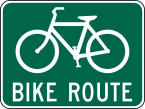
Bike route
3 questions from the Connecticut practice test
1. When must a driver slow or stop for a pedestrian at a crosswalk?
- Only when the crosswalk has painted lines
- When the pedestrian is within any portion of a marked or unmarked crosswalk
- Only after the pedestrian reaches the center of the road
- Only when a crossing guard is present
Show answer
When the pedestrian is within any portion of a marked or unmarked crosswalk. Connecticut recognizes a crosswalk at every intersection, including one without painted lines. A driver must slow or stop and grant the right-of-way when a pedestrian is within any part of that crosswalk. Requiring painted lines or a crossing guard would miss unmarked crossings and ordinary intersections. Waiting until the person reaches the road center also delays the required yield. The practical cue is to imagine the sidewalk or shoulder continuing across the roadway and to scan that entire crossing area before moving.
2. You have just passed a bicyclist and plan to turn right. What should you do?
- Turn immediately because passing has already been completed
- Slow down and let the bicyclist clear the intersection before turning
- Sound the horn and turn across the bicycle's path
- Move into the bicycle lane and stop beside the bicyclist
Show answer
Slow down and let the bicyclist clear the intersection before turning. A vehicle that has passed a bicycle can reach the corner before the rider has cleared it. Connecticut guidance says to slow down and allow the cyclist to get through the intersection before making the right turn. Immediate turning creates a crossing conflict, while a horn does not give permission to cut across the rider. The safest cue is to check the bicycle's position again after passing, then turn only when the cyclist is clear.
3. How should a driver pass a horseback rider on the roadway?
- Drive close to the rider to remain visible
- Sound the horn repeatedly so the rider moves aside
- Accelerate past before the animal can react
- Slow down and leave at least three feet while passing
Show answer
Slow down and leave at least three feet while passing. A person riding or driving an animal is a vulnerable user, and Connecticut requires drivers to allow three feet when passing. Slowing down gives the rider and animal more time to respond, while the space reduces the chance that a sudden movement becomes a collision. Repeated horn use can startle an animal, and accelerating or crowding the rider removes the safety margin. Wait for a safe opening, pass smoothly with the required clearance, and return to the lane only after the rider is well clear.
Practice this topic
Lock it in with safe driving questions from the free Connecticut practice test. Every answer comes with a plain English explanation.
Source: the Connecticut Driver's Manual, Sharing the Road with Others. This lesson is a plain English summary, not the law itself; where it differs, the manual and the statute govern. Last checked 2026-09-27.