
Key points
Speed limits are posted for ideal conditions; slow down on wet or icy roads, in poor visibility or heavy traffic.
Source: Handbook p. 36
“Remember, speed limits are posted for ideal conditions. If the road is wet or icy, if you cannot see well, or if traffic is heavy, you must slow down.”
Connecticut Driver's Manual, Handbook p. 36You can get a ticket for driving too fast for conditions even at the posted limit.
Source: Handbook p. 36
“Even if you are driving the posted speed limit, you can get a ticket for traveling too fast for road conditions.”
Connecticut Driver's Manual, Handbook p. 36Stopping at 60 mph takes over three times the distance of stopping at 30 mph.
Source: Handbook p. 36
“stopping at 60 mph does not take twice the distance it takes at 30 mph, as one might think, but over three times the distance.”
Connecticut Driver's Manual, Handbook p. 36At 50 mph it can take about 400 feet to react and stop; at 30 mph about 200 feet.
Source: Handbook p. 36
“At 50 mph, it can take you about 400 feet to react to something you see and bring your vehicle to a stop. That is about the length of a city block. • At 30 mph, it can take about 200 feet to stop.”
Connecticut Driver's Manual, Handbook p. 36If you cannot see 200 feet ahead, you may not be driving safely at 30 mph.
Source: Handbook p. 36
“If you cannot see 200 feet ahead, you may not be driving safely at 30 mph.”
Connecticut Driver's Manual, Handbook p. 36If vehicles pile up behind you, pull over when safe and let them pass.
Source: Handbook p. 36
“If vehicles are piled up behind you, pull over when it is safe to do so and let them pass.”
Connecticut Driver's Manual, Handbook p. 36Obey the slower posted speed limit in school zones or face fines.
Source: Handbook p. 16
“You must obey the slower posted speed limit in school zones or be subject to fines.”
Connecticut Driver's Manual, Handbook p. 16Use the four second sight distance rule: if you reach a fixed object before counting four seconds, slow down.
Source: Handbook p. 18
“If you reach the object before you finish saying “four-one-thousand,” you need to slow down.”
Connecticut Driver's Manual, Handbook p. 18
Numbers to know
| Number | What it means | Manual |
|---|---|---|
| 60 mph / 30 mph | speeds compared in the stopping distance rule | Handbook p. 36 |
| 50 mph / 400 feet | reaction and stopping distance at 50 mph | Handbook p. 36 |
| 30 mph / 200 feet | stopping distance at 30 mph | Handbook p. 36 |
| 4 | seconds counted in the sight distance rule | Handbook p. 18 |
Recognize these signs
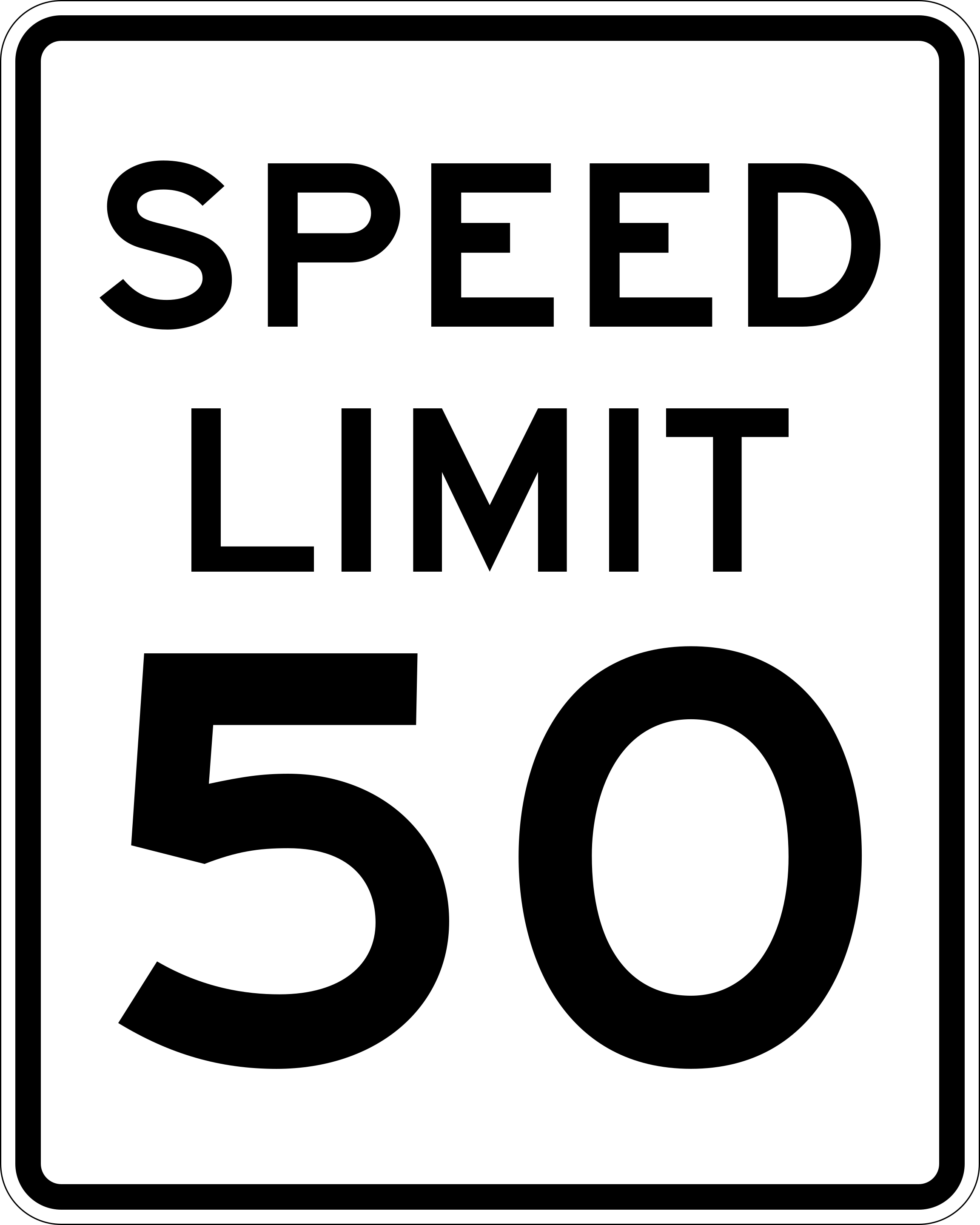
Speed limit
3 questions from the Connecticut practice test
1. Near a school or school crossing, which speed instruction applies?
- Always drive 15 mph regardless of signs
- Obey the slower posted speed limit
- Use the normal limit when school is not in session
- Match the speed of school buses
Show answer
Obey the slower posted speed limit. The manual emphasizes that school hours are not the only time children may be present, so drivers must obey the slower posted speed limit near a school or school crossing. Connecticut does not replace every school-area sign with one universal 15 mph rule. The normal limit is not automatically restored after the bell. Look for the posted restriction, slow early, and scan for children beyond the immediate school schedule.
2. On dry pavement with good tires and brakes, about how far can it take to stop at 50 mph?
- About 200 feet
- About 50 feet
- About 100 feet
- About 400 feet
Show answer
About 400 feet. The manual estimates about 400 feet at 50 mph to react to something seen and bring the vehicle to a stop when pavement is dry and the tires and brakes are in good condition. The 50-foot and 100-foot choices underestimate the combined space needed for perception, reaction, and braking. About 200 feet is the separate figure given for 30 mph, so it belongs to a different speed. Use the surface and equipment conditions as part of the rule, then connect 50 mph with a full city-block distance before assuming a visible hazard can be avoided.
3. Why can a Connecticut driver receive a ticket while traveling at the posted speed limit?
- Posted limits apply only to motorcycles
- The limit is enforceable only in daylight
- Posted limits assume ideal conditions, so the speed may be too fast for wet, icy, low-visibility, or heavy-traffic conditions
- A ticket is possible only when the speedometer is broken
Show answer
Posted limits assume ideal conditions, so the speed may be too fast for wet, icy, low-visibility, or heavy-traffic conditions. Connecticut's posted speed limits are based on ideal conditions. A driver must slow when pavement is wet or icy, visibility is poor, or traffic is heavy, and the manual says a ticket can result even when the vehicle is at the posted number if that speed is too fast for the conditions. The limit is not restricted to daylight or to a particular vehicle type. Treat the sign as an upper reference for favorable conditions, then reduce speed when the road or traffic demands more time and stopping distance.
Practice this topic
Lock it in with speed limits questions from the free Connecticut practice test. Every answer comes with a plain English explanation.
Source: the Connecticut Driver's Manual, Road Safety: Speed Limits and Stopping. This lesson is a plain English summary, not the law itself; where it differs, the manual and the statute govern. Last checked 2026-09-27.