
QualitySpaceQualitySpace
Display
Auto follows your device setting.
Menu

25 question exam format · Real sign images & audio · Free

CT Permit Practice Test

Practice the Connecticut knowledge test the way it is actually given: 25 questions, 80 percent to pass. Every question has a plain English explanation and narrated audio. 216 questions in the bank, free, no account required.

Question bank
216
State
Connecticut
Format
Fixed question set
Cost
Free

The real Connecticut knowledge test is the DMV exam used for a learner permit. This page contains the full free 216 question study bank, with an explanation after each answer. Use the numbered 20 question tests below when you want a fixed study session.

The real Connecticut knowledge test: 25; passing score 20 of 25 correct (80%) (official source). This practice bank has 216 questions.

Alcohol and DUIEmergenciesLaws and paperworkParkingRight of wayRoad signsSafe drivingSignals and markingsSpeed limits

216-question bank · Sign images & explanations · Free

Connecticut practice test has 216 questions. Every question comes with a plain-English explanation the moment you answer.

Get a day by day study plan

Optional. Three quick answers; the tests below work without it.

Age on test day

No date yet? You get a 7 day plan.

Real exam format: 25 questions, 20 correct to pass.

Start here

Run 20 questions to warm up.

Find your gaps

Diagnose weak topics and retry what you've missed.

Simulate the real thing

Practice under graded exam conditions or run the whole bank.

Practice one topic

Drill a single topic, up to 20 questions with explanations.

Random draw and answer order every attempt. Scored against the real test's pass mark: 20 of 25 correct.

Free means actually free: no subscription, no auto-renew, no card required, no locked features. This site is funded by our insurance work, not by test-prep charges.

See facts and key topics for Connecticut DMV (minimum age, fees, wait times, question counts by topic) before you start, or print it to bring with you on test day.

Study the handbook, chapter by chapter: 24 short free lessons with the key rules, the exact numbers, and 3 check questions each, all quoted from the Connecticut manual.

How to use this CT practice test

  1. Take the 25 question exam-length practice test above once, untimed, to find your weak topics.
  2. Work through the numbered 20 question sets below. Each one is fixed, so a second attempt is a fair comparison.
  3. Read the explanation on every miss. The wording comes from the Connecticut Driver's Manual, which is what the examiners use.
  4. When you pass three sets in a row at 80 percent or better, book the real test.

CT practice tests, 20 questions each

Fixed sets in a fixed order so you can retake one and compare your score.

  1. Test 1
  2. Test 2
  3. Test 3
  4. Test 4
  5. Test 5
  6. Test 6
  7. Test 7
  8. Test 8
  9. Test 9
  10. Test 10

Printable CT practice test with answer key

Frequently asked questions

How many questions are in the Connecticut practice bank?

This free page contains the full 216 question bank. The numbered tests each contain 20 fixed questions.

How does this practice test relate to the real Connecticut test?

The real test facts are shown above from the official source. This page is an educational practice bank and is separate from the DMV test.

Can I use the Connecticut practice test for free?

Yes. The practice questions, explanations, and numbered tests are free to use with no account required.

Last verified 2026-09-05 against the Connecticut Driver's Manual, which sets the real exam at 25 questions and 20 correct to pass.

All 25 questions, CT exam length

Every question below comes from the Connecticut question bank on this page. Open a question to see the correct answer and the explanation. Nothing here is hidden behind a signup.

  1. 1. During what hours does Connecticut's teen driving curfew apply?

    1. 11 p.m. to 5 a.m., except for school, work, medical or religious reasons, or a Safe Rides program
    2. 9 p.m. to 6 a.m. with no exceptions
    3. Midnight to 4 a.m.
    4. There is no curfew
    Show answer

    11 p.m. to 5 a.m., except for school, work, medical or religious reasons, or a Safe Rides program. Under the parent teen driving agreement, a 16 or 17 year old may not drive between 11 p.m. and 5 a.m. Full explanation in Test 1

  2. 2. When may a driver cross a double yellow line to pass slow-moving traffic in Connecticut?

    1. Whenever the vehicle ahead is traveling below the posted limit
    2. When the pass is legal for that situation and there is enough sight distance to do it safely
    3. Only after driving on the shoulder first
    4. Whenever an oncoming vehicle is close enough to see
    Show answer

    When the pass is legal for that situation and there is enough sight distance to do it safely. Connecticut permits crossing a double yellow line to pass certain slow-moving traffic, including bicycles, but the permission is conditional Full explanation in Test 2

  3. 3. An emergency vehicle approaches while you are already in an intersection. What should you do first?

    1. Stop in the intersection immediately
    2. Back up to the previous stop line
    3. Drive through the intersection, then pull over
    4. Turn left and continue without stopping
    Show answer

    Drive through the intersection, then pull over. The emergency-vehicle rule requires a driver to pull to the right and stop, but the manual gives a specific instruction for a vehicle alread Full explanation in Test 3

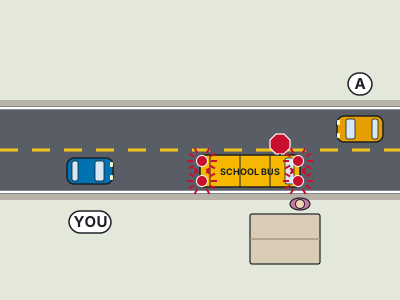
  4. 4. A school bus is stopped with red lights flashing on your side of a two-way road. What is required?

    A two-lane road with one lane in each direction and a broken yellow center line. A school bus is stopped in the lane heading east with its red lights flashing and its stop arm out. Your car, blue, is behind the bus. Car A, orange, is coming toward the bus from the other direction.
    1. Continue if you are traveling toward the bus
    2. Pass slowly if no children are visible
    3. Stop only if the bus driver extends the stop arm
    4. Stop and remain stopped until it is safe to proceed
    Show answer

    Stop and remain stopped until it is safe to proceed. A stopped school bus displaying flashing red lights requires a stop whether the bus is on your side, across the road, or at an approaching i Full explanation in Test 4

  5. 5. What hazard does a circular yellow RXR sign announce?

    Round yellow RXR sign
    1. A pedestrian-only plaza ahead
    2. A railroad crossing ahead
    3. A circular traffic island ahead
    4. A roadway with no passing ahead
    Show answer

    A railroad crossing ahead. The circular railroad warning sign means a crossing is ahead. It gives you time to slow down, look, and listen before reaching the tracks. Full explanation in Test 5

  6. 6. When is a driver required to move one lane away from a vehicle stopped on the roadside?

    1. Only after stopping completely behind the vehicle
    2. Only when the stopped vehicle is displaying blue lights
    3. Whenever it can be done safely after slowing below the posted speed limit
    4. Never on a road with two or more lanes
    Show answer

    Whenever it can be done safely after slowing below the posted speed limit. The Move Over instruction is conditional on safety. Full explanation in Test 6

  7. 7. During months seven through twelve after licensing, which passengers may be added to the Connecticut teen driver's permitted passenger group?

    1. Any friend with a valid license
    2. Only a driving instructor
    3. All passengers under age 21
    4. Members of the driver's immediate family
    Show answer

    Members of the driver's immediate family. Connecticut expands the passenger allowance during the second six months of a teen license. Full explanation in Test 7

  8. 8. What spacing should a driver leave behind a vehicle that may have to stop at a railroad crossing?

    1. No extra room unless a train is visible
    2. Less than one second, so another driver cannot enter the gap
    3. Extra room, especially behind vehicles carrying hazardous materials
    4. Enough room only for a motorcycle to pass
    Show answer

    Extra room, especially behind vehicles carrying hazardous materials. The manual lists vehicles carrying hazardous materials among those that may be required to stop at railroad crossings. Full explanation in Test 8

  9. 9. What is required when driving through a Connecticut work zone?

    1. Watch only for construction trucks and ignore changing traffic patterns
    2. Maintain the normal speed if workers are not immediately visible
    3. Change lanes without signaling to clear the work area quickly
    4. Obey the signs and flaggers, reduce speed, and stay alert
    Show answer

    Obey the signs and flaggers, reduce speed, and stay alert. Work zones can contain workers, equipment, lane shifts, alternating closures, and surfaces that change from day to day. Full explanation in Test 9

  10. 10. When may a driver enter an intersection under Connecticut's instruction not to block it?

    1. Whenever the light is green, even if traffic is stopped
    2. Only when the driver can get completely through without stopping
    3. Only after sounding the horn
    4. Whenever the vehicle has entered halfway
    Show answer

    Only when the driver can get completely through without stopping. The driver should not enter an intersection unless there is room to get all the way through without stopping. Full explanation in Test 10

  11. 11. How long can a truck and its tow vehicle be in Connecticut, and how much clear road may passing it take?

    1. As long as 65 feet, needing more than half a mile of clear road
    2. About 30 feet, needing 500 feet
    3. About 100 feet, needing one mile
    4. There is no limit
    Show answer

    As long as 65 feet, needing more than half a mile of clear road. A truck and its tow vehicle may be as long as 65 feet, and it may take you more than half a mile of clear road to pass. Full explanation in Test 1

  12. 12. If the gas pedal sticks and the engine keeps speeding up, which sequence is recommended?

    1. Turn the ignition to lock while the vehicle is moving
    2. Pump the accelerator while staying in the lane
    3. Shift to neutral, pull off safely, then turn off the engine
    4. Apply the parking brake suddenly and steer into traffic
    Show answer

    Shift to neutral, pull off safely, then turn off the engine. A stuck accelerator requires the driver to reduce the engine's connection to the drive wheels and regain a safe stopping path. Full explanation in Test 2

  13. 13. If an officer's hand signal conflicts with a traffic light, which instruction controls?

    1. The signal given by another driver
    2. The traffic light
    3. The last signal a driver noticed
    4. The officer's hand signal
    Show answer

    The officer's hand signal. A driver must obey the directions of a police officer who is directing traffic, even when those directions conflict with the light. Full explanation in Test 3

  14. 14. What right-of-way does a pedestrian with a guide dog or white cane have?

    1. Priority only after making eye contact
    2. Right-of-way only at a signalized crossing
    3. Absolute right-of-way, and drivers should not use the horn
    4. No special right-of-way
    Show answer

    Absolute right-of-way, and drivers should not use the horn. A pedestrian using a guide dog or carrying a white cane has absolute right-of-way. Full explanation in Test 4

  15. 15. A warning sign shows a reduction in lanes in your direction. What should you anticipate?

    Yellow sign showing right lane narrowing
    1. Changing lanes or allowing another vehicle to merge into your lane
    2. An added lane for your direction
    3. A mandatory stop at the lane boundary
    4. A two-way roadway beginning immediately
    Show answer

    Changing lanes or allowing another vehicle to merge into your lane. The REDUCTION IN LANES sign warns that fewer lanes will continue in the direction you are traveling. Full explanation in Test 5

  16. 16. When do passenger restrictions not apply to a Connecticut learner’s permit holder?

    1. During specific instruction from a licensed driver instructor at a commercial school or driver education program
    2. During any trip with a licensed adult passenger
    3. During daylight hours on roads below 30 mph
    4. During the first six months after receiving a driver’s license
    Show answer

    During specific instruction from a licensed driver instructor at a commercial school or driver education program. The manual makes an exception while a learner’s permit holder is receiving specific instruction from a licensed driver instructor connected Full explanation in Test 6

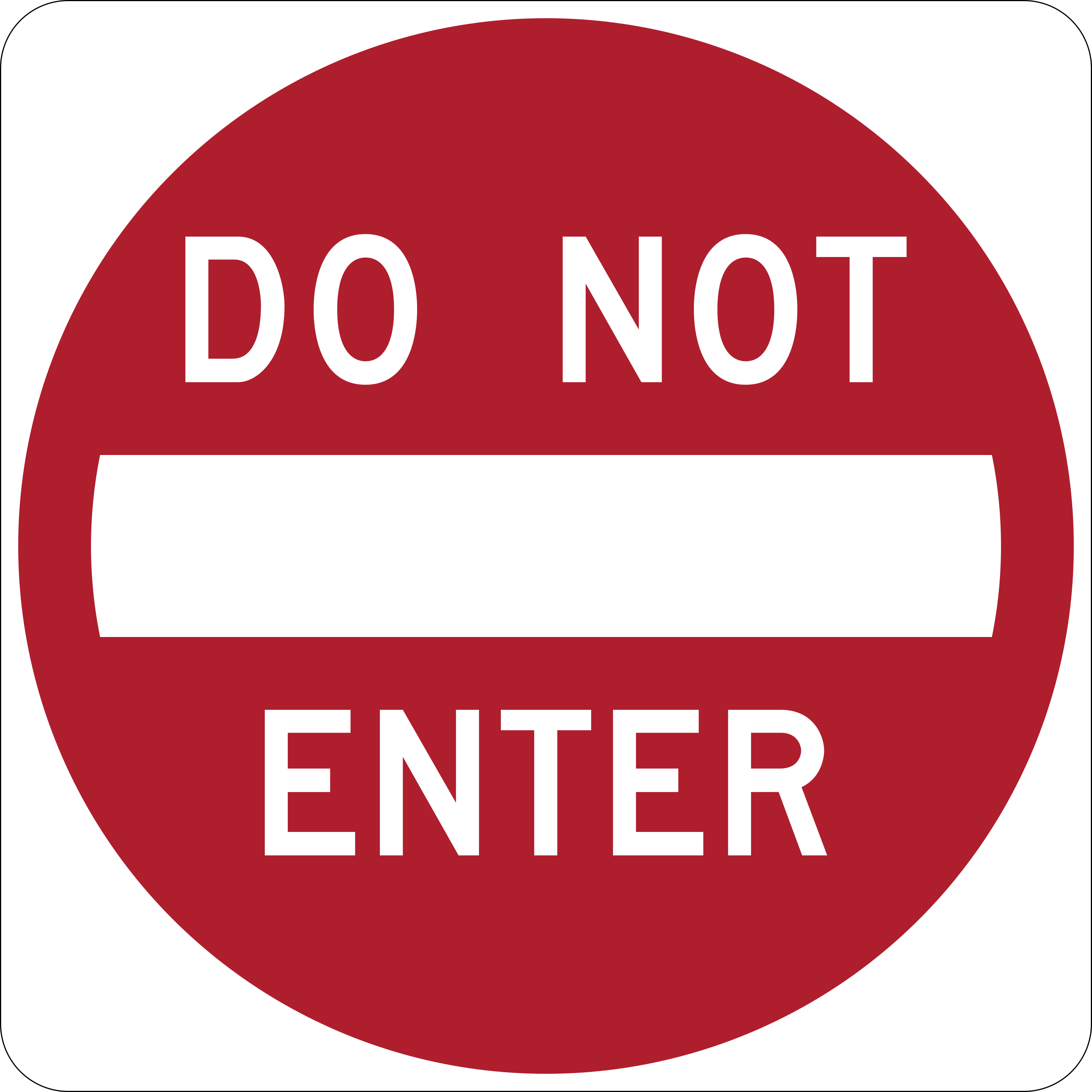
  17. 17. Where might a square sign with a white horizontal line inside a red ball be placed?

    Square sign with red circle reading DO NOT ENTER
    1. At a permitted entrance to a two-way street
    2. At the start of every school zone
    3. Only beside a legal parking space
    4. At a roadway opening that should not be entered, such as an exit ramp leading the wrong way
    Show answer

    At a roadway opening that should not be entered, such as an exit ramp leading the wrong way. The DO NOT ENTER sign prohibits entry at a roadway opening where entering would put the driver in the wrong direction or otherwise violate t Full explanation in Test 7

  18. 18. A broken yellow line is beside a solid yellow line. Which side may pass?

    1. Traffic beside the solid line, whenever no vehicle is visible
    2. Traffic beside the broken line, when the maneuver is safe
    3. Neither side, because any yellow line prohibits passing
    4. Both sides, if drivers activate their turn signals
    Show answer

    Traffic beside the broken line, when the maneuver is safe. The paired marking assigns different rules to the two sides. Full explanation in Test 8

  19. 19. You are an adult driver stopped at a red light in Connecticut. May you use your hand-held phone?

    1. Yes, because the vehicle is not moving
    2. Yes, for texting only
    3. Yes, if the engine is turned off at the light
    4. No, the ban also covers stops for traffic, road conditions, or a signal
    Show answer

    No, the ban also covers stops for traffic, road conditions, or a signal. Connecticut bans hand-held phones and mobile electronic devices while operating a vehicle on a public highway, and the ban also applies when Full explanation in Test 9

  20. 20. What does the chemical test requested after a DUI arrest show?

    1. The vehicle's emissions level
    2. The driver's blood alcohol content
    3. The driver's vision acuity
    4. The vehicle's tire pressure
    Show answer

    The driver's blood alcohol content. After an arrest for driving under the influence, the manual describes a blood, breath, or urine test that shows the driver's blood alcohol c Full explanation in Test 10

  21. 21. How should a driver treat a flashing red traffic light?

    1. As a flashing yellow signal requiring no stop
    2. As a green light when the intersection looks clear
    3. As a stop sign, stopping fully before proceeding when safe
    4. As a signal to reverse away from the intersection
    Show answer

    As a stop sign, stopping fully before proceeding when safe. A flashing red signal has the same meaning as a stop sign. Full explanation in Test 1

  22. 22. What does the Connecticut manual say about wearing only part of a two part seat belt?

    1. Wearing either the lap or shoulder belt alone greatly reduces protection
    2. The lap belt alone is enough
    3. The shoulder belt alone is enough
    4. Either part alone is fully effective
    Show answer

    Wearing either the lap or shoulder belt alone greatly reduces protection. If your vehicle has a two part seat belt system, wear both the lap belt and the shoulder belt, because wearing either part alone greatly red Full explanation in Test 2

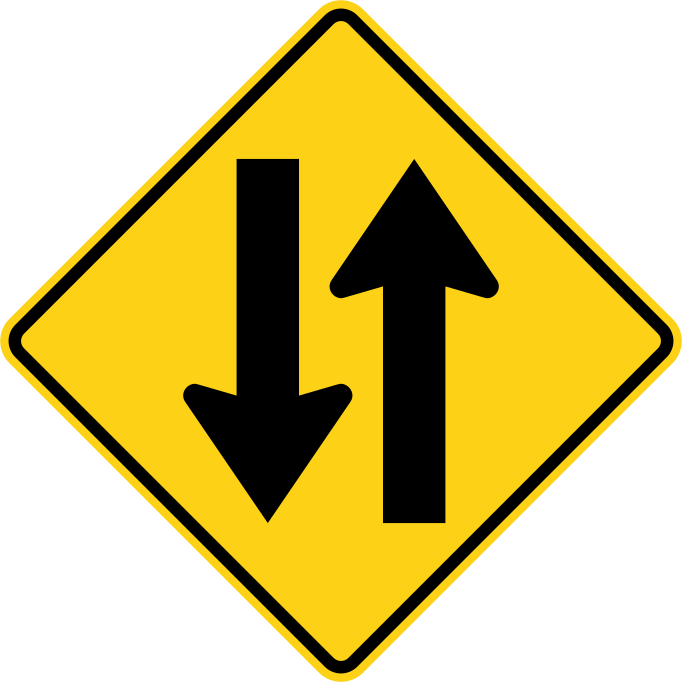
  23. 23. What change in roadway operation is shown by two opposing arrows?

    Yellow sign with two opposing arrows
    1. Passing is automatically allowed in both directions
    2. Both directions may use any lane
    3. A second median is beginning
    4. You are leaving a divided roadway and entering a two-way highway
    Show answer

    You are leaving a divided roadway and entering a two-way highway. The TWO-WAY ROAD WAY sign means the divided roadway is ending and you will drive on a two-way highway. Full explanation in Test 3

  24. 24. How should you respond to a pedestrian-crossing warning sign?

    Yellow sign with walking person
    1. Watch for people in your path and be prepared to slow or stop
    2. Accelerate so pedestrians have less time in the road
    3. Assume pedestrians must wait for every vehicle
    4. Use the sign as permission to park near the crossing
    Show answer

    Watch for people in your path and be prepared to slow or stop. A PEDESTRIAN CROSSING warning tells you that people may cross your path. Full explanation in Test 4

  25. 25. A curved arrow appears before the roadway bends. What does the warning identify?

    Yellow curved-arrow sign
    1. A change in road direction or a curve ahead
    2. A lane reserved for turning at a signal
    3. A mandatory detour around construction
    4. A one-way road beginning at the sign
    Show answer

    A change in road direction or a curve ahead. A curved-arrow warning identifies a change in direction or a curve ahead. Full explanation in Test 5

How this test works

Study the rules, then check the explanation

This page uses the prepared Connecticut question bank exactly as provided. Start the test, choose an answer, and read the explanation before moving on. Retakes serve the same 216 questions so you can work through the state set without losing your place.

Want a one-page summary to study or print? See the Connecticut DMV cheat sheet, with the most-missed rules from this same question bank.

Looking for another state? Go back to the DMV practice test hub. California remains on the established California DMV practice test page.

Are you a library or school? See the free DMV practice test partner resource for a copy ready listing and referral link.

How we write and check these questions

QualitySpace is expanding to Connecticut

We are a California-based independent insurance brokerage working on licensing in more states. We cannot help with Connecticut insurance yet. Leave your email and we will let you know when we can.