Every question below comes from the New Jersey question bank on this page. Open a question to see the correct answer and the explanation. Nothing here is hidden behind a signup.
1. A New Jersey resident plans to learn with a parent instead of a driving school. What is the minimum age for this examination permit?
- 17
- 16
- 18
- 21
Show answer
17. New Jersey's examination permit does not need a student enrollment or an instructor, and it is available once a resident is at least 17 and Full explanation in Test 1
Study this in the handbook: Permits and the Graduated Driver License
2. What do double yellow and white solid lines prohibit?
- Passing
- Turning into every driveway
- Using a railroad crossing
- Parking at a fire hydrant
Show answer
Passing. Double yellow and white solid lines prohibit passing. Full explanation in Test 2
Study this in the handbook: Traffic signals and road markings
3. What should a driver do at a flashing yellow traffic signal?
- Slow down and proceed with care
- Stop and wait for green
- Accelerate before the signal changes
- Treat it as a flashing red stop sign
Show answer
Slow down and proceed with care. A flashing yellow light tells the driver to slow down and proceed with care. Full explanation in Test 3
Study this in the handbook: Traffic signals and road markings
4. A New Jersey probationary driver under 21 has a job that starts at 4:30 a.m. What makes driving to work during the restricted hours lawful?
- A parent's spoken permission
- Carrying a signed certification from the employer on business letterhead
- Nothing, because the hours rule has no exceptions
- Displaying an extra pair of GDL decals
Show answer
Carrying a signed certification from the employer on business letterhead. New Jersey allows an exemption from the 11:01 p.m. to 5:00 a.m. Full explanation in Test 4
Study this in the handbook: Permits and the Graduated Driver License
5. A New Jersey driver experiences a tire blowout. What should the driver do first?
- Brake hard before moving toward the shoulder
- Turn sharply toward the nearest open lane
- Release the steering wheel so the vehicle can coast freely
- Hold the steering wheel firmly and keep the vehicle straight
Show answer
Hold the steering wheel firmly and keep the vehicle straight. During a blowout, the first priority is keeping the vehicle pointed straight. Full explanation in Test 5
Study this in the handbook: Vehicle emergencies and what to do after a crash
6. Which statement describes New Jersey's yellow and dashed center-line combination?
- Pass whenever the solid line is on your side
- Cross the lines to make a U-turn at any time
- Ignore the markings if no vehicle is visible
- Pass only when the dashed line is on your side, and finish before it becomes solid
Show answer
Pass only when the dashed line is on your side, and finish before it becomes solid. A mixed yellow marking permits passing from the side with the broken line, and the driver must finish before that section changes to solid. Full explanation in Test 6
Study this in the handbook: Pedestrians, cyclists, trucks and trains
7. How long must a New Jersey permit holder under 21 practice with a supervising driver before a probationary license can be issued?
- At least three months, with no suspensions or postponements
- At least one full year of supervised practice
- At least six months, with no suspensions or postponements
- No set period once the 50 practice hours are logged
Show answer
At least six months, with no suspensions or postponements. Under 21, the supervised stage in New Jersey lasts at least six months, and that time must be free of suspensions or postponements before th Full explanation in Test 7
Study this in the handbook: Permits and the Graduated Driver License
8. What is the New Jersey response when an engine dies and power steering fails?
- Release the wheel so the vehicle can center itself
- Keep a firm grip because extra hand power is needed, then stop safely
- Turn off all warning lights and continue at normal speed
- Apply the parking brake sharply while making a fast turn
Show answer
Keep a firm grip because extra hand power is needed, then stop safely. If an engine dies and power steering is lost, the driver should keep a firm grip because extra hand power is needed to turn or maintain cont Full explanation in Test 8
Study this in the handbook: Vehicle emergencies and what to do after a crash
9. A motorist becomes angry in traffic. What should the driver do before continuing?
- Use the horn repeatedly
- Follow another vehicle closely
- Make an abrupt lane change
- Take time to cool off
Show answer
Take time to cool off. Strong emotion can impair judgment, so an angry or excited motorist should take time to cool off. Full explanation in Test 9
Study this in the handbook: Following distance, weather and staying alert
10. What do yellow edge lines separate from the travel lane?
- Opposing traffic lanes
- The shoulder
- A railroad crossing gate
- A pedestrian waiting area
Show answer
The shoulder. Yellow edge lines separate the shoulder from the travel lane and show the edge of the highway. Full explanation in Test 10
Study this in the handbook: Pedestrians, cyclists, trucks and trains
11. Is it lawful in New Jersey to drive across private property to bypass a traffic signal or stop sign?
- Yes, whenever the property entrance is open to the public
- Yes, but only if the driver activates hazard lights
- No, unless the maneuver is made after midnight
- No, using public or private property to avoid the control is a motor-vehicle violation
Show answer
No, using public or private property to avoid the control is a motor-vehicle violation. New Jersey specifically treats operating a vehicle on public or private property to avoid a traffic-control signal or sign as a moving viola Full explanation in Test 11
Study this in the handbook: Right of way, intersections and passing
12. Which statement about train width is given in the New Jersey Driver Manual?
- Exactly the width of the tracks
- Six inches wider than the tracks
- Three or more feet wider than the tracks
- Trains never extend beyond the tracks on either side
Show answer
Three or more feet wider than the tracks. Trains can be three or more feet wider than the tracks on both sides. Full explanation in Test 12
Study this in the handbook: Pedestrians, cyclists, trucks and trains
13. What does the round yellow railroad sign warn of in New Jersey?

- A railroad crossing behind the vehicle
- A railroad crossing ahead
- A station where parking is required
- A crossing reserved for pedestrians only
Show answer
A railroad crossing ahead. The yellow circular RR advance-warning sign announces a railroad crossing ahead. Full explanation in Test 13
Study this in the handbook: Pedestrians, cyclists, trucks and trains
14. At what blood alcohol concentration may a New Jersey driver be convicted of driving under the influence?
- 0.15% only when a crash occurs
- 0.01% only for drivers over 21
- 0.08% or higher
- Any reading only after a refusal
Show answer
0.08% or higher. New Jersey identifies a BAC of 0.08 percent or higher as a basis for a DUI conviction, and impairment by intoxicating liquor or drugs can al Full explanation in Test 14
Study this in the handbook: DUI, breath test refusal and interlock penalties
15. A frozen dessert truck flashes red lights with its stop arm out in New Jersey. To whom must an approaching motorist yield?
- Only children already standing at the truck window
- Only adults returning to the truck with empty hands
- Nobody, if the motorist slows to 15 mph
- Any person crossing the roadway to or from the truck
Show answer
Any person crossing the roadway to or from the truck. When approaching or overtaking a frozen dessert truck displaying flashing red lights and a stop arm, yield to any person crossing to or from Full explanation in Test 15
Study this in the handbook: Right of way, intersections and passing
16. In a heavy rainstorm in New Jersey, where should a motorist try to drive on a multiple lane highway?
- On the highest point of the road, using the center lane when available
- In the right lane beside the deepest runoff
- Directly behind a truck to use its cleared path
- On the shoulder above the flooded lanes
Show answer
On the highest point of the road, using the center lane when available. In a heavy rainstorm, try to drive on the highest point of the road. Full explanation in Test 16
Study this in the handbook: Following distance, weather and staying alert
17. For most motorists, how should the driver seat be set relative to the steering wheel?
- Pressed against the wheel with bent elbows on the rim
- Sitting an arm's length from the steering wheel, able to reach all pedals and controls easily
- As far back as the rails allow, toes barely touching pedals
- Low enough that the wheel hides the road
Show answer
Sitting an arm's length from the steering wheel, able to reach all pedals and controls easily. Adjust the seat so all pedals and controls are easy to reach. Full explanation in Test 17
18. For a three-year-old child weighing 35 pounds in a vehicle with rear seats, which restraint options does the manual list?
- A federally approved rear-facing or forward-facing child restraint with a five-point harness, in a rear seat
- An adult shoulder belt in a rear seat
- A booster seat without a harness in a front seat
- A forward-facing restraint with no harness in a rear seat
Show answer
A federally approved rear-facing or forward-facing child restraint with a five-point harness, in a rear seat. For children under four who weigh less than 40 pounds, the manual lists a federally approved rear-facing restraint with a five-point harness Full explanation in Test 18
Study this in the handbook: Seat belts, child seats and vehicle control
19. A driver looks down to read a text message. Which distraction type does that act fall under?
- Visual, taking the driver's eyes off the road
- Manual only
- Auditory
- None, if the road looks straight
Show answer
Visual, taking the driver's eyes off the road. Distractions split into four types, and reading a screen belongs to the visual group: any task that takes a driver's eyes off the road. Full explanation in Test 19
20. What may the MVC do when a New Jersey motorist fails to pay violation surcharges?
- Forgive the balance after one mailed notice
- File a judgment action in state Superior Court and secure a lien against real property the motorist owns
- Convert the surcharge into motor vehicle points
- Send the debt to the motorist's insurance agent for billing
Show answer
File a judgment action in state Superior Court and secure a lien against real property the motorist owns. Failure to pay violation surcharges may result in a collection action. Full explanation in Test 20
Study this in the handbook: Points, surcharges and driver programs
21. What condition must a vehicle's headlights, both bright and dim, be in according to the manual?
- Bright lights only need to work
- They must work and be properly aligned
- Alignment matters only after a crash
- They may point upward if kept clean
Show answer
They must work and be properly aligned. Bright and dim headlights must work and be properly aligned. Full explanation in Test 21
Study this in the handbook: Seat belts, child seats and vehicle control
22. What share of driving decisions is based on what a motorist sees?
- About half
- Nearly 90 percent
- About 25 percent
- Nearly all decisions use hearing first
Show answer
Nearly 90 percent. Nearly 90 percent of driving decisions are based on what a motorist sees. Full explanation in Test 22
Study this in the handbook: Following distance, weather and staying alert
23. How many license plates does New Jersey provide when registering a trailer, moped, or motorcycle?
- Two matching plates
- One plate
- No plate until the second year
- Three plates including a spare
Show answer
One plate. New Jersey provides one license plate when registering a trailer, moped, or motorcycle. Full explanation in Test 23
24. At what tread depth does the manual say a vehicle should not be driven in New Jersey?
- Less than 3/16 inch
- Less than 1/4 inch
- Less than 1/16 inch, about the edge of a penny
- Any visible wear at all
Show answer
Less than 1/16 inch, about the edge of a penny. A vehicle should not be driven with tires that have less than 1/16 inch of tread, about the edge of a penny. Full explanation in Test 24
Study this in the handbook: Seat belts, child seats and vehicle control
25. Where is practice driving forbidden before a New Jersey road test?
- On any public road with a validated permit
- On the test course or in the parallel parking area
- In an empty shopping center lot with an instructor
- On rural roads during daylight hours
Show answer
On the test course or in the parallel parking area. The road test checklist prohibits practice driving on the test course or in the parallel parking area. Full explanation in Test 25
Study this in the handbook: Permits and the Graduated Driver License
26. What does New Jersey law impose on a driver convicted of failing to stop for a pedestrian in a marked crosswalk, when no one is seriously injured?
- A $54 fine with no points
- A written warning for a first offense
- A $1,000 fine and 8 points
- A $200 fine, with possible community service of up to 15 days
Show answer
A $200 fine, with possible community service of up to 15 days. N.J.S.A. 39:4-36 sets a $200 fine for a driver convicted of failing to stop and stay stopped for a pedestrian in a marked crosswalk, and the Full explanation in Test 1
27. What fine range may apply to a New Jersey Move Over law violation?
- $25 to $75
- $100 to $500
- Only a warning for a first offense
- $500 to $1,000
Show answer
$100 to $500. A New Jersey Move Over violation carries a fine of not less than $100 and not more than $500. Full explanation in Test 2
Study this in the handbook: Right of way, intersections and passing
28. What do New Jersey road work signs alert motorists to?
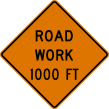
- Permanent license restrictions
- Temporary roadway conditions such as lane shifts and detours
- The current color of a traffic signal
- A guaranteed dry road surface
Show answer
Temporary roadway conditions such as lane shifts and detours. Road work signs alert motorists to temporary roadway conditions, including lane closings, lane shifts, flaggers, uneven pavement, and detour Full explanation in Test 3
Study this in the handbook: Road sign shapes and colors
29. What is New Jersey's speed limit on rural roads where no limit is posted?
- 35 mph
- 50 mph
- 55 mph
- 65 mph
Show answer
50 mph. New Jersey's speed table sets 50 mph for non-posted rural roadways. Full explanation in Test 4
Study this in the handbook: Speed limits and safe speed
30. A New Jersey motorcycle rider notices a vehicle following too closely. What does the manual advise the rider to do?
- Speed up quickly to get away from the vehicle
- Brake suddenly to warn the driver behind
- Move closer to the vehicle ahead
- Open up additional following distance ahead
Show answer
Open up additional following distance ahead. The motorcycle section of the New Jersey manual says many riders complain about tailgaters, motorists that follow too closely. Full explanation in Test 5
31. In bad weather, how much longer can a truck, tractor-trailer or bus take to stop, according to the New Jersey manual?
- About 5 percent longer
- No longer than a car
- About twice as long
- As much as 25 percent longer
Show answer
As much as 25 percent longer. Large vehicles have deep blind spots, called no-zones, and they need more room to stop than cars do. Full explanation in Test 6
Study this in the handbook: Pedestrians, cyclists, trucks and trains
32. A red-bordered inverted triangle in New Jersey identifies which instruction?
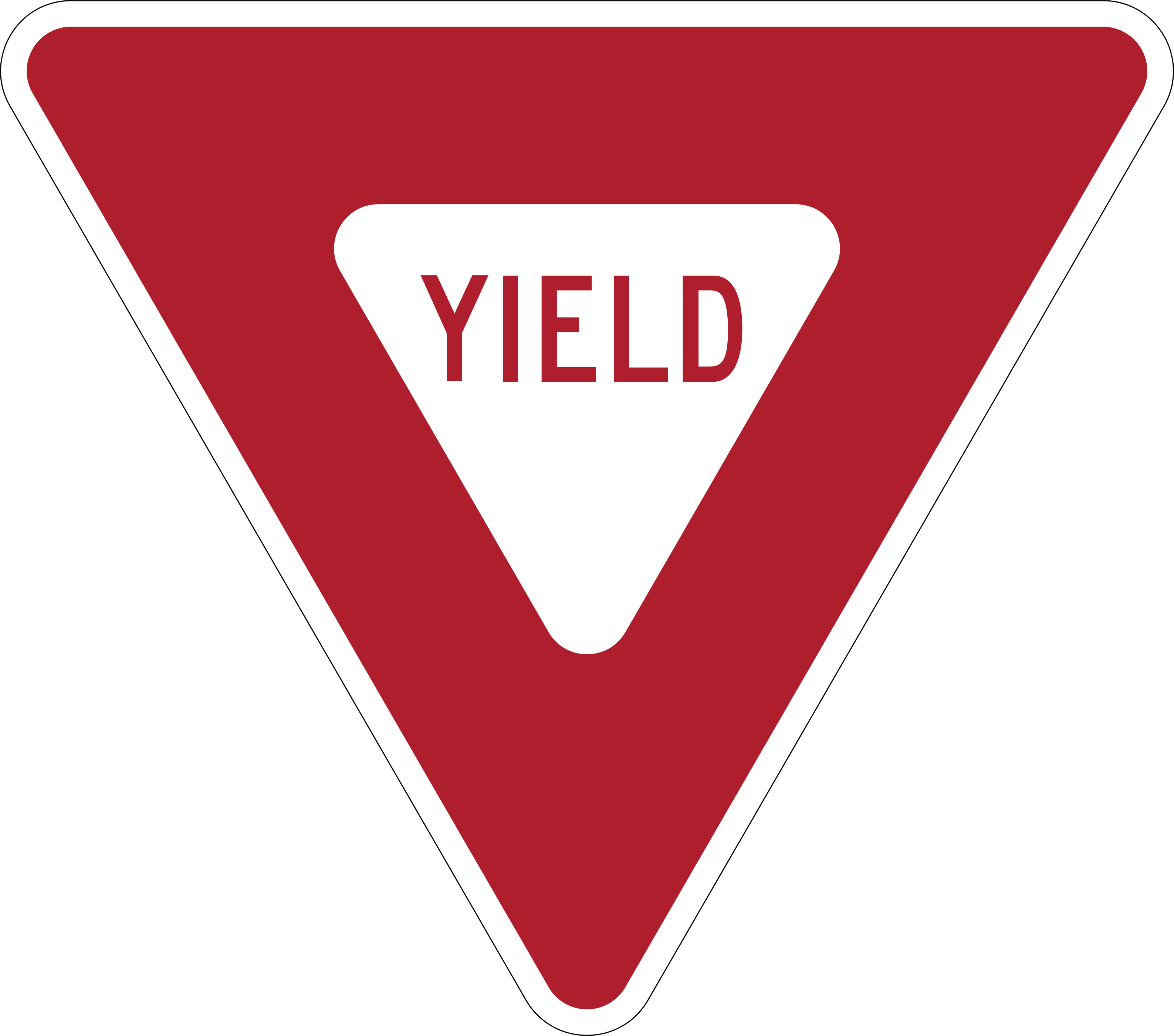
- YIELD
- STOP
- No passing
- Railroad crossing ahead
Show answer
YIELD. The inverted triangle is the distinctive shape assigned to a YIELD sign. Full explanation in Test 7
Study this in the handbook: Road sign shapes and colors
33. What do road arrows show when used with other signs?
- The location of the nearest inspection station
- That passing is always permitted
- That the roadway is closed to all traffic
- The correct direction a motorist must take in that lane
Show answer
The correct direction a motorist must take in that lane. Road arrows, when used with other signs, show the correct direction a motorist must take in that lane. Full explanation in Test 8
Study this in the handbook: Traffic signals and road markings
34. A pedestrian has not entered the roadway and faces an orange steady raised palm. What should happen?
- Start crossing quickly
- Remain on the sidewalk and do not enter
- Walk diagonally against traffic
- Enter after a driver waves
Show answer
Remain on the sidewalk and do not enter. The steady raised palm tells a person still on the sidewalk or curb not to enter the roadway. Full explanation in Test 9
Study this in the handbook: Traffic signals and road markings
35. How should a New Jersey motorist secure a vehicle parked facing downhill?
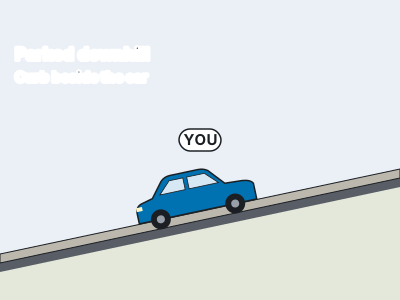
- Turn the wheels straight and use first gear
- Turn the wheels away from the curb and use neutral
- Leave it in drive with the brake set
- Set the hand brake, turn the wheels toward the curb, and use park or reverse with a manual transmission
Show answer
Set the hand brake, turn the wheels toward the curb, and use park or reverse with a manual transmission. When parking a vehicle facing downhill, the hand brake should be set, the wheels should be turned toward the curb, and the vehicle should be Full explanation in Test 10
Study this in the handbook: Hill parking and parallel parking
36. On a two-lane road, a school bus ahead has flashing red lights. How far away must approaching motorists stop?
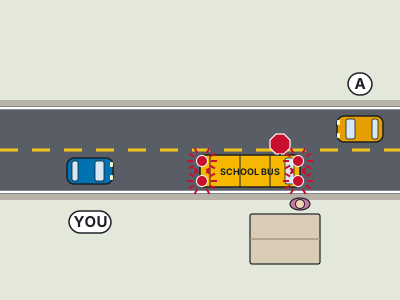
- At least 10 feet
- At least 50 feet
- At least 25 feet
- Only after the bus begins moving again
Show answer
At least 25 feet. On a two-lane road, a motorist must stop at least 25 feet from a school bus with flashing red lights. Full explanation in Test 11
Study this in the handbook: School buses, railroad crossings and highway ramps
37. A GDL driver loses one red decal. How can a replacement pair be obtained, and at what cost?
- Free, by mail only
- For $4 per pair at any MVC Licensing Center
- For $10 per pair at a police station
- Replacements are not sold; a new permit is required
Show answer
For $4 per pair at any MVC Licensing Center. GDL drivers under 21 with a permit or probationary license must display two visible red reflective decals. Full explanation in Test 12
Study this in the handbook: Permits and the Graduated Driver License
38. When may a New Jersey motorist drive over a fire hose?
- Only when directed to do so by a fire, emergency rescue, or police official
- When no fire truck is visible nearby
- Whenever the hose looks flat and empty
- At any speed, if the motorist honks first
Show answer
Only when directed to do so by a fire, emergency rescue, or police official. Driving over a fire hose requires direction from a fire, emergency rescue, or police official, with no self-granted exceptions. Full explanation in Test 13
Study this in the handbook: Right of way, intersections and passing
39. Why does the New Jersey manual urge lower speeds where pedestrians may be present?
- They only matter on highways
- They mostly reduce fuel use
- They have little effect on injuries
- They give drivers more time to react and greatly improve pedestrian survival
Show answer
They give drivers more time to react and greatly improve pedestrian survival. The manual says speed is especially dangerous where pedestrians may be present, and that even small increases in speed significantly raise t Full explanation in Test 14
Study this in the handbook: Speed limits and safe speed
40. What can tailgating cause in New Jersey traffic, according to the manual?
- A series of rear-end crashes when many vehicles are too close together
- Lower fuel use for all vehicles
- Smoother traffic flow on the highway
- Better visibility of the road ahead
Show answer
A series of rear-end crashes when many vehicles are too close together. Tailgating means following too closely behind the vehicle directly in front, and the manual calls it a common cause of crashes. Full explanation in Test 15
Study this in the handbook: Following distance, weather and staying alert
41. How should pedestrians walk along New Jersey roadways that have no sidewalks?
- Walk with traffic so drivers approach from behind
- Walk in the center of the lane after dark
- Face away from traffic while wearing dark clothing
- Face traffic, and wear reflective or light-colored clothing at night
Show answer
Face traffic, and wear reflective or light-colored clothing at night. Pedestrians should face traffic on roadways without sidewalks and wear reflective or light-colored clothing at night. Full explanation in Test 16
42. In a New Jersey car, who is legally responsible for passengers under age 18 wearing seat belts?
- Each young passenger alone
- No one, until age 18
- The oldest passenger
- The driver
Show answer
The driver. The driver is responsible for all passengers under age 18 wearing seat belts. Full explanation in Test 17
Study this in the handbook: Seat belts, child seats and vehicle control
43. Under New Jersey’s Move Over law, what must a driver do when changing lanes is unsafe near a stationary emergency vehicle with flashing lights?
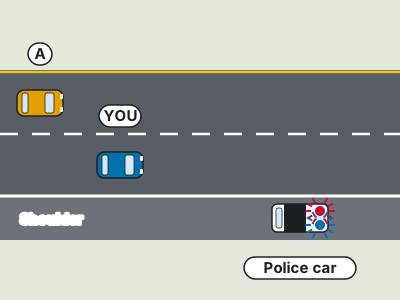
- Stop in the adjacent lane beside the emergency vehicle
- Maintain the posted speed if the vehicle is partly on the shoulder
- Reduce speed below the posted limit and be prepared to stop
- Pass on the shoulder to create extra room
Show answer
Reduce speed below the posted limit and be prepared to stop. The Move Over rule normally calls for a safe lane change into a lane that is not adjacent to the stationary vehicle. Full explanation in Test 18
Study this in the handbook: Right of way, intersections and passing
44. How does the New Jersey manual compare the danger of a tired driver with other impaired drivers?
- A tired driver is safe if the radio is on
- A tired driver can be as dangerous as a drunk driver
- A tired driver is only a risk at night
- A tired driver is safer than a distracted driver
Show answer
A tired driver can be as dangerous as a drunk driver. The manual says a tired driver cannot drive well and has reduced reaction time, may get upset more easily, and may even fall asleep behind t Full explanation in Test 19
45. Which definition does the New Jersey manual give for a cognitive driving distraction?
- Any task that takes the driver's eyes off the road
- Any task that takes the driver's hands off the steering wheel
- Sounds loud enough to reduce attention to driving
- Any task that takes the driver's mind or attention off the road
Show answer
Any task that takes the driver's mind or attention off the road. The manual defines cognitive distraction as any task that takes the driver’s mind or attention off the road. Full explanation in Test 20
46. What minimum advance notice must an applicant give the MVC when requesting a state-approved interpreter for the knowledge test?
- At least two weeks before the intended test date
- At least two days before the intended test date
- Only on the morning of the test
- At least two months before the intended test date
Show answer
At least two weeks before the intended test date. An applicant must inform the MVC of the need for an interpreter at least two weeks before the intended knowledge test date. Full explanation in Test 21
Study this in the handbook: The knowledge test and road test
47. On snow-covered roads, what following distance does New Jersey guidance recommend?
- Three seconds
- Six seconds or more
- Four seconds
- Two seconds
Show answer
Six seconds or more. The manual recommends a following distance of six seconds or more on snow-covered roads. Full explanation in Test 22
Study this in the handbook: Following distance, weather and staying alert
48. What does the New Jersey manual require operators of snowmobiles, ATVs, and dirt bikes to do concerning insurance and registration?
- Proof of insurance, with the vehicle registration displayed
- A municipal parking permit for trail access
- A passenger vehicle license plate on the front
- Proof of a basic driver license test score
Show answer
Proof of insurance, with the vehicle registration displayed. Operators of snowmobiles, ATVs, and dirt bikes must maintain proof of insurance and always display the vehicle’s registration. Full explanation in Test 23
49. Your car stalls on railroad tracks as a train approaches. After getting out, which way should you run?
- Directly away from the tracks, opposite the train
- Along the tracks away from the train
- At a 45-degree angle away from the vehicle and tracks, but in the direction of the train
- Stay beside the car until help arrives
Show answer
At a 45-degree angle away from the vehicle and tracks, but in the direction of the train. If a train is approaching, run at a 45-degree angle away from the vehicle and tracks but in the direction of the train to avoid flying debri Full explanation in Test 24
Study this in the handbook: Vehicle emergencies and what to do after a crash
50. Unless otherwise posted, what speed limit applies in New Jersey school zones, business districts, or residential districts?
- 25 mph
- 30 mph
- 35 mph
- 20 mph
Show answer
25 mph. The manual lists 25 mph for school zones, business districts, and residential districts unless otherwise posted. Full explanation in Test 25
Study this in the handbook: Speed limits and safe speed
