
Key points
The speed limit is 25 mph in school zones and business or residential districts.
Source: Handbook p. 62
“25 mph School zones, business, or residential districts”
New Jersey Driver Manual, Handbook p. 62The limit is 35 mph in suburban business and residential districts.
Source: Handbook p. 62
“35 mph Suburban business and residential districts”
New Jersey Driver Manual, Handbook p. 62Unposted rural roads are 50 mph, and certain state highways and interstates are 55 mph as posted.
Source: Handbook p. 62
“50 mph Non-posted rural roadways 55 mph Certain state highways (as posted) and interstates”
New Jersey Driver Manual, Handbook p. 62Certain interstates are posted at 65 mph, and going 10 mph or more over that limit doubles your fine.
Source: Handbook p. 62
“Motorists pay double fines for exceeding the 65 mph limit by 10 miles per hour or more.”
New Jersey Driver Manual, Handbook p. 62Double fines also apply to most other moving violations in a 65 mph zone.
Source: Handbook p. 62
“Double fines also apply to most other moving violations committed in a 65 mph zone.”
New Jersey Driver Manual, Handbook p. 62Never drive faster than weather, road or traffic conditions safely allow, whatever the posted limit.
Source: Handbook p. 63
“Never drive faster than weather, road, or traffic conditions safely allow, regardless of the posted speed limit.”
New Jersey Driver Manual, Handbook p. 63Always slow down on narrow or winding roads, at intersections and railroad crossings, on hills, and at sharp or blind curves.
Source: Handbook p. 63
“Always slow down: • On narrow or winding roads. • At intersections or railroad crossings. • On hills. • At sharp or blind curves.”
New Jersey Driver Manual, Handbook p. 63Driving so slowly that you block normal traffic is against the law.
Source: Handbook p. 63
“When road surfaces and traffic are normal, New Jersey law prohibits blocking traffic through slow driving.”
New Jersey Driver Manual, Handbook p. 63On Safe Corridor highways, fines double for offenses such as speeding and aggressive driving.
Source: Handbook p. 64
“The Safe Corridors law doubles fines on various state highways for a variety of driving offenses, including speeding and aggressive driving.”
New Jersey Driver Manual, Handbook p. 64If a vehicle problem keeps you from keeping up with traffic, pull off the road and turn on your hazard lights.
Source: Handbook p. 63
“If vehicle problems prevent a motorist from keeping up with the normal flow of traffic, the driver should safely pull off the road and activate hazard lights.”
New Jersey Driver Manual, Handbook p. 63
Numbers to know
| Number | What it means | Manual |
|---|---|---|
| 25 mph | school zones, business or residential districts | Handbook p. 62 |
| 35 mph | suburban business and residential districts | Handbook p. 62 |
| 50 mph | rural roads with no posted limit | Handbook p. 62 |
| 55 mph | certain state highways and interstates, as posted | Handbook p. 62 |
| 65 mph | certain interstate highways, as posted | Handbook p. 62 |
| 10 mph over | speed over a 65 mph limit that doubles the fine | Handbook p. 62 |
| 50 percent and 1,000 crashes | crash rate over the state rate, and crashes in 3 years, that qualify a Safe Corridor | Handbook p. 64 |
Recognize these signs
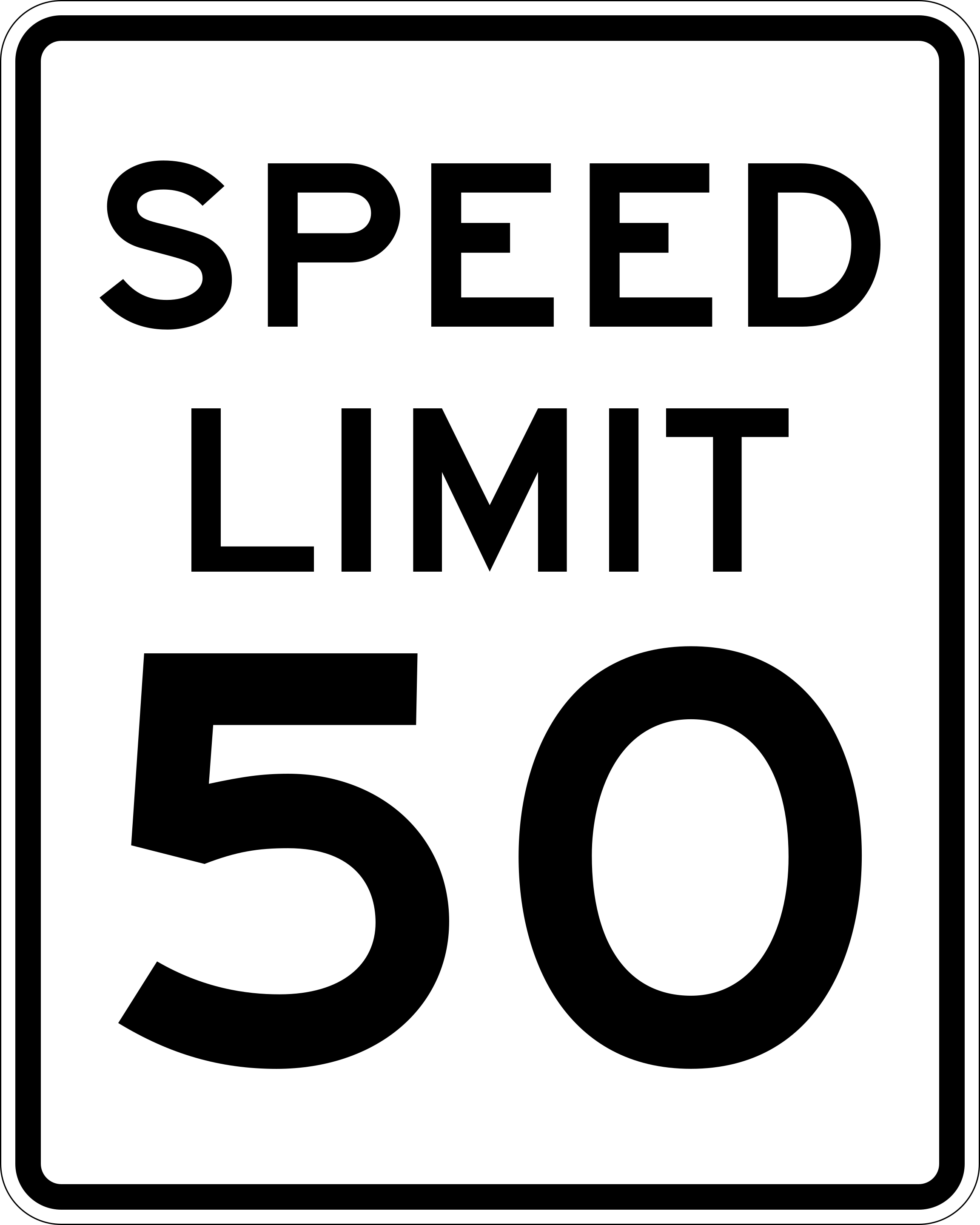
Speed limit
3 questions from the New Jersey practice test
1. A driver travels 76 mph in a posted 65-mph New Jersey zone. What fine rule applies?
- The fine is doubled because the speed is at least 10 mph over
- The fine is doubled only after a crash
- The fine is cut in half because the excess is under 15 mph
- The ordinary fine applies until the speed reaches 80 mph
Show answer
The fine is doubled because the speed is at least 10 mph over. The calculation is 76 minus 65, which equals 11 mph. New Jersey doubles the fine when a driver exceeds a 65-mph limit by 10 mph or more, so this example crosses the threshold. A collision is not required, and the law does not wait for 15 or 80 mph. On the test, subtract the posted limit from the actual speed first; the resulting number determines whether the special 65-mph penalty applies.
2. Which maximum appears in New Jersey’s speed table for certain interstate highways when posted?
- 45 mph
- 50 mph
- 55 mph
- 65 mph
Show answer
65 mph. Certain interstate highways may be posted at 65 mph, the highest category shown in New Jersey’s table. The 55-mph figure belongs to certain state highways and interstates as posted, so it is not the answer for the separate 65-mph category. A road type does not authorize ignoring a lower sign; the displayed limit still controls. Look for the words ‘certain interstate highways’ beside the number rather than choosing the familiar 55-mph figure.
3. What does New Jersey's Safe Corridors law do on designated highways?
- It doubles fines for various driving offenses, including speeding and aggressive driving
- It raises every posted speed limit by 10 mph
- It applies only to parking violations
- It removes penalties when traffic is heavy
Show answer
It doubles fines for various driving offenses, including speeding and aggressive driving. On designated Safe Corridors highways, New Jersey doubles fines for various driving offenses, including speeding and aggressive driving. The program is a penalty increase, not permission to exceed a sign and not a parking-only rule. Heavy traffic does not erase the consequence. A corridor designation calls for ordinary speed compliance and calm lane choices because aggressive driving is specifically named.
Practice this topic
Lock it in with speed limits questions from the free New Jersey practice test. Every answer comes with a plain English explanation.
Source: the New Jersey Driver Manual, Chapter 4: Safe Driving Rules and Regulations. This lesson is a plain English summary, not the law itself; where it differs, the manual and the statute govern. Last checked 2026-10-12.