
Key points
On a vertical signal, red is always on top and a green arrow is always on the bottom. On a horizontal signal, red is on the left.
Source: Handbook p. 212
“When traffic signals are hung vertically, the red light is always on top. The yellow is in the center. The green light is third in line. If there is a green arrow, it is always on the bottom. When the lights are horizontal, red is always on the left.”
New Jersey Driver Manual, Handbook p. 212A yellow arrow means the signal is changing from green to red, giving you a chance to stop safely.
Source: Handbook p. 212
“A yellow arrow means the signal is changing from green to red and gives the motorist a chance to stop safely.”
New Jersey Driver Manual, Handbook p. 212A green arrow, alone or with a red light, lets you go only in the direction of the arrow. Yield to pedestrians.
Source: Handbook p. 212
“When shown alone or in combination with the red signal, proceed only as shown by the arrow. Be cautious and yield to pedestrians.”
New Jersey Driver Manual, Handbook p. 212On a green light, yield to pedestrians and vehicles still in the intersection, and before a left turn yield to approaching vehicles.
Source: Handbook p. 212
“Yield to pedestrians and vehicles still in the intersection and when turning left or right. Before making a left turn, yield to approaching vehicles.”
New Jersey Driver Manual, Handbook p. 212A flashing yellow light means slow down and proceed with care. A flashing red light means stop, yield, and go only when safe.
Source: Handbook p. 212
“FLASHING AMBER/YELLOW LIGHT Slow down and proceed with care. FLASHING RED LIGHT Stop. Yield to traffic and pedestrians. Go only when safe.”
New Jersey Driver Manual, Handbook p. 212A signal with no working lights and no one directing traffic is a 4 way stop.
Source: Handbook p. 213
“Stop if a signal does not have any of its bulbs working and no one is directing traffic. It is considered a four-way stop sign.”
New Jersey Driver Manual, Handbook p. 213Road markings have the same force of law as signs and signals.
Source: Handbook p. 216
“Road markings have the same force of law as signs or traffic signals.”
New Jersey Driver Manual, Handbook p. 216Yellow center lines separate traffic going in opposite directions. White lines separate traffic going the same way.
Source: Handbook p. 216
“Yellow center lines Separate traffic flow going in opposite directions. • White lines Separate traffic going the same way when there is more than one lane; show edges of roads.”
New Jersey Driver Manual, Handbook p. 216If the solid yellow line is on your side, do not pass. You may pass only when the dashed line is on your side, and you must finish before it turns solid.
Source: Handbook p. 217
“If the solid yellow line is on the motorist’s side of the road, do not pass. Pass only if the dashed line is on the motorist’s side of the road. A pass must be completed before the yellow dashed lines become solid.”
New Jersey Driver Manual, Handbook p. 217White diamonds painted in a lane mark a high occupancy vehicle (HOV) lane.
Source: Handbook p. 217
“HOV lanes may also be marked with white diamonds painted on the pavement of the lane.”
New Jersey Driver Manual, Handbook p. 217
Numbers to know
| Number | What it means | Manual |
|---|---|---|
| 4 way stop | how to treat a signal with no working lights | Handbook p. 213 |
Recognize these signs
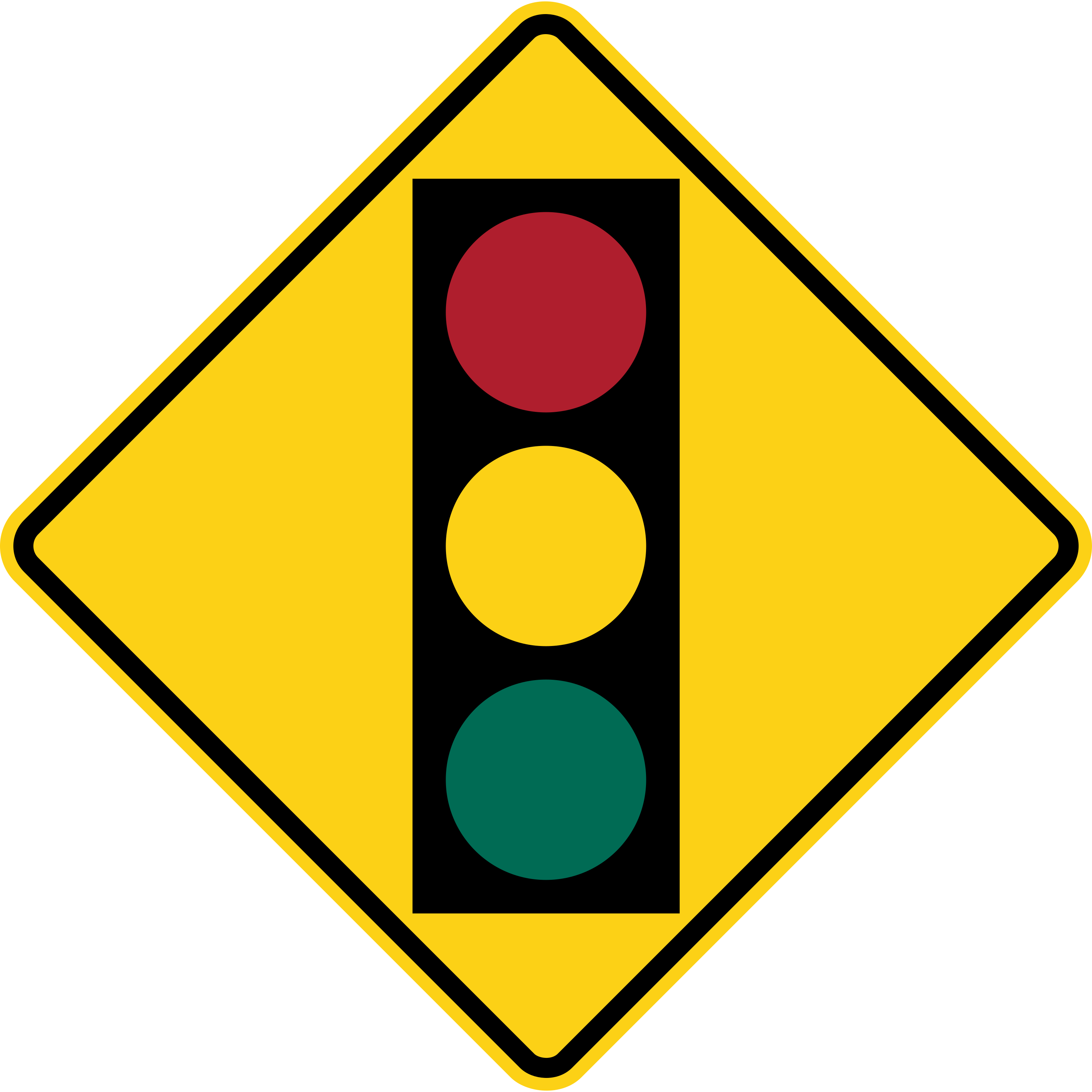
Signal ahead
3 questions from the New Jersey practice test
1. What should a driver do at a flashing yellow traffic signal?
- Slow down and proceed with care
- Stop and wait for green
- Accelerate before the signal changes
- Treat it as a flashing red stop sign
Show answer
Slow down and proceed with care. A flashing yellow light tells the driver to slow down and proceed with care. It does not impose the complete stop required by a flashing red signal, so the stop-and-wait choice applies the wrong signal rule. Accelerating increases risk at the intersection and is not the manual’s instruction. Scan for crossing traffic and pedestrians, reduce speed, and continue only after the path is safe.
2. When a traffic signal shows a green arrow alone, what may the driver do?
- Travel in any direction after stopping
- Ignore the arrow and follow the next red signal
- Proceed only as shown by the arrow and yield to pedestrians
- Enter only after another car moves
Show answer
Proceed only as shown by the arrow and yield to pedestrians. A green arrow authorizes movement only along its displayed direction. It is not permission to select another turn or lane, and another vehicle does not determine whether the movement is allowed. The driver still watches for pedestrians in the crossing path. Read the arrow as a directional instruction, then proceed carefully when the route is clear. The signal controls direction, not careful observation.
3. If a solid yellow line is on your side of the road, what passing action is allowed?
- Pass whenever the road ahead appears clear
- Do not pass
- Pass only at night
- Cross the line to avoid a slow vehicle
Show answer
Do not pass. When the solid yellow line is on the motorist’s side, passing is prohibited. The clear-road choice overlooks the line’s restriction, and darkness does not create permission to cross. Moving around a slow vehicle also remains a pass and is not an exception. Compare the two centerline patterns before acting: a dashed line on your side may permit a safe pass, but a solid line on your side means stay in lane.
Practice this topic
Lock it in with signals and markings questions from the free New Jersey practice test. Every answer comes with a plain English explanation.
Source: the New Jersey Driver Manual, Chapter 11: Appendix, Driver Safety. This lesson is a plain English summary, not the law itself; where it differs, the manual and the statute govern. Last checked 2026-10-12.