
Test 8 of 11 · 20 questions · Free 2026
UT Permit Practice Test 8
Jump to the test ↓A fixed 20 question set from the Utah bank with answers and plain English explanations. The real UT exam is 50 questions, 80 percent to pass; take the full length version on the main practice page.
Question 1 of 20 · 0 right so far
All 20 questions in test 8
Every question below comes from the Utah question bank on this page. Open a question to see the correct answer and the explanation. Nothing here is hidden behind a signup.
1. Is 10 mph automatically a safe speed on an icy Utah road?
- Yes, every speed at or below 10 mph is safe on ice
- Yes, provided the vehicle has four-wheel drive
- No, ice requires a fixed 5 mph limit everywhere
- No, even 10 mph may be too fast for the conditions
Show answer
No, even 10 mph may be too fast for the conditions. The handbook warns that even 10 mph on an icy road can be too fast. A low speedometer reading alone cannot show whether the tires have enough grip or whether you can stop within the visible distance. The fixed 5 mph choice invents a universal limit instead of requiring judgment about the actual surface. If steering or braking feels ineffective on a frozen stretch, treat that loss of traction as a cue to reduce demands on the vehicle and reassess speed.
Study this in the handbook: Speed Limits and the Basic Speed Law
2. You face a flashing yellow left-turn arrow in Utah while opposing traffic approaches. How should you handle the turn?
- Turn immediately because the arrow stops opposing traffic
- Wait for opposing drivers to stop at their green light
- Treat the arrow as a protected left turn
- Yield to oncoming traffic and pedestrians before turning cautiously
Show answer
Yield to oncoming traffic and pedestrians before turning cautiously. A flashing yellow arrow permits the turn only after yielding to oncoming vehicles and pedestrians. It is not a protected turn: the opposing traffic has a green light and may continue through. Look beyond the arrow for an approaching vehicle and check the crosswalk before accepting a gap. The immediate-turn choice would place your car across traffic that has not been stopped by the signal. Complete the maneuver only when the available space makes it safe.
Study this in the handbook: Intersections and Right of Way
3. How early may a regular Utah driver license be renewed before its expiration date?
- Up to twelve months early
- Up to six months early
- Only during the final thirty days
- Only after the expiration date
Show answer
Up to six months early. A regular Utah license may be renewed up to six months before it expires. Waiting until the final thirty days is not required, and the twelve-month choice opens the renewal window too early. Check the expiration date on the credential when planning an appointment, especially if travel or work will make the final weeks inconvenient. The handbook directs drivers to schedule a renewal appointment through the division website and complete any required tests and fee payment.
Study this in the handbook: Renewal, Phone Laws and the Point System
4. How long must a 16 or 17 year old in Utah hold a learner permit before getting a first regular Class D license?
- 30 days
- 90 days
- 6 months
- 12 months
Show answer
6 months. Drivers who are 16 or 17 must hold the learner permit for 6 months and complete driver education before they can be issued a first regular Class D license. Ninety days is the holding period for applicants 19 and older who skip driver education, and 30 days and 12 months are not Utah holding periods. The renewal permit rules repeat the point: a 16 or 17 year old must complete driver education and hold a learner permit for at least six months.
Study this in the handbook: Driver Education and Learner Permits
5. A 17 year old Utah driver wants to use a phone while driving. Which use is allowed?
- Talking with friends on speaker
- Using GPS by typing an address
- Communicating with a parent or legal guardian
- Texting friends while driving
Show answer
Communicating with a parent or legal guardian. Drivers under 18 may use a handheld wireless device while driving only for a medical emergency, reporting a safety hazard, reporting criminal activity, or communicating with a parent or legal guardian. Calling friends, typing into a GPS, and texting friends are not on that list. Drivers over 18 may talk using voice commands, and texting remains a Class C misdemeanor with a fine of up to $100.
Study this in the handbook: Renewal, Phone Laws and the Point System
6. After an alcohol-related offense in Utah, for how long can a driver be placed under alcohol-restricted status?
- 2, 3, 5, or 10 years, depending on the offenses
- Only 90 days
- Only until reinstatement
- Always exactly one year
Show answer
2, 3, 5, or 10 years, depending on the offenses. Utah places a driver under alcohol-restricted status for 2, 3, 5 or 10 years, depending on the number and type of offenses, and for life after automobile homicide or felony DUI. The status outlasts reinstatement; the driver regains full privileges but remains restricted. Ninety days and exactly one year are not the periods. Driving with any measurable alcohol while restricted brings a one year revocation.
Study this in the handbook: DUI Penalties, Refusal and Ignition Interlock
7. At an island marked with this KEEP RIGHT sign, may you drive across the island to shorten your path?
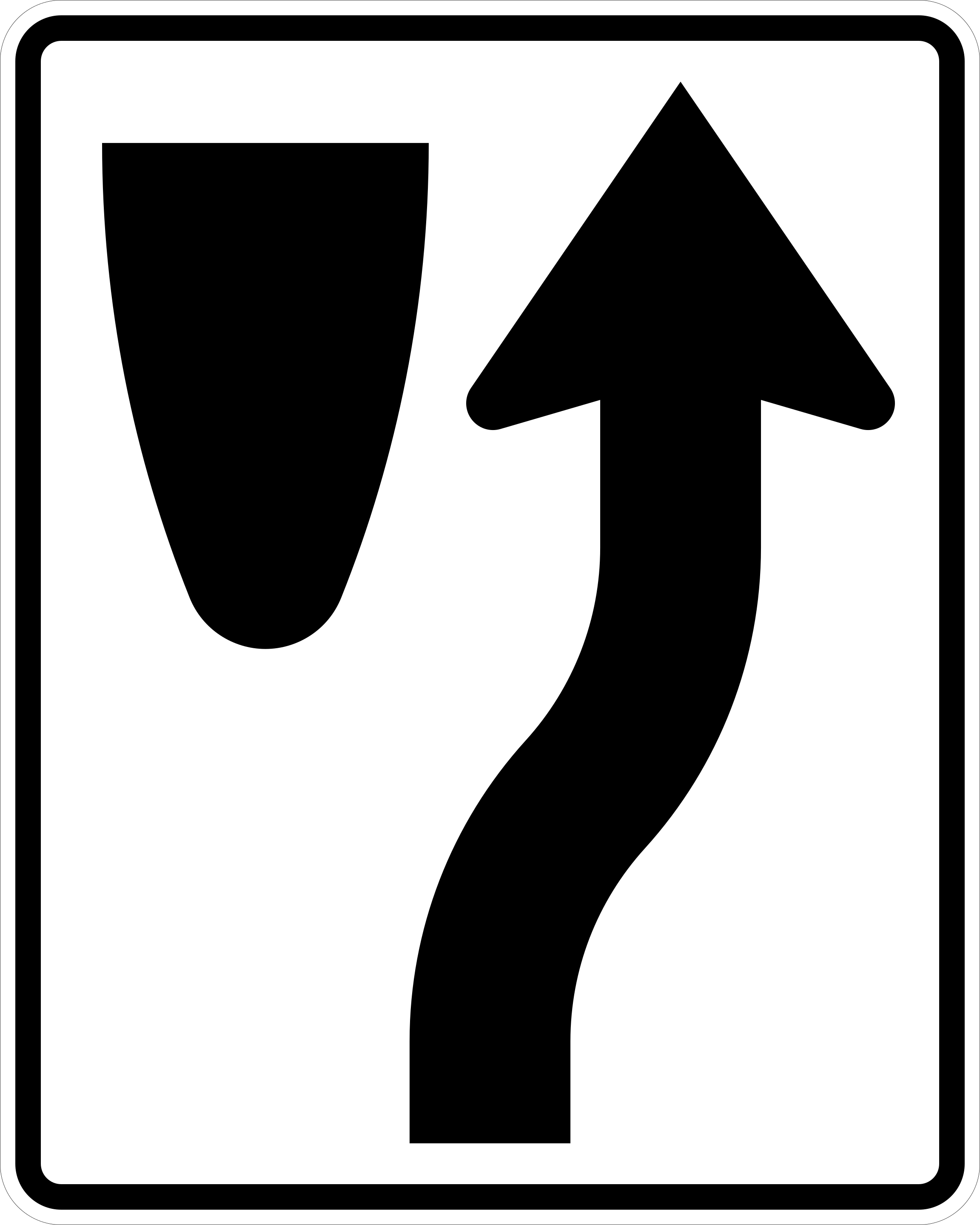
- No, operating a vehicle across any part of an island is prohibited
- Yes, if you signal before crossing it
- Yes, when the island is painted rather than raised
- Yes, when there are no vehicles beside you
Show answer
No, operating a vehicle across any part of an island is prohibited. Utah prohibits operating a vehicle over, across, or within any part of an island. The keep-right arrow provides the route around the obstruction; it does not allow you to straighten your path across it. Signaling communicates an intended movement but cannot make crossing the island lawful. When the island and curved arrow come into view, align the vehicle with the designated roadway around the right side and leave the island itself clear.
8. What does the Utah handbook say about the double white line beside an I-15 express lane?
- It may be crossed whenever traffic is slow
- It is illegal to cross it; enter and exit only where the line is broken
- It marks the shoulder
- It may be crossed by motorcycles only
Show answer
It is illegal to cross it; enter and exit only where the line is broken. The express lanes on I-15 are separated from the general lanes by a double white line, and the handbook states that it is illegal to cross a double white line. Moving in and out of the lane is allowed only at access points marked with white dotted striping, which are located at nearly every interchange. The rule applies to motorcycles, buses and clean fuel decal vehicles too, and slow traffic does not create an exception. The one exception the handbook notes is a right hand lane change out of the express lane, when safe, to clear the way for an emergency or police vehicle with flashing lights.
Study this in the handbook: Pavement Markings and Special Lanes
9. As you approach the intersection indicated by this sign, where should you search for hazards?

- To both the left and right where traffic intersects
- Only along the lane directly ahead
- Only toward traffic approaching from your right
- Only in the rearview mirror until reaching the crossing
Show answer
To both the left and right where traffic intersects. An upcoming crossing calls for a search to the left and right because vehicles can approach from either side. Looking only along your own lane can miss a vehicle entering across your path, even when your forward view appears open. Use the crossroad symbol as a prompt to locate the side-road entrances and check their approaches while continuing to monitor the space in front of your vehicle.
Study this in the handbook: Pavement Markings and Special Lanes
10. When does the Utah handbook say animals are most active on the road?
- At midday
- Only in winter
- At dawn and dusk
- Only during rain
Show answer
At dawn and dusk. Deer and other animals move most at dawn and dusk, which is also when light is poor and drivers see least, so the handbook lists using caution at dawn and dusk when animals are most active as the first way to reduce your chances of an animal collision. Midday, winter alone, and rain are not what the handbook singles out. Slow down where animal crossing signs are posted, and expect a second animal after the first one crosses.
Study this in the handbook: Distractions, Fatigue, Animals and Mountain Roads
11. Under Utah's car seat guidance, how long must children ride rear facing in the back seat?
- Until their first birthday
- Until at least two years of age and 30 pounds, or longer if the seat allows
- Until they can sit up on their own
- Until age eight
Show answer
Until at least two years of age and 30 pounds, or longer if the seat allows. The handbook says children must be rear facing in the back seat until at least two years of age and 30 pounds, and longer if the car seat allows it. The first birthday and the ability to sit up are milestones that come too early. Age eight relates to a different rule, the general child safety seat requirement for children aged eight and under who are shorter than 57 inches, not to the rear facing rule. Check the seat's label for its limits and keep the child rear facing as long as it permits.
Study this in the handbook: Seat Belts, Car Seats and Air Bags
12. What does the Utah handbook say about the shape of regulatory signs?
- Always round
- Square, rectangular, or a unique shape
- Always pennant shaped
- Always diamond shaped
Show answer
Square, rectangular, or a unique shape. Regulatory signs tell you about traffic directions, lane use, turning, speed, parking, and other special situations, and the handbook describes them as square, rectangular, or having a unique shape. They are white with black, red, or green letters or symbols, and some carry a red circle with a red slash meaning you cannot do something. A round yellow sign is the railroad advance warning, and warning signs are usually diamond shaped and yellow, so neither shape is the regulatory pattern. Read a white regulatory sign as a rule, not as advice.
Study this in the handbook: Regulatory, Guide and Route Signs
13. Approaching any intersection in Utah, what does the handbook tell you to do first?
- Speed up to clear it quickly
- Sound the horn
- Change lanes to the one with the least traffic
- Slow down and search for traffic controls, other traffic, pedestrians, bicyclists, and road conditions
Show answer
Slow down and search for traffic controls, other traffic, pedestrians, bicyclists, and road conditions. The handbook's rule is to slow down at all intersections and search for traffic controls, oncoming and cross traffic, pedestrians and bicyclists, and road conditions before you enter. Speeding through, changing lanes inside the intersection, or honking your way across all replace a look with a hope. Scan left, right, and left again, and keep both hands on the wheel as you go through.
Study this in the handbook: Freeway Driving and Work Zone Speeds
14. Police cars, fire engines, or ambulances approach in Utah using sirens or emergency lights. What must you do?
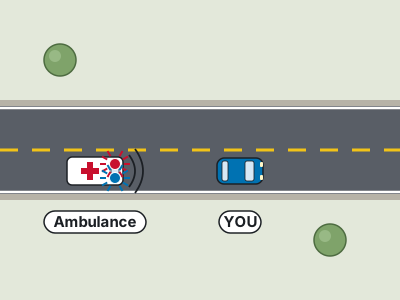
- Speed up to clear the area
- Stop in the intersection
- Yield the right of way to them
- Continue at the same speed in your lane
Show answer
Yield the right of way to them. Emergency vehicles using sirens, lights or other warning devices have the right of way, and the handbook says you must yield to them. It spells out what yielding means: drive at once to the right side of the road and stop until the emergency vehicle has passed. Racing ahead, stopping inside an intersection where you block its path, and holding your lane at the same speed are not yielding. If a fire vehicle is responding to an alarm, also stay at least 500 feet behind it unless you are on official business.
Study this in the handbook: Emergency Vehicles, Move Over and School Buses
15. What should a Utah driver do to prepare for winter driving conditions such as fog, storms, snow, or ice?
- Nothing; winter roads are the same as summer roads
- Drive faster to spend less time on the road
- Turn off the headlights to reduce glare
- Expect fewer daylight hours and those conditions, and adjust speed and following distance
Show answer
Expect fewer daylight hours and those conditions, and adjust speed and following distance. Bad weather and poor visibility require you to reduce speed and increase following distance. The handbook says to obey posted limits and, if needed, reduce your speed to adjust for weather, road, and traffic conditions, and to increase following distance in bad weather or poor visibility. Winter brings fewer daylight hours along with fog, storms, snow, and ice, so those conditions call for more space and slower driving. Winter roads are not summer roads, extra speed shortens your reaction time, and headlights off makes you invisible. Leave extra time for the trip.
Study this in the handbook: Night Driving, Weather, Floods and Skids
16. When may a Utah driver make a U-turn on a street or highway?
- Anywhere the road is clear
- Only where the road is wide enough to turn from the left lane or just right of the center line
- Only at traffic signals
- Never on any public road
Show answer
Only where the road is wide enough to turn from the left lane or just right of the center line. A U-turn needs room. The handbook says it should only be made on a street or highway wide enough to allow the turn from the left hand lane or from just right of the center line, and it must be signaled. A clear road is not enough if the pavement is too narrow, signals are not a requirement, and U-turns are legal in many places. Where the road is too narrow, the handbook's alternative is a three point turn.
Study this in the handbook: Lane Changes, Passing, Turns and U-Turns
17. What do the shape and color of route number signs help you identify?
- The number of travel lanes beyond the next junction
- The distance to the nearest fuel station
- The type of roadway, such as interstate, U.S., or state
- The maximum speed allowed in poor weather
Show answer
The type of roadway, such as interstate, U.S., or state. Route-number signs use shape and color to identify the roadway system, including interstate, U.S., state, city, county, and local roads. They do not tell you how many lanes the next junction will have. When planning a trip, note the type of route as well as its number, then match both to signs along the drive. A numbered route marker is a navigation cue rather than a substitute for a speed-limit sign.
Study this in the handbook: Regulatory, Guide and Route Signs
18. When does the Utah handbook say to use hand over hand steering?
- When steering is critical, such as parking, sharp right turns, or correcting a skid
- Only on the freeway
- Never; it is an outdated method
- Only when driving in reverse
Show answer
When steering is critical, such as parking, sharp right turns, or correcting a skid. The Utah handbook says to use hand over hand steering when steering is critical, such as when parking, performing sharp right turns, or correcting a skid. It does not limit the method to freeways or to backing, and it does not call it outdated: the steering section says all steering methods are acceptable, including hand over hand and push/pull, as long as both hands stay on the outside of the wheel. For ordinary turns the handbook describes pull push steering, which gives smooth steering and reduces the potential for oversteering.
Study this in the handbook: Railroad Crossings
19. After failing Utah's written knowledge test and leaving the office, what must you arrange before returning to retest?
- A new driving skills examination
- A new learner permit application before every retest
- A written retest appointment
- A driver education refresher course before every retest
Show answer
A written retest appointment. A return visit following an unsuccessful knowledge test requires a written retest appointment. Scheduling a driving skills examination would reserve the wrong service because that examination evaluates actual vehicle operation. The useful cue is that you have already left the office after failing the written test. Before making another trip, arrange the retest appointment so the visit is scheduled for the examination you still need to pass.
Study this in the handbook: Knowledge, Traffic Safety and Skills Tests
20. What license suspension does Utah state for a first DUI conviction when the driver is 21 or older?
- A 120-day suspension
- A 30-day suspension
- An 18-month suspension
- A two-year suspension
Show answer
A 120-day suspension. For a driver 21 or older, a first DUI conviction carries a 120-day license suspension. The two-year period applies to a second or subsequent offense, so it should not be substituted for the first conviction in this scenario. Read the age and offense history together when identifying the applicable period. A chemical-test refusal is a different licensing event with its own revocation schedule; the cue here is that the question concerns a court conviction for DUI.
Study this in the handbook: DUI Penalties, Refusal and Ignition Interlock
QualitySpace is expanding to Utah
We are a California-based independent insurance brokerage working on licensing in more states. We cannot help with Utah insurance yet. Leave your email and we will let you know when we can.
Every question is written from the official Utah Driver Handbook. Need paper? Printable UT practice test with answer key.
Last verified 2026-10-05. How we check every question · Study all 220 as flashcards
Frequently asked questions
How many questions are on this Utah practice test?
This fixed set has 20 questions. It is test 8 of 11 from the 220 question Utah bank. The real UT exam asks 50 questions and you need 40 correct.
What is the passing score for the real Utah test?
You must pass with a score of 80% or better That figure comes from the official Utah source cited on the DMV facts page.
How does this fixed test relate to the full Utah bank?
Each numbered test is a fixed set of questions in a fixed order, so you can retake the same test later and compare. Every test mixes road signs and the other topics in about the same proportion as the full bank. Tests 1 to 11 together cover every question in the Utah bank once. The full practice page mixes the whole bank at random.
Last verified 2026-10-05. See the Utah DMV facts page for sourced state details.