
Key points
Signal for at least 2 seconds in the direction you intend to move.
Source: Handbook p. 30
“Signal for at least two seconds in the direction you intend to move.”
Utah Driver Handbook, Handbook p. 30On multi lane roads, stay in the far right lane unless passing or the lane is blocked.
Source: Handbook p. 31
“On multi-lane roads, always move to or remain in the far-right lane unless you are passing another vehicle or the lane is blocked.”
Utah Driver Handbook, Handbook p. 31When merging, yield to vehicles in the continuing lane close enough to be a threat.
Source: Handbook p. 31
“you must yield the right-of-way to all vehicles traveling the continuing traffic lane that are close enough to be an immediate threat.”
Utah Driver Handbook, Handbook p. 31At a congested merge, use both lanes to the merge point, then alternate like a zipper.
Source: Handbook p. 31
“Use both lanes of traffic until the vehicles reach the merge point, and once the vehicles reach the merge point, alternate”
Utah Driver Handbook, Handbook p. 31After passing, return to the right lane no less than 200 feet from oncoming vehicles.
Source: Handbook p. 34
“Return to the right-hand lane no less than 200 feet from oncoming vehicles.”
Utah Driver Handbook, Handbook p. 34When passing on the right, leaving the roadway is illegal.
Source: Handbook p. 34
“When passing on the right, it is illegal to leave the roadway.”
Utah Driver Handbook, Handbook p. 34When 3 or more snowplows work in echelon formation, you may not pass them on either side.
Source: Handbook p. 34
“If three or more snowplows operate in echelon formation, an individual operating a vehicle may not pass or overtake the snowplows on either side.”
Utah Driver Handbook, Handbook p. 34Never U-turn on a curve or near a hilltop where you cannot see or be seen for 500 feet in both directions.
Source: Handbook p. 38
“Never make a U-turn on any curve near the top of a hill where you cannot see or be seen from both directions for 500 feet”
Utah Driver Handbook, Handbook p. 38
Numbers to know
| Number | What it means | Manual |
|---|---|---|
| 2 seconds | minimum signal time | Handbook p. 30 |
| 200 feet | minimum gap from oncoming vehicles when returning after passing | Handbook p. 34 |
| 3 | snowplows in echelon that may not be passed | Handbook p. 34 |
| 500 feet | sight distance needed for a U-turn near curves and hills | Handbook p. 38 |
Recognize these signs
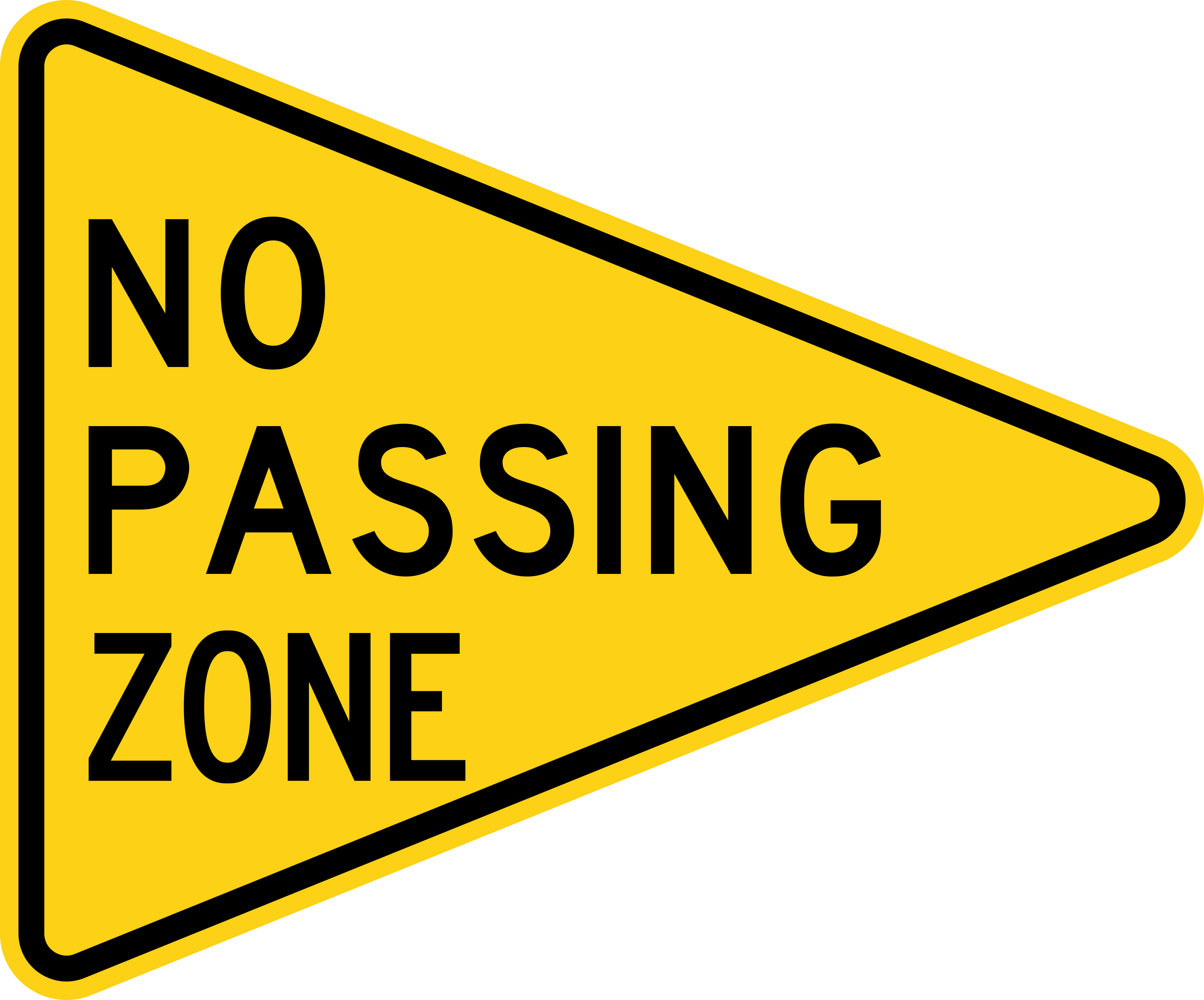
No passing zone
3 questions from the Utah practice test
1. How long must you signal before moving into another lane in Utah?
- At least two seconds before the move
- For one quick flash as the tires cross the line
- At least five seconds after entering the lane
- Only while turning your head to check the blind spot
Show answer
At least two seconds before the move. Give the lane-change signal at least two seconds before moving toward the adjacent lane. A single flash at the lane line leaves nearby drivers without the advance notice Utah calls for. After checking mirrors, use the signal and look over your shoulder toward the intended movement to check the blind spot. The lane stripe is a useful cue: the warning interval should happen before you begin moving across it.
2. What is required before a Utah driver may make a lane change, according to the signal rule?
- Signal at the moment you move over
- Signal for at least two seconds before beginning the lane change
- No signal is needed if the lane is empty
- Flash the headlights
Show answer
Signal for at least two seconds before beginning the lane change. Utah measures the signal in time, not distance: the handbook says signals are required for two seconds before beginning any lane change and for two seconds before turning. Signaling as you move gives no warning, headlights are not a lane change signal, and an empty lane can fill from your blind spot in the time it takes to look. Signal, check the mirror and the blind spot, then move smoothly.
3. At a congested Utah merge point such as a construction zone, how does the handbook say drivers should merge?
- Merge as early as possible into the open lane
- Use both lanes to the merge point, then alternate into the single lane
- The lane that ends must stop and wait for a gap
- Faster vehicles go first
Show answer
Use both lanes to the merge point, then alternate into the single lane. Utah describes zipper merging for congested merge points like construction zones. Use both lanes of traffic until the vehicles reach the merge point, and once they reach it, alternate, yielding the right-of-way into the single traffic lane. Merging as early as possible is not the method the handbook describes, and no lane has to stop and wait. The handbook adds that a violation of this section is an infraction, so taking turns at the merge point is the law as well as the courteous choice.
Practice this topic
Lock it in with safe driving questions from the free Utah practice test. Every answer comes with a plain English explanation.
Source: the Utah Driver Handbook, Section 8: Basic Driving. This lesson is a plain English summary, not the law itself; where it differs, the manual and the statute govern. Last checked 2026-09-27.