
Key points
Never drive faster than is reasonable and prudent for existing conditions.
Source: Handbook p. 44
“the basic speed law states that you may never drive faster than is reasonable and prudent under the existing conditions.”
Utah Driver Handbook, Handbook p. 4420 mph when passing a school building or grounds during school recess.
Source: Handbook p. 44
“20 miles per hour: • When passing a school building or grounds during school recess.”
Utah Driver Handbook, Handbook p. 4425 mph in any business or residential area.
Source: Handbook p. 44
“25 miles per hour: • In any business or residential area.”
Utah Driver Handbook, Handbook p. 4455 mph on major highways, as posted; 65 to 80 mph on rural interstates.
Source: Handbook p. 44
“55 miles per hour: • On major highways, as posted. 65/70/75/80 miles per hour: • On rural interstate highways.”
Utah Driver Handbook, Handbook p. 44On an icy road even 10 mph, or 25 mph on a rainy night, may be too fast.
Source: Handbook p. 45
“Driving on an icy road at 10 miles per hour or on an open highway on a rainy night at 25 miles per hour may be too fast.”
Utah Driver Handbook, Handbook p. 45The law requires you to slow down when approaching and crossing an intersection or railroad crossing.
Source: Handbook p. 45
“When approaching and crossing an intersection or railroad crossing.”
Utah Driver Handbook, Handbook p. 45Driving so slowly that you impede traffic can get you a citation.
Source: Handbook p. 45
“Peace officers are allowed to issue you a citation if you are impeding the normal flow of traffic.”
Utah Driver Handbook, Handbook p. 45Children are present when school zone lights are flashing, and you must obey the slower limit.
Source: Handbook p. 82
“Children are present when lights are flashing in a school zone; you must obey a slower speed limit.”
Utah Driver Handbook, Handbook p. 82
Numbers to know
| Number | What it means | Manual |
|---|---|---|
| 20 mph | school areas during recess or arrival and dismissal | Handbook p. 44 |
| 25 mph | business and residential areas | Handbook p. 44 |
| 55 mph | major highways as posted | Handbook p. 44 |
| 65 to 80 mph | rural interstate highways | Handbook p. 44 |
| 10 mph | speed that may be too fast on ice | Handbook p. 45 |
Recognize these signs
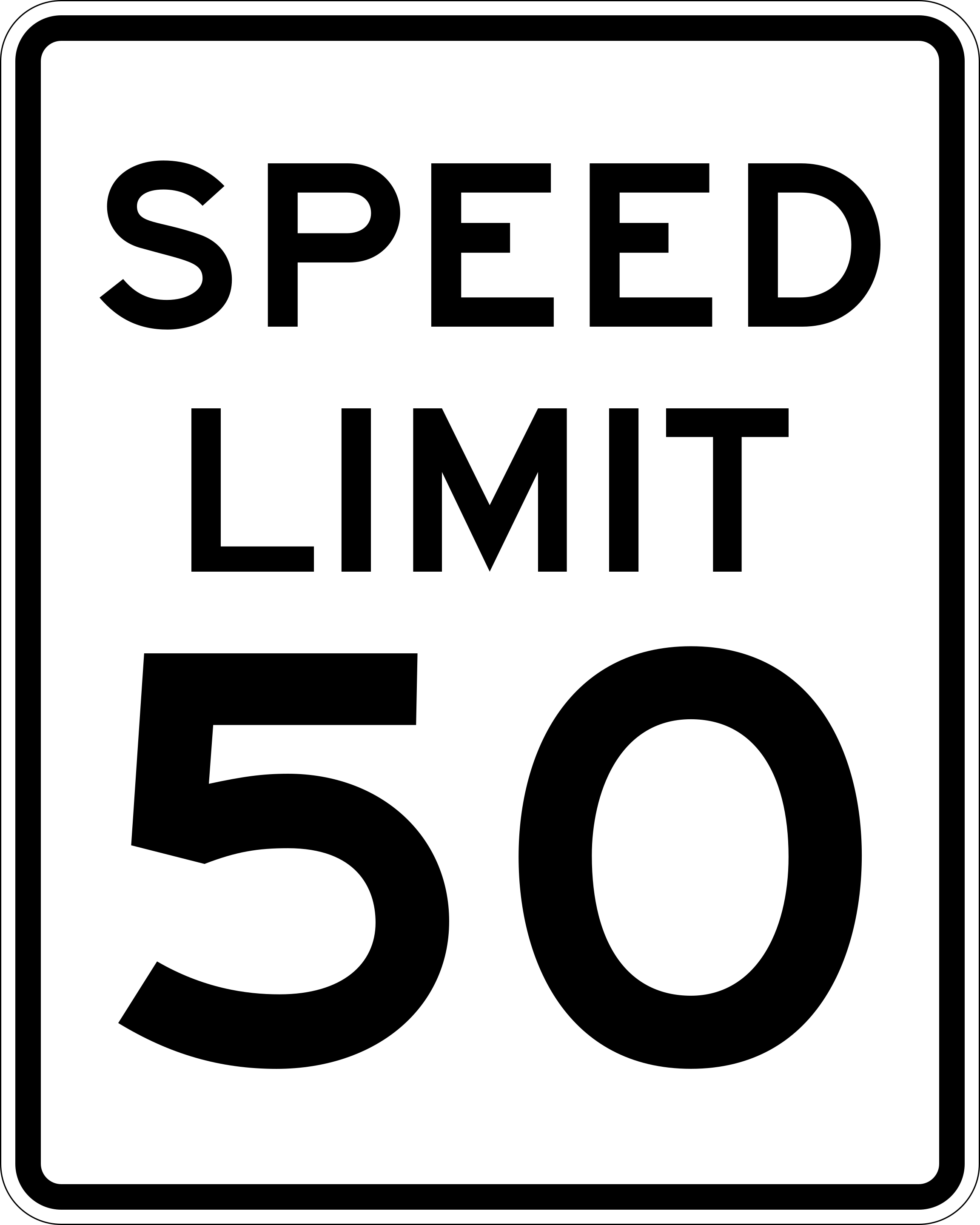
Speed limit 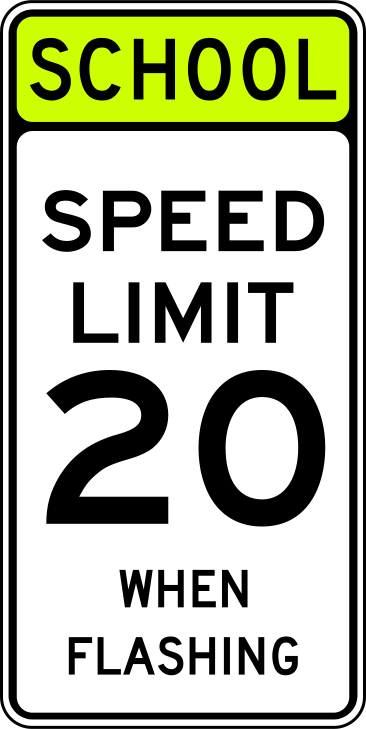
School speed limit
3 questions from the Utah practice test
1. On a Utah residential street with no posted limit or special hazards, what speed is permitted?
- A maximum of 25 mph
- A maximum of 15 mph
- A maximum of 35 mph
- A maximum of 55 mph
Show answer
A maximum of 25 mph. Utah permits 25 mph in a business or residential area when no sign sets another limit and no special hazard requires a reduction. The 35 mph option would exceed that unposted residential limit, even on a straight street with little traffic. Look for homes, driveways, and neighborhood activity as cues that you are in a residential setting. Continue watching for posted signs and reduce speed further when visibility or nearby people make 25 mph unsafe.
2. With no different speed posted and no additional hazard, how fast may you pass Utah school grounds during recess?
- No more than 25 mph
- No more than 20 mph
- No more than 30 mph
- No more than 35 mph
Show answer
No more than 20 mph. The school-ground rule allows 20 mph while passing during recess under the stated conditions. Choosing 25 mph would confuse the business or residential speed with the lower school speed. Children using the grounds during a break are a practical cue to check your speed before reaching the school frontage. Do not wait for a child to step into your lane before responding, and be ready to travel more slowly when an actual hazard makes that necessary.
3. Is 10 mph automatically a safe speed on an icy Utah road?
- Yes, every speed at or below 10 mph is safe on ice
- Yes, provided the vehicle has four-wheel drive
- No, ice requires a fixed 5 mph limit everywhere
- No, even 10 mph may be too fast for the conditions
Show answer
No, even 10 mph may be too fast for the conditions. The handbook warns that even 10 mph on an icy road can be too fast. A low speedometer reading alone cannot show whether the tires have enough grip or whether you can stop within the visible distance. The fixed 5 mph choice invents a universal limit instead of requiring judgment about the actual surface. If steering or braking feels ineffective on a frozen stretch, treat that loss of traction as a cue to reduce demands on the vehicle and reassess speed.
Practice this topic
Lock it in with speed limits questions from the free Utah practice test. Every answer comes with a plain English explanation.
Source: the Utah Driver Handbook, Section 9: Speed. This lesson is a plain English summary, not the law itself; where it differs, the manual and the statute govern. Last checked 2026-09-27.