
Key points
Never think you have the right of way; always look at the situation and think about safety.
Source: Handbook p. 50
“Never think that you have the right of way. Always look at the situation and think about safety.”
Utah Driver Handbook, Handbook p. 50Yield to a driver who reaches the intersection before you.
Source: Handbook p. 50
“A driver who is at the intersection before you.”
Utah Driver Handbook, Handbook p. 50When turning left, yield to drivers in the opposite lane.
Source: Handbook p. 50
“Drivers in the opposite lane when you are making a left turn.”
Utah Driver Handbook, Handbook p. 50At a four way stop, if you arrive together, yield to the driver on your right.
Source: Handbook p. 50
“The driver on your right at a four-way stop if both of you arrive at the same time.”
Utah Driver Handbook, Handbook p. 50Coming from a driveway or private road, yield to drivers on the public road.
Source: Handbook p. 50
“Drivers on a public road if you are coming from a driveway or a private road.”
Utah Driver Handbook, Handbook p. 50On an entrance ramp, yield to drivers already on the interstate.
Source: Handbook p. 50
“Drivers already on an interstate highway if you are on the entrance ramp.”
Utah Driver Handbook, Handbook p. 50Look left, right and left again before entering an intersection.
Source: Handbook p. 41
“Look left, right, and then left again before entering the intersection.”
Utah Driver Handbook, Handbook p. 41Do not turn into a lane just because an oncoming vehicle has a turn signal on: the driver may plan to turn after passing you, or may have forgotten to turn the signal off.
Source: Handbook p. 42
“oncoming vehicle has a turn signal on. The driver may plan to turn after they pass you, or they may have forgotten to turn their signal off.”
Utah Driver Handbook, Handbook p. 42In a roundabout, yield to oncoming traffic and pedestrians, and enter when it is clear.
Source: Handbook p. 45
“Yield to oncoming traffic, and pedestrians enter when it is clear.”
Utah Driver Handbook, Handbook p. 45
Recognize these signs
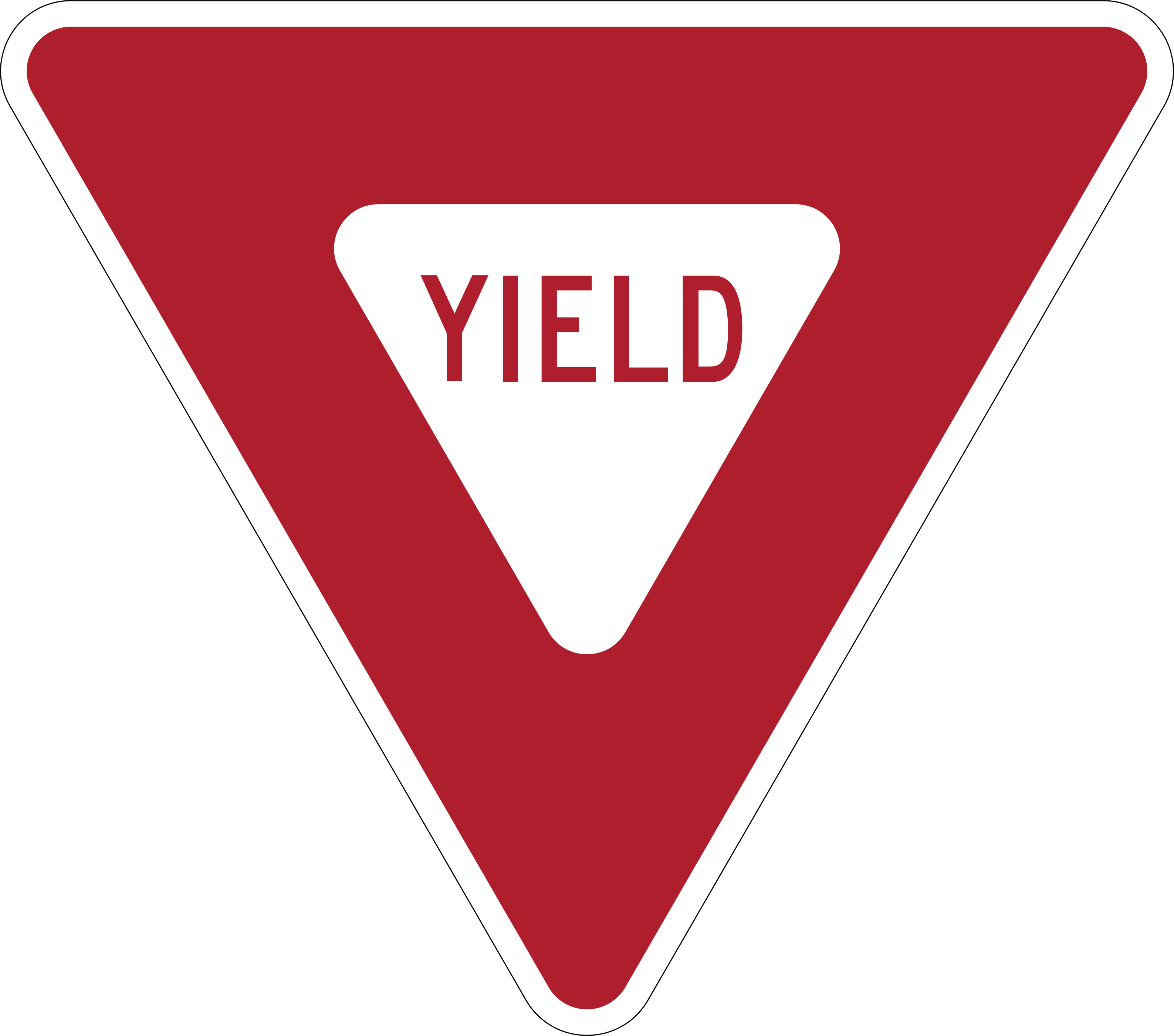
Yield 
Roundabout
3 questions from the Utah practice test
1. At a Utah intersection, another driver is already there before you arrive. What does the handbook’s arrival-order rule require?
- Yield to the driver who reached the intersection first
- Yield only if the earlier driver is on your left
- Proceed first if the earlier driver is on your left
- Proceed first if you intend to travel straight
Show answer
Yield to the driver who reached the intersection first. The Utah handbook's right-of-way list starts with this rule: yield the right-of-way to a driver who is at the intersection before you. The driver who arrived first goes first, whichever side that driver is on and whatever turn you plan to make. The handbook's tie rule is separate: at a four-way stop, yield to the driver on your right if you both arrive at the same time. It also warns never to think that you have the right of way.
2. You face a flashing yellow left-turn arrow in Utah while opposing traffic approaches. How should you handle the turn?
- Turn immediately because the arrow stops opposing traffic
- Wait for opposing drivers to stop at their green light
- Treat the arrow as a protected left turn
- Yield to oncoming traffic and pedestrians before turning cautiously
Show answer
Yield to oncoming traffic and pedestrians before turning cautiously. A flashing yellow arrow permits the turn only after yielding to oncoming vehicles and pedestrians. It is not a protected turn: the opposing traffic has a green light and may continue through. Look beyond the arrow for an approaching vehicle and check the crosswalk before accepting a gap. The immediate-turn choice would place your car across traffic that has not been stopped by the signal. Complete the maneuver only when the available space makes it safe.
3. When you believe another Utah driver should yield, what approach does the handbook advise?
- Enter confidently so the other driver recognizes your priority
- Use the horn to establish your right-of-way
- Assess the situation for safety instead of assuming priority
- Accelerate before the other driver can move
Show answer
Assess the situation for safety instead of assuming priority. Utah’s guidance is to examine the situation and think about safety rather than assume you have priority. Entering confidently just to make another driver yield can create a conflict if that driver has not seen you or does not stop. Watch the other vehicle’s movement, especially when it continues rolling toward the intersection. Even where a rule requires the other person to wait, leave yourself time and space to avoid a collision if that person fails to yield.
Practice this topic
Lock it in with right of way questions from the free Utah practice test. Every answer comes with a plain English explanation.
Source: the Utah Driver Handbook, Sections 9 and 14: Intersections and Yielding. This lesson is a plain English summary, not the law itself; where it differs, the manual and the statute govern. Last checked 2026-09-27.