
Test 10 of 11 · 20 questions · Free 2026
UT Permit Practice Test 10
Jump to the test ↓A fixed 20 question set from the Utah bank with answers and plain English explanations. The real UT exam is 50 questions, 80 percent to pass; take the full length version on the main practice page.
Question 1 of 20 · 0 right so far
All 20 questions in test 10
Every question below comes from the Utah question bank on this page. Open a question to see the correct answer and the explanation. Nothing here is hidden behind a signup.
1. What is the minimum age for a Utah entry-level learner permit?
- 14
- 15
- 16
- 17
Show answer
15. Utah lets a student start with an entry-level learner permit at a minimum age of 15, which allows the student to take driver education and practice driving. The permit lasts 18 months, and the person in the seat next to the learner must be a licensed parent, stepparent, foster parent, guardian, approved instructor, or responsible adult age 21 or older. Age 14 is too young, and 16 is the minimum for the 6 month renewal permit, not the first permit.
Study this in the handbook: Driver Education and Learner Permits
2. A Utah interlock-restricted driver is convicted of driving a vehicle without the device. What is the result?
- A fine only
- A 30 day suspension
- Revocation for one year plus an additional two-year interlock restriction
- The restriction ends early
Show answer
Revocation for one year plus an additional two-year interlock restriction. A conviction for violating the interlock-restricted driver law revokes the license for one year and adds another two-year interlock restriction from the conviction date. The vehicle may also be impounded. A fine alone or 30 days understates it, and the restriction certainly does not end early. The device must also be monitored at least every 60 days while the restriction lasts.
Study this in the handbook: DUI Penalties, Refusal and Ignition Interlock
3. On a wet road marked with this skidding-car warning, what happens when your vehicle hydroplanes?

- The front tires slide on the pavement because braking has locked them
- The front tires ride on water instead of the roadway
- The tires gain traction as water builds beneath them
- The steering becomes more effective as speed increases
Show answer
The front tires ride on water instead of the roadway. Hydroplaning occurs when the front tires ride on a layer of water rather than maintaining contact with the road. This reduces steering control, and increasing speed makes the problem worse. The idea that water buildup improves traction reverses the hazard the warning is calling attention to. Standing water or a water-covered surface near the sign is a cue to reduce speed and leave more room, rather than counting on normal dry-road steering response.
Study this in the handbook: Night Driving, Weather, Floods and Skids
4. What is the longest permitted interval between ignition interlock monitoring visits for a restricted Utah driver?
- 30 days
- 60 days
- 120 days
- 90 days
Show answer
60 days. An ignition interlock device must be monitored at least every 60 days while the driver is restricted. Waiting 90 days would exceed the monitoring interval, even if the vehicle seems to operate normally. Installation is therefore only one part of complying with the restriction. Put the next monitoring date on a calendar after each service visit, and arrange the visit early enough that scheduling problems do not carry it beyond the required interval.
Study this in the handbook: DUI Penalties, Refusal and Ignition Interlock
5. What is the most a Utah driver may be fined for a first texting while driving conviction that causes no injury?
- $1,000
- There is no fine
- $25
- $100, as a Class C misdemeanor
Show answer
$100, as a Class C misdemeanor. Texting while driving is a criminal offense in Utah, not a simple ticket. The handbook says a texting conviction is a Class C misdemeanor with a maximum fine of $100, or a Class B misdemeanor if the driver inflicts bodily injury or has a previous violation for this offense. Officers may pull a driver over if they observe texting. The larger amounts and the no fine answer are wrong, and the handbook also lists a judge ordered license suspension after a texting conviction among the reasons a license can be suspended.
Study this in the handbook: Distractions, Fatigue, Animals and Mountain Roads
6. A Utah student has completed 40 practice driving hours, including six after sunset. What additional practice meets the nighttime requirement?
- Four more hours before sunset
- Four more hours after sunset
- Six more hours at any time
- No additional hours because the total is already 40
Show answer
Four more hours after sunset. The student requirement combines 40 total driving hours with 10 hours after sunset. Six nighttime hours leave four still needed, even though the overall total has been reached. Adding daylight practice cannot fill that particular gap. In a practice log, keep the after-sunset hours identifiable instead of recording only a grand total. Completing four further nighttime hours would bring this student to 10 after sunset and more than the minimum total.
Study this in the handbook: Driver Education and Learner Permits
7. What does a flashing yellow arrow signal permit at a Utah intersection?
- A protected turn with no yielding
- Turns, but only after yielding to oncoming traffic and pedestrians
- Straight through travel only
- No movement until the arrow turns green
Show answer
Turns, but only after yielding to oncoming traffic and pedestrians. The flashing yellow arrow is the permissive turn indication. The handbook says turns are permitted, but first you must yield to oncoming traffic and to pedestrians in the crosswalk. It is not the protected green arrow, it does not restrict you to going straight, and you do not have to wait for a green arrow if the way is clear. Creep forward, wait for a safe gap, and complete the turn only when no one has the right of way over you.
Study this in the handbook: Traffic Signals and Arrows
8. Why does the Utah handbook say to avoid sounding your horn close to a bicyclist?
- It is illegal to use a horn near any bicycle
- Riders must stop and dismount whenever a horn sounds
- It may startle the rider into steering into your path
- A horn is required only when passing a bicycle on the left
Show answer
It may startle the rider into steering into your path. A sudden horn blast next to a rider can make them flinch and swerve, and the handbook warns that startling bicyclists can cause them to steer into your path and crash. That is why it says to avoid sounding the horn close to bicyclists unless there is a real chance of a crash. The horn is not banned outright near bicycles, riders are not told to dismount when one sounds, and the handbook does not tie horn use to passing on the left. Slow down, give space, and pass quietly.
Study this in the handbook: Pedestrians, Bicycles and Motorcycles
9. Where should children twelve and under ride to avoid air bag injuries, according to the Utah handbook?
- In the front passenger seat with the belt on
- On an adult's lap in the front seat
- Anywhere, as long as the air bag is on
- Buckled up in a rear seat
Show answer
Buckled up in a rear seat. The handbook says an air bag comes out of the dashboard at up to 200 mph and that its force can hurt those who are too close to it. The handbook's air bag safety points start with the rule that children twelve and under should ride buckled up in a rear seat, and that properly restraining children in the back seat eliminates the danger from a deploying bag. The front seat, a lap, and an active air bag are the combinations the rule is written against. Younger children also need the correct car or booster seat.
Study this in the handbook: Seat Belts, Car Seats and Air Bags
10. How should you place the belt when wearing a safety belt correctly, according to the Utah handbook?
- Shoulder harness snug across the shoulder and chest, lap belt across the hips
- Lap belt only, shoulder harness behind the back
- Shoulder harness under the arm, lap belt across the stomach
- Both belts loose enough to slip a hand under
Show answer
Shoulder harness snug across the shoulder and chest, lap belt across the hips. A belt protects only when it loads the strong parts of the body. The handbook says to pull the shoulder harness across your shoulder and chest until it is snug, and to fit the lap belt across the hips rather than the stomach. Tucking the shoulder belt under an arm or behind the back leaves the head and chest unrestrained, and a loose belt lets you travel before it catches. Adjust the belt every time you sit down, and keep it snug.
Study this in the handbook: Seat Belts, Car Seats and Air Bags
11. What does the Utah handbook say about medications and driving?
- Many medications can cause drowsiness, and a physician may advise against driving until a suitable dosage is set
- Prescription drugs never affect driving
- Only illegal drugs impair driving
- Medication effects wear off as soon as you start driving
Show answer
Many medications can cause drowsiness, and a physician may advise against driving until a suitable dosage is set. Legal drugs impair too. The handbook notes that many medications may cause drowsiness or other difficulties, so a physician may advise against driving until a suitable dosage is found, and it warns that abuse of prescription drugs has caused many serious crashes. The idea that only illegal drugs impair, or that effects vanish behind the wheel, is exactly the mistake the handbook is correcting. Read the label, ask the doctor, and do not drive if the medicine makes you drowsy.
12. What result must a first-time Utah Class D applicant earn on the additional Traffic Safety and Trends Exam?
- At least 70%
- At least 80%
- At least 90%
- A score of 100%
Show answer
A score of 100%. First-time Class D applicants must earn 100% on the additional Traffic Safety and Trends Exam. An 80% result may sound sufficient because it is the passing threshold for the regular written knowledge test, but these are separate requirements. When reviewing an application checklist, identify which exam a score belongs to before assuming testing is finished. The trends exam is available through the Driver License Division website and can be attempted as often as needed before licensing.
Study this in the handbook: Knowledge, Traffic Safety and Skills Tests
13. A fire vehicle is responding to an alarm on a Utah road. How closely may you follow it if you are not on official business?
- No closer than 500 feet
- No closer than 100 feet
- As closely as traffic allows
- Within one car length
Show answer
No closer than 500 feet. Utah law says that unless you are on official business you may not follow within 500 feet of any fire vehicle responding to an alarm. One hundred feet or a car length puts you inside the space the crew needs, and following as closely as traffic allows ignores the stated distance entirely. Drop back and keep at least 500 feet between your vehicle and the responding fire vehicle until it has gone.
Study this in the handbook: Emergency Vehicles, Move Over and School Buses
14. While merging in Utah, a vehicle in the continuing lane is close enough to pose an immediate threat. What must you do?
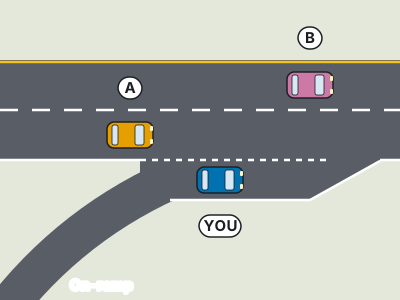
- Yield to that vehicle before joining its lane
- Claim priority by switching on your turn signal
- Enter first and require that driver to brake
- Enter first if your acceleration lane is about to end
Show answer
Yield to that vehicle before joining its lane. A driver merging into a traffic lane must yield to vehicles already in the continuing lane when they are close enough to be an immediate threat. A turn signal communicates your intention but does not require someone else to brake for your entry. Use the nearby vehicle’s position and closing speed as cues when judging the gap. Keep looking for suitable space, and merge only when your movement will not put you into conflict with that traffic.
Study this in the handbook: Pavement Markings and Special Lanes
15. What kind of instruction does this DO NOT ENTER sign give a driver approaching a ramp?
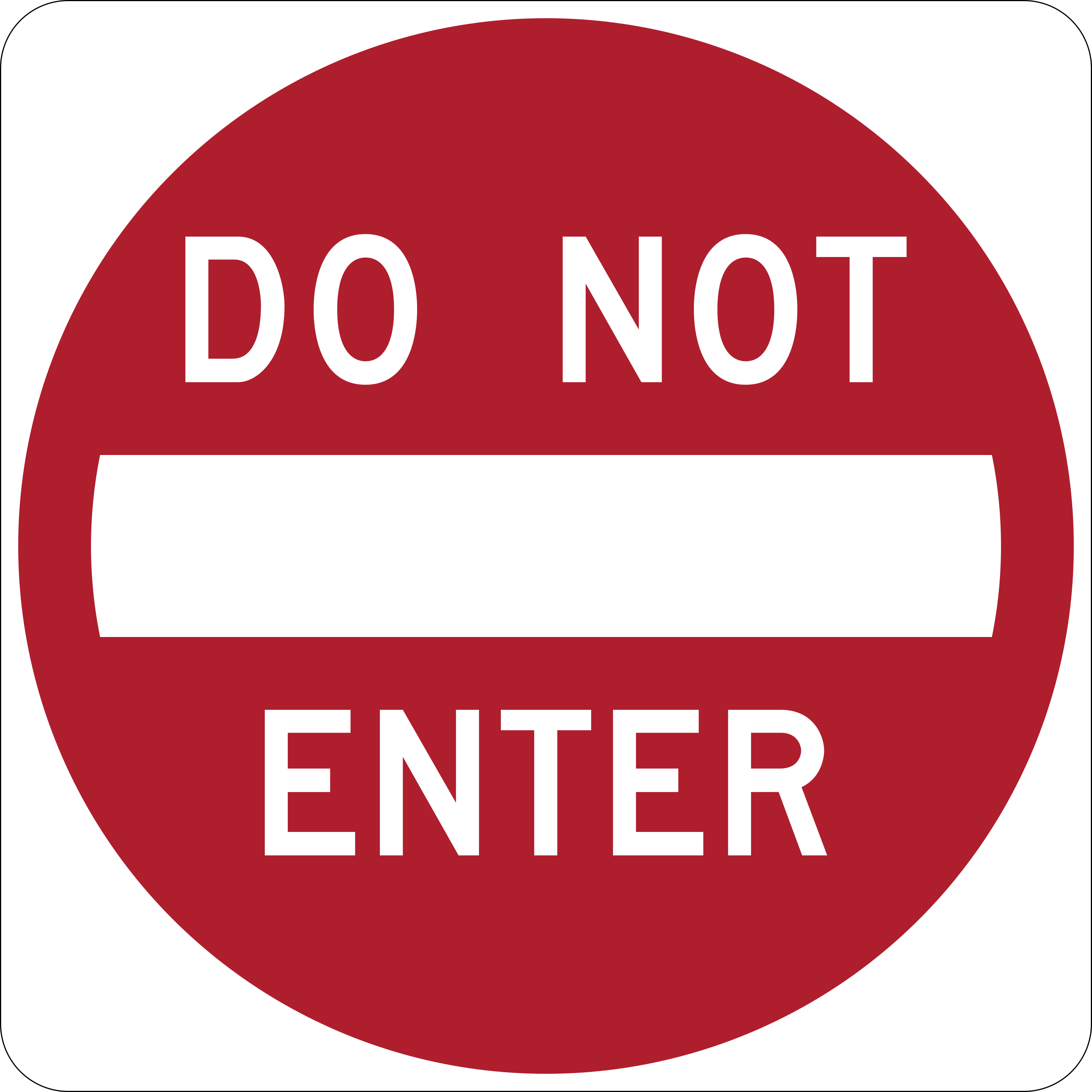
- An advisory about a rough ramp surface
- A suggestion to enter only when traffic is light
- A regulatory instruction prohibiting entry from this direction
- A notice that parking on the ramp is restricted
Show answer
A regulatory instruction prohibiting entry from this direction. DO NOT ENTER is a regulatory sign controlling whether you may enter the roadway from the direction you are approaching. It is not merely a suggestion to wait for light traffic or a notice about parking. The regulation applies to your intended entry, regardless of whether the ramp looks empty. The sign’s words and red symbol are the cue to stop considering that opening as an available route and locate the designated lawful access.
Study this in the handbook: Regulatory, Guide and Route Signs
16. Compared with an ordinary speeding fine, what minimum fine applies for speeding in a Utah highway construction zone?
- One and a half times the regular speeding fine
- The regular speeding fine with no increase
- At least double the regular speeding fine
- Exactly three times the regular speeding fine
Show answer
At least double the regular speeding fine. A highway construction zone speeding fine must be at least twice the regular speeding fine. The ordinary fine option misses the required increase, while exactly triple wrongly turns a minimum multiplier into a fixed amount. Orange construction signs and channeling devices are practical reminders to check your speed before entering the changed roadway. The increased fine accompanies hazards such as narrowed lanes, rough surfaces, and equipment moving near traffic.
Study this in the handbook: Freeway Driving and Work Zone Speeds
17. While passing a bicyclist in Utah, what minimum separation must your vehicle provide?
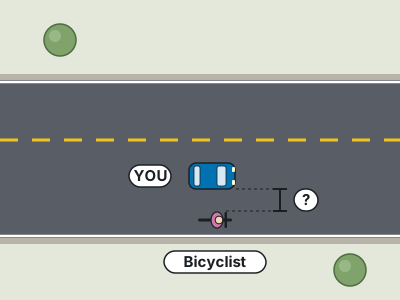
- Three feet from the bicyclist
- Two feet when traveling below 25 mph
- Half the width of the bicycle lane
- One foot if you sound the horn
Show answer
Three feet from the bicyclist. Utah requires at least three feet between your passing vehicle and a bicyclist or other vulnerable highway user. A lower driving speed does not reduce that minimum to two feet. Judge the gap from the person you are overtaking, not just from a painted lane boundary. If a cyclist is riding near the edge of a bike lane, account for that position before beginning the pass and allow additional space when possible.
Study this in the handbook: Pedestrians, Bicycles and Motorcycles
18. When you stop behind another car, what visual cue should you use to leave a safe gap?
- Leave just enough space to see its roof
- Align your hood with its rear window
- Stop only when its bumper disappears below your hood
- Keep its rear wheels visible
Show answer
Keep its rear wheels visible. Stop far enough back that you can still see the rear wheels of the car ahead. This gives you a practical visual reference while choosing your stopping position. Waiting until its bumper disappears below your hood encourages closing the space instead of preserving it. As traffic slows toward a signal, brake smoothly and watch where those rear tires meet the road, then finish your stop while that reference remains visible.
Study this in the handbook: Pavement Markings and Special Lanes
19. Your vehicle is disabled on a Utah road. How far behind it does the handbook say to place emergency flares or triangles?
- Right at the rear bumper
- About 50 feet behind
- About 100 feet behind
- 200 to 300 feet behind the vehicle
Show answer
200 to 300 feet behind the vehicle. Warning devices only help if drivers see them early enough to react. The handbook says to put emergency flares or triangles 200 to 300 feet behind your vehicle, which gives approaching traffic time to change lanes or slow down before they reach you. Placing them at the bumper gives little warning, and 50 or 100 feet is short of the distance the handbook gives. First get the vehicle off the roadway and away from traffic, turn on the emergency flashers, raise the hood, and call law enforcement (911) about the breakdown.
Study this in the handbook: Vehicle Emergencies
20. You hold a regular Class D Utah driver license and move to a new address. How long do you have to notify the Driver License Division?
- 30 days
- 60 days
- 10 days
- At your next renewal
Show answer
10 days. State law requires a Class D holder to notify the division of a new address within 10 days of moving, and it can be done online. Thirty and sixty days are too long, and waiting for renewal breaks the law. The handbook explains why it matters: the post office will not forward mail from the Driver License Division, so notices could miss you. A new card with the new address requires a separate replacement appointment.
Study this in the handbook: Renewal, Phone Laws and the Point System
QualitySpace is expanding to Utah
We are a California-based independent insurance brokerage working on licensing in more states. We cannot help with Utah insurance yet. Leave your email and we will let you know when we can.
Every question is written from the official Utah Driver Handbook. Need paper? Printable UT practice test with answer key.
Last verified 2026-10-05. How we check every question · Study all 220 as flashcards
Frequently asked questions
How many questions are on this Utah practice test?
This fixed set has 20 questions. It is test 10 of 11 from the 220 question Utah bank. The real UT exam asks 50 questions and you need 40 correct.
What is the passing score for the real Utah test?
You must pass with a score of 80% or better That figure comes from the official Utah source cited on the DMV facts page.
How does this fixed test relate to the full Utah bank?
Each numbered test is a fixed set of questions in a fixed order, so you can retake the same test later and compare. Every test mixes road signs and the other topics in about the same proportion as the full bank. Tests 1 to 11 together cover every question in the Utah bank once. The full practice page mixes the whole bank at random.
Last verified 2026-10-05. See the Utah DMV facts page for sourced state details.