
Printable UT Permit Practice Test
50 questions in the real UT exam format, 80 percent (40 of 50) to pass. Answer key on the last page. Last verified 2026-09-05 against the official Utah driver manual.
1. What does a flashing yellow traffic light mean in Utah?
- Stop and wait for green
- Stop, then proceed as at a stop sign
- Slow down and proceed with caution
- The signal is broken; ignore it
2. How does the red slash change the meaning of the left-turn arrow on this sign?
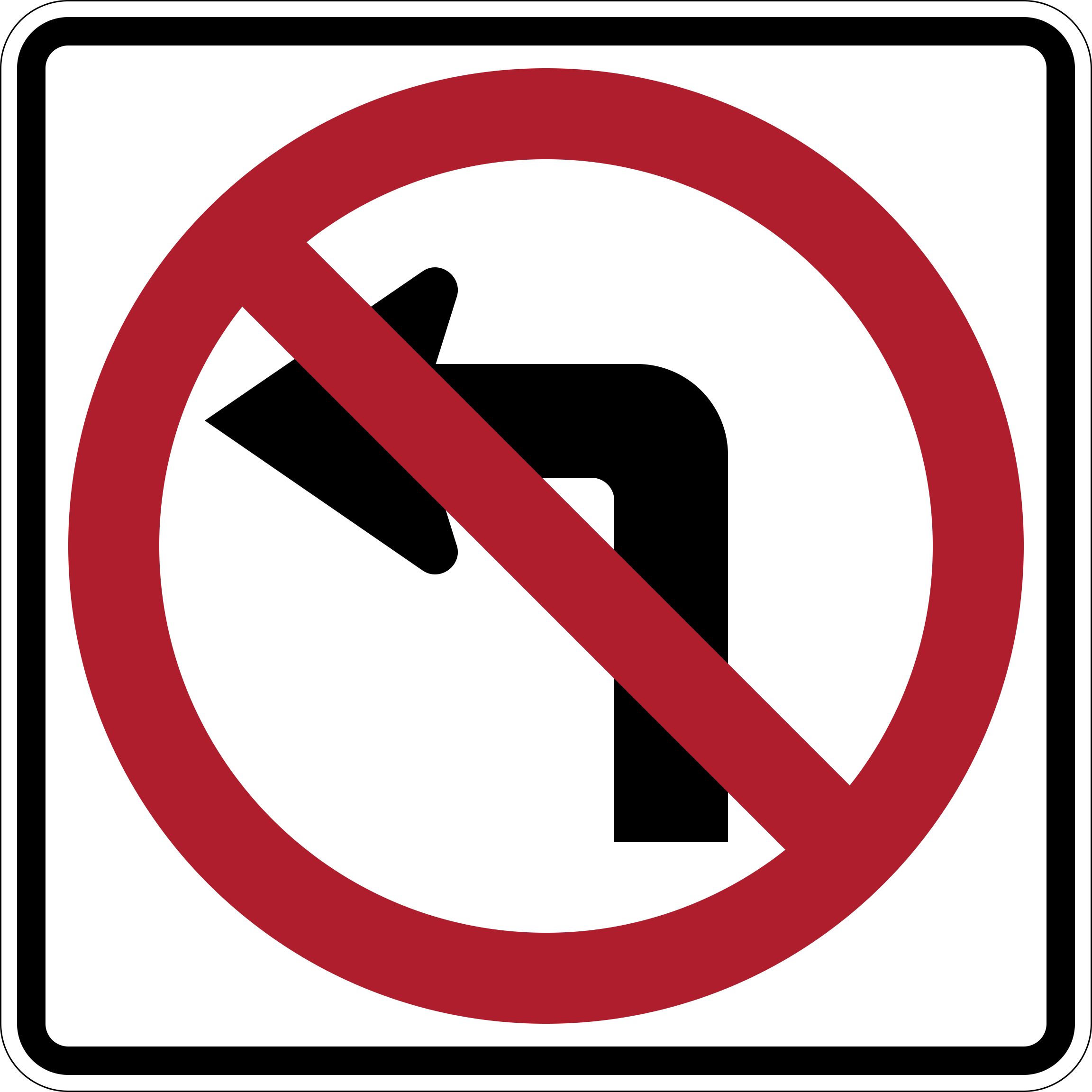
- It reserves left turns for the next green light
- It makes left turns optional
- It warns that left turns require a lower speed
- It prohibits the illustrated left turn
3. With no different speed posted and no additional hazard, how fast may you pass Utah school grounds during recess?
- No more than 25 mph
- No more than 20 mph
- No more than 30 mph
- No more than 35 mph
4. After a DUI impound in Utah, which costs does the handbook identify for the vehicle owner?
- Towing, storage charges, and administrative costs
- Towing and driver license reinstatement fees only
- Only a towing charge, with free storage
- Only the traffic fine, with no impound charges
5. How should a Utah driver adjust the outside mirrors to reduce blind spots?
- Set them to show the side of your car clearly
- Point them at the rear bumper
- Set them so you can barely see the sides of your own vehicle, giving a wide view
- Fold them in to reduce glare
6. Which Utah licensing rule applies to a visitor who has only a learner permit from another state?
- The permit permits driving for six months
- The permit permits driving with any Utah license holder
- The permit permits driving after a Utah address is established
- The permit is not valid for driving in Utah
7. What happens if a Utah driver removes an ignition interlock device before the restriction period ends?
- Only the vehicle registration is canceled
- Only an additional reinstatement fee is charged
- Driving privileges are suspended again
- The driver may continue if a sober adult rides along
8. Is 10 mph automatically a safe speed on an icy Utah road?
- Yes, every speed at or below 10 mph is safe on ice
- Yes, provided the vehicle has four-wheel drive
- No, ice requires a fixed 5 mph limit everywhere
- No, even 10 mph may be too fast for the conditions
9. What can happen to a Utah driver caught driving while the license is suspended?
- Up to 90 days in jail, a fine, and the suspension lengthened by the original period
- Only a $25 fine
- The suspension ends early
- Nothing if the suspension was for unpaid fines
10. What is the minimum age for a Utah entry-level learner permit?
- 14
- 15
- 16
- 17
11. What purpose does this yellow arrow warning sign serve?

- It orders every vehicle to turn at the next driveway
- It designates a lane that must be used for turning
- It identifies a route to a public service
- It warns of a possible danger farther along the road
12. In which direction does traffic flow through a Utah roundabout?
- Clockwise
- Counterclockwise
- Either direction, depending on the lane
- Clockwise in the inside lane and counterclockwise in the outside lane
13. This STOP AHEAD sign gives you advance notice of a required stop. How should you prepare?

- Coast through if the intersecting street appears empty
- Wait until your front bumper reaches the stop sign to brake
- Begin braking well before the stopping point
- Brake abruptly at the crosswalk to minimize slowing time
14. A 19-year-old drives in Utah with measurable alcohol in their body and receives a first Not-a-Drop offense. How long are driving privileges denied?
- For 30 days
- For 90 days
- For six months
- For eighteen months
15. A vehicle with priority is approaching the junction marked by this triangular sign. What should you do?
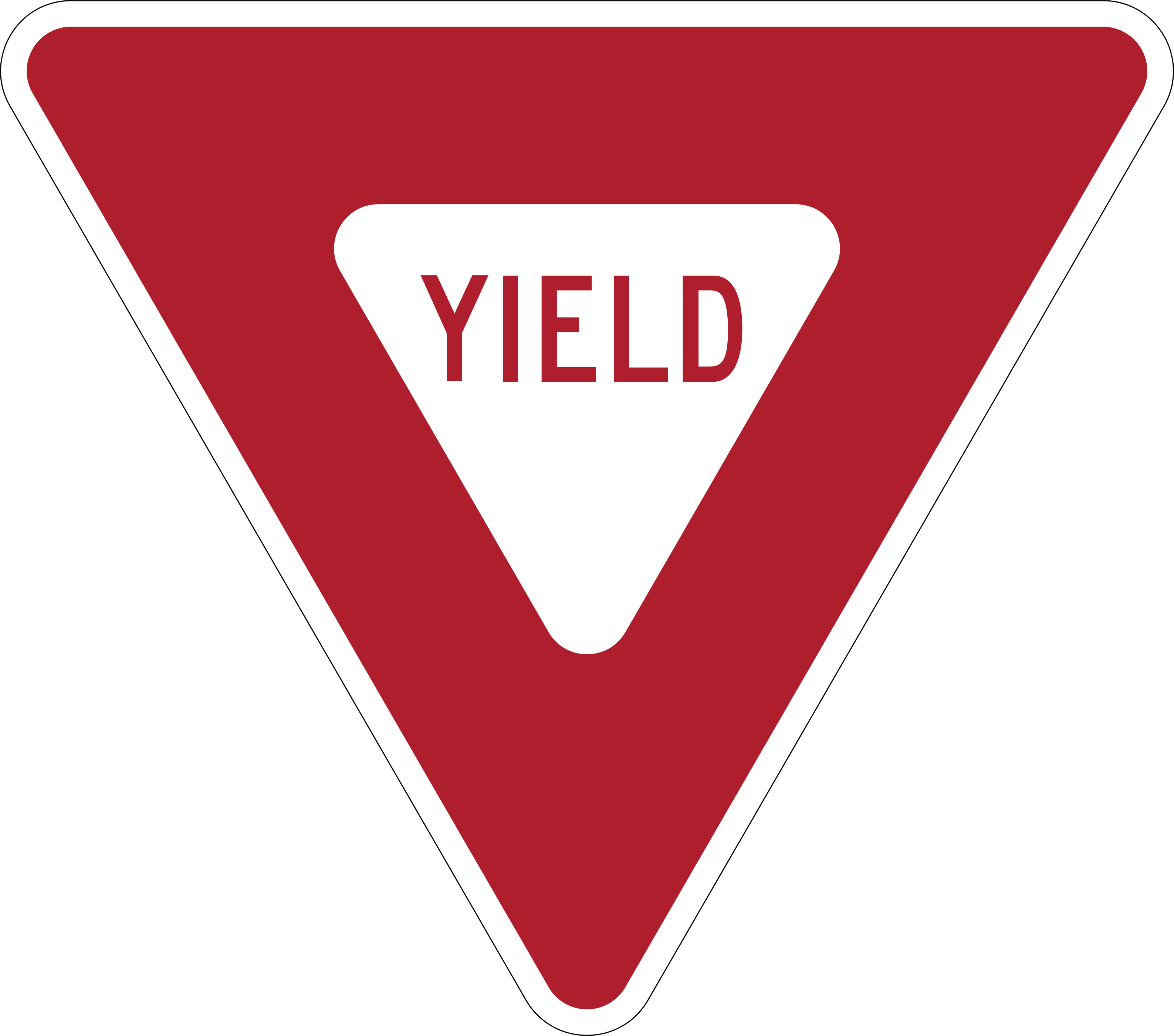
- Reduce speed and let the vehicle with priority proceed
- Enter first if your vehicle is closer to the sign
- Maintain speed because only an octagon controls priority
- Require the approaching driver to stop for you
16. Before opening the door of your car parked along a street, what should you check for?
- Bicyclists approaching from the sides and rear
- Only traffic in the rearview mirror, not the sides
- Only vehicles approaching from directly ahead
- Only whether the car behind you has moved
17. According to the Utah handbook, alcohol and other impairing drugs are involved in about what share of fatal traffic crashes?
- About 5 percent
- About 90 percent
- Less than 1 percent
- About 40 percent
18. At a Utah intersection, another driver is already there before you arrive. What does the handbook’s arrival-order rule require?
- Yield to the driver who reached the intersection first
- Yield only if the earlier driver is on your left
- Proceed first if the earlier driver is on your left
- Proceed first if you intend to travel straight
19. You face a flashing yellow left-turn arrow in Utah while opposing traffic approaches. How should you handle the turn?
- Turn immediately because the arrow stops opposing traffic
- Wait for opposing drivers to stop at their green light
- Treat the arrow as a protected left turn
- Yield to oncoming traffic and pedestrians before turning cautiously
20. What ignition interlock restriction follows an automobile homicide conviction in Utah?
- Two years
- Three years
- 10 years
- 18 months
21. A Utah interlock-restricted driver is convicted of driving a vehicle without the device. What is the result?
- A fine only
- A 30 day suspension
- Revocation for one year plus an additional two-year interlock restriction
- The restriction ends early
22. Where does the Utah handbook say to watch especially for slow moving vehicles?
- In rural areas
- Only in downtown areas
- Only on interstates
- Only in parking lots
23. In a Utah school zone, when are children considered present so that the slower speed limit applies?
- Only when a crossing guard is standing in the road
- Only during the lunch hour
- When the school zone lights are flashing
- Only when you can actually see children on the sidewalk
24. According to the Utah handbook, what does a driver reduce by leaving a few minutes early?
- Fuel consumption only
- The need to wear a safety belt
- The need to check mirrors
- The urge to speed, beat traffic signals, or do anything that results in a citation or crash
25. How long do alcohol and drug related violations, suspensions and revocations stay on a Utah driving record?
- Three years
- 10 years
- Five years
- They are removed at reinstatement
26. On a Utah divided highway with four or more lanes and a median, a school bus stops with red lights flashing on the other side. What must you do?
- Stop, because all traffic must stop
- Stop only if children are visible
- Proceed with caution; only vehicles behind the bus must stop
- Stop until the bus turns off its engine
27. When does the Utah handbook say to use a three point turn?
- Only if the road is too narrow for a U-turn
- Whenever you want to reverse direction
- Only on freeways
- Only at night
28. What does the Utah handbook say about how safety features perform in bad weather and on hills and curves?
- They work best in bad weather
- They may not work correctly in rain, snow, ice, fog, hills, and curves
- They replace the need to slow down
- They only work on freeways
29. Outside of an emergency, may a Utah driver stop, stand, or park on a runaway vehicle ramp?
- Yes, briefly to look at the view from the grade
- Yes, if no trucks are visible
- Yes, for up to five minutes
- No, it is prohibited on the ramp and in its pathway
30. How early may a regular Utah driver license be renewed before its expiration date?
- Up to twelve months early
- Up to six months early
- Only during the final thirty days
- Only after the expiration date
31. A 16 year old in Utah has a driver license (not a permit). During which hours is the teen restricted from driving without a qualifying exception?
- 12 a.m. to 5 a.m.
- 10 p.m. to 6 a.m.
- 9 p.m. to 5 a.m.
- 11 p.m. to 6 a.m.
32. On a wet road marked with this skidding-car warning, what happens when your vehicle hydroplanes?

- The front tires slide on the pavement because braking has locked them
- The front tires ride on water instead of the roadway
- The tires gain traction as water builds beneath them
- The steering becomes more effective as speed increases
33. Which marking may border a Utah flex lane that carries traffic in one direction at some times and the opposite direction at others?
- Blue reflectors
- Solid white lines
- A single broken white line
- Double dashed yellow lines on either side
34. An ambulance approaches behind you with its emergency lights operating. Where should you wait for it to pass?
- Stopped at the right side of the road
- Moving slowly along the center line
- Stopped in the leftmost travel lane
- On the shoulder only after the ambulance overtakes you
35. A car is coming toward you at night in Utah with your high beams on. When must you dim them?
- Before you get within 500 feet of the oncoming car
- Within 100 feet of the oncoming car
- Only if the other driver flashes first
- Only on divided highways
36. For a Utah driver under 21, how many points within three years lead to a hearing?
- 70 points or more
- 200 points or more
- 12 points or more
- 150 points or more
37. How close to a fire hydrant may you park in Utah?
- 5 feet
- 10 feet
- No closer than 15 feet
- 25 feet
38. Before backing out of a parking space, why should you check behind the vehicle before getting in?
- Looking through the rear window always reveals small objects hidden by the rear bumper
- A walk-around is necessary only when the vehicle has no backup camera
- Children or small objects may be invisible from the driver seat
- Looking behind the vehicle replaces all checks during backing
39. Where must a Utah driver stop at a stop sign or signal?
- Beside the sign post
- Just past the crosswalk for a better view
- In the middle of the intersection
- Behind the stop line or crosswalk
40. Which vehicles does the Utah handbook list as exempt from the motor vehicle safety belt usage act?
- Authorized emergency vehicles, mopeds, motorcycles, school buses, and vehicles not equipped with belts by the manufacturer
- Pickup trucks and vans
- Any vehicle made before 2000
- Taxis and rideshare vehicles
41. How long must a 16 or 17 year old in Utah hold a learner permit before getting a first regular Class D license?
- 30 days
- 90 days
- 6 months
- 12 months
42. To prevent the heat buildup that can cause a tire fire, what does the Utah handbook say you should never do for an extended period of time?
- Drive with a spare tire that is smaller than the other tires
- Drive with the high beam indicator light on
- Drive on a soft or flat tire or with a brake that is dragging
- Drive with the cruise control engaged
43. What is the longest permitted interval between ignition interlock monitoring visits for a restricted Utah driver?
- 30 days
- 60 days
- 120 days
- 90 days
44. Why should a Utah driver take extra care around bicyclists when the road is wet or has sand or gravel?
- Bicyclists are not allowed on wet roads
- Sand makes bicycles faster
- Those conditions affect bicycles much more than vehicles
- Gravel roads are reserved for bicycles
45. Beyond this divided-highway sign, a school bus flashes red lights on the opposite side of a median on a four-lane road. Must you stop?

- Yes; every lane on both sides of the median must stop
- No; the stopping requirement applies to the lanes behind the bus
- Yes; a median changes the rule only on six-lane roads
- No; even vehicles following the bus may continue
46. What do orange diamond or rectangular signs with black letters warn Utah drivers about?
- School crossings
- Work zones and people working on or near the road
- Railroad crossings
- Scenic areas
47. A NO RIGHT TURN sign is posted beside a red traffic light. Does stopping first authorize a right turn?
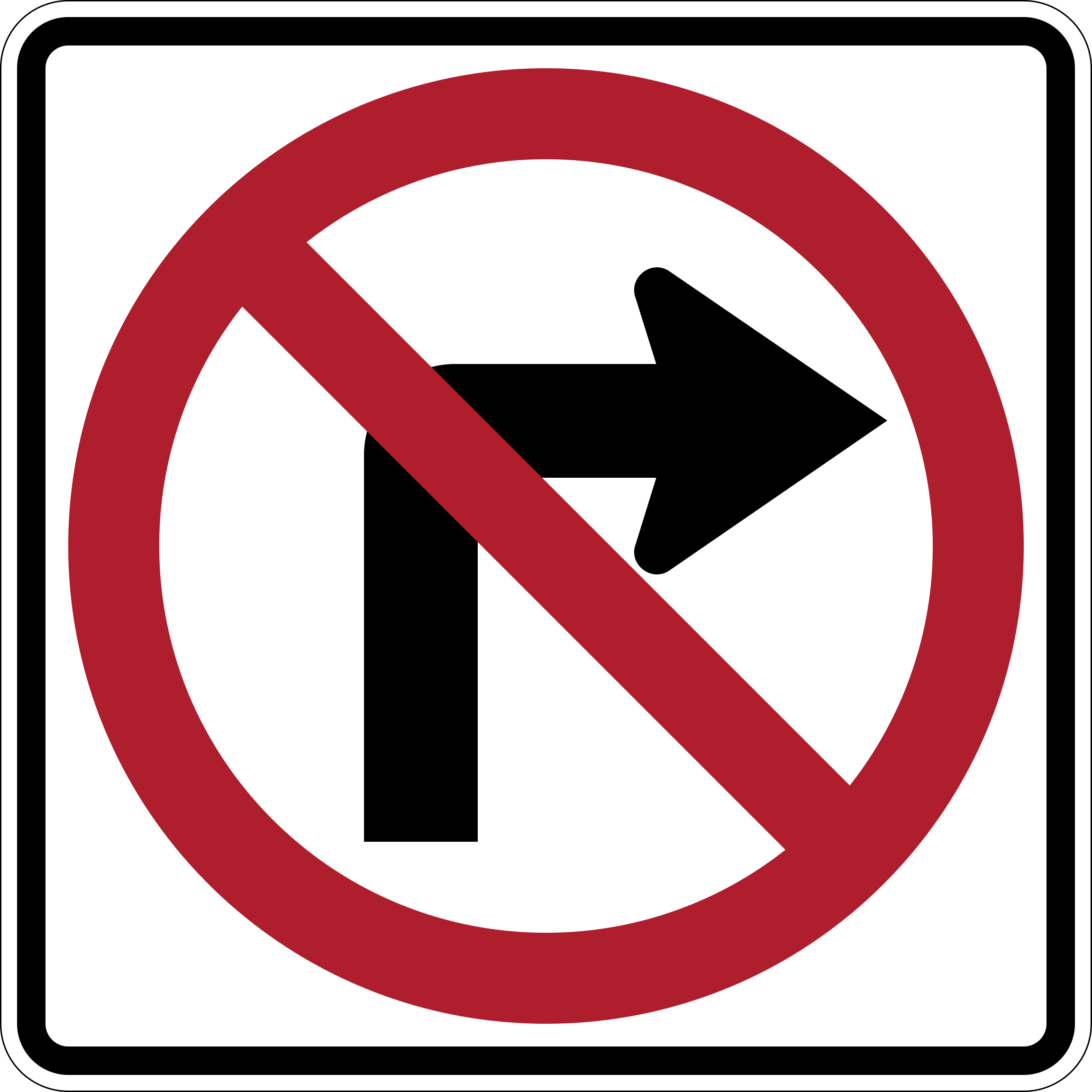
- Yes, if no pedestrian is in the crosswalk
- Yes, once the wheels have completely stopped
- No, a posted restriction prevents that turn
- Yes, because the turn restriction applies only when the light is green
48. A newly licensed 16 year old in Utah wants to drive friends to school. What passenger rule applies at first?
- Up to two friends are allowed
- Only immediate family members, until six months from the issue date
- Any passengers, as long as all wear belts
- No passengers at all for one year
49. A 19 year old in Utah refuses the chemical test after a DUI arrest for the first time. What revocation applies?
- 18 months
- Six months
- Two years or until 21, whichever is longer
- No revocation because the driver is under 21
50. The signal displays a red arrow for your right turn. What must you do?
- Remain stopped until an indication allowing movement appears
- Turn slowly because red arrows apply only to left turns
- Turn after a brief stop if no pedestrian is present
- Move into the crosswalk and wait for a gap
Answer key
- 1. C
- 2. D
- 3. B
- 4. A
- 5. C
- 6. D
- 7. C
- 8. D
- 9. A
- 10. B
- 11. D
- 12. B
- 13. C
- 14. C
- 15. A
- 16. A
- 17. D
- 18. A
- 19. D
- 20. C
- 21. C
- 22. A
- 23. C
- 24. D
- 25. B
- 26. C
- 27. A
- 28. B
- 29. D
- 30. B
- 31. A
- 32. B
- 33. D
- 34. A
- 35. A
- 36. A
- 37. C
- 38. C
- 39. D
- 40. A
- 41. C
- 42. C
- 43. B
- 44. C
- 45. B
- 46. B
- 47. C
- 48. B
- 49. C
- 50. A