
Test 6 of 11 · 20 questions · Free 2026
UT Permit Practice Test 6
Jump to the test ↓A fixed 20 question set from the Utah bank with answers and plain English explanations. The real UT exam is 50 questions, 80 percent to pass; take the full length version on the main practice page.
Question 1 of 20 · 0 right so far
All 20 questions in test 6
Every question below comes from the Utah question bank on this page. Open a question to see the correct answer and the explanation. Nothing here is hidden behind a signup.
1. Which Utah licensing rule applies to a visitor who has only a learner permit from another state?
- The permit permits driving for six months
- The permit permits driving with any Utah license holder
- The permit permits driving after a Utah address is established
- The permit is not valid for driving in Utah
Show answer
The permit is not valid for driving in Utah. An out-of-state learner permit does not authorize its holder to drive in Utah. The six-month visitor allowance concerns a valid out-of-state or out-of-country license, so it cannot be extended to someone who has only a permit. Before sharing driving duties on a Utah trip, check whether the credential is a full license or a learner permit. Having a licensed passenger beside the permit holder does not change the handbook restriction on that out-of-state permit.
Study this in the handbook: Renewal, Phone Laws and the Point System
2. According to the Utah handbook, alcohol and other impairing drugs are involved in about what share of fatal traffic crashes?
- About 5 percent
- About 90 percent
- Less than 1 percent
- About 40 percent
Show answer
About 40 percent. The handbook opens its alcohol section with the number: alcohol and other impairing drugs are involved in approximately 40 percent of all traffic crashes in which someone is killed each year. The other figures are far from that. The point is that impairment is not a rare cause of death on Utah roads, and that even a small amount of alcohol raises your crash risk well above a sober driver's. The same section adds that impairment starts with the first drink.
Study this in the handbook: Alcohol, Drugs and the 0.05 Limit
3. What does the Utah handbook say about how safety features perform in bad weather and on hills and curves?
- They work best in bad weather
- They may not work correctly in rain, snow, ice, fog, hills, and curves
- They replace the need to slow down
- They only work on freeways
Show answer
They may not work correctly in rain, snow, ice, fog, hills, and curves. Driver assistance features such as blind spot warning, lane keeping assistance, and automatic emergency braking can help, but the handbook warns that safety features may not work correctly in rain, snow, ice, fog, hills, and curves. They are not improved by bad weather, they do not replace adjusting your speed, and they are not limited to freeways. The handbook says safety features are meant to assist you, not drive the vehicle, so know their limitations, keep the sensors clean, and do not rely on safety features alone.
4. Where must a Utah driver stop at a stop sign or signal?
- Beside the sign post
- Just past the crosswalk for a better view
- In the middle of the intersection
- Behind the stop line or crosswalk
Show answer
Behind the stop line or crosswalk. Stopping at the right point keeps the crosswalk clear for people on foot. The handbook says to stop behind the stop line or crosswalk at a stop sign or signal. Rolling past the crosswalk forces pedestrians into traffic, stopping inside the intersection blocks cross traffic, and the sign post is not the stopping point. Make the full stop behind the line first, then creep forward if you need a better view.
Study this in the handbook: Pavement Markings and Special Lanes
5. The signal displays a red arrow for your right turn. What must you do?
- Remain stopped until an indication allowing movement appears
- Turn slowly because red arrows apply only to left turns
- Turn after a brief stop if no pedestrian is present
- Move into the crosswalk and wait for a gap
Show answer
Remain stopped until an indication allowing movement appears. A red right-turn arrow prohibits that turn until a signal indication permits you to proceed. The option to stop briefly and then turn confuses this arrow with the handbook permission for some right turns at a circular red light. Read the actual shape of the illuminated indication before deciding whether a turn is allowed. An arrow pointing right while glowing red is the cue to remain stopped, even with an apparently empty crosswalk.
Study this in the handbook: Traffic Signals and Arrows
6. A front tire suddenly blows out. What should you expect from the vehicle?
- Only vibration, with no change in the direction of travel
- A hard pull toward the side with the blown tire
- A hard pull away from the damaged tire
- Normal steering until the brake pedal is pressed
Show answer
A hard pull toward the side with the blown tire. A front-tire blowout can pull the vehicle strongly toward the failed tire. Expecting it to pull away from that side can lead you to misread the first abrupt movement. Hold the steering wheel firmly, keep the vehicle straight, and reduce speed gradually rather than slamming on the brakes. A sudden sideways tug together with a tire failure is your cue to focus on maintaining control before pulling off to a safe location.
Study this in the handbook: Vehicle Emergencies
7. In Utah, how close may you park to a stop sign, yield sign, flashing beacon or traffic signal?
- No closer than 30 feet
- No closer than 10 feet
- No closer than 15 feet
- No closer than 100 feet
Show answer
No closer than 30 feet. Utah prohibits parking within 30 feet of any flashing beacon, stop sign, yield sign, or traffic control signal. Ten and fifteen feet are too close; fifteen feet is the fire hydrant rule. One hundred feet is not a Utah parking distance. The same parking list also bars parking within 30 feet of the edges of an area posted for pedestrian use, and it is a separate figure from the 20 foot crosswalk rule and the 50 foot railroad crossing rule.
8. How many attempts to pass Utah's written knowledge test does one fee cover within 12 months?
- Two attempts over the entire 12 months
- Five attempts if appointments are available
- No more than three attempts
- Unlimited attempts before the permit expires
Show answer
No more than three attempts. One fee covers no more than three written knowledge test attempts within 12 months. The two-attempt choice confuses the possible daily testing allowance with the total covered by a fee. Availability of appointments does not make the attempts unlimited. Track both how many attempts you have used and when you paid; after three unsuccessful attempts, another fee is needed for three more opportunities to pass the written examination.
Study this in the handbook: Knowledge, Traffic Safety and Skills Tests
9. After a Utah Not-a-Drop suspension, what may be accepted instead of the local substance abuse assessment and completion?
- Proof of paying the license reinstatement fee without completing a substance abuse program
- A receipt for a defensive driving course
- Proof of enrolling in a Prime For Life DUI class without completing it
- Evidence of completing a Prime For Life DUI class
Show answer
Evidence of completing a Prime For Life DUI class. The division accepts evidence of completing a Prime For Life DUI class as the stated alternative to assessment and completion through the local substance abuse authority. A general defensive driving receipt does not identify that specified alcohol program. When gathering reinstatement paperwork after a Not-a-Drop suspension, check the exact course name on the completion document. This requirement concerns addressing the alcohol-related event, rather than routine vehicle registration or an informal family supervision arrangement.
Study this in the handbook: Alcohol, Drugs and the 0.05 Limit
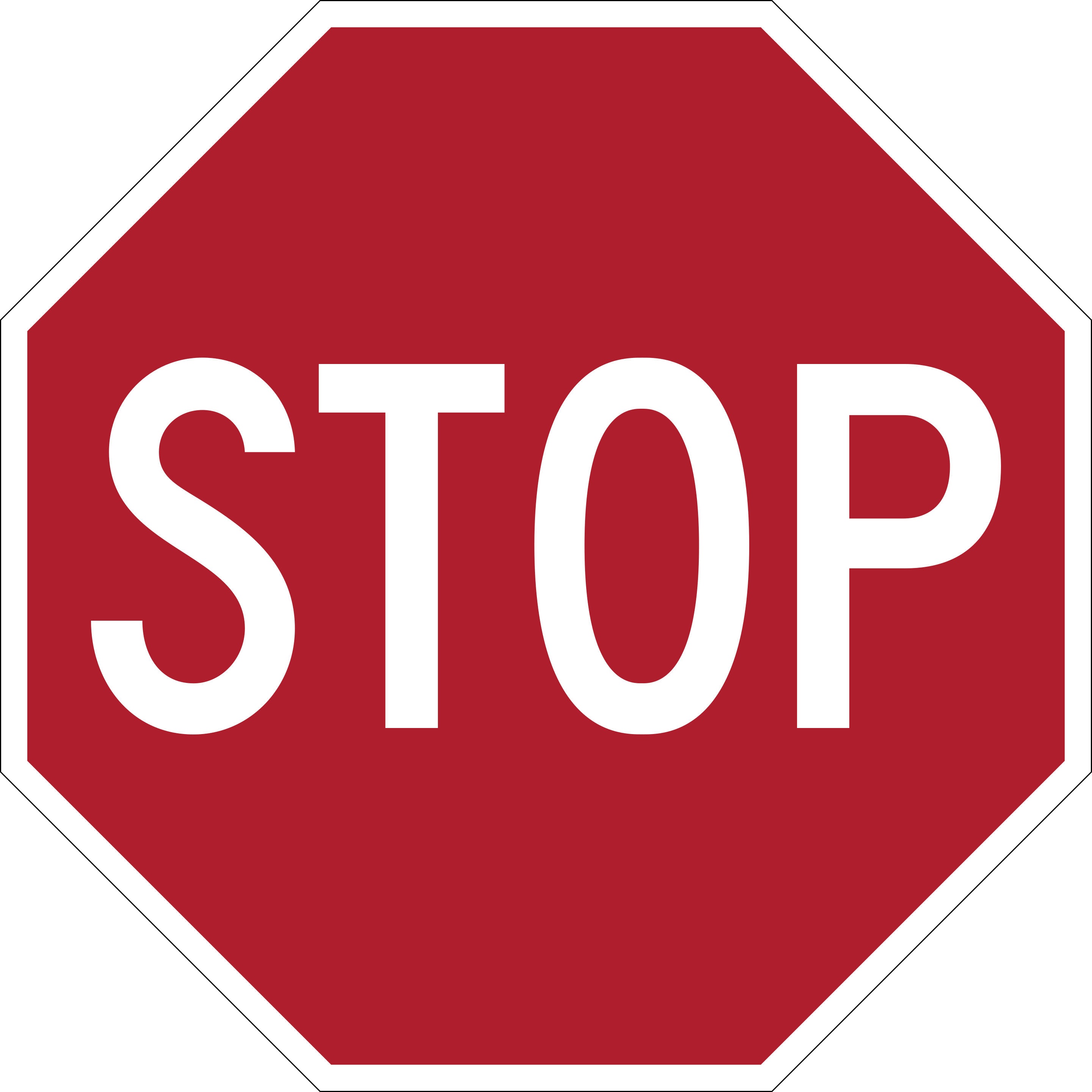
10. At the pictured sign, a painted stop line lies before the crosswalk. Where must your vehicle stop?
- With the front wheels touching the crosswalk
- Behind the painted stop line
- Beyond the line where cross traffic is easier to see
- Inside the intersection before turning
Show answer
Behind the painted stop line. Position the vehicle behind the stop line so the crosswalk and intersection remain available to other road users. Moving beyond the line for a better view is not a substitute for the required initial stop. If visibility remains limited after stopping, check carefully before advancing. The painted bar across your lane is the practical reference point: keep the front of your vehicle behind it rather than placing your wheels on the pedestrian crossing.
Study this in the handbook: Pavement Markings and Special Lanes
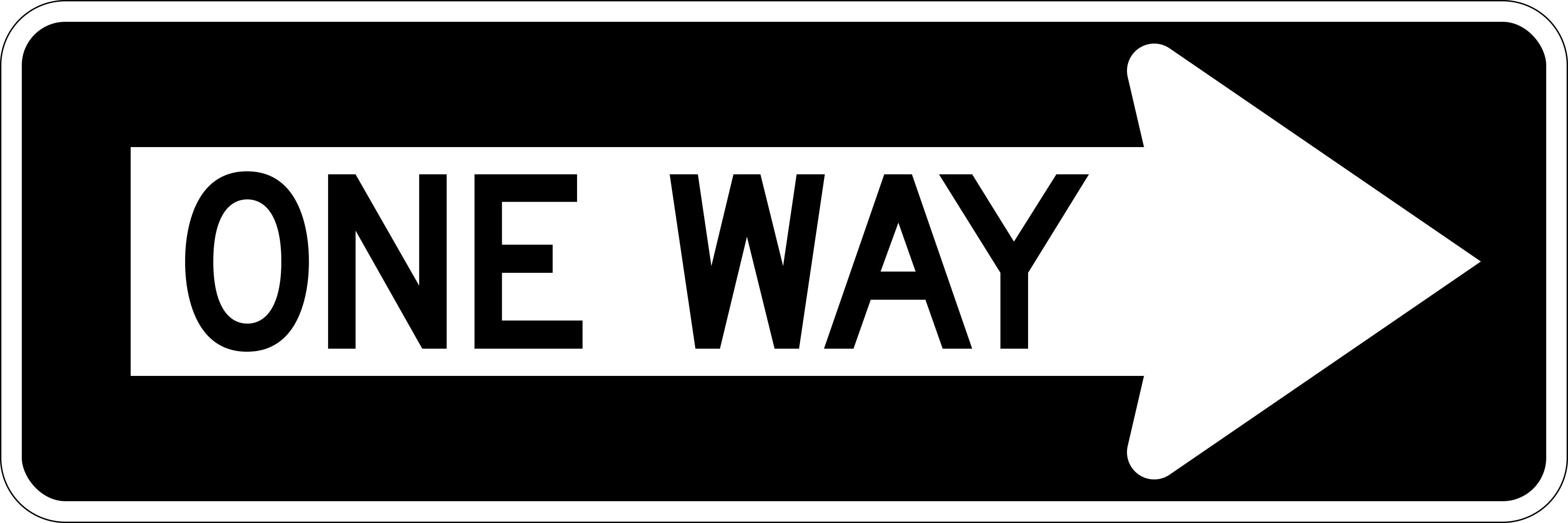
11. You want to reach a business opposite the arrow on this ONE WAY sign. How should you choose your route?
- Turn against the arrow if the business is within one block
- Follow the arrow and find another lawful approach
- Drive against the arrow along the curb
- Back along the street to avoid making a prohibited turn
Show answer
Follow the arrow and find another lawful approach. Traffic on the signed street moves in the arrow’s direction. Reaching a nearby address does not justify turning the opposite way, even for a short distance. Driving close to the curb would still send your vehicle against the established traffic flow. Use the arrow as the immediate cue for your allowed direction, then select another lawful street or approach that takes you to the business without opposing vehicles traveling correctly on the one-way road.
Study this in the handbook: Regulatory, Guide and Route Signs
12. A 19-year-old who has never held a license violates Utah's Not-a-Drop Act. Can the violation affect future driving privileges?
- No, penalties start only after a license is issued
- No, completing driver education removes the violation
- Yes, privileges can be denied despite never having a license
- Yes, but only after a later licensed driving offense
Show answer
Yes, privileges can be denied despite never having a license. Never having received a license does not protect someone from a Not-a-Drop action. Utah can deny driving privileges before the person obtains a license. Waiting until a license is issued is therefore not a condition for the penalty. Picture an unlicensed teenager planning to apply for a permit: an alcohol violation can affect that plan now, rather than waiting for a future offense committed after licensing.
Study this in the handbook: Alcohol, Drugs and the 0.05 Limit
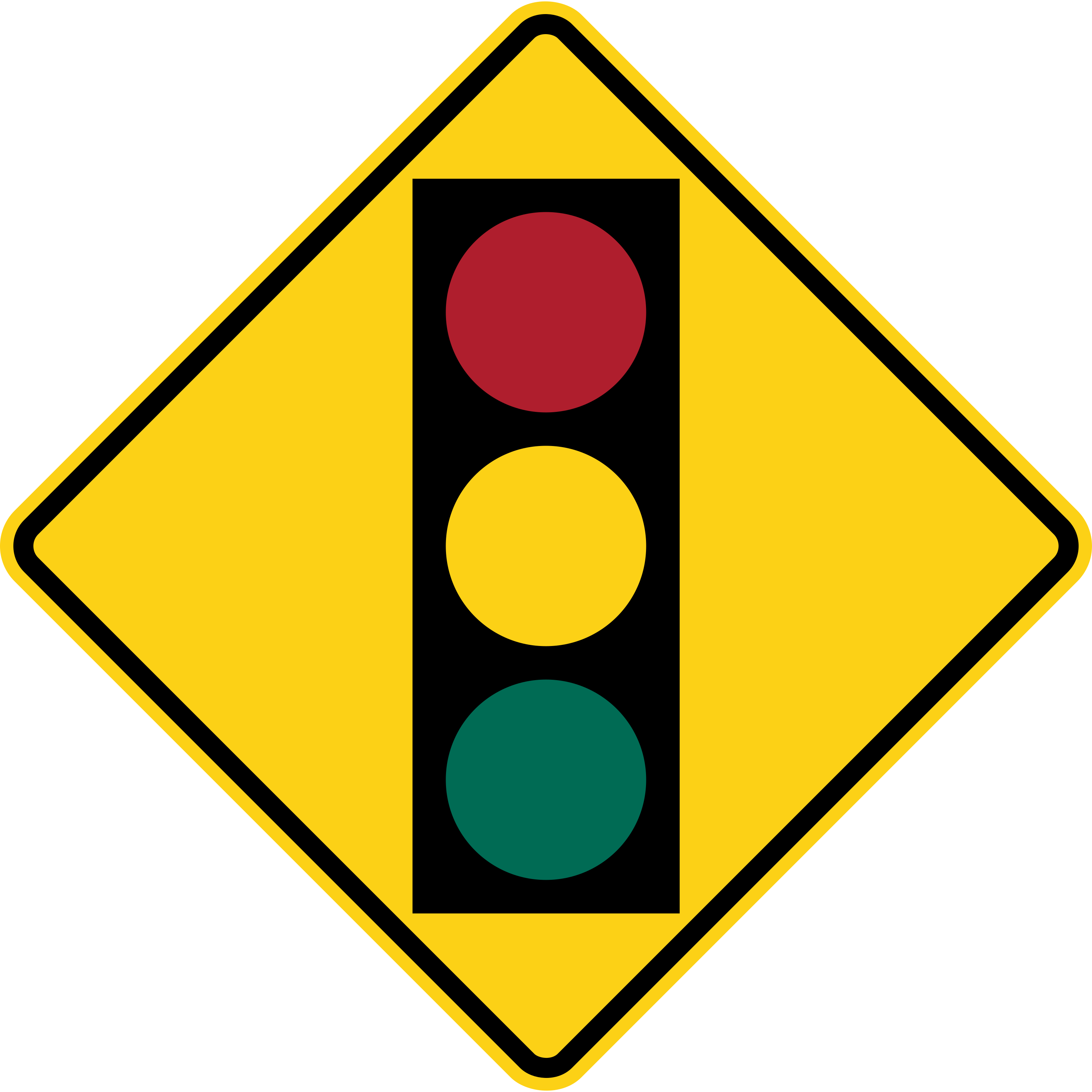
13. After this traffic-signal warning sign, an officer directs you to stop while the light is green. Which instruction controls?
- The green light because it is an automatic control
- The warning sign, which allows continued travel
- The movement of the vehicle ahead of you
- The officer’s instruction to stop
Show answer
The officer’s instruction to stop. An officer directing traffic at an intersection takes precedence over the light’s indication. A green signal therefore does not authorize moving past the officer’s stop instruction. Another vehicle proceeding ahead cannot supply that authorization either. The warning sign gives you notice of the approaching signal, but continue scanning the actual intersection for active traffic direction. An officer’s raised hand or other stop command is the cue to halt even if the lamp remains green.
Study this in the handbook: Regulatory, Guide and Route Signs
14. Under Utah's rules on speed, what does the handbook say about the posted limit at night?
- Driving the posted limit at night may be too fast
- The posted limit is always the safe speed at night
- You may exceed the limit at night if traffic is light
- Night speed limits are 10 mph higher
Show answer
Driving the posted limit at night may be too fast. The law requires that you drive at a reasonable and prudent speed, and the handbook warns that especially at night, driving the posted speed limit may be too fast. At night the distance you can see is limited, so the limit is not a promise that a speed is safe, and there is no night bonus or light traffic exception. The handbook adds that you should use your lights any time conditions keep you from seeing 1,000 feet ahead and increase your following distance at night by at least two seconds.
Study this in the handbook: Night Driving, Weather, Floods and Skids
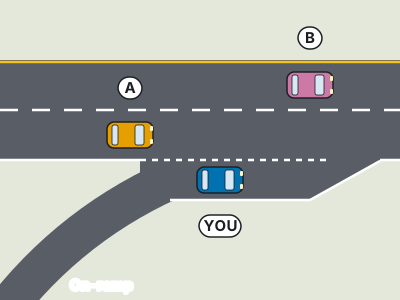
15. What is a driver merging into a lane of traffic required to do under the Utah handbook?
- Force a gap by signaling and moving over
- Stop at the end of the ramp and wait for a wave
- Yield the right of way to vehicles already traveling in the continuing lane
- Match speed and expect the through traffic to yield
Show answer
Yield the right of way to vehicles already traveling in the continuing lane. The handbook puts the duty on the merging driver: if you are merging into a lane of traffic, you must yield the right of way to all vehicles traveling in the continuing lane that are close enough to be an immediate threat. Signaling only tells others what you intend; it does not create a gap or make them brake. Through drivers are not required to give way to you, and the rule does not call for a full stop and a wave. Watch the vehicles in the continuing lane, judge their position and closing speed, and merge into a safe gap without forcing anyone to brake.
Study this in the handbook: Pavement Markings and Special Lanes
16. How long must you signal before moving into another lane in Utah?
- At least two seconds before the move
- For one quick flash as the tires cross the line
- At least five seconds after entering the lane
- Only while turning your head to check the blind spot
Show answer
At least two seconds before the move. Give the lane-change signal at least two seconds before moving toward the adjacent lane. A single flash at the lane line leaves nearby drivers without the advance notice Utah calls for. After checking mirrors, use the signal and look over your shoulder toward the intended movement to check the blind spot. The lane stripe is a useful cue: the warning interval should happen before you begin moving across it.
Study this in the handbook: Lane Changes, Passing, Turns and U-Turns
17. What is required before a Utah driver may make a lane change, according to the signal rule?
- Signal at the moment you move over
- Signal for at least two seconds before beginning the lane change
- No signal is needed if the lane is empty
- Flash the headlights
Show answer
Signal for at least two seconds before beginning the lane change. Utah measures the signal in time, not distance: the handbook says signals are required for two seconds before beginning any lane change and for two seconds before turning. Signaling as you move gives no warning, headlights are not a lane change signal, and an empty lane can fill from your blind spot in the time it takes to look. Signal, check the mirror and the blind spot, then move smoothly.
Study this in the handbook: Lane Changes, Passing, Turns and U-Turns
18. When must you dim your headlights for bicyclists at night in Utah?
- Never; bicyclists are not covered by the dimming rule
- Only when they flash a light at you
- Within 500 feet when approaching or overtaking them
- Within 50 feet
Show answer
Within 500 feet when approaching or overtaking them. A bicyclist is blinded by high beams just as a driver is, and has less protection if they swerve. The handbook says to dim your headlights within 500 feet when approaching or overtaking bicyclists at night. The rule does not depend on a signal from the rider, riders are covered like any other road user, and 50 feet is far too late. Dim early, slow down, and give the rider room as you pass.
Study this in the handbook: Pedestrians, Bicycles and Motorcycles
19. When does a Utah provisional license, issued to someone under 21, expire?
- On the birthday five years after issue
- On the birthday eight years after issue
- At age 18
- Exactly one year after issue
Show answer
On the birthday five years after issue. Utah issues a provisional license to any applicant under 21, and it expires on the applicant's birthday five years after issue. Eight years is the term for an original license issued to an applicant over 21. The license does not expire at 18 or after one year. The handbook explains that applicants under 21 receive a provisional license for the purpose of using a separate point system.
Study this in the handbook: Renewal, Phone Laws and the Point System
20. When can a Utah officer stop a vehicle just because an occupant is not wearing a seat belt?
- Never; belt violations are only added after another stop
- Only on freeways
- When anyone under 16 years of age is unrestrained
- Only when the driver is unbelted
Show answer
When anyone under 16 years of age is unrestrained. Utah allows a stop and citation when anyone under 16 in the vehicle is unrestrained. Occupants 16 and older may be cited for a belt violation only if the vehicle was stopped for another reason. So saying belt violations are never a reason to stop is wrong for children, and the rule is not limited to freeways or to the driver. A citation can be issued for each unrestrained passenger.
Study this in the handbook: Seat Belts, Car Seats and Air Bags
QualitySpace is expanding to Utah
We are a California-based independent insurance brokerage working on licensing in more states. We cannot help with Utah insurance yet. Leave your email and we will let you know when we can.
Every question is written from the official Utah Driver Handbook. Need paper? Printable UT practice test with answer key.
Last verified 2026-10-05. How we check every question · Study all 220 as flashcards
Frequently asked questions
How many questions are on this Utah practice test?
This fixed set has 20 questions. It is test 6 of 11 from the 220 question Utah bank. The real UT exam asks 50 questions and you need 40 correct.
What is the passing score for the real Utah test?
You must pass with a score of 80% or better That figure comes from the official Utah source cited on the DMV facts page.
How does this fixed test relate to the full Utah bank?
Each numbered test is a fixed set of questions in a fixed order, so you can retake the same test later and compare. Every test mixes road signs and the other topics in about the same proportion as the full bank. Tests 1 to 11 together cover every question in the Utah bank once. The full practice page mixes the whole bank at random.
Last verified 2026-10-05. See the Utah DMV facts page for sourced state details.