
Test 8 of 10 · 20 questions · Free 2026
AR Permit Practice Test 8
Jump to the test ↓A fixed 20 question set from the Arkansas bank with answers and plain English explanations.
Question 1 of 20 · 0 right so far
All 20 questions in test 8
Every question below comes from the Arkansas question bank on this page. Open a question to see the correct answer and the explanation. Nothing here is hidden behind a signup.
1. For which ages does Arkansas issue the Intermediate License?
- 16 to 18
- 14 to 16
- 18 to 21
- 15 to 17
Show answer
16 to 18. The Intermediate License is a restricted license for drivers between 16 and 18. Ages 14 to 16 are covered by the Learner's License, and 18 is when a non-restricted Class D license becomes available, so 18 to 21 is not the intermediate range. Fifteen to seventeen is not an Arkansas stage. Intermediate drivers face a passenger limit, a night curfew, and a ban on phone use except in emergencies.
Study this in the handbook: Instruction Permits and Graduated Licenses
2. How much more likely are distracted teens who text while driving to crash, according to research cited in the Arkansas guide?
- 23 times more likely
- Twice as likely
- No more likely
- Half as likely
Show answer
23 times more likely. National research has found that distracted teens who are texting while driving are 23 times more likely to be involved in a crash, and those crashes are often more serious because the driver reacts late or not at all. Sending or reading a text takes your eyes off the road for about five seconds, a football field at 55 mph. Arkansas bans cell phone use for drivers under 18 except in an emergency.
Study this in the handbook: Work Zones
3. When should a driver use emergency flashers or hazard lights?
- To replace a turn signal during every lane change
- To warn other drivers of an emergency or broken-down vehicle
- To claim priority while entering an intersection
- To tell following drivers that a turn is optional
Show answer
To warn other drivers of an emergency or broken-down vehicle. Emergency flashers warn other drivers about an emergency, a broken-down vehicle, or a car parked on the side of the road. They are not a replacement for a turn signal during an ordinary lane change, and they do not give a driver priority at an intersection. A flashing light also does not make a turn optional for following traffic. If the vehicle is disabled, move it away from traffic when possible and activate the flashers so approaching drivers receive an early warning.
Study this in the handbook: Headlights, Horn and Signals
4. What can happen to someone who illegally uses another person's accessible parking certificate in Arkansas?
- A $10 parking fee
- A verbal warning
- Nothing if the owner gave permission
- A Class A misdemeanor for fraud, with fines from $100 to $500 for a first offense
Show answer
A Class A misdemeanor for fraud, with fines from $100 to $500 for a first offense. Anyone who illegally uses another person's special certificate has committed fraud and can be found guilty of a Class A misdemeanor under Arkansas Code 27-15-305. The first offense carries a minimum of $100 and up to $500. A second offense brings $250 to $1,000, a six month license suspension, and liability for towing, impoundment, attorney fees and court costs. The certificate holder must be in the vehicle.
Study this in the handbook: Parking Rules and Accessible Parking
5. In fatal crashes between a car and a tractor trailer, who is usually at fault, according to NHTSA figures in the Arkansas guide?
- The truck driver, in most cases
- Neither, usually weather
- Both equally
- The car, in 72 percent of such crashes
Show answer
The car, in 72 percent of such crashes. According to the National Highway Traffic Safety Administration, in 72 percent of fatal crashes involving two or more vehicles where one is a tractor trailer, the cause is usually attributed to a car. The guide lists common mistakes around trucks, such as cutting into the open space in front of a truck and lingering alongside one while passing. A fully loaded truck at 55 mph may need more than 335 feet to stop.
Study this in the handbook: Trucks, Motorcycles and Bicycles
6. What alcohol restriction applies to an Arkansas person under 21 apart from impaired driving?
- Purchasing or consuming alcohol is prohibited
- Beer is allowed but liquor is prohibited
- Alcohol is allowed when a parent is present
- Consumption is allowed after midnight only
Show answer
Purchasing or consuming alcohol is prohibited. The guide states that a person under 21 may not purchase or consume alcohol. The rule is broader than a distinction between beer and liquor, and neither a parent’s presence nor a time of day creates the listed exception. Keep this separate from the BAC rule: the question concerns purchase and consumption itself, not merely the condition of operating a vehicle while impaired.
Study this in the handbook: Drivers Under 21 and Alcohol
7. What changed in Arkansas' seat belt law on June 30, 2009?
- An officer may stop a vehicle solely because the driver or front seat passenger is not buckled up
- Only rear seat passengers must buckle up
- Seat belts became optional for adults
- Fines were eliminated
Show answer
An officer may stop a vehicle solely because the driver or front seat passenger is not buckled up. Beginning June 30, 2009, Arkansas' seat belt law changed to permit a law enforcement traffic stop based on the primary violation of a driver or front seat passenger who is not buckled up. The violation carries a fine of not more than $25 plus any court costs or fees. It is illegal to drive or ride in the front seat without a properly fastened belt, and children under 15 must be in appropriate restraints.
Study this in the handbook: Seat Belts, Child Seats and Littering
8. If your brakes stop working, what should you try first?
- Continue driving until the brakes repair themselves
- Pull the parking brake sharply and immediately
- Pump the brake pedal several times
- Turn the steering wheel into oncoming traffic
Show answer
Pump the brake pedal several times. The first response to brake failure is to pump the brake pedal several times, because this can rebuild enough pressure to stop. A sharp parking-brake pull may lock the rear wheels and cause a skid, so the manual calls for using that brake slowly only if pumping does not work. If necessary, shift to lower gears and find a safe place off the roadway. Keep control, warn others, and do not continue normal driving after the braking system has failed. The cue is gradual control, not a sudden steering or braking maneuver.
Study this in the handbook: Vehicle Emergencies and Crashes
9. When may drivers avoid stopping for a school bus with flashing red lights on the opposite side?
- When the bus is stopped at an intersection
- When the driver is late for work
- When the opposite lanes are separated by a median at least 20 feet wide
- When the driver can see no children nearby
Show answer
When the opposite lanes are separated by a median at least 20 feet wide. Drivers generally must make a complete stop for a stopped school bus with red lights flashing, regardless of whether they are in the bus's lane, the opposing lane, or at an intersection. The stated exception is an opposite lane of travel separated by a median 20 feet or more in width. A narrow median does not qualify, and seeing no children does not cancel the stop rule. Watch the bus lights and the roadway design, stop before reaching the bus, and remain stopped until the lights are off and the bus has resumed moving.
Study this in the handbook: Stopping for School Buses
10. If the yellow center marking on your side is broken and the other side is solid, when may you pass?
- Only after crossing the solid line first
- When there is no opposing traffic
- At any time before an intersection
- Never, because every yellow line forbids passing
Show answer
When there is no opposing traffic. A broken yellow line between opposing lanes permits a driver to cross for passing when no opposing traffic is present. The solid line on the other side restricts that opposing direction, so the two markings do not give both directions identical permission. Check sight distance, traffic, and roadway conditions before moving across. The memory cue is to read the line nearest your vehicle: broken on your side can allow a safe pass, while solid bars the maneuver.
Study this in the handbook: Pavement Markings and Lane Use
11. Where is a round black-on-yellow railroad warning sign placed?
- Only beside a railroad station platform
- Inside the crossing after the tracks begin
- Ahead of a public highway-rail intersection
- At the end of a highway-rail intersection
Show answer
Ahead of a public highway-rail intersection. The round black-on-yellow railroad warning sign is positioned in advance of a public highway-rail intersection. Its location gives the driver time to reduce speed, search for a train, listen, and prepare to stop at the tracks. The choice placing it inside the crossing defeats the advance-warning purpose. A station platform is not the defining location, and placing the sign at the end of the crossing gives the warning too late. When this circular sign appears, begin the observation and speed adjustment before reaching the rails.
Study this in the handbook: Warning and Railroad Crossing Signs
12. What does a light green arrow permit a driver to do?
- Turn in any direction without watching for hazards
- Turn in the direction of the arrow after checking that it is safe
- Proceed straight only and ignore the arrow
- Wait until the arrow changes to flashing red
Show answer
Turn in the direction of the arrow after checking that it is safe. A light green arrow permits a driver to turn in the arrow's direction, and the manual describes left turns under the arrow as protected because opposing traffic must stop. The arrow does not eliminate the need to confirm that the movement is safe, especially for pedestrians or vehicles already in the intersection. The choice allowing any direction changes the signal's meaning, while waiting for red would waste a protected movement. Follow the arrow, stay in the marked turn path, and scan the intersection before moving.
Study this in the handbook: Traffic Lights and Arrows
13. How close to the curb must an Arkansas driver parallel park?
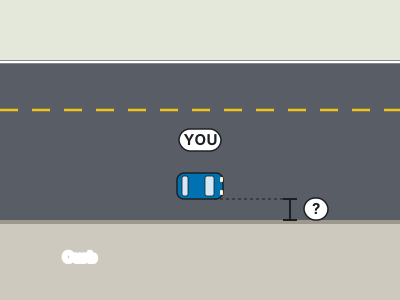
- Within 3 feet
- Within 24 inches
- 18 inches or less
- Any distance if the wheels are straight
Show answer
18 inches or less. When parallel parking, your vehicle should be 18 inches or less from the curb. If you park on the roadway, park as far from traffic as possible and as close to the curb as you can. On a hill, turn the wheels sharply away from traffic so the car cannot roll into the lane, and check traffic before opening a street side door.
Study this in the handbook: Parking Rules and Accessible Parking
14. What cell phone use does Arkansas allow for a driver under 18?
- Hands free calls only
- Calls but not texts
- Any use when stopped at a light
- None except in an emergency, not even hands free devices
Show answer
None except in an emergency, not even hands free devices. Under the Fewer Distractions Means Safer Driving Act, drivers under 18 may not use a cell phone except in an emergency, and hands free devices are not allowed for them either. Drivers 18 or older may use a hands free device, though it is not recommended, and drivers 21 or older may use a cell phone, though the guide warns it is never safe to talk and drive. Texting is prohibited for everyone under the No Texting Law.
Study this in the handbook: Phone Laws and Distracted Driving
15. What information does a yellow, usually diamond-shaped roadway sign provide?
- A service location for motorists
- A rule about parking fees and hours
- A warning about a hazard or special situation ahead
- A route number and destination distance
Show answer
A warning about a hazard or special situation ahead. Yellow warning signs with black lettering or symbols call attention to a hazard, change, or special situation ahead. They are meant to prompt preparation, which may include reducing speed or being ready to stop. A service sign identifies help such as fuel or food, while a guide sign provides route information; neither has the warning-sign meaning. When a yellow diamond appears, look for the condition it describes and adjust before reaching it.
Study this in the handbook: Stop, Yield and Regulation Signs
16. What does the red-circle symbol on this DO NOT ENTER sign tell a driver?
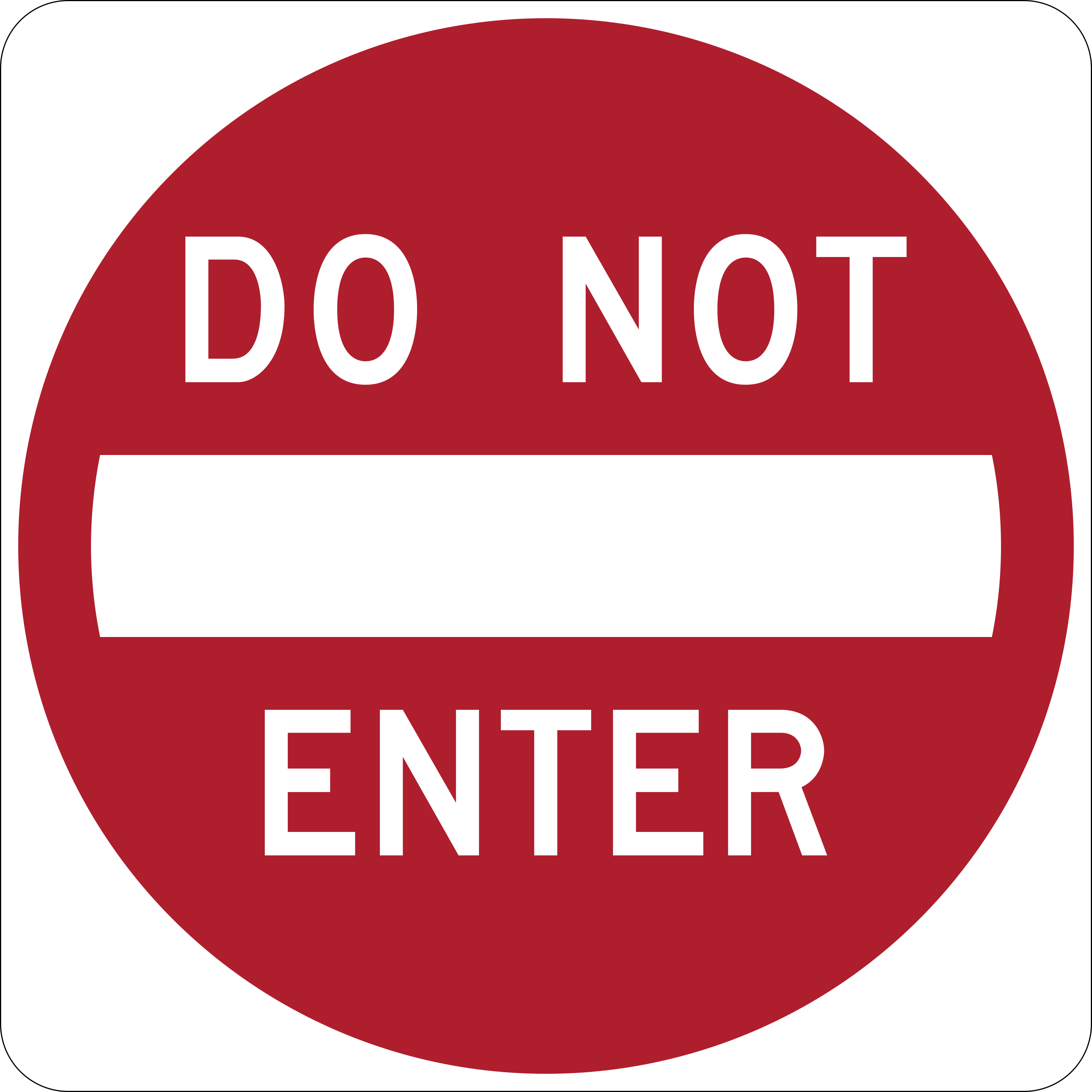
- Parking is allowed for a short period on the signed side
- The road is open, but only to vehicles turning right
- The driver must stop and wait for a crossing train
- The indicated movement or entry is prohibited
Show answer
The indicated movement or entry is prohibited. The manual describes a do not enter sign as a red circle crossed by a line, meaning the indicated entry is not allowed. Treat that message as a restriction on your movement, not as a temporary parking instruction or a railroad warning. The right-turn option invents permission that the symbol does not provide, and a train-related stop belongs to railroad controls. The practical cue is simple: a red barred symbol marks a forbidden movement, so choose another legal route before entering the signed area.
Study this in the handbook: Stop, Yield and Regulation Signs
17. At this red octagonal sign, what must the driver do before proceeding?
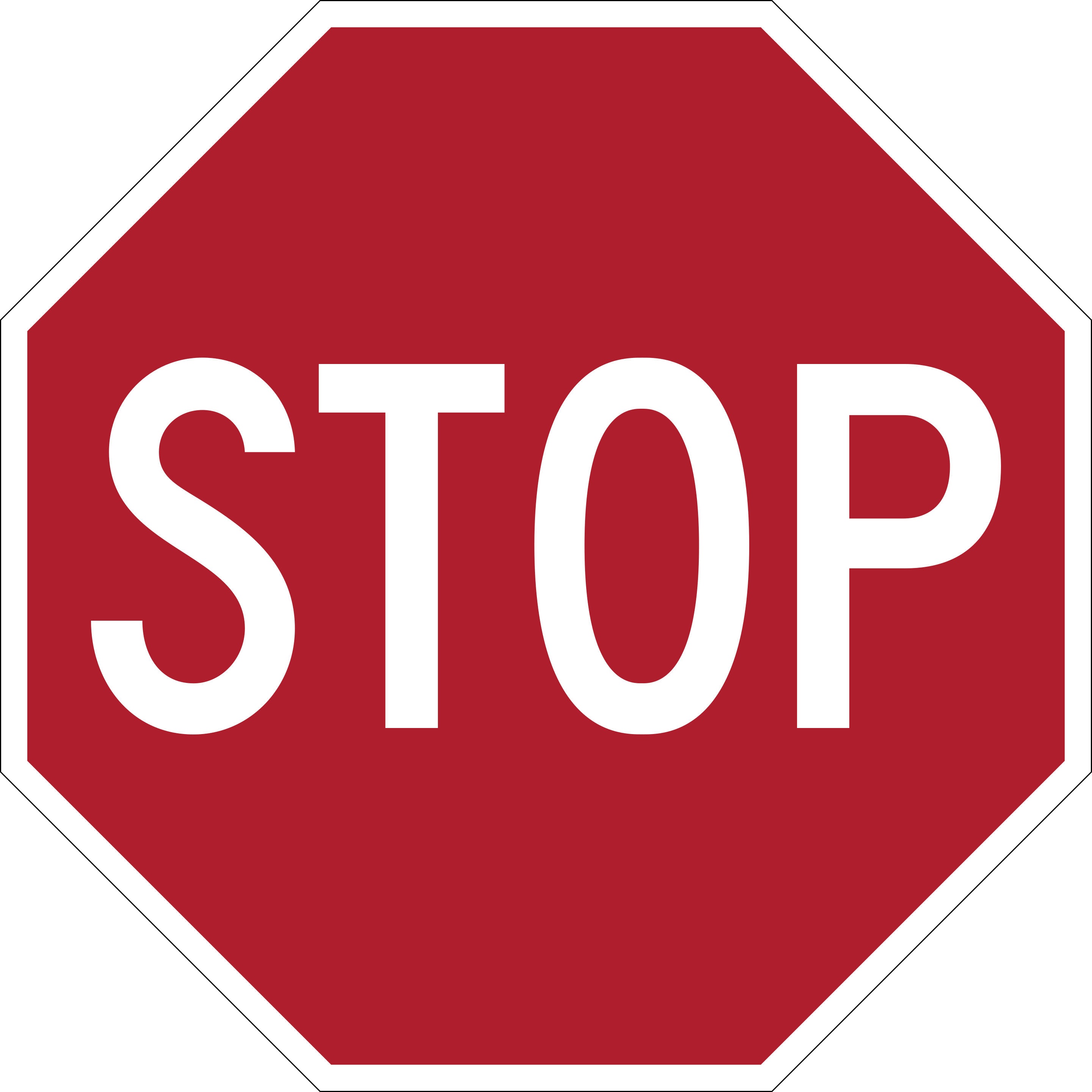
- Make a complete stop and wait for crossing traffic and pedestrians to clear
- Reduce speed, then continue without stopping if the road looks open
- Stop only when a vehicle is approaching from the other direction
- Yield briefly while keeping the vehicle moving through the intersection
Show answer
Make a complete stop and wait for crossing traffic and pedestrians to clear. A stop sign requires a complete stop, followed by waiting until crossing vehicles and pedestrians have cleared the intersection. The octagonal shape is a strong recognition cue, but the required action matters more than simply identifying the sign. Merely reducing speed leaves no guaranteed pause for a person in the crosswalk. Waiting for only opposing vehicles ignores cross traffic and pedestrians. After stopping, move forward only when the entire path is safe, especially if an obstruction required you to inch ahead for a better view.
Study this in the handbook: Stop, Yield and Regulation Signs
18. How long is an Arkansas instruction permit valid, and can it be renewed?
- Until age 18
- One year, renewable once
- Six months, renewable
- Two years, and it cannot be renewed or extended
Show answer
Two years, and it cannot be renewed or extended. The instruction permit is valid for two years and cannot be renewed or extended. The skills exam must be completed and a license purchased before the two year expiration, or the applicant must retake all phases of the driver's exam. Schedule the driving portion online well before the deadline and bring a licensed driver age 21 or older, insurance and registration to the test.
19. A speed limit sign shows the maximum speed for which driving conditions?
- Every condition, including poor visibility
- Ideal conditions
- Only dry roads during daylight
- Only conditions approved by a police officer
Show answer
Ideal conditions. The posted maximum assumes ideal conditions, so it is not a promise that the same speed is safe in rain, ice, or limited visibility. The choice “Every condition, including poor visibility” incorrectly treats the number as fixed even when hazards arise. A driver should scan the road and weather after reading the sign, then reduce speed when traction or sight distance worsens. The sign gives a ceiling for that section, not permission to ignore changing conditions.
Study this in the handbook: Speed Limits and Road Conditions
20. When entering an Arkansas traffic circle, whom must the entering driver yield to?
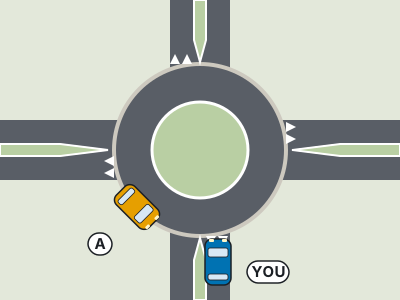
- Drivers stopped behind the entrance
- Drivers already in the circle
- Only pedestrians outside the circle
- No one if the entering vehicle signals
Show answer
Drivers already in the circle. Traffic already circulating has priority over a vehicle approaching the entrance. The entering driver must slow, look for a safe gap, and yield before joining the flow. A turn signal does not create priority, and traffic behind the vehicle has no special claim. The pedestrian-only option is too narrow because the manual specifically assigns the yield duty to drivers already traveling in the circle.
Study this in the handbook: Pedestrians, Sidewalks and Traffic Circles
QualitySpace is expanding to Arkansas
We are a California-based independent insurance brokerage working on licensing in more states. We cannot help with Arkansas insurance yet. Leave your email and we will let you know when we can.
Every question is written from the official Arkansas Driver License Study Guide. Need paper? Printable AR practice test with answer key.
Last verified 2026-10-05. How we check every question · Study all 200 as flashcards
Frequently asked questions
How many questions are on this Arkansas practice test?
This fixed set has 20 questions. It is test 8 of 10 from the 200 question Arkansas bank.
How does this fixed test relate to the full Arkansas bank?
Each numbered test is a fixed set of questions in a fixed order, so you can retake the same test later and compare. Every test mixes road signs and the other topics in about the same proportion as the full bank. Tests 1 to 10 together cover every question in the Arkansas bank once. The full practice page mixes the whole bank at random.
Last verified 2026-10-05. See the Arkansas DMV facts page for sourced state details.
Return to the full Arkansas practice test · Study road signs