
Test 10 of 10 · 20 questions · Free 2026
AR Permit Practice Test 10
Jump to the test ↓A fixed 20 question set from the Arkansas bank with answers and plain English explanations.
Question 1 of 20 · 0 right so far
All 20 questions in test 10
Every question below comes from the Arkansas question bank on this page. Open a question to see the correct answer and the explanation. Nothing here is hidden behind a signup.
1. During which hours may an Arkansas Intermediate License holder not drive unless an exception applies?
- Midnight to 5:00 am
- 10:00 pm to 5:00 am
- 11:00 pm to 4:00 am
- 9:00 pm to 6:00 am
Show answer
11:00 pm to 4:00 am. An intermediate driver may not drive between 11:00 pm and 4:00 am unless a licensed driver 21 or older is along, or the trip is to or from a school activity, church activity, job, or an emergency. The other hour ranges do not match the Arkansas rule, which starts at 11:00 pm and ends at 4:00 am. The curfew is separate from the one unrelated minor passenger limit.
Study this in the handbook: Instruction Permits and Graduated Licenses
2. When may a vehicle with an Arkansas Special Certificate (accessible parking hang tag) park in an accessible space?
- Whenever the tag is hanging from the mirror
- Whenever a family member drives
- Only when the person with the disability is present in the vehicle
- Only on weekdays
Show answer
Only when the person with the disability is present in the vehicle. A Special Certificate is registered to the person with the disability and can move between vehicles, but that person must be present in the vehicle when it parks in an accessible space and must carry the matching photo ID card. Simply hanging the tag is not enough, and a family member cannot use it alone. Illegally using another person's certificate is fraud, a Class A misdemeanor.
Study this in the handbook: Parking Rules and Accessible Parking
3. According to the Arkansas guide, which driving ability is affected first by alcohol?
- Hearing
- Judgment
- Night vision only
- Steering strength
Show answer
Judgment. The guide says the first driving ability affected by alcohol is judgment. That is why drinking is so dangerous: judgment is what tells you when to stop drinking, and by the time you feel the effects it is already impaired. Hearing, night vision alone, and steering strength are not what the guide names first. Alcohol also slows reflexes, reduces vision, and makes drivers less alert.
Study this in the handbook: Drinking and Driving
4. For how long is an Arkansas instruction permit valid, counted from the date the knowledge exam is passed?
- It remains valid for five years
- It expires after six months
- It is issued for two years
- It is valid only until the next birthday
Show answer
It is issued for two years. The instruction permit runs for two years from the date the applicant passes the knowledge exam. The six-month and five-year options confuse this permit with other licensing periods, while the birthday option has no stated connection to permit validity. Applicants should use the exam date as the starting point when calculating the period, not the date of a later office visit or a birthday.
Study this in the handbook: Instruction Permits and Graduated Licenses
5. What right-of-way do pedestrians using a guide dog or carrying a white cane have?
- No priority if the driver is already turning
- Priority only at marked crosswalks
- Priority only when accompanied by another adult
- Absolute right-of-way
Show answer
Absolute right-of-way. The guide gives pedestrians who carry a white cane or use a guide dog absolute right of way. Nothing in that rule limits the protection to marked crosswalks, and a turning maneuver does not cancel it. The guide also warns against using the horn near a blind pedestrian, because the sound could confuse or frighten the person. The choice requiring another adult invents a condition. Wait patiently, keep the vehicle stopped, and let the person finish crossing before you move.
Study this in the handbook: Pedestrians, Sidewalks and Traffic Circles
6. What phone restriction applies to an Arkansas Class D driver who is 18 but under 21?
- All phone communication is allowed if traffic is light
- Hands-free interactive communication is allowed, but handheld use is limited to emergencies
- Only texting is allowed through a hands-free device
- Handheld calls are allowed on interstates only
Show answer
Hands-free interactive communication is allowed, but handheld use is limited to emergencies. For a Class D driver in this age band, the guide permits a hands-free wireless telephone or device for interactive communication while driving. A handheld wireless telephone is limited to emergencies, and texting remains prohibited regardless of age. The traffic-density and interstate choices invent exceptions. The practical check is the device and the type of use: hands-free communication may qualify, while a handheld call does not except for an emergency.
Study this in the handbook: Phone Laws and Distracted Driving
7. If the accelerator sticks and the engine keeps running faster, what should the driver do first?
- Quickly shift the transmission to neutral
- Pump the accelerator repeatedly
- Turn the ignition off before steering
- Pull the parking brake sharply at once
Show answer
Quickly shift the transmission to neutral. A stuck accelerator can keep the vehicle gaining speed, so the first control step is to disconnect the engine from the drive wheels by shifting to neutral. Keep watching the roadway, steer toward a safe place, and shut off the engine after the vehicle is positioned safely. Pumping the pedal does not address the fault, and an abrupt ignition shutdown before steering may complicate control. Remember the sequence as neutral, roadway, safe stop, engine off.
Study this in the handbook: Vehicle Emergencies and Crashes
8. Why should a driver avoid driving when tired?
- Rest helps prevent falling asleep at the wheel and crashing
- Fatigue only affects fuel use, not vehicle control
- A short drive makes sleepiness disappear automatically
- Opening a window guarantees that a tired driver is safe
Show answer
Rest helps prevent falling asleep at the wheel and crashing. The manual says a driver cannot drive safely when tired and explains that being rested can help prevent falling asleep at the wheel and crashing. Fatigue is a safety problem, not a fuel or comfort issue. Fresh air or a short drive may make someone feel temporarily more alert without restoring safe judgment and attention. Plan to leave after adequate sleep, take regular breaks, and stop to sleep rather than gambling on staying awake. The key cue is sleepiness itself: if you are struggling to remain alert, do not continue driving.
9. According to the Arkansas Department of Finance and Administration, how long is the license suspension for a first DWI alcohol offense?
- 30 days
- 6 months
- 24 months
- 4 years
Show answer
6 months. The Department of Finance and Administration lists a 6 month suspension for a first DWI or BWI alcohol offense. A second offense within five years brings a 24 month suspension, a third brings 30 months, and a fourth brings a 4 year revocation. Before reinstatement the driver must complete a state sanctioned alcohol education or treatment program, attend a Victim Impact Panel, keep an ignition interlock for a period equal to the suspension, and pay a $150 reinstatement fee. The printed study guide still shows 120 days, so rely on the DFA figure.
Study this in the handbook: Drinking and Driving
10. What is the best initial response to a sudden tire blowout?
- Hold the steering wheel tightly and keep the vehicle going straight
- Slam on the brakes and turn sharply toward the shoulder
- Release the steering wheel so the vehicle can settle itself
- Accelerate hard to reach the next intersection
Show answer
Hold the steering wheel tightly and keep the vehicle going straight. After a sudden tire blowout, hold the steering wheel tightly and keep the vehicle traveling straight. Then take your foot off the gas, slow gradually, use the brakes lightly, and pull off the road in a safe place if possible. Slamming the brakes or turning sharply can make the vehicle harder to control, especially when one tire has lost pressure. The practical sequence is control first, gradual slowing second, and a safe roadside position third. Do not stop in a travel lane if a safer location is available.
Study this in the handbook: Vehicle Emergencies and Crashes
11. What does a steady yellow arrow tell a driver turning left?
- The signal requires the driver to reverse before entering
- The left turn is protected and opposing traffic must stop
- The driver may turn left without checking the intersection
- The signal is getting ready to turn red, so stop if safe
Show answer
The signal is getting ready to turn red, so stop if safe. A steady yellow arrow warns that the signal is preparing to turn red. A driver turning left should stop if it is safe to do so, rather than beginning a movement that cannot be completed lawfully. The protected-turn description belongs to a light green arrow, while the choice “The driver may turn left without checking the intersection” wrongly removes the need to evaluate the intersection. Reversing is unrelated to this signal. Treat the yellow indication as a transition, check the space around the vehicle, and stop smoothly when stopping can be done safely.
Study this in the handbook: Traffic Lights and Arrows
12. How far before applying for an Arkansas Learner's License must the applicant avoid a crash or serious traffic conviction?
- The preceding six months
- The preceding three months
- The preceding 30 days
- The preceding 12 months
Show answer
The preceding six months. The applicant must not have been involved in a traffic crash or convicted of a serious traffic violation during the six months preceding the application. Thirty days and three months shorten the clean-record period, while twelve months extends it beyond the guide's condition. This rule concerns both crash involvement and conviction, not just one type of event. Link the learner application to a six-month lookback when reviewing eligibility facts.
Study this in the handbook: Instruction Permits and Graduated Licenses
13. When approaching this triangular YIELD sign, which action is required?
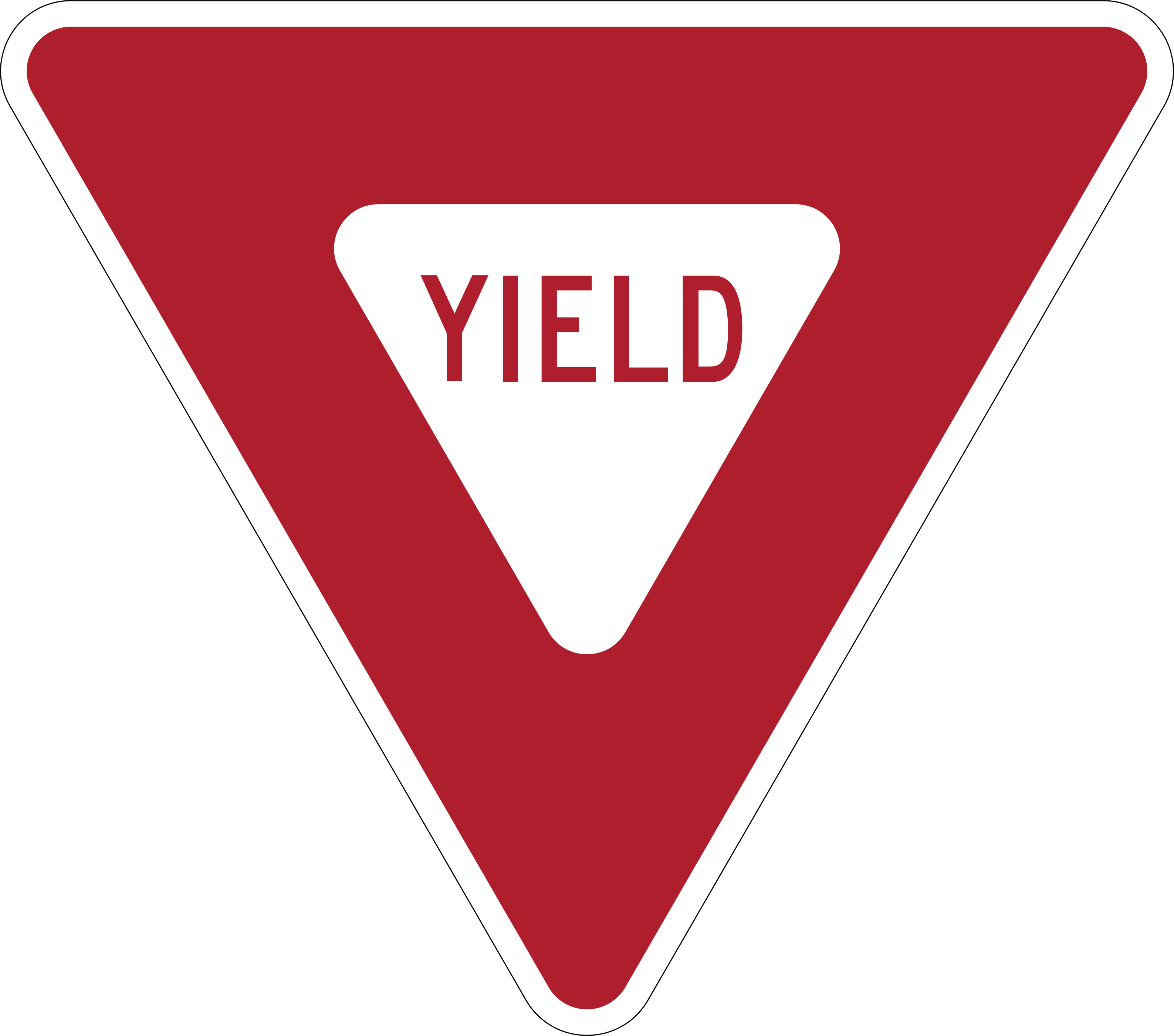
- Stop every time, even when no traffic or pedestrians are present
- Slow down, yield to vehicles in the intersection, and stop if necessary
- Accelerate to claim the intersection before other traffic arrives
- Continue without checking because the sign gives you priority
Show answer
Slow down, yield to vehicles in the intersection, and stop if necessary. A yield sign calls for a reduction in speed and yielding the right of way to traffic in the intersection. Stop when necessary, rather than treating every approach as an automatic stop. The stop-every-time option adds a requirement the manual does not give, while accelerating reverses the sign’s safety purpose. A yield sign never grants priority over traffic already crossing or entering the intersection. Scan both directions, check for pedestrians, and be ready to pause before entering the conflict area.
Study this in the handbook: Stop, Yield and Regulation Signs
14. What does the crossed-out left arrow on this sign prohibit?
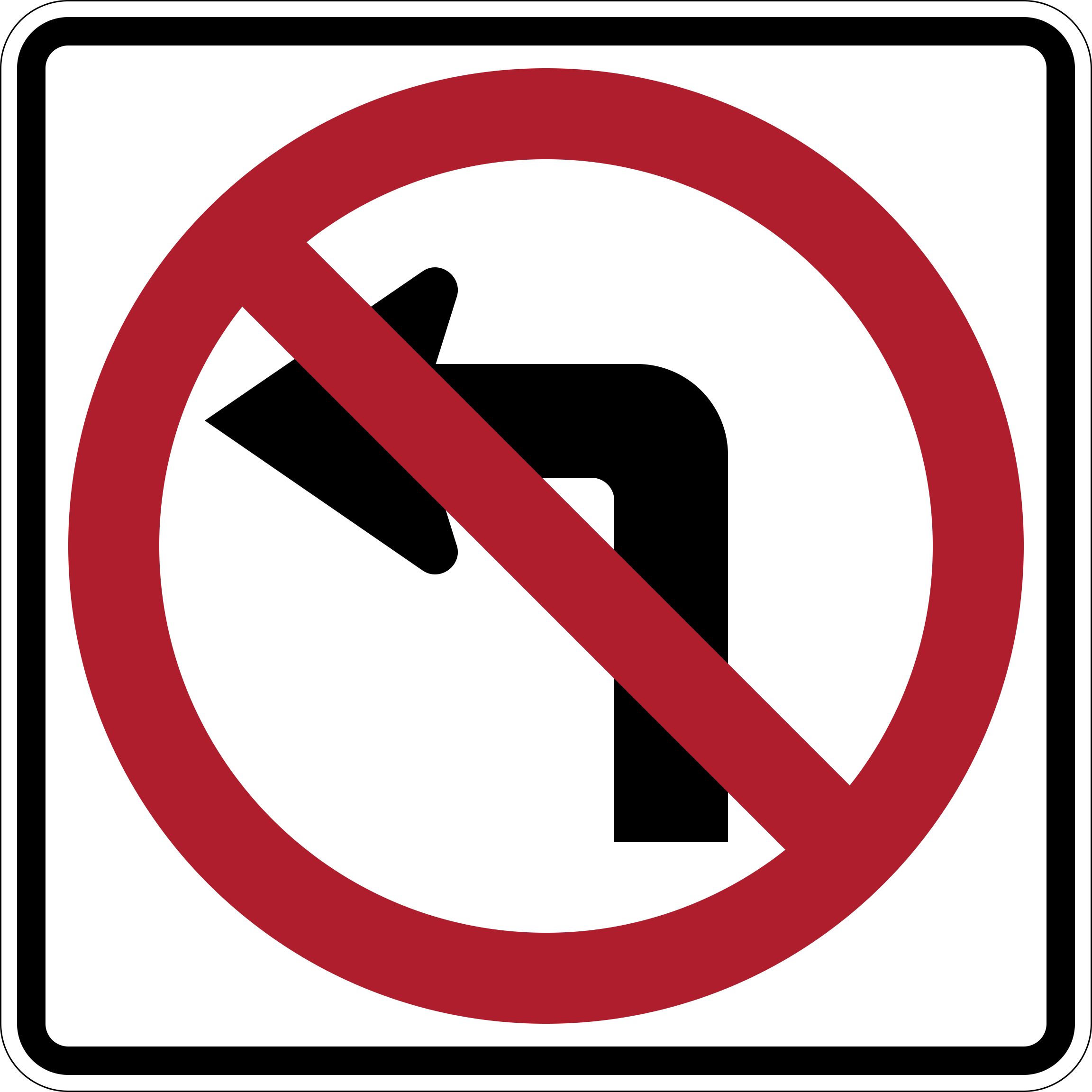
- Driving straight through the intersection
- A right turn from the roadway
- A left turn at the signed location
- Changing lanes before the intersection
Show answer
A left turn at the signed location. The crossed-out left arrow marks a prohibited left-turn maneuver at that location. Continue straight or choose another permitted route according to the other controls present. It does not ban right turns, straight travel, or every lane change on the approach. The manual explains that a red circle and slash over a symbol means the driver is not allowed to execute that particular maneuver. Read the symbol inside the slash, then match the restriction to the movement you planned.
Study this in the handbook: Stop, Yield and Regulation Signs
15. About how fast do farm tractors, animal-drawn vehicles, and roadway maintenance vehicles usually travel in Arkansas?
- 55 mph or less
- 35 mph or less
- 45 mph or less
- 25 mph or less
Show answer
25 mph or less. The guide groups these slow-moving vehicles at twenty-five miles per hour or less and says they should display a slow-moving vehicle sign from the rear. The higher choices could make a driver approach too quickly and leave too little time to change lanes or slow down. This figure describes their usual travel speed, not a special speed limit for every roadway. Treat the orange rear warning as a cue to create time and space before reaching them.
Study this in the handbook: Speed Limits and Road Conditions
16. At an uncontrolled intersection, a vehicle arrives at the same time from your right. Who yields?
- Both vehicles proceed without slowing
- The vehicle on your right yields automatically
- The larger vehicle yields
- You yield to the vehicle on your right
Show answer
You yield to the vehicle on your right. With no sign or signal controlling the intersection, the vehicle approaching from the right receives priority. The driver on the left must yield, slow, and proceed only when the path is safe. Vehicle size does not decide this relationship, and simultaneous arrival is precisely when the right-side rule matters. Neither driver should rush into the crossing; yielding means allowing the other vehicle to pass first.
Study this in the handbook: Right of Way at Intersections
17. What do railroad crossing warning signs warn drivers about?
- The possibility of a required fuel stop
- The possibility of a train
- The possibility of a lane becoming a bus lane
- The possibility of a mandatory U-turn
Show answer
The possibility of a train. Railroad crossing warning signs alert drivers to the possibility of a train. That warning calls for an early reduction in speed, a check in both directions, and readiness to stop before the tracks. The other choices describe conditions that are not the purpose of railroad warning signs. Do not wait for a gate or flashing light before paying attention, because the advance sign is meant to give you time to prepare. Treat every such sign as a cue to look and listen for rail traffic ahead.
Study this in the handbook: Warning and Railroad Crossing Signs
18. What following distance does the normal two second rule help a driver check?
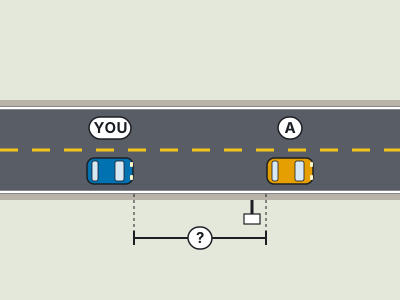
- Whether the driver can stop within two feet
- Whether the vehicle is exactly two car lengths behind
- Whether the vehicle is following no closer than two seconds
- Whether a lane change must begin after two signals
Show answer
Whether the vehicle is following no closer than two seconds. The two second rule measures time rather than car lengths. When the vehicle ahead passes a stationary point, the driver counts until reaching that same point. Arriving before finishing the count means the gap is too short, so the driver should drop back and repeat the check. Two car lengths can be inadequate or excessive depending on speed, and the other choices confuse following distance with braking or signaling. Use a fixed object such as a sign or pavement mark as the reference. Rain, slippery pavement, poor visibility, or a motorcycle calls for additional space beyond the normal check.
Study this in the handbook: Stopping Distance and Following
19. A center lane with left-turn arrows facing both directions is intended for:
- Accelerating before merging into a through lane
- Driving straight through to pass slower vehicles
- Parking while waiting for a passenger
- Making left turns for traffic traveling in either direction
Show answer
Making left turns for traffic traveling in either direction. A shared center lane is reserved for left turns and can serve vehicles traveling in either direction. Its opposing arrows show that drivers from both approaches may use the space for that maneuver, so it is not a through lane or a parking area. Arkansas also says the center left-turn lane may not be used as an acceleration lane. Before entering, check for an opposing turner and keep the movement limited to the intended turn.
Study this in the handbook: Pavement Markings and Lane Use
20. What is the minimum age for an Arkansas Class M motorcycle license?
- 14 years
- 15 years
- 16 years
- 18 years
Show answer
16 years. Arkansas describes Class M as a non-restricted motorcycle license for applicants sixteen or older. That age is distinct from the younger restricted Class MD pathway, so fourteen is not the Class M threshold. Fifteen also falls short, and eighteen would incorrectly treat adulthood as necessary. The license still requires the listed testing steps, but those procedures do not change the minimum age. Associate the M designation with sixteen and the MD designation with the younger restricted category.
Study this in the handbook: Instruction Permits and Graduated Licenses
QualitySpace is expanding to Arkansas
We are a California-based independent insurance brokerage working on licensing in more states. We cannot help with Arkansas insurance yet. Leave your email and we will let you know when we can.
Every question is written from the official Arkansas Driver License Study Guide. Need paper? Printable AR practice test with answer key.
Last verified 2026-10-05. How we check every question · Study all 200 as flashcards
Frequently asked questions
How many questions are on this Arkansas practice test?
This fixed set has 20 questions. It is test 10 of 10 from the 200 question Arkansas bank.
How does this fixed test relate to the full Arkansas bank?
Each numbered test is a fixed set of questions in a fixed order, so you can retake the same test later and compare. Every test mixes road signs and the other topics in about the same proportion as the full bank. Tests 1 to 10 together cover every question in the Arkansas bank once. The full practice page mixes the whole bank at random.
Last verified 2026-10-05. See the Arkansas DMV facts page for sourced state details.
Return to the full Arkansas practice test · Study road signs