
Test 12 of 25 · 20 questions · Free 2026
AR Permit Practice Test 12
Jump to the test ↓A fixed 20 question set from the Arkansas bank with answers and plain English explanations.
Question 1 of 20 · 0 right so far
All 20 questions in test 12
Every question below comes from the Arkansas question bank on this page. Open a question to see the correct answer and the explanation. Nothing here is hidden behind a signup.
1. You pass a bicyclist in Arkansas and plan to turn right soon after. Before turning, how should you check?
- Look only in the rear mirror once and turn
- Look left, then right and left again to check the cyclist and speed
- Turn first and check the bicycle path after crossing it
- Rely on the cyclist to brake and move aside
Show answer
Look left, then right and left again to check the cyclist and speed. Passing a bicycle does not end your duty at the next right turn. The rider keeps moving and may be beside or just behind your car when you start turning. Look left, then right and left again, and judge the rider speed before crossing the path. That repeated scan catches a cyclist hidden by a door pillar. Turning only after the path is clear prevents a right hook crash.
Study this in the handbook: Trucks, Motorcycles and Bicycles
2. You turn your head to check your blind spot before a lane change. How long should that look last?
- A quick glance, then eyes back on the road ahead
- A long look so you are sure the lane is clear
- As long as it takes while the car drifts a bit
- A glance only after you have already started to move over
Show answer
A quick glance, then eyes back on the road ahead. When checking your blind spot, the guide says to turn your head and quickly glance over your shoulder, and not to take your eyes off the road ahead for more than an instant. Traffic ahead could stop suddenly while you are checking the sides or rear. Your mirrors will not show the blind spots at the rear corners of the vehicle, so the short look is necessary, but it must be brief.
Study this in the handbook: Turns, Lane Changes and Passing
3. Your car breaks down and you pull off the road. What does the guide suggest to get help?
- Stand in the lane and wave down passing drivers
- Leave the car and walk along the edge of the road to find help
- Use your cell phone to notify authorities if you have one
- Wait inside with no lights until someone stops
Show answer
Use your cell phone to notify authorities if you have one. After you pull off the road with a broken-down vehicle, the guide says to use your cell phone, if one is available, to notify authorities. Many roadways also have signs that tell you which phone number to call in an emergency. Hazard lights warn other drivers that the vehicle is disabled. Standing in the lane or walking along the road puts you in the path of traffic.
Study this in the handbook: Headlights, Horn and Signals
4. In Arkansas, which road sections often develop icy conditions first?
- Sunny straight stretches on dry afternoons
- Toll booth lanes with heavy braking
- Overpasses and bridges
- Parking lots beside large buildings
Show answer
Overpasses and bridges. Cold air can chill a bridge or overpass from above and below, so ice forms there sooner than on nearby ground-level road. The pavement leading to a bridge may look clear while the span itself is slick. That contrast can catch a driver who keeps full speed. Slow before bridges and overpasses on cold wet days, and watch shady spots too, because ice lingers there and thaws last.
Study this in the handbook: Speed Limits and Road Conditions
5. A hill crest hides the road beyond it as you drive on an Arkansas road. What should you be ready to do?
- Hold your speed, since a hill crest is not a real danger to you
- Be ready to stop by matching your speed to what you can see
- Speed up to get over the hill quickly
- Move to the center of the road for a better view
Show answer
Be ready to stop by matching your speed to what you can see. The guide says that you may not know what is on the other side of a hill or just around a curve, so you should be ready to stop. It tells drivers to adjust their speed so they can stop if needed. A crest can hide a slow vehicle, a stalled car, or oncoming traffic, so choosing a speed that lets you stop in the distance you can actually see is the safe response.
Study this in the handbook: Speed Limits and Road Conditions
6. A loaded tractor-trailer ahead brakes for slowing traffic at highway speed. How does its stop compare with a car's?
- It stops in about the same distance as a car
- It stops sooner because of its heavy brakes
- It stops quickly because the driver sits higher
- It needs a much longer distance to stop
Show answer
It needs a much longer distance to stop. The guide explains that tractor-trailers take longer to stop than a car traveling at the same speed. A car at 55 miles per hour can stop in about 225 feet, while a fully loaded tractor-trailer at that speed may need more than 335 feet. When you share the road with a truck, leave extra room in front of it and never cut in so close that the driver cannot stop.
Study this in the handbook: Trucks, Motorcycles and Bicycles
7. A cyclist rides toward the center of the lane to pass parked cars. What should you do?
- Pass quickly on the left within the same lane
- Give the cyclist the whole lane if you can
- Honk so the rider moves back to the right
- Follow closely until the rider returns to the edge
Show answer
Give the cyclist the whole lane if you can. The guide explains that when cyclists pass parked cars they tend to move toward the center of the lane to avoid people getting out of the cars, and that in such cases the cyclist is operating properly. Drivers should give the cyclist the entire lane if possible, and when road conditions prevent that, pass with extreme caution. Cyclists who are not on the right side of the lane are not being careless.
Study this in the handbook: Trucks, Motorcycles and Bicycles
8. You want to parallel park while traffic approaches from behind. What should you do before you start the move?
- Stop in the lane and back into the space at once
- Pull ahead of the space and stop there for a moment
- Back in quickly, before the cars behind you can reach you
- Signal, pull next to the space, and let traffic pass
Show answer
Signal, pull next to the space, and let traffic pass. The guide says that if you want to parallel park and there is traffic from behind, you should turn on your signal, pull next to the space, and allow vehicles from behind to pass before parking. Stopping and backing in at once, or hurrying to beat the cars, puts you in the way of traffic with little warning. Letting vehicles go by first keeps the lane clear while you park.
9. In Arkansas, driving using only parking lights is best described as what?
- Allowed on well lit city streets
- Required when following another car
- A substitute for low beams in fog
- Illegal while driving in Arkansas
Show answer
Illegal while driving in Arkansas. Parking lights mark a vehicle that is parked, so they are not a driving light. Arkansas treats driving on only those small lights as illegal. They do not light the road well and they can make your moving vehicle look stopped to others. Use proper headlights when you drive so you can see ahead and others can judge that your vehicle is moving and how far away it is.
Study this in the handbook: Headlights, Horn and Signals
10. Why should an Arkansas driver never drink alcohol while taking medications or other drugs?
- Alcohol neutralizes the medicine so neither substance has any real effect
- Mixing both substances mainly causes a headache the next morning
- The combination may also strengthen alcohol effects or add new ones
- Medication helps the body clear alcohol at twice the usual rate
Show answer
The combination may also strengthen alcohol effects or add new ones. Drinking while taking medication or other drugs is dangerous because the drugs may strengthen what alcohol does or add separate effects of their own. The combined result can reduce driving ability and may cause serious health harm. Alcohol does not neutralize medicine so that both become harmless. A headache the following morning is far from the only possible outcome. Medication also does not speed alcohol out of the body. Keeping alcohol away from medicine use protects both driving safety and personal health.
Study this in the handbook: Drivers Under 21 and Alcohol
11. In Arkansas, what does this sign tell you as you approach road work?
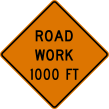
- The work zone has ended
- You are entering a work zone
- You may ignore later speed signs
- Parking is allowed on the shoulder
Show answer
You are entering a work zone. This orange diamond warns that road work lies ahead on your Arkansas route. Signs like it mark the start of the work area, so your speed and lane choices should change right away. The end of a work zone comes later, after you pass the crew and equipment. Later speed signs still apply, and the shoulder is no place to park beside active work. Treat this warning as your cue to slow down and watch ahead.
Study this in the handbook: Work Zones
12. Which conditions can Arkansas work zone signs warn you about?
- Detours, fast equipment, and freshly polished road surface ahead
- Road meals, lodging, and scenic overlooks nearby
- Detours, slow equipment, and suddenly changing road surfaces
- Fuel prices, toll prices, and hotel vacancies ahead on road
Show answer
Detours, slow equipment, and suddenly changing road surfaces. Work zone signs in Arkansas give advance warning about the road itself, including a detour, slow moving construction equipment, and pavement that is poor or changes suddenly. That notice lets you choose a lane and lower speed before the hazard reaches your tires. Meal, lodging, fuel, and toll information belongs on service or guide signs elsewhere. Treat each orange warning as a prompt to scan farther ahead, ease off the accelerator, and leave extra room for workers and equipment near the travel lane.
Study this in the handbook: Work Zones
13. A slow farm tractor with a slow-moving vehicle sign is ahead and you are catching up fast. What should you do?
- Stay close behind and flash your lights to move it
- Speed up to pass before the next hill
- Wait until you are very close, then brake hard
- Give yourself time to slow down or change lanes
Show answer
Give yourself time to slow down or change lanes. The guide says farm tractors, animal-drawn vehicles, and roadway maintenance vehicles usually travel 25 mph or less, and these vehicles should have a slow-moving vehicle sign visible from the rear. When you come upon this kind of traffic, give yourself time to change lanes or slow down, because slowing suddenly can cause a traffic accident. Planning your move early gives the vehicles behind you time to react as well.
Study this in the handbook: Speed Limits and Road Conditions
14. You drive through an Arkansas work zone and no reduced speed limit is posted. Which speed should you obey?
- The normally posted speed limit
- Five miles per hour below the normal limit
- Any speed that keeps up with traffic
- 25 miles per hour through the whole zone
Show answer
The normally posted speed limit. A reduced limit in an Arkansas work zone will be clearly posted when one applies. When no reduced limit appears, the normally posted speed limit still governs your driving. Dropping five below on your own, matching faster traffic, or crawling at 25 without a sign all ignore that posted figure. Read every sign as you enter, settle at the posted number, and stay ready for workers, equipment, and sudden stops ahead of you.
Study this in the handbook: Phone Laws and Distracted Driving
15. How should the lower strap of a safety belt be adjusted in Arkansas?
- Across the upper thighs and not the abdomen
- Across the stomach, as high as it will go
- Loose enough to let you lean forward easily
- Behind your back to avoid pressure
Show answer
Across the upper thighs and not the abdomen. The guide says to adjust the lower strap so it fits across the upper thighs and not the abdominal region. The belt is designed to spread the force of a crash over the pelvic area, so it needs to sit on the upper thighs to do that job. Riding high on the stomach concentrates force on soft tissue, and a loose or misplaced belt cannot protect you well.
16. You follow another vehicle closely at night. Which headlights should you use?
- High beams, so you can see more of the road
- Low beams, when you are within 200 feet
- Parking lights, so you do not blind the driver
- Fog lights alone, even on a clear night
Show answer
Low beams, when you are within 200 feet. The guide says to use your low-beam headlights when following another vehicle closer than 200 feet. High beams shining into the mirrors of the driver ahead can cause glare and make it harder for that driver to see. Parking lights are for parked cars, and driving with only parking lights is illegal in Arkansas. Low beams let you see while keeping glare away from the driver in front of you.
Study this in the handbook: Headlights, Horn and Signals
17. You need to slow for a private driveway with a vehicle close behind you. What helps most?
- Start slowing early so the slowdown is gradual
- Brake hard just before the driveway entrance
- Turn the wheel first and slow down as you enter the driveway
- Slow only when the car behind you honks
Show answer
Start slowing early so the slowdown is gradual. The guide says that drivers should check behind them before slowing down. Allowing plenty of time to slow down keeps you from stopping suddenly, or at points where the following driver would not expect you to slow, such as private driveways or parking lots. An early, gradual slowdown, along with a signal, gives the driver behind you time to react and avoids a rear-end crash.
18. Why should you back very slowly in Arkansas?
- A vehicle is much harder to steer while backing
- Backing uses less fuel at a crawl
- Slow backing lets you skip checking mirrors
- Other drivers must always yield to backing cars
Show answer
A vehicle is much harder to steer while backing. Steering feels different in reverse, and small wheel movements can swing the vehicle more than expected. Going slowly gives you time to correct the path and stop if someone walks or drives behind you. Slow movement also makes it easier to look through the rear window while keeping control. Rushing raises the chance of clipping a parked car, curb, or person you noticed too late to avoid.
19. What should an Arkansas driver understand about specialty alcoholic drinks?
- A specialty serving holds less alcohol than a standard serving
- Specialty servings affect mainly people who seldom drink alcohol at parties
- Fruit or soda mixed in removes most alcohol from the serving
- One specialty serving may equal several standard servings combined
Show answer
One specialty serving may equal several standard servings combined. A specialty serving can carry more alcohol than a standard serving, so a single glass may count as several drinks. Treating it as weaker reverses the actual risk, especially when the drink is large or mixed by hand. The extra alcohol can affect any drinker, including someone who drinks regularly. Fruit or soda changes flavor and appearance without removing alcohol from the glass. When the strength of a drink is uncertain, assuming it counts for more than one is the cautious approach.
Study this in the handbook: Drinking and Driving
20. Someone was hurt in a crash you were part of. When may you leave the scene?
- As soon as an ambulance arrives for the injured
- As soon as you have exchanged insurance details
- After police have talked with the drivers
- As soon as another witness stays at the scene
Show answer
After police have talked with the drivers. The guide says that a driver cannot leave the scene of a crash with injury or death until police have talked with the driver or drivers and collected all the information they need about the crash. You must also notify police immediately if anyone is injured or killed, or if property damage exceeds $1000. Exchanging insurance details or having a witness stay does not release you.
Study this in the handbook: Vehicle Emergencies and Crashes
Every question is written from the official Arkansas Driver License Study Guide. Need paper? Printable AR practice test with answer key.
Last verified 2026-10-05. How we check every question · Study all 500 as flashcards
Frequently asked questions
How many questions are on this Arkansas practice test?
This fixed set has 20 questions. It is test 12 of 25 from the 500 question Arkansas bank.
How does this fixed test relate to the full Arkansas bank?
Each numbered test is a fixed set of questions in a fixed order, so you can retake the same test later and compare. Every test mixes road signs and the other topics in about the same proportion as the full bank. Tests 1 to 25 together cover every question in the Arkansas bank once. The full practice page mixes the whole bank at random.
Last verified 2026-10-05. See the Arkansas DMV facts page for sourced state details.
Return to the full Arkansas practice test · Study road signs