
Printable AR Permit Practice Test
40 questions from the Arkansas question bank. Answer key on the last page. Last verified 2026-09-05 against the official Arkansas driver manual.
1. If your vehicle begins to hydroplane, what should you do?
- Accelerate until the tires cut through the water
- Brake hard and turn quickly toward the shoulder
- Slowly take your foot off the gas and keep the steering wheel straight
- Turn the wheel back and forth rapidly
2. After a minor Arkansas crash, what does state law say to do with your vehicle if it can be moved?
- Leave it exactly where it stopped for the police
- Drive home and report later
- Push it into the median
- Move it from the roadway so it does not block traffic
3. What license penalty can a court order for violating Arkansas's law on moving over for a stopped police vehicle?
- A warning only
- Suspension of the license for up to six months
- A permanent revocation
- A one year mandatory revocation
4. In Arkansas, smoking tobacco in a vehicle is prohibited when it carries a passenger younger than what age?
- 12
- 14
- 16
- 18
5. For a first littering conviction in Arkansas, what is the maximum fine described in the study guide?
- $250
- $500
- $1,000
- $2,000
6. How should you adjust your speed on packed snow, according to the Arkansas guide?
- Keep the posted speed
- Cut your speed in half
- Slow by 5 mph
- Speed up to keep momentum
7. At what age may an Arkansas applicant obtain a non-restricted Class D license?
- 21
- 14
- 16
- 18
8. For which ages does Arkansas issue the Intermediate License?
- 16 to 18
- 14 to 16
- 18 to 21
- 15 to 17
9. A 25 year old Arkansas driver wants to send a quick text at a slow speed. What does the Arkansas guide say?
- It is allowed for drivers over 21
- Text messages are not allowed regardless of age
- It is allowed with one hand on the wheel
- It is allowed on rural roads
10. During which hours may an Arkansas Intermediate License holder not drive unless an exception applies?
- Midnight to 5:00 am
- 10:00 pm to 5:00 am
- 11:00 pm to 4:00 am
- 9:00 pm to 6:00 am
11. You have been drinking in Arkansas and you do not have a designated driver. What should you do?
- Use public transportation or a cab
- Drive home slowly on side streets with few other cars
- Wait fifteen minutes and then drive if you feel steady
- Drink coffee at the venue and then drive yourself home
12. You pass a bicyclist in Arkansas and plan to turn right soon after. Before turning, how should you check?
- Look only in the rear mirror once and turn
- Look left, then right and left again to check the cyclist and speed
- Turn first and check the bicycle path after crossing it
- Rely on the cyclist to brake and move aside
13. In Arkansas, how does a driver start the two-second following-distance count?
- Count when your front bumper first passes the vehicle ahead of you
- Count only while stopped and waiting at a traffic light ahead
- Count from when its rear passes a fixed point until you reach it
- Estimate car lengths by eye without using any roadside point
14. When may a driver use the shoulder of an Arkansas street or road?
- Any time traffic is heavy and the lanes are full
- To pass a slow vehicle traveling on the right side
- Whenever the shoulder is paved and wide enough
- Only when a police officer directs the driver there
15. Your vehicle has no antilock brakes. The wheels lock and the vehicle starts to skid in a hard stop. What should you do?
- Keep the pedal pressed to the floor
- Pump the pedal as fast as you can
- Let up, then press again once the skid stops
- Release the pedal and steer straight with no braking
16. Traffic is clear after a crash and several bystanders saw what happened. What information should you collect from the people at the scene?
- Only the license plate number of the other driver's car
- The names of the officers who arrive
- The phone numbers of nearby businesses
- Names and addresses of those involved and witnesses
17. Where must a driver never block or stop the vehicle in Arkansas?
- At a stop line
- In a parking space
- On the shoulder after a breakdown
- In a crosswalk
18. Which two driver behaviors does Arkansas call especially problematic in work zones?
- Driving at night and using cruise control
- Speeding and distracted driving
- Changing lanes often and honking the horn
- Following closely and parking on the shoulder
19. Your vehicle is damaged in a crash on a two-lane road with traffic still passing. Where should you stop it?
- At or near the site, then off the road if possible
- Well past the site so the damage is out of view of others
- In the lane so passing drivers slow down
- Beside the other car with the doors open
20. You send a quick text while driving at 55 mph. How far does the car travel while your eyes are off the road?
- About the length of a car
- About the length of a city block downtown
- About the length of a football field
- About the length of a house lot
21. When does a green light allow you to proceed through an Arkansas intersection?
- Only after every side street in the area is empty
- As soon as you hear other drivers honking behind you
- When a vehicle behind you is following closely
- When there is no opposing traffic in your way
22. You feel tired on the morning of a planned long drive. What plan fits the Arkansas guide?
- Leave on time and plan to stop later
- Leave on time and drink coffee on the way
- Leave now and drive faster to finish sooner
- Delay leaving until you are rested
23. When a green arrow is shown for your turn in Arkansas, what must opposing traffic do?
- Opposing traffic may enter and share the turn lane
- Opposing traffic gets the right to go first
- Opposing traffic must stop
- Opposing traffic should speed up to clear out
24. You enter a long Arkansas work zone that stretches for miles. Besides lower speeds, what other change may be imposed for safety?
- Passing is required on the shoulder
- Headlights must be turned off
- Lane use may be restricted
- Left turns are required at every exit
25. A person on foot or on a bike looks ready to move into your lane. What should you do?
- Sound your horn to warn the person
- Flash your headlights and keep your speed
- Swerve around the person without a signal
- Wave the person across and slow down
26. You hear sirens while your vehicle is inside an intersection. What is the safest next move?
- Stop immediately in the intersection
- Drive through the intersection, then pull over to the right
- Turn left and follow the emergency vehicle
- Remain stopped until the emergency vehicle turns away
27. What is the minimum age to apply for an Arkansas instruction permit?
- 16
- 15
- 14
- 13
28. Who must ride with a 15 year old driving on an Arkansas Learner's License?
- No one, once the license is issued
- A licensed driver at least 21 years old
- Any licensed driver 16 or older
- A parent, even if unlicensed
29. Within what period must a person who becomes an Arkansas resident obtain an Arkansas driver's license?
- Within 10 calendar days
- Within six months
- Within 60 calendar days
- Within 30 calendar days
30. At night, about what speed lets you stop within the distance your headlights let you see ahead?
- Around 30 mph
- Around 50 mph
- Around 40 mph
- Around 65 mph
31. How close to a fire hydrant may you park in Arkansas?
- No closer than 10 feet
- No closer than 30 feet
- No closer than 20 feet
- No closer than 15 feet
32. What should a driver with a manual transmission avoid doing while crossing railroad tracks?
- Keeping the vehicle moving through the crossing
- Shifting gears
- Checking for enough room beyond the tracks before entering
- Looking for trains before entering the crossing
33. How much more likely are distracted teens who text while driving to crash, according to research cited in the Arkansas guide?
- 23 times more likely
- Twice as likely
- No more likely
- Half as likely
34. Past this sign, a flagger holds up a STOP paddle while the traffic signal ahead shows green. What should you do?
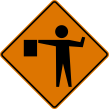
- Follow the green signal, because a signal outranks a person
- Obey the flagger and stop
- Slow down and go through if the road looks clear
- Sound your horn so the flagger lets you pass
35. When may a vehicle with an Arkansas Special Certificate (accessible parking hang tag) park in an accessible space?
- Whenever the tag is hanging from the mirror
- Whenever a family member drives
- Only when the person with the disability is present in the vehicle
- Only on weekdays
36. Which three types of distraction does the Arkansas guide say occur together when you use a hand-held phone?
- Visual, hearing, and emotional
- Visual, manual, and cognitive
- Manual, spoken, and physical
- Cognitive, auditory, and social
37. You turn your head to check your blind spot before a lane change. How long should that look last?
- A quick glance, then eyes back on the road ahead
- A long look so you are sure the lane is clear
- As long as it takes while the car drifts a bit
- A glance only after you have already started to move over
38. What alcohol concentration is safe for operating a vehicle in Arkansas?
- There is no safe alcohol concentration for operating a vehicle
- Any amount below the arrest limit is safe to drive on
- One drink worth of alcohol is always safe for driving
- Alcohol is safe for driving if you also ate a full meal
39. After passing the pictured sign you reach a flagger holding a STOP paddle. Where should you stop?
- Right beside the flagger so you can ask what to do
- Just past the flagger so you are ready to go first
- At the designated spot, or a car length away
- Wherever the car ahead of you happened to stop
40. In Arkansas, what should you do for a vehicle entering a roadway that has two or more lanes?
- Speed up to close the gap ahead of the entering vehicle
- Make room for the vehicle entering the roadway
- Force the entering driver to stop on the ramp in all cases
- Change lanes without checking mirrors to block entry
Answer key
- 1. C
- 2. D
- 3. B
- 4. B
- 5. C
- 6. B
- 7. D
- 8. A
- 9. B
- 10. C
- 11. A
- 12. B
- 13. C
- 14. D
- 15. C
- 16. D
- 17. D
- 18. B
- 19. A
- 20. C
- 21. D
- 22. D
- 23. C
- 24. C
- 25. A
- 26. B
- 27. C
- 28. B
- 29. D
- 30. B
- 31. D
- 32. B
- 33. A
- 34. B
- 35. C
- 36. B
- 37. A
- 38. A
- 39. C
- 40. B