
Key points
The maximum speed limit is for ideal conditions; reduce speed for slippery roads or poor visibility.
Source: Handbook p. 25
“The maximum speed should be used in ideal conditions and reduced as conditions arise such as slippery roads or poor visibility.”
Arkansas Driver License Study Guide, Handbook p. 25If no limit is set on a county road, the limit is 40 mph.
Source: Handbook p. 26
“then the speed limit shall be forty miles per hour (40 m.p.h.) on the county road.”
Arkansas Driver License Study Guide, Handbook p. 26Speeding more than 15 mph over the limit on a county road is a Class C misdemeanor.
Source: Handbook p. 26
“guilty of speeding in excess of fifteen miles per hour (15 m.p.h.) over the posted speed limit on a county road established by a county judge or as provided under this section is guilty of a Class C misdemeanor.”
Arkansas Driver License Study Guide, Handbook p. 26Even at the speed limit, you can be ticketed for driving too fast for conditions.
Source: Handbook p. 58
“Even if you are driving the speed limit, you can get a ticket for traveling too fast for the conditions.”
Arkansas Driver License Study Guide, Handbook p. 58On packed snow, cut your speed in half; on ice, slow to a coast.
Source: Handbook p. 55
“On packed, snow you should cut your speed in half. On the ice, you must slow to a coast.”
Arkansas Driver License Study Guide, Handbook p. 55A slow moving vehicle sign is an orange triangle bordered with red.
Source: Handbook p. 26
“A reflective orange triangle bordered with red warns other road users that the vehicle is traveling slower than the normal speed of traffic.”
Arkansas Driver License Study Guide, Handbook p. 26Farm tractors, animal drawn vehicles and road maintenance vehicles usually go 25 mph or less.
Source: Handbook p. 57
“Farm tractors, animal-drawn vehicles, and roadway maintenance vehicles usually travel 25 mph or less.”
Arkansas Driver License Study Guide, Handbook p. 57If vehicles build up behind you, pull over and let them pass.
Source: Handbook p. 56
“If vehicles are accumulating behind you, pull over and allow them to pass.”
Arkansas Driver License Study Guide, Handbook p. 56
Numbers to know
| Number | What it means | Manual |
|---|---|---|
| 40 mph | county road limit when none is set | Handbook p. 26 |
| 15 mph | speeding over the limit that makes a county road offense a misdemeanor | Handbook p. 26 |
| 25 mph | usual top speed of farm and maintenance vehicles | Handbook p. 57 |
Recognize these signs
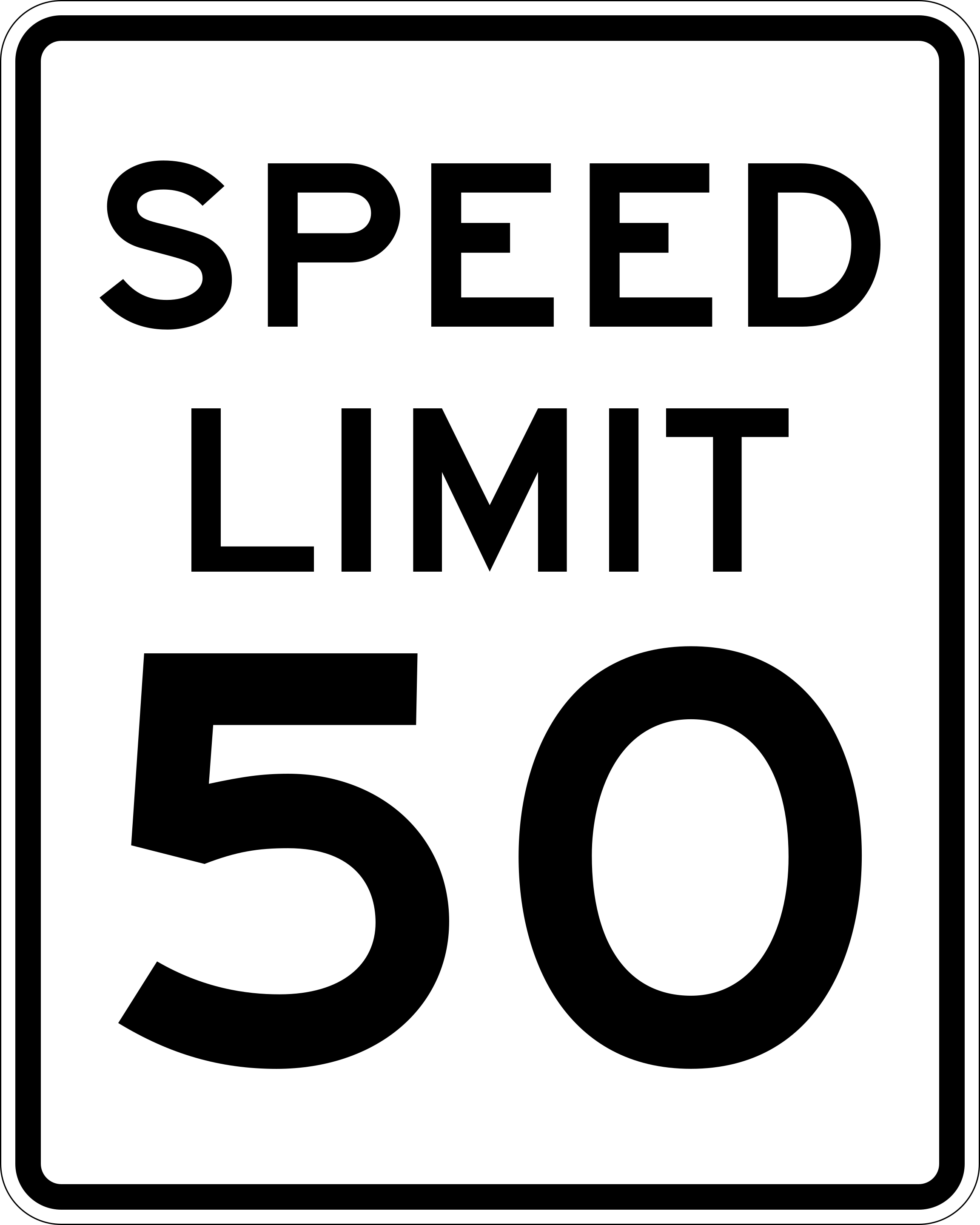
Speed limit 
Slow moving vehicle
3 questions from the Arkansas practice test
1. A speed limit sign shows the maximum speed for which driving conditions?
- Every condition, including poor visibility
- Ideal conditions
- Only dry roads during daylight
- Only conditions approved by a police officer
Show answer
Ideal conditions. The posted maximum assumes ideal conditions, so it is not a promise that the same speed is safe in rain, ice, or limited visibility. The choice “Every condition, including poor visibility” incorrectly treats the number as fixed even when hazards arise. A driver should scan the road and weather after reading the sign, then reduce speed when traction or sight distance worsens. The sign gives a ceiling for that section, not permission to ignore changing conditions.
2. What does an orange triangle bordered with red warn road users about?
- A vehicle traveling slower than normal traffic
- A vehicle carrying hazardous material
- A lane reserved for passing
- A railroad crossing with multiple tracks
Show answer
A vehicle traveling slower than normal traffic. The reflective orange triangle with a red border identifies a slow-moving vehicle. It warns approaching drivers to expect a large speed difference and to plan carefully before passing. The hazardous-material option describes a different concern, while the lane and railroad choices refer to roadway controls rather than a vehicle emblem. Seeing this symbol should prompt earlier awareness and a controlled approach instead of a sudden pass.
3. What should an Arkansas driver do when rain or ice makes the posted speed unsafe?
- Maintain the posted number because it is always safe
- Adjust speed to current road conditions
- Increase speed to reduce time on the road
- Use the posted speed only after turning on hazard lights
Show answer
Adjust speed to current road conditions. Arkansas treats posted speed limits as values for ideal conditions. Rain, ice, poor visibility, and heavy traffic can require a lower safe speed, even when the vehicle remains under the numerical limit. Maintaining the sign's number ignores the condition-based duty, and increasing speed makes stopping harder. Hazard lights do not create a special exception. The useful cue is that a posted limit is a ceiling for ideal conditions, not a promise that the same speed fits every roadway situation.
Practice this topic
Lock it in with speed limits questions from the free Arkansas practice test. Every answer comes with a plain English explanation.
Source: the Arkansas Driver License Study Guide, Chapters 2 and 5: Speed Limits and Road Conditions. This lesson is a plain English summary, not the law itself; where it differs, the manual and the statute govern. Last checked 2026-09-27.