
Test 6 of 10 · 20 questions · Free 2026
WI Permit Practice Test 6
Jump to the test ↓A fixed 20 question set from the Wisconsin bank with answers and plain English explanations. The real WI exam has a 15 question road sign section with 12 correct to pass, plus 50 knowledge questions with 40 correct to pass; take the full length version on the main practice page.
Question 1 of 20 · 0 right so far
All 20 questions in test 6
Every question below comes from the Wisconsin question bank on this page. Open a question to see the correct answer and the explanation. Nothing here is hidden behind a signup.
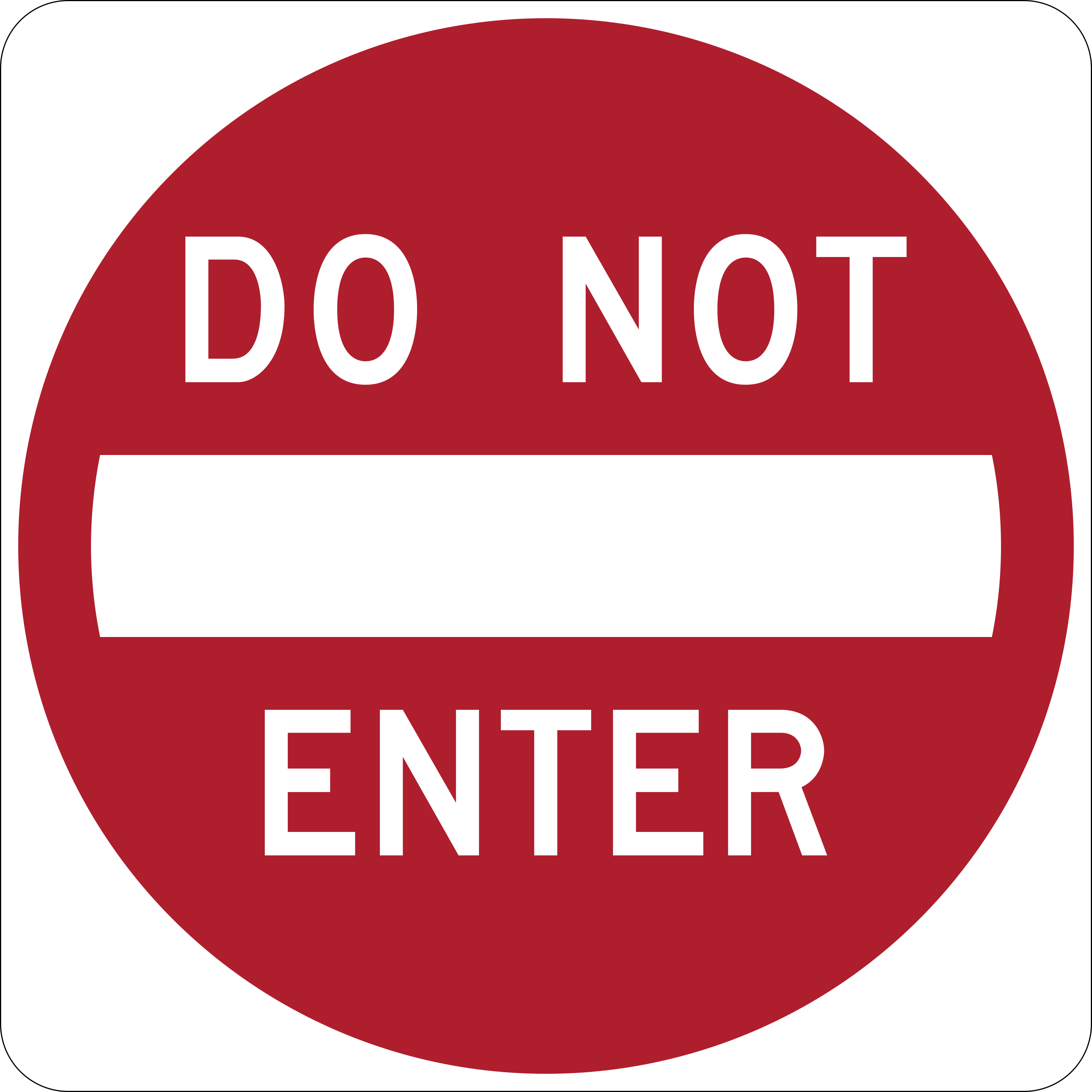
1. Why might a driver encounter this sign on an exit ramp?
- The ramp is reserved for emergency vehicles
- The ramp leads in the wrong direction
- The ramp is a legal passing lane
- The ramp ends at a railroad signal
Show answer
The ramp leads in the wrong direction. Wisconsin uses the Do Not Enter sign on exit ramps when a driver could go the wrong direction. The choice “The ramp leads in the wrong direction” describes that specific hazard and tells you not to continue onto the ramp. The emergency vehicle option assigns a restriction the handbook does not give this sign. The passing choice is unrelated to entry control, and the railroad choice names a separate warning situation. A practical cue is to treat the sign as an immediate stop to your intended entry, then reassess the road markings and find the proper route.
Study this in the handbook: Regulatory, destination and service signs
2. What guidance does the Wisconsin handbook give regular license holders about cell phone use while driving?
- Use a phone only for navigation, with no other restriction
- Use a handheld phone freely when traffic is moving slowly
- Avoid using a cell phone and try the vehicle’s hands-free option if use is necessary
- Turn the phone off by law in every situation
Show answer
Avoid using a cell phone and try the vehicle’s hands-free option if use is necessary. For regular license holders, the handbook says to avoid using a cell phone while driving and, if use is necessary, try the vehicle’s hands-free option. That is advice to reduce distraction, not a statement that every form is banned or that slow traffic makes handheld use safe. The emergency-only rule belongs to instruction permit and probationary holders. A good cue is the license category: regular drivers receive the avoid and hands-free guidance, while newer drivers face the narrower emergency reporting allowance.
Study this in the handbook: Alcohol, drugs and implied consent
3. A pedestrian with a guide dog or white cane is near the roadway. How far away should a driver stop until that person is clear?
- Only at the edge of a marked crosswalk
- At least 3 feet
- At least 20 feet
- At least 10 feet
Show answer
At least 10 feet. The handbook gives special protection to a pedestrian using a guide dog or carrying a white cane. The driver must stop at least 10 feet away and remain stopped until the person is off the roadway. Three feet and 20 feet are not the stated distance, and the rule is not limited to a marked crosswalk. Notice the combination of a mobility or vision cue and the 10 foot distance. That is the detail that distinguishes this right-of-way instruction from ordinary pedestrian caution.
Study this in the handbook: Right of way
4. Before receiving a probationary license, an applicant under 18 must hold the instruction permit for at least how long?
- One year
- Three months
- Nine months
- Six months
Show answer
Six months. An applicant under 18 needs to hold the instruction permit for at least six months before moving to a probationary license. The applicant also must turn 16 and show completion of driver training or driver education. Three months is too short, while nine months describes the initial Graduated Driver License restriction period rather than the permit holding minimum. One year adds an extra requirement not stated here. Separate the stages by number: six months for the permit, then nine months for the initial GDL restrictions.
Study this in the handbook: Sponsors and the instruction permit
5. Why might Wisconsin’s safe driving speed be lower than the posted maximum?
- Visibility and road conditions may require a slower speed
- A driver may exceed the maximum when visibility is poor
- The posted number applies only when traffic is heavy
- A driver should always travel exactly at the posted number
Show answer
Visibility and road conditions may require a slower speed. Wisconsin describes a speed limit as the maximum, not a target that must be reached in every condition. The handbook says drivers may need to go slower when visibility or road conditions make the posted maximum unsafe. Poor visibility is therefore a reason to reduce speed, not permission to exceed the limit. Traffic volume does not make the sign optional, and traveling exactly at the number can be unsafe on a slick or obscured roadway. Scan ahead, judge the conditions, and leave enough room to stop safely.
Study this in the handbook: Speed limits and the sight distance rule
6. Who is a habitual traffic offender in Wisconsin?
- Someone with two speeding tickets in one year
- Someone convicted of four or more major or 12 or more minor violations within five years
- Someone who reaches 6 points in 12 months
- Someone with one OWI conviction
Show answer
Someone convicted of four or more major or 12 or more minor violations within five years. A habitual traffic offender is someone convicted of four or more major traffic violations, or 12 or more minor violations, within five years. The privilege is then revoked and the driver cannot drive for five years, though an occupational license may be possible after a two-year wait. Two speeding tickets, six points, or a single conviction do not meet the definition. The separate 12 point rule counts points in a 12-month period, not violations over five years.
Study this in the handbook: Points, seat belts, child seats and insurance
7. What is the best option in severe weather?
- Slow down and stay alert
- Speed up and make sharp turns
- Brake rapidly in every situation
- Drive without checking conditions
Show answer
Slow down and stay alert. The handbook identifies slowing down and staying alert as the best option in severe weather. Slippery pavement, heavy rain, ice, or snow can reduce the time available to respond, so extra attention and lower speed help preserve control. Rapid braking and sudden sharp turns can make a slide worse, while speeding increases the danger created by reduced traction. The safest choice may be to stay off the road entirely when conditions are severe. If you must drive, look farther ahead, leave more room, and make steering and braking changes gradually instead of reacting abruptly.
Study this in the handbook: Bad weather, skids, winter and rural roads
8. What should you do at a flashing yellow traffic signal?
- Speed through before the signal changes
- Stop and wait for a green arrow
- Slow down, check for cross traffic, and proceed with caution
- Ignore the signal because it is not operating
Show answer
Slow down, check for cross traffic, and proceed with caution. Flashing yellow means slow down, check for cross traffic, and proceed with caution. It is different from flashing red, which requires a full stop. Speeding through defeats the warning, and treating the signal as dead ignores the instruction it is actively giving. A green arrow is not required before continuing. Reduce speed early, scan the intersection, and make sure other road users have been accounted for before moving through.
Study this in the handbook: Traffic lights and arrows
9. What does the Wisconsin handbook say is the only thing that will sober a driver up?
- A short nap in the vehicle
- Coffee
- Cold air
- Time
Show answer
Time. Wisconsin's alcohol guidance is direct: time is the only thing that will sober you up. Coffee, cold air, or a quick nap may make someone feel more alert, but they do not remove alcohol from the body fast enough to make driving safe. The handbook also recommends a sober friend, family member, or cab instead of driving after drinking. The practical cue is any drinking before a trip: do not test your own alertness, arrange a ride and wait.
Study this in the handbook: Alcohol, drugs and implied consent
10. After parking on a level surface, what should you do before leaving the vehicle?
- Put the vehicle in Park, or in gear with a manual transmission, and set the parking brake
- Leave the transmission in neutral and release the parking brake
- Keep the engine running and leave the vehicle in Drive
- Turn the wheels toward traffic and omit the brake
Show answer
Put the vehicle in Park, or in gear with a manual transmission, and set the parking brake. On a level surface, place an automatic transmission in Park, or leave a manual transmission in gear, and set the parking brake. These steps help keep the vehicle from rolling after you leave it. Neutral removes the transmission’s holding position, and Drive is not a parking setting. Keeping the engine running does not replace securing the vehicle. Think of the sequence as transmission position first, then parking brake, before opening the door or walking away.
Study this in the handbook: Turns, passing, backing and parking
11. Where is a large vehicle's no-zone located according to the Wisconsin handbook?
- Only in the lane directly to the truck's left
- Only immediately beside the driver's door
- Exactly 50 feet behind every vehicle
- About 200 feet behind and 20 feet in front of the truck
Show answer
About 200 feet behind and 20 feet in front of the truck. The handbook places the large-vehicle no-zone about 200 feet behind and 20 feet in front of a truck. Those areas are difficult for the truck driver to see, so a nearby car should speed up or drop back rather than linger there. The driver's-door and left-lane descriptions are too narrow, and 50 feet is not the stated rear distance. The practical cue is to pass a large vehicle decisively when safe, then leave enough space before returning to its lane.
Study this in the handbook: Motorcycles, bicycles and truck no zones
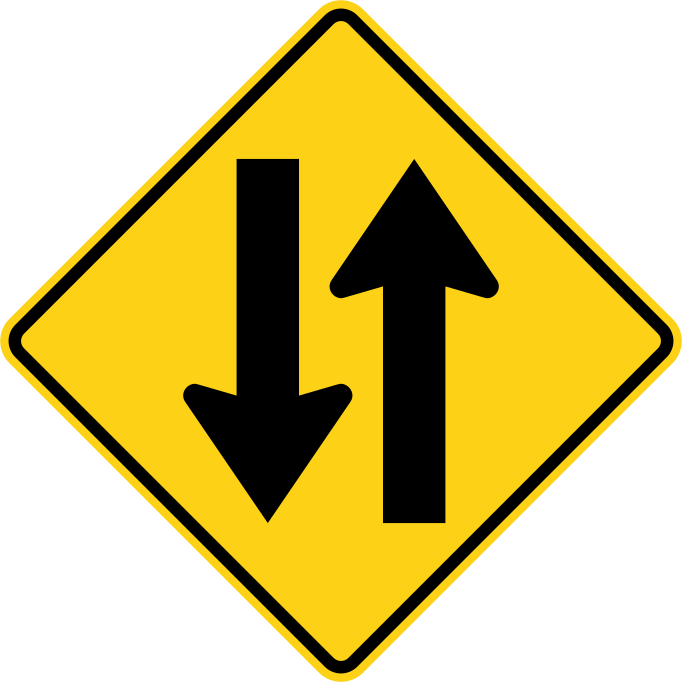
12. What traffic pattern follows this two opposing arrows warning?
- A school crossing is immediately ahead
- All traffic will continue in one direction around a median
- Only vehicles turning left may use the roadway
- You are leaving a one-way roadway and entering opposing traffic
Show answer
You are leaving a one-way roadway and entering opposing traffic. The two opposing arrows indicate a transition from a one-way roadway to a roadway with traffic moving in both directions. The choice “You are leaving a one-way roadway and entering opposing traffic” states that change. The median option describes a divided highway, where a physical barrier separates opposing flows. A left-turn-only lane is a lane-use instruction, not a two-way warning, and the school answer confuses unrelated symbols. As you approach the transition, keep alert for vehicles coming toward you and adjust your lane position to the new roadway arrangement.
Study this in the handbook: Warning and construction signs
13. What roadway condition does this Curved Road warning describe?

- A traffic signal is hidden behind a railroad gate
- The road will make an immediate U-turn at the sign
- The road will slowly move to the right or left
- The lane is ending at a school crossing
Show answer
The road will slowly move to the right or left. The Curved Road warning tells you the road will slowly move to the right or left. Wisconsin advises slowing down if needed to drive safely on that road. An immediate U-turn is a much sharper maneuver and is not what this sign describes. The signal, railroad, lane-ending, and school choices combine unrelated warnings. Look through the bend, manage speed before entering it, and keep the vehicle under control as the roadway gradually changes direction.
Study this in the handbook: Warning and construction signs
14. What following-distance method does Wisconsin recommend for normal driving?
- The Four Second Following Distance Rule
- A one-car-length rule at every speed
- The two-second rule only at night
- Following until the lead vehicle brakes
Show answer
The Four Second Following Distance Rule. Wisconsin recommends choosing a stationary object and checking whether four seconds pass before reaching it. If the vehicle arrives at that object before the count ends, the following distance is too short. A fixed car length ignores speed, while a two-second nighttime-only rule omits the handbook's baseline. Waiting for the lead vehicle to brake provides no planned cushion. Add a second for adverse conditions such as heavy traffic, rain, snow, or ice, so the gap grows when stopping needs increase.
Study this in the handbook: The four second rule and space around you
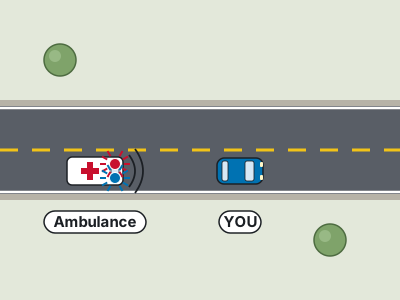
15. What should you do when emergency lights and sirens announce an approaching emergency vehicle?
- Keep driving until the emergency vehicle sounds its horn
- Stop in the center of the intersection
- Pull to the side of the road and stop
- Follow closely behind the emergency vehicle
Show answer
Pull to the side of the road and stop. Wisconsin directs drivers to make room when emergency lights and sirens are active. Pull toward the side of the road and stop, giving the responding vehicle a clear route. Stopping in an intersection creates a blockage at the very place emergency traffic may need to pass. Continuing until a horn sounds adds an unnecessary condition, and following behind can interfere with the response. Before moving again, confirm that the emergency vehicle has passed and that the roadway is open around you.
Study this in the handbook: Pedestrians, emergency vehicles and school buses
16. What does an eight-sided red stop sign require?
- A complete stop, followed by waiting until the path is clear
- A rolling slowdown when no traffic is visible
- A yield only to vehicles approaching from the left
- A stop only when a pedestrian is present
Show answer
A complete stop, followed by waiting until the path is clear. The octagonal red sign is a stop sign. The driver must come to a complete stop and wait until the path is clear before continuing. A rolling slowdown does not satisfy the requirement, and the sign is not limited to traffic approaching from one direction. No pedestrian must be visible before the stop is required. After stopping, scan for cross traffic, pedestrians, and bicyclists, then proceed only when the intersection can be entered safely.
Study this in the handbook: Regulatory, destination and service signs
17. What does a steady yellow traffic light tell a driver approaching an intersection?
- Speed up because the light guarantees extra crossing time
- The light is about to turn red, so slow and stop before entering
- Stop wherever the vehicle is if the light changes
- Proceed without checking because yellow gives priority
Show answer
The light is about to turn red, so slow and stop before entering. A steady yellow warns that the signal is about to change to red. Slow down and stop before entering the intersection. If your vehicle is already inside when yellow appears, do not stop there; continue through. Accelerating to beat the signal ignores the warning, and stopping in the intersection creates a hazard. The light does not grant priority over other road users. Check your distance and speed early, then make a controlled stop before the intersection whenever that can be done safely.
Study this in the handbook: Traffic lights and arrows
18. Which condition is a warning sign that a driver should pull over and rest?
- Driving below the posted speed limit
- Feeling eager to reach the destination
- Having a full fuel tank
- Yawning or blinking frequently
Show answer
Yawning or blinking frequently. Frequent yawning or blinking is a warning that fatigue may be reducing alertness, and the handbook says to pull over and rest in that situation. Drifting from the lane or hitting a roadside rumble strip are additional warning signs. Wanting to arrive, having enough fuel, and traveling below the speed limit do not show that the driver is awake enough to continue. Treat repeated yawns as an early signal rather than trying to overcome tiredness through willpower. Leaving traffic before attention worsens gives the driver a safer chance to recover and prevents fatigue from becoming a lane control problem.
Study this in the handbook: Distracted and drowsy driving
19. After stopping at a steady red light, when may you turn right in Wisconsin?
- Only after the signal turns yellow
- Whenever the road is empty, without stopping
- When it is safe and no sign prohibits the turn
- Only when a vehicle behind sounds its horn
Show answer
When it is safe and no sign prohibits the turn. A right turn on red is permitted only after a complete stop, a check for traffic, and confirmation that no sign prohibits the turn. Safety remains the condition, even when the intersection appears quiet. The empty-road choice omits the required stop. Waiting for yellow is unnecessary because the handbook specifically permits the movement from red after yielding. A horn from behind has no legal effect. Stop first, scan for pedestrians and cross traffic, then turn in the proper lane when clear.
Study this in the handbook: Traffic lights and arrows
20. When must a Wisconsin crash be reported to police?
- Only when both vehicles need towing
- When someone is injured or killed, among other listed conditions
- Only when the crash occurs after dark
- Only when an insurance company requests a report
Show answer
When someone is injured or killed, among other listed conditions. Wisconsin lists several police-report triggers, including an injury or death. Reporting is also required for property damage of at least $1,000, government property damage of at least $200, an immovable vehicle, or a driver who appears impaired by alcohol or drugs. Waiting for a tow truck, darkness, or an insurer does not replace those conditions. At a serious crash, call 911, remain on scene, and follow directions. The amount and type of damage matter, not just whether a vehicle looks badly damaged.
Study this in the handbook: Avoiding crashes, crash duties and roadside emergencies
QualitySpace is expanding to Wisconsin
We are a California-based independent insurance brokerage working on licensing in more states. We cannot help with Wisconsin insurance yet. Leave your email and we will let you know when we can.
Every question is written from the official Wisconsin Motorists' Handbook. Need paper? Printable WI practice test with answer key.
Last verified 2026-10-05. How we check every question · Study all 200 as flashcards
Frequently asked questions
How many questions are on this Wisconsin practice test?
This fixed set has 20 questions. It is test 6 of 10 from the 200 question Wisconsin bank. The real WI exam has a 15 question road sign section with 12 correct to pass, plus 50 knowledge questions with 40 correct to pass.
What is the passing score for the real Wisconsin test?
40 questions (80%) correctly to pass That figure comes from the official Wisconsin source cited on the DMV facts page.
How does this fixed test relate to the full Wisconsin bank?
Each numbered test is a fixed set of questions in a fixed order, so you can retake the same test later and compare. Every test mixes road signs and the other topics in about the same proportion as the full bank. Tests 1 to 10 together cover every question in the Wisconsin bank once. The full practice page mixes the whole bank at random.
Last verified 2026-10-05. See the Wisconsin DMV facts page for sourced state details.
Return to the full Wisconsin practice test · Study road signs