
Printable WI Permit Practice Test
50 questions in the real WI exam format, 80 percent (40 of 50) to pass. Answer key on the last page. Last verified 2026-09-05 against the official Wisconsin driver manual.
1. When should a driver return from high beams to low beams?
- Only after entering a construction area
- Whenever the road has a center line
- When a vehicle comes toward you
- When following a vehicle at any distance
2. What roadway feature does a Keep Right sign indicate ahead?
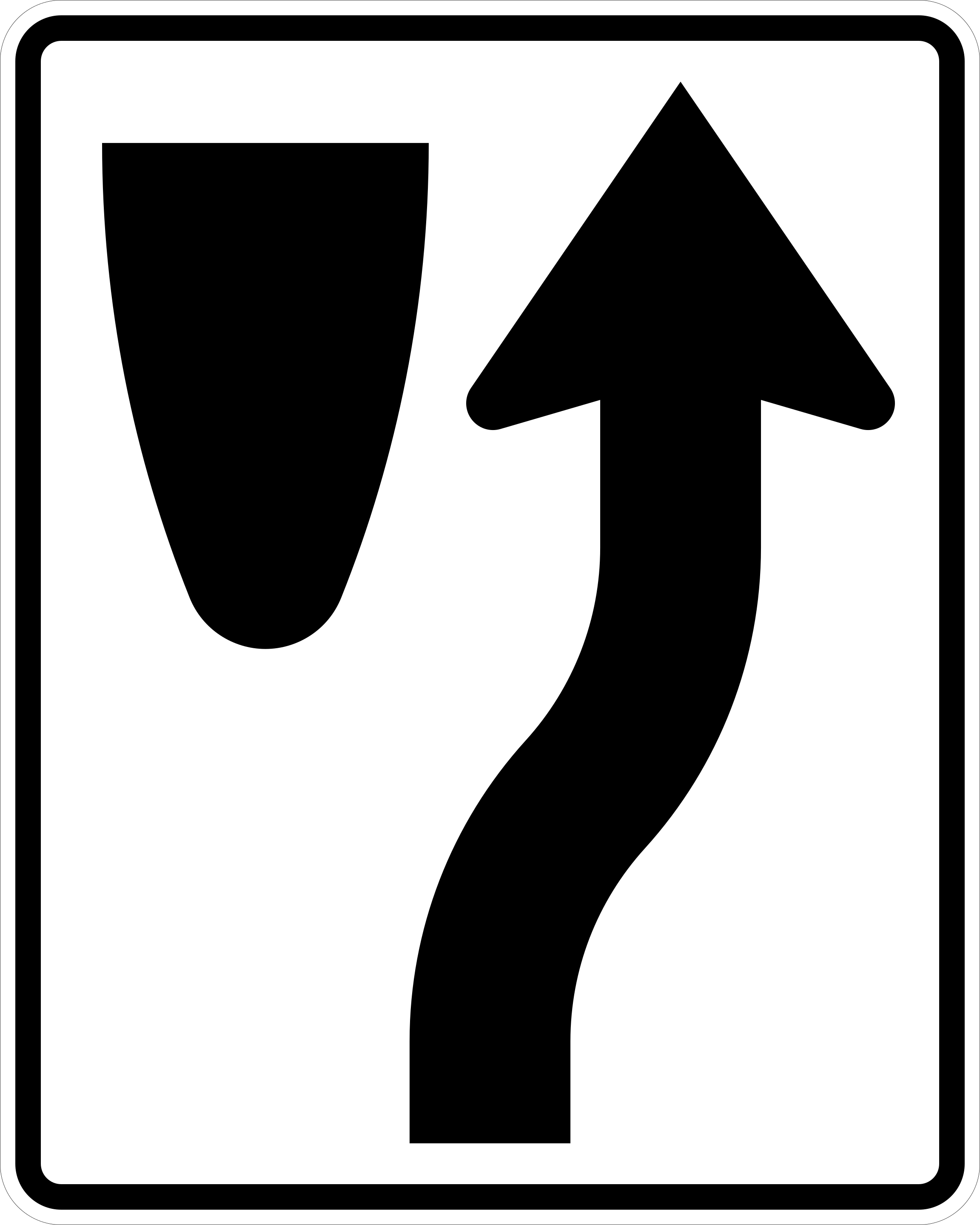
- A traffic island or obstacle divides the road
- The right lane is reserved for passing
- A one-way roadway requires every turn to be right
- A railroad gate blocks the left shoulder
3. If a Wisconsin driver refuses a requested PAC test, what minimum driving privilege consequence does the handbook describe?
- Loss of driving privileges for at least one year
- A warning with no license consequence
- A three-month suspension only
- A requirement to retake the signs test
4. What does an intersection or cross-road warning sign identify?

- A road that permits traffic in one direction only
- A lane reserved for turning vehicles only
- A railroad track that is no longer in use
- A place where two or more roads cross
5. Until what age must children generally use a child safety seat in Wisconsin?
- Until they reach age eight
- Until they reach age two
- Until they reach age four
- Until they reach age twelve
6. Why might a driver encounter this sign on an exit ramp?
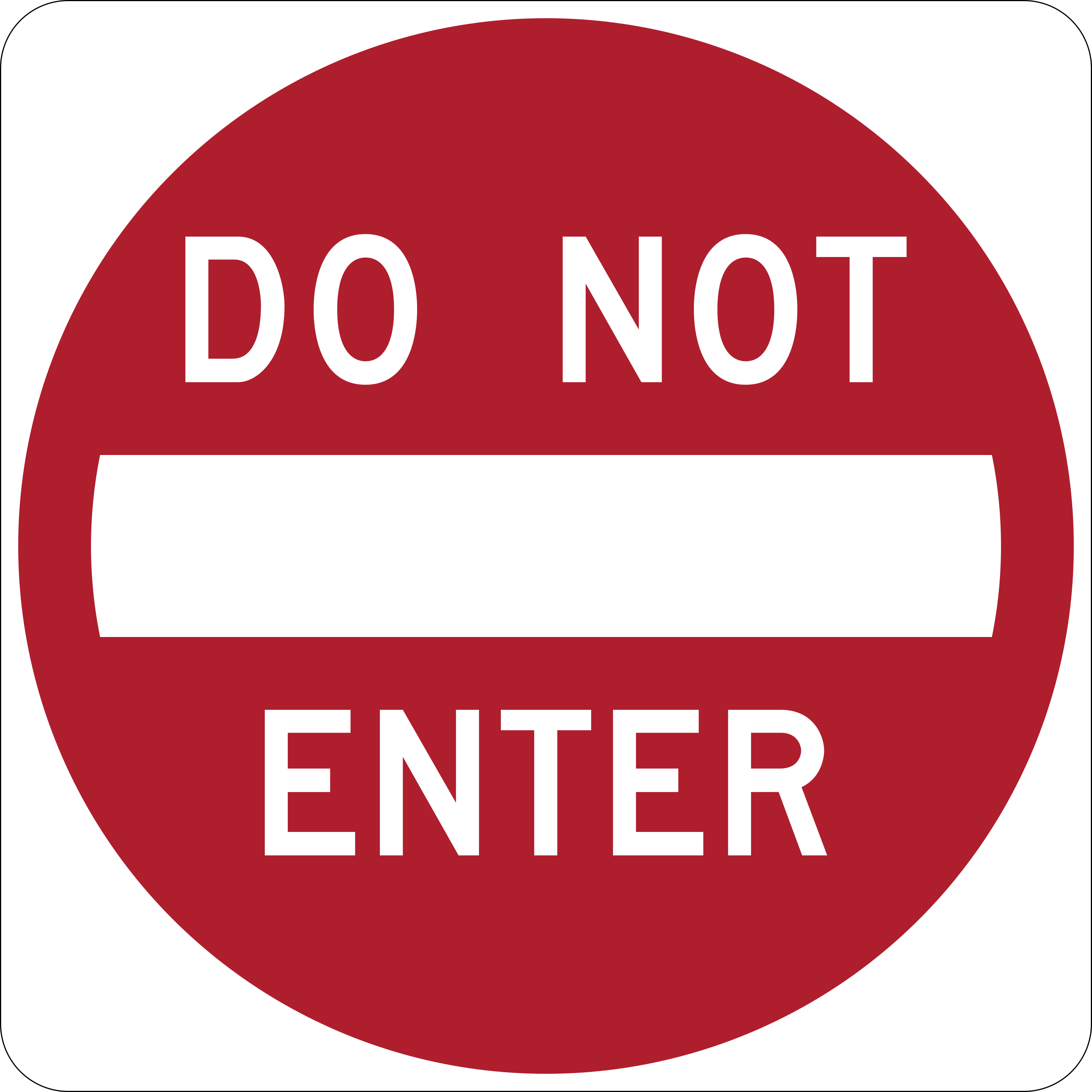
- The ramp is reserved for emergency vehicles
- The ramp leads in the wrong direction
- The ramp is a legal passing lane
- The ramp ends at a railroad signal
7. Where does the Wisconsin handbook say parking is not allowed?
- Only on the left side of a one-way street
- On yellow curb markings or in front of fire hydrants
- Anywhere within one block of a business
- On every road with a paved shoulder
8. What following gap does Wisconsin recommend as a normal starting point?
- Ten feet behind the vehicle ahead
- One car length at every speed
- Two seconds only when roads are icy
- Four seconds from a stationary reference point
9. What does a dashed yellow center line allow when it is safe?
- Parking in the center of the roadway
- Passing other vehicles
- Turning only at a traffic signal
- Driving against traffic without checking
10. How often must a Wisconsin driver license be renewed?
- Every eight years
- Every four years
- Every two years
- Every twelve years
11. A school bus displays flashing red lights on the opposite side of an undivided road. What must you do?
- Stop only if the bus driver gestures
- Continue if you are traveling in the opposite direction
- Pass slowly after checking for children
- Stop at least 20 feet from the bus
12. On a Wisconsin railroad crossbuck assembly, what may a sign below the X-shaped Railroad Crossing sign tell you?
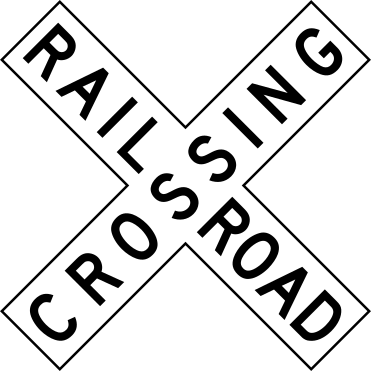
- The speed limit for the next town
- The train's exact arrival time
- The number of tracks at the crossing
- The distance to the nearest hospital
13. When may a driver cross a dashed yellow centerline to pass?
- When the vehicle ahead is farm equipment
- Whenever the driver wants to save time
- Only after sounding the horn twice
- When passing is safe and the way is clear
14. What should a driver do after seeing a curved-road warning sign?

- Move immediately onto the shoulder
- Accelerate before the road changes direction
- Stop in the travel lane until the curve ends
- Slow down if needed to drive safely through the curve
15. Before crossing railroad tracks, what should a Wisconsin driver do even if warning signs are not flashing?
- Stop on the tracks to check for traffic
- Shift gears while crossing to gain speed
- Look both ways and listen for a train
- Cross quickly without checking if the gate is raised
16. What guidance does the Wisconsin handbook give regular license holders about cell phone use while driving?
- Use a phone only for navigation, with no other restriction
- Use a handheld phone freely when traffic is moving slowly
- Avoid using a cell phone and try the vehicle’s hands-free option if use is necessary
- Turn the phone off by law in every situation
17. A school bus has flashing red lights on the other side of a divided highway. What is the rule for you?
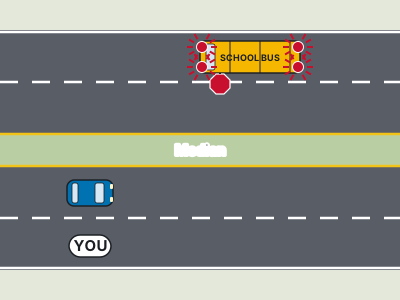
- You must stop unless the highway has four lanes
- You must stop at least 20 feet away every time
- You may pass only after the bus driver waves you through
- You do not have to stop when you are on the opposite side of the divided roadway
18. What score is required to pass Wisconsin's separate Highway Signs test?
- 10 correct out of 15
- 12 correct out of 15
- 13 correct out of 20
- 8 correct out of 10
19. For how long are Wisconsin graduated driver license restrictions required for a driver under 18, unless the driver turns 18 sooner?
- The first three months
- The first six months
- The first nine months
- Until the driver turns 21
20. How long are Wisconsin GDL restrictions extended if the teen breaks one of them?
- Thirty days
- Six months
- One year
- Until age 21
21. Which action is prohibited when crossing railroad tracks?
- Waiting for a clear path on the other side
- Looking both ways before crossing
- Stopping on the tracks
- Checking for a train even when warning signs are dark
22. What happens to points on second or future convictions under Wisconsin GDL restrictions?
- They apply only after age 21
- They are erased
- They convert to driving hours
- They double
23. How should you approach an intersection when trees, buildings, or parked vehicles block your view?
- Rely on the vehicle ahead without looking
- Accelerate so you clear the obstruction quickly
- Stop in the middle of the cross street
- Approach at a slow pace
24. What must a driver do when a railroad crossing gate is lowering?
- Cross after the gate reaches halfway down
- Drive around it if no train is visible
- Wait and do not drive around the gate
- Stop under the gate until the bell ends
25. What is the purpose of Wisconsin warning signs?
- To authorize parking in any nearby lane
- To list the driver's license renewal date
- To identify only services such as hospitals
- To alert drivers to a special situation or hazard ahead
26. A pedestrian with a guide dog or white cane is near the roadway. How far away should a driver stop until that person is clear?
- Only at the edge of a marked crosswalk
- At least 3 feet
- At least 20 feet
- At least 10 feet
27. What does Wisconsin’s handbook say about assuming that the vehicle on the right always goes first?
- Do not make that assumption because each situation can differ
- Make that assumption at every intersection
- Use it only at four-way stops
- Ignore it whenever the road is wet
28. On a road with more than one lane in your direction, how should you pass a stopped emergency vehicle with flashing lights?
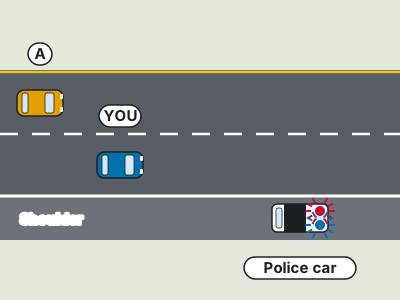
- Drive on the shoulder beside it
- Stop in the lane nearest the vehicle
- Move into the lane farthest from the stopped vehicle
- Turn around before reaching it
29. Which steering response is recommended while a vehicle is hydroplaning?
- Hold the wheel straight until the tires grip again
- Swerve toward the nearest open lane
- Use repeated hard braking to force traction
- Turn toward the vehicle behind you
30. In which situation does the Wisconsin handbook recommend using low beam headlights?
- Only when parked and idling
- When using windshield wipers
- Only when driving on a divided highway
- When no vehicle has a license plate
31. What must Wisconsin drivers always do to avoid hitting pedestrians, bicyclists, or other vehicles?
- Yield when needed
- Assume pedestrians will stop
- Proceed first after sounding the horn
- Yield only when a police officer is present
32. In a Wisconsin construction zone, when may you hold and use your cellphone while driving?
- Whenever you are below the posted speed limit
- Whenever traffic is stopped
- Only to report an emergency
- Only if you are 18 or older
33. What must a driver do when a police car is stopped on the roadside with lights and sirens on?
- Move over or slow down to give it room
- Stop directly behind the police car
- Pass without changing speed if the lane is open
- Turn around before reaching the stopped vehicle
34. When are Wisconsin drivers required to use low-beam headlights?
- Only when driving on an interstate highway
- From a half hour after sunset until a half hour before sunrise
- Only during rain, snow, or fog
- Whenever the vehicle is parked and idling
35. What should you turn on during a roadside emergency in Wisconsin?
- Emergency flashers
- High beams only
- The parking brake warning light
- Interior dome lights only
36. Before receiving a probationary license, an applicant under 18 must hold the instruction permit for at least how long?
- One year
- Three months
- Nine months
- Six months
37. What cell phone use is permitted for a Wisconsin instruction permit or probationary license holder while driving?
- Using any hands-free feature whenever desired
- Using the phone only to report an emergency
- Making personal calls if traffic is light
- Using the phone only while stopped at a red light
38. When may a driver travel briefly in a Wisconsin reserved lane that is marked for special vehicles?
- Whenever traffic in regular lanes is slow
- When turning across it in the next half of a block
- Only to pass a bicyclist at full speed
- Anytime the lane has a white diamond
39. What do two solid yellow lines mean for passing?
- Passing is allowed for both directions
- No lane of travel can pass
- Only trucks may cross to pass
- Passing is required before the next curve
40. When making a left turn, what must you leave room for?
- No traffic once your signal is on
- Only vehicles parked behind you
- A vehicle to pass on the shoulder
- Oncoming traffic to turn in front of you
41. What headphone use does Wisconsin warn drivers not to do?
- Drive with headsets or headphones covering or in both ears
- Use one earbud for a navigation prompt
- Keep the vehicle radio at low volume
- Listen for emergency vehicles while driving
42. What does Wisconsin require to reinstate a revoked license once the revocation period is over?
- Only a new vision test
- A letter from the arresting officer
- Proof of identity, a reinstatement fee, and possibly proof of financial responsibility
- Nothing, because it restores itself
43. On a two lane road, what does a solid yellow line beside a dashed yellow line indicate?
- The road is changing to one way traffic
- Passing is forbidden for vehicles on both sides
- Passing is allowed from the solid side only
- Passing is allowed from the dashed side but not the solid side
44. What does Wisconsin say about exceeding the speed limit to pass another vehicle?
- It is allowed only on two-lane rural highways
- It is allowed for less than one mile
- It is not allowed
- It is required when traffic is backed up
45. When parallel parking in Wisconsin, how long should the parking space be compared with your vehicle?
- Exactly the same length
- About 10 to 15 feet longer
- At least twice as long
- About 3 to 6 feet longer
46. Why might Wisconsin’s safe driving speed be lower than the posted maximum?
- Visibility and road conditions may require a slower speed
- A driver may exceed the maximum when visibility is poor
- The posted number applies only when traffic is heavy
- A driver should always travel exactly at the posted number
47. At a steady green light, what must you remember before making a left turn?
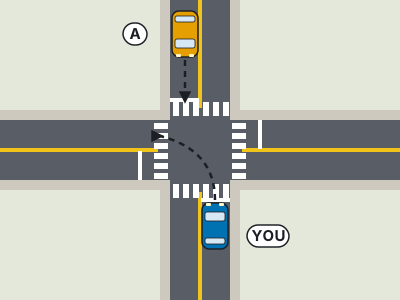
- Oncoming traffic has the right of way, so turn only when safe
- The green light gives an unconditional left turn
- You must wait for a red light before turning
- Vehicles behind you have priority over oncoming traffic
48. What does a slow moving vehicle sign identify in Wisconsin?

- A vehicle carrying hazardous cargo only
- A vehicle that must travel at least 55 mph
- A road closed to farm equipment
- A vehicle that could travel at 25 mph or less
49. A Wisconsin driver is asked to take a prohibited alcohol concentration test and refuses. What consequence does the handbook describe?
- The driver may refuse if no crash occurred
- The driver receives only a written warning for a first refusal
- The refusal changes the charge to a parking violation
- The officer must arrest the driver, and driving privileges are lost for at least one year
50. If a Wisconsin crash has no injuries and the vehicle can move, what should the driver do when safe?
- Leave it blocking traffic until a tow truck arrives
- Move the vehicle off the road
- Drive away without exchanging information
- Stop in the middle of the road to take photos first
Answer key
- 1. C
- 2. A
- 3. A
- 4. D
- 5. C
- 6. B
- 7. B
- 8. D
- 9. B
- 10. A
- 11. D
- 12. C
- 13. D
- 14. D
- 15. C
- 16. C
- 17. D
- 18. B
- 19. C
- 20. B
- 21. C
- 22. D
- 23. D
- 24. C
- 25. D
- 26. D
- 27. A
- 28. C
- 29. A
- 30. B
- 31. A
- 32. C
- 33. A
- 34. B
- 35. A
- 36. D
- 37. B
- 38. B
- 39. B
- 40. D
- 41. A
- 42. C
- 43. D
- 44. C
- 45. D
- 46. A
- 47. A
- 48. D
- 49. D
- 50. B