
Key points
Speed limits are the fastest you may drive, and you cannot exceed them to pass.
Source: Handbook p. 10
“It is illegal to go over the speed limit that is on the sign. You cannot drive over the speed limit to pass other vehicles.”
Wisconsin Motorists' Handbook, Handbook p. 10Unless posted otherwise, the limit in residential areas is 25 mph.
Source: Handbook p. 10
“Unless otherwise posted, the speed limit in residential areas is 25 miles per hour.”
Wisconsin Motorists' Handbook, Handbook p. 10The normal school zone limit when children are present is 15 mph.
Source: Handbook p. 10
“The normal speed limit in a school zone when children are present is 15 miles per hour.”
Wisconsin Motorists' Handbook, Handbook p. 10In outlying parts of cities and villages with no posted limit, the maximum is 35 mph.
Source: Handbook p. 10
“The maximum speed limit in outlying parts of cities and villages with no posted speed limit is 35mph.”
Wisconsin Motorists' Handbook, Handbook p. 10You may need to go slower than the limit depending on visibility and road conditions.
Source: Handbook p. 10
“you may need to go slower depending on visibility and road conditions.”
Wisconsin Motorists' Handbook, Handbook p. 10Going too slow can back up traffic and cause a crash, and you can be ticketed for it.
Source: Handbook p. 10
“Going too slow can cause vehicles to back up behind you and cause a crash. In both instances you could be given a ticket by police.”
Wisconsin Motorists' Handbook, Handbook p. 10If you cannot see 10 to 15 seconds ahead, you must slow down.
Source: Handbook p. 12
“If you cannot see 10 to 15 seconds ahead, you must slow down so you have better control of your vehicle in the traffic environment.”
Wisconsin Motorists' Handbook, Handbook p. 12Drive in the far right lane of a multi lane road if you are slower than most traffic.
Source: Handbook p. 10
“Drive in the far-right lane of a multi-lane road if you are driving slower than most traffic.”
Wisconsin Motorists' Handbook, Handbook p. 10
Numbers to know
| Number | What it means | Manual |
|---|---|---|
| 25 mph | residential areas unless posted otherwise | Handbook p. 10 |
| 15 mph | normal school zone limit when children are present | Handbook p. 10 |
| 35 mph | outlying parts of cities and villages with no posted limit | Handbook p. 10 |
| 10 to 15 seconds | how far ahead you should be able to see | Handbook p. 12 |
Recognize these signs
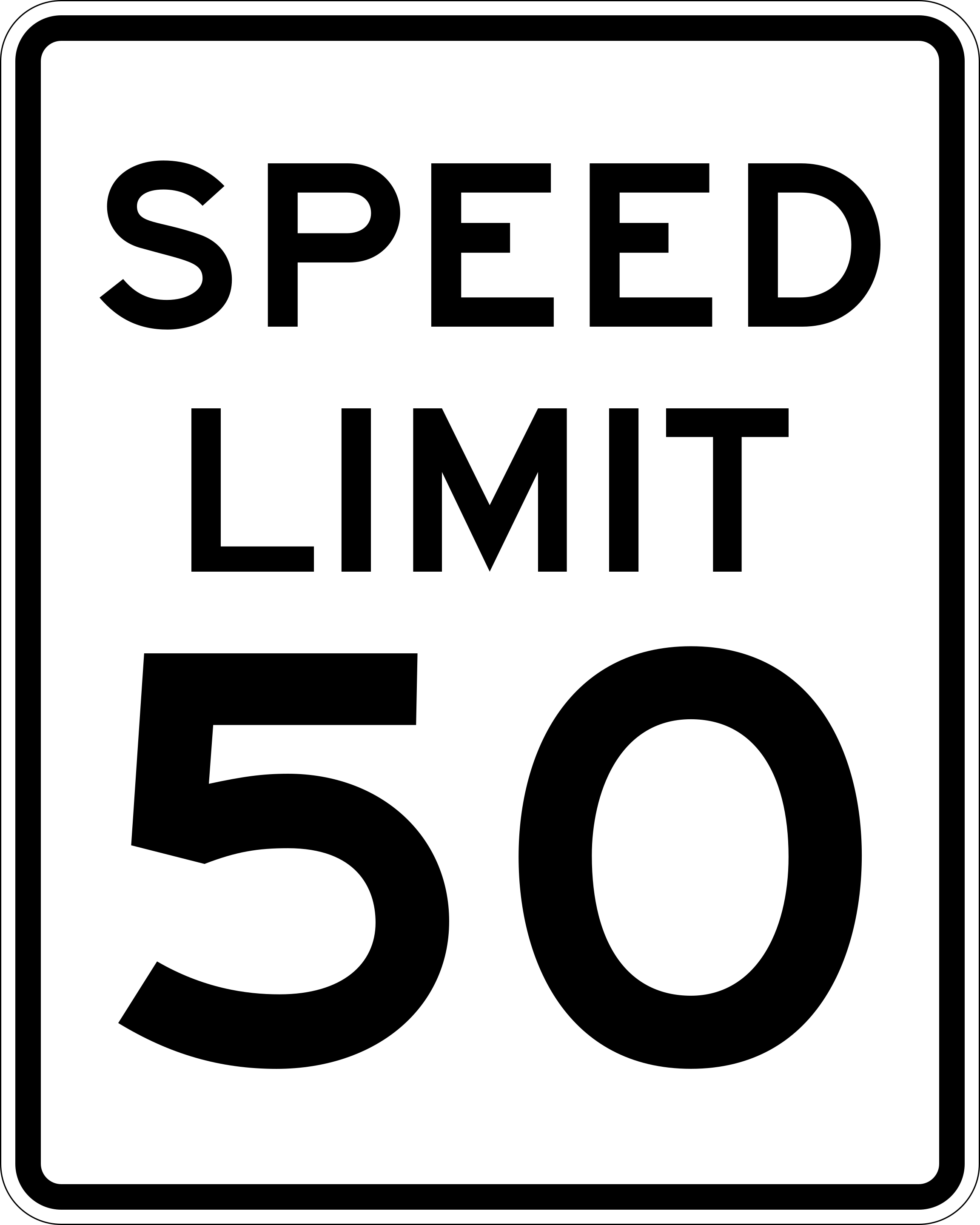
Speed limit 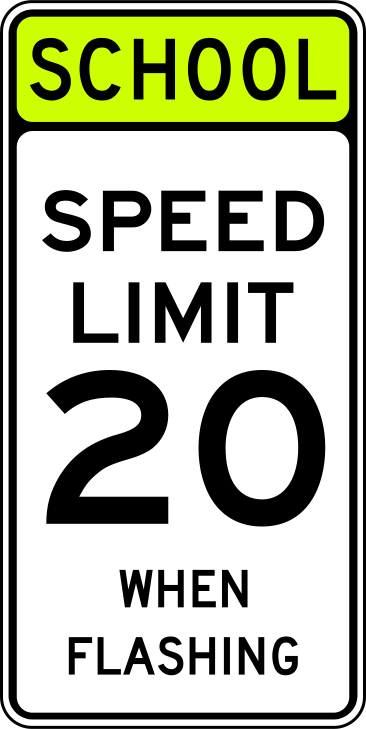
School speed limit
3 questions from the Wisconsin practice test
1. Unless a sign sets a different limit, what speed applies in a Wisconsin residential area?
- 15 miles per hour
- 25 miles per hour
- 30 miles per hour
- 35 miles per hour
Show answer
25 miles per hour. Wisconsin sets the residential default at 25 miles per hour when no other sign changes the limit. The 15 mile choice belongs to a school zone when children are present, while 30 and 35 miles per hour are not the handbook’s residential default. Posted signs still control when they show another number. On a practice question, first identify the land use, then check whether the wording says unless otherwise posted. That pairing points to 25 miles per hour rather than the nearby school zone and outlying-area figures.
2. Unless another limit is posted, what is the maximum speed in outlying parts of Wisconsin cities and villages?
- 25 mph
- 35 mph
- 45 mph
- 55 mph
Show answer
35 mph. The handbook sets 35 mph as the maximum in outlying parts of cities and villages when no speed limit is posted. The 25 mph figure applies to residential areas unless posted otherwise, so it describes a different road setting. The 45 mph and 55 mph choices exceed the stated default for these city and village outskirts. Treat the location description as the key cue: outlying municipal areas are not the same as residential streets or rural highways. Road and visibility conditions may still require driving below the maximum.
3. When should a Wisconsin driver slow down because the sight distance ahead is too short?
- When another vehicle is more than four seconds behind
- Only when the posted speed limit drops below 35 mph
- When the driver cannot see 10 to 15 seconds ahead
- Only after entering a school zone with children visible
Show answer
When the driver cannot see 10 to 15 seconds ahead. Wisconsin ties speed choice to how far ahead the driver can see. If the view does not reach 10 to 15 seconds ahead, slowing gives more time to control the vehicle and respond to hazards. A posted number below 35 mph is not the trigger for this rule, and a following vehicle behind you does not measure your forward sight distance. Use hills, curves, fog, traffic, or parked vehicles as cues that your visible path has shortened.
Practice this topic
Lock it in with speed limits questions from the free Wisconsin practice test. Every answer comes with a plain English explanation.
Source: the Wisconsin Motorists' Handbook, Section 3: The Basics. This lesson is a plain English summary, not the law itself; where it differs, the manual and the statute govern. Last checked 2026-09-27.