
Key points
Regulatory signs are square, rectangular or a special shape and tell you the rules of the road.
Source: Handbook p. 24
“These signs are square, rectangle or a special shape. They can be white or red with black, red, white or green lettering and symbols. The sign will tell you the rules of the road.”
Wisconsin Motorists' Handbook, Handbook p. 24Do Not Enter is used on exit ramps going the wrong direction and on one way streets.
Source: Handbook p. 24
“Do Not Enter You cannot enter. This is used on exit ramps going the wrong direction or one-way streets.”
Wisconsin Motorists' Handbook, Handbook p. 24A Speed Limit sign shows the maximum speed in good driving conditions.
Source: Handbook p. 24
“Speed Limit This indicates the maximum speed you can drive in good driving conditions.”
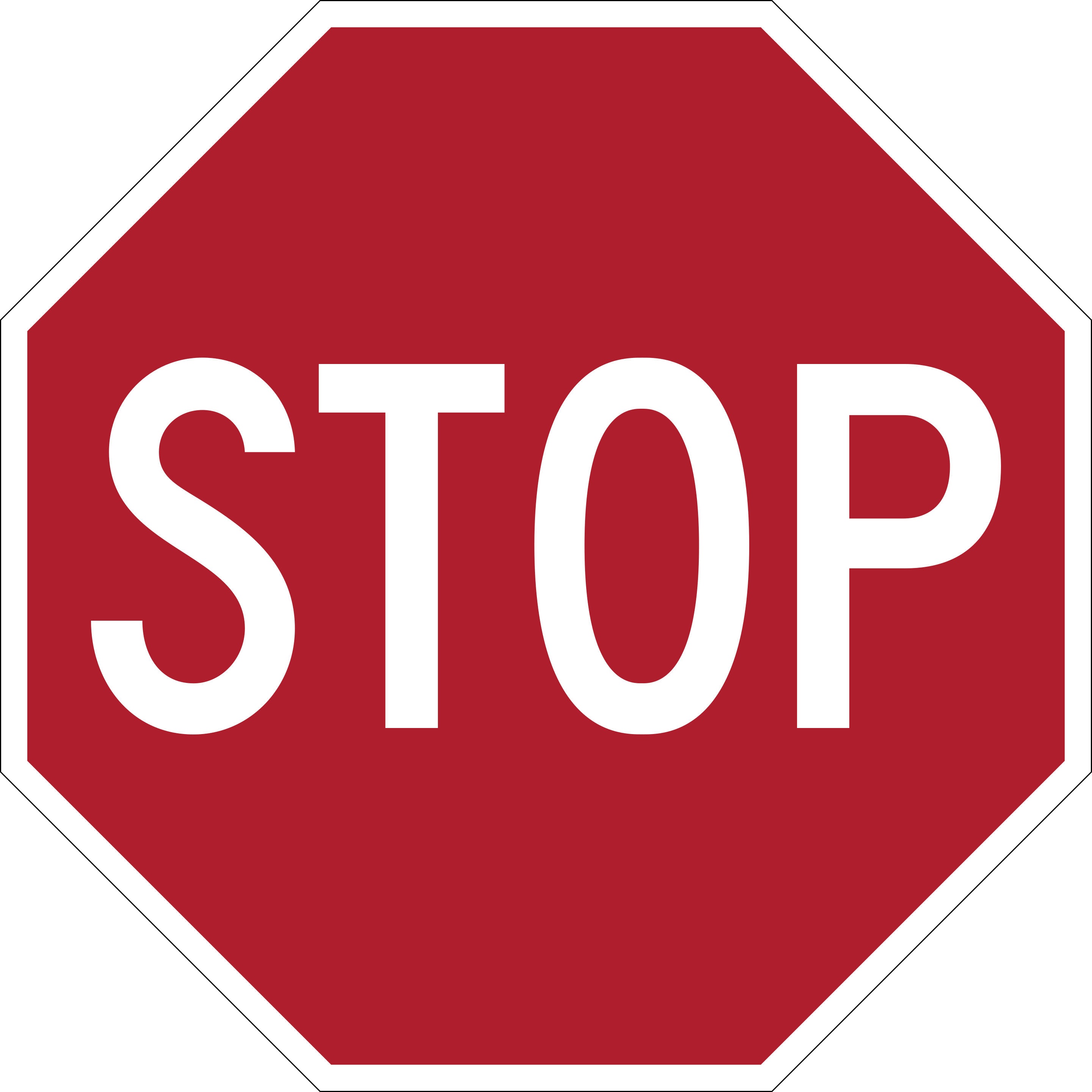
Wisconsin Motorists' Handbook, Handbook p. 24The stop sign has 8 sides and is red with white letters. Stop completely and wait until your path is clear.
Source: Handbook p. 25
“Stop This sign has eight sides and is red with white letters. You must come to a complete stop and wait until your path is clear before continuing.”
Wisconsin Motorists' Handbook, Handbook p. 25The yield sign is a downward pointing red and white triangle.
Source: Handbook p. 25
“Yield A downward pointing red and white triangle with red letters. This sign means that you must yield right-of-way to other vehicles.”
Wisconsin Motorists' Handbook, Handbook p. 25The slow moving vehicle sign is a triangle with reflective orange markings, on a vehicle that could travel at 25 mph or less.
Source: Handbook p. 25
“Slow Moving Vehicle A triangle shaped sign with reflective orange markings. This vehicle could travel at 25 mph or less.”
Wisconsin Motorists' Handbook, Handbook p. 25The yellow pennant marks a no passing zone where you may not pass any vehicle.
Source: Handbook p. 25
“No Passing Zone A yellow pennant with black lettering. You are not allowed to pass any vehicle in the no passing zone.”
Wisconsin Motorists' Handbook, Handbook p. 25Destination signs are square or rectangular, and green or brown with white letters.
Source: Handbook p. 27
“Destination signs are square or rectangular. They are green or brown with white lettering.”
Wisconsin Motorists' Handbook, Handbook p. 27Mile markers appear every one to two tenths of a mile, on the right side of the road or in the median.
Source: Handbook p. 28
“They are at every one to two-tenths of a mile. You can find them on the right side of the road or in the median.”
Wisconsin Motorists' Handbook, Handbook p. 28
Numbers to know
| Number | What it means | Manual |
|---|---|---|
| 8 sides | the stop sign's shape | Handbook p. 25 |
| 25 mph | top speed of vehicles with the slow moving vehicle sign | Handbook p. 25 |
Recognize these signs
Stop 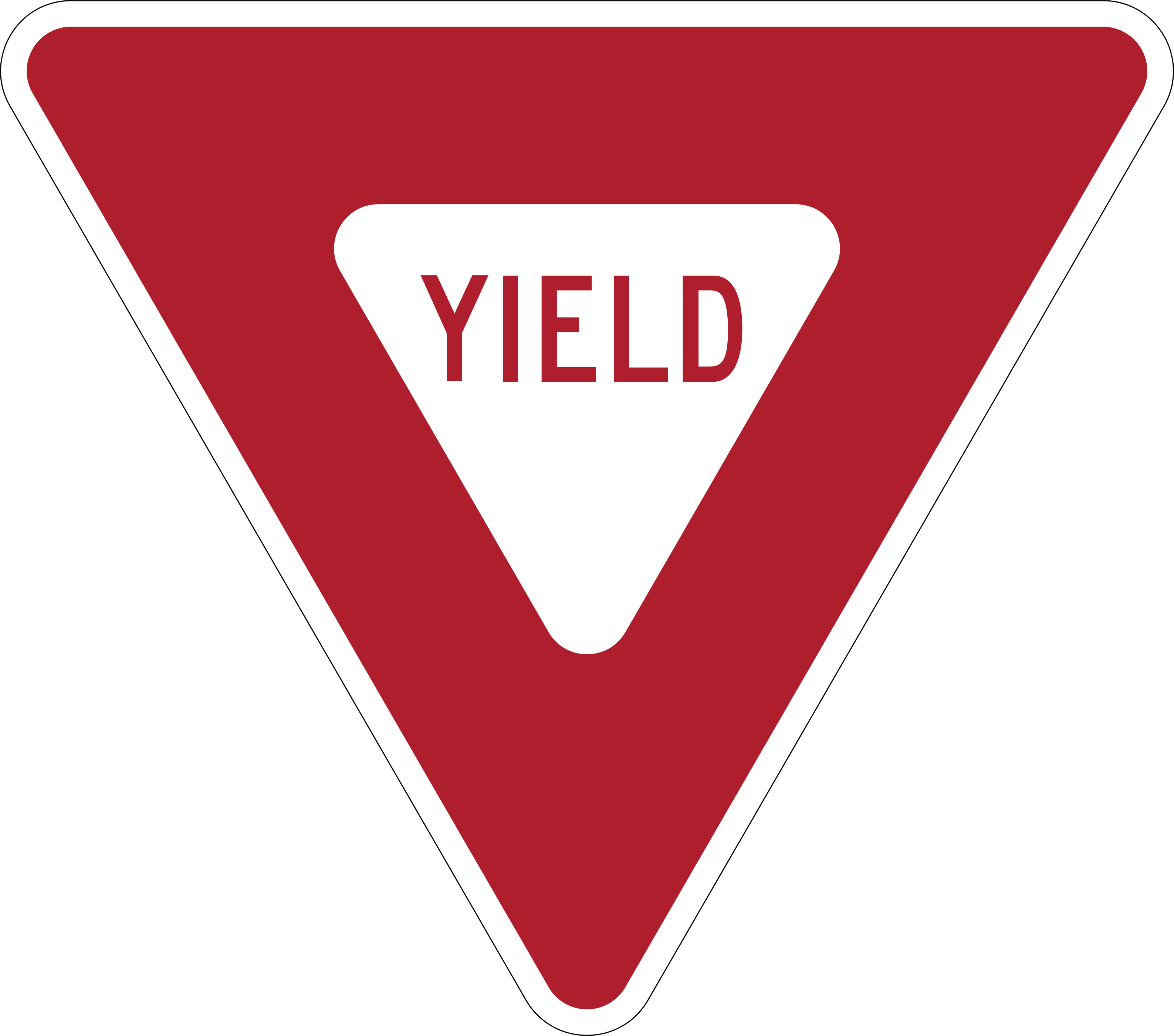
Yield 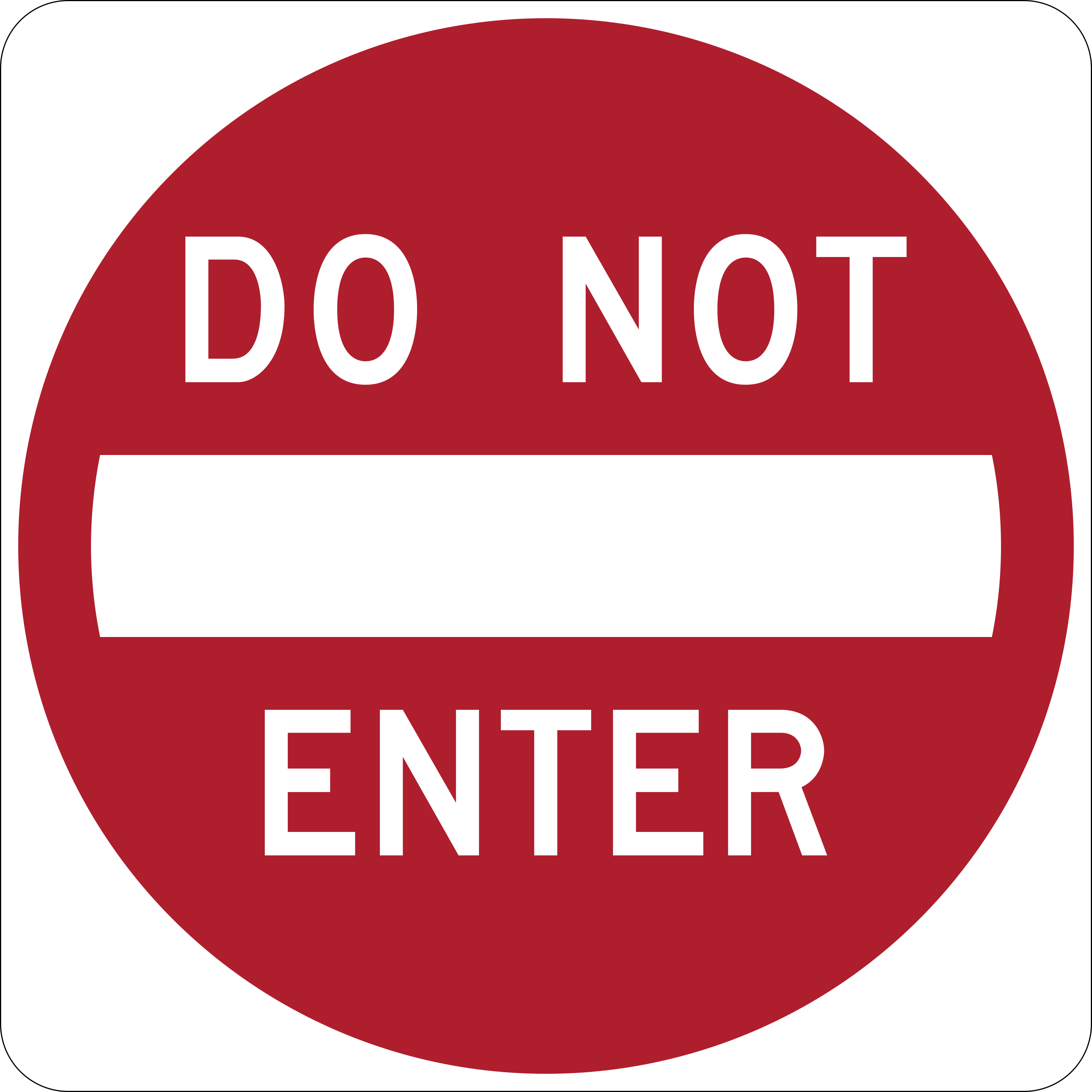
Do not enter 
No U turn 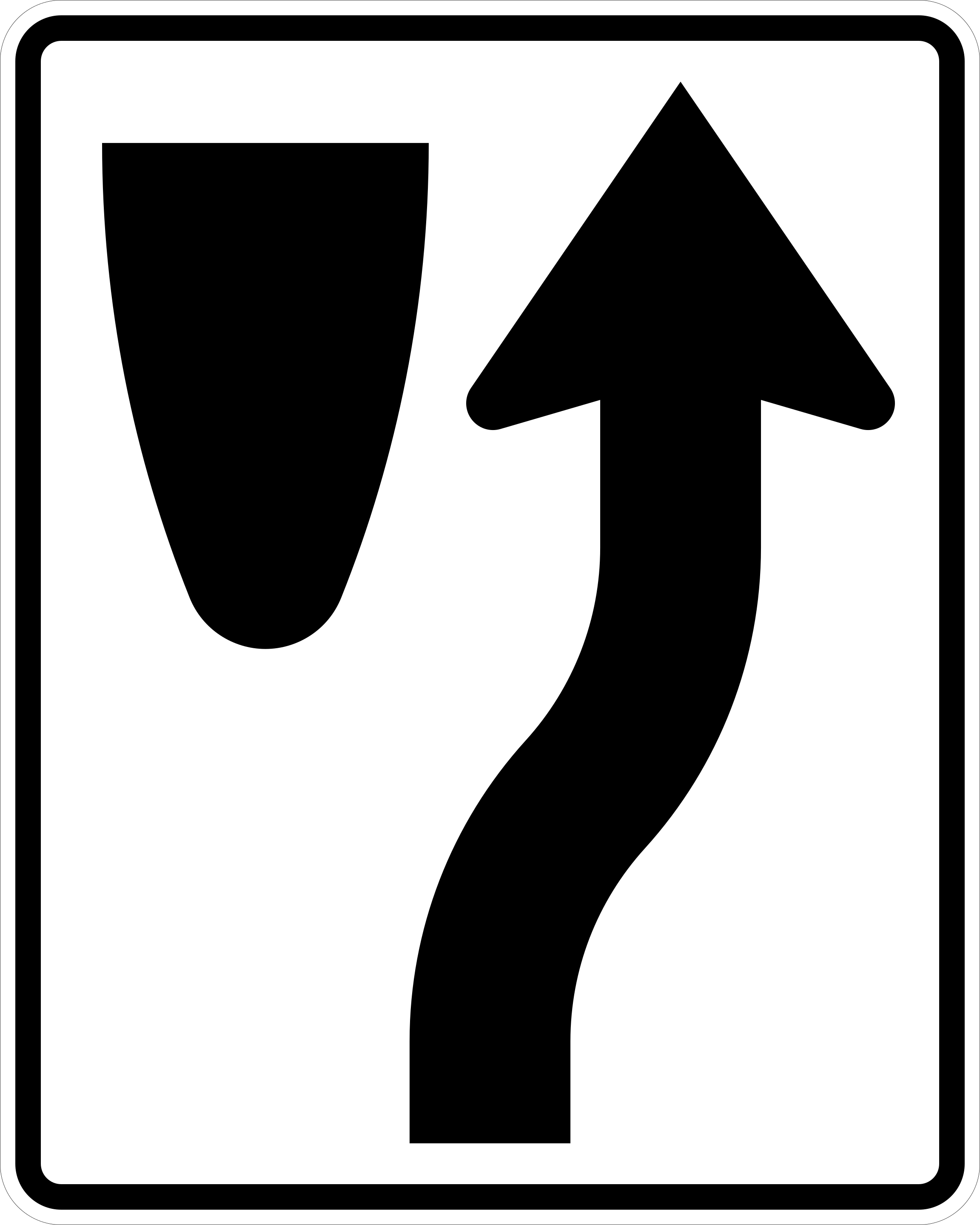
Keep right 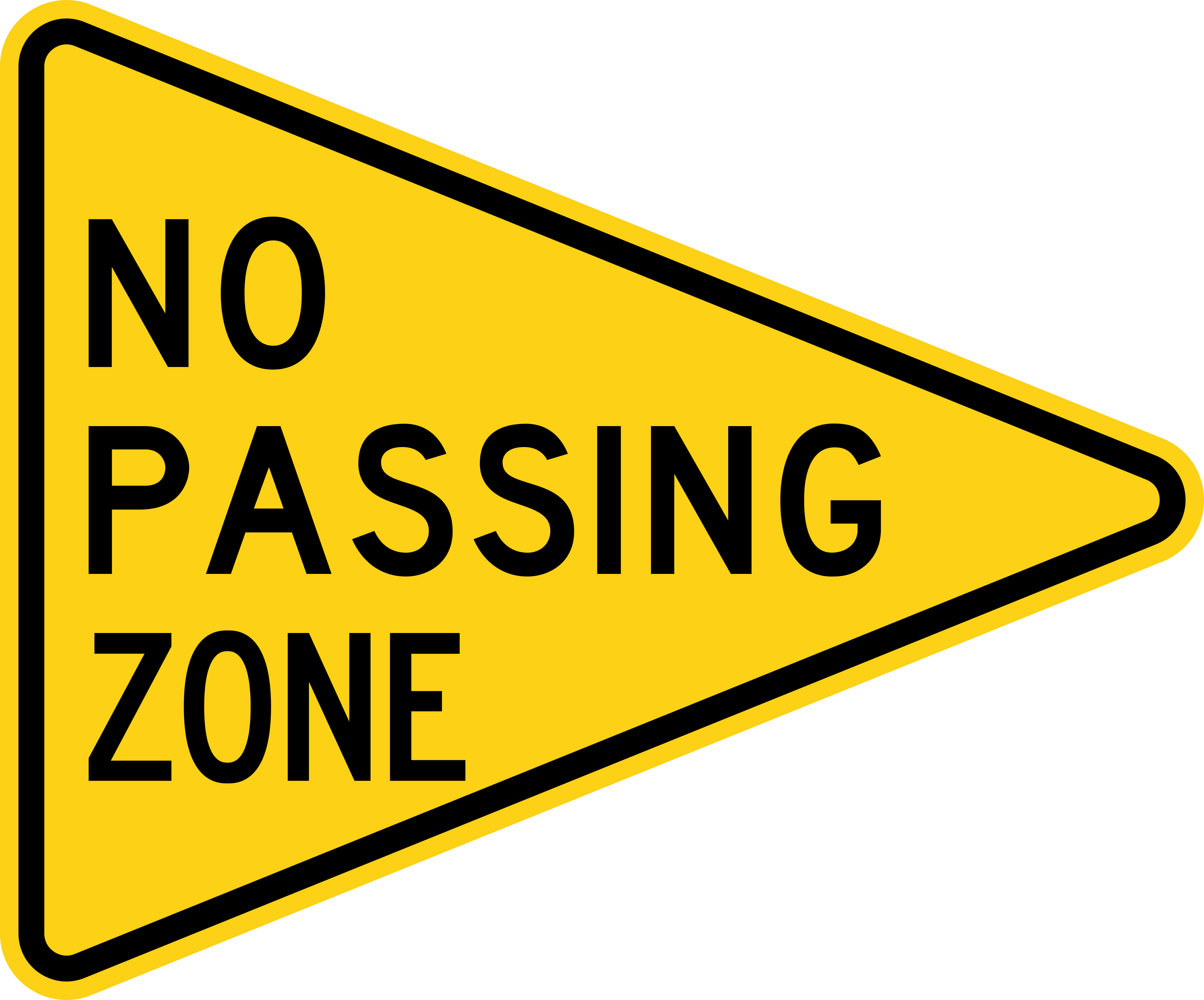
No passing zone 
Slow moving vehicle 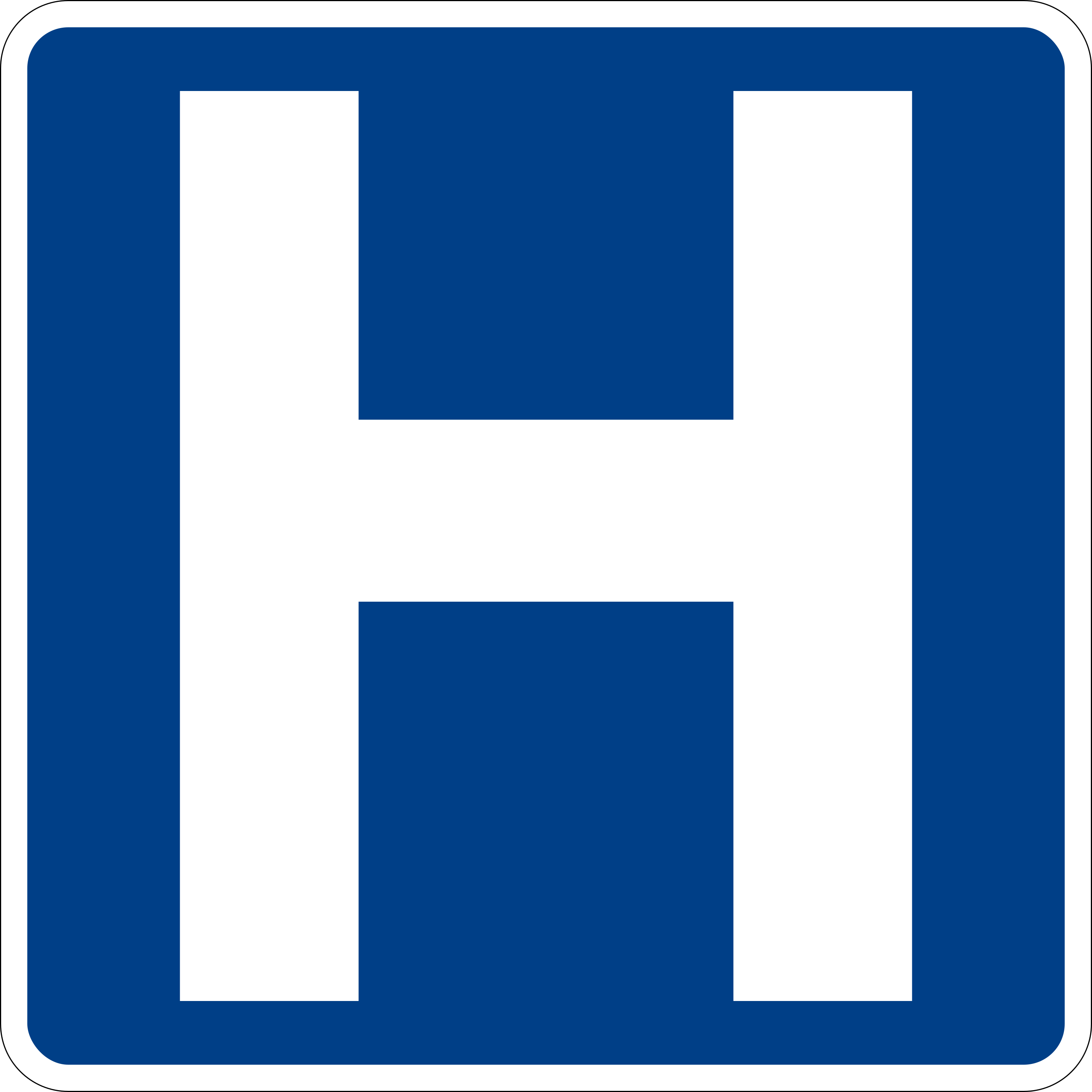
Hospital
3 questions from the Wisconsin practice test
1. What instruction is given by a downward pointing red and white triangle?
- Yield right of way to other vehicles
- Stop and remain stopped for one minute
- Expect a railroad crossing immediately ahead
- Follow the lane reserved for buses
Show answer
Yield right of way to other vehicles. The inverted red and white triangle is a Yield sign. It tells the driver to give right of way to other vehicles, so approach slowly, inspect the traffic stream, and enter only when the movement is safe. It is not a timed stop requirement, a railroad warning, or a bus lane instruction. A full stop may still be prudent if visibility or traffic requires it, but the sign’s central command is yielding. Look beyond the sign for vehicles already occupying the intersection or roadway.
2. What does an eight-sided red stop sign require?
- A complete stop, followed by waiting until the path is clear
- A rolling slowdown when no traffic is visible
- A yield only to vehicles approaching from the left
- A stop only when a pedestrian is present
Show answer
A complete stop, followed by waiting until the path is clear. The octagonal red sign is a stop sign. The driver must come to a complete stop and wait until the path is clear before continuing. A rolling slowdown does not satisfy the requirement, and the sign is not limited to traffic approaching from one direction. No pedestrian must be visible before the stop is required. After stopping, scan for cross traffic, pedestrians, and bicyclists, then proceed only when the intersection can be entered safely.
3. How often are Wisconsin mile markers placed according to the handbook?
- Every one to two-tenths of a mile
- Only every ten miles
- Only at county borders
- Every five feet near intersections
Show answer
Every one to two-tenths of a mile. Wisconsin mile markers, also called reference markers, are placed every one to two-tenths of a mile. That frequent spacing helps identify a location during highway incidents and can improve emergency response. Ten miles and county borders are far too sparse for the locating purpose described. Five feet near intersections is not how highway reference markers work. The cue is a tall, thin blue or green marker with route, direction, and mile information: use it to report where you are.
Practice this topic
Lock it in with road signs questions from the free Wisconsin practice test. Every answer comes with a plain English explanation.
Source: the Wisconsin Motorists' Handbook, Section 4: Signs. This lesson is a plain English summary, not the law itself; where it differs, the manual and the statute govern. Last checked 2026-09-27.