
Test 2 of 10 · 20 questions · Free 2026
WI Permit Practice Test 2
Jump to the test ↓A fixed 20 question set from the Wisconsin bank with answers and plain English explanations. The real WI exam has a 15 question road sign section with 12 correct to pass, plus 50 knowledge questions with 40 correct to pass; take the full length version on the main practice page.
Question 1 of 20 · 0 right so far
All 20 questions in test 2
Every question below comes from the Wisconsin question bank on this page. Open a question to see the correct answer and the explanation. Nothing here is hidden behind a signup.
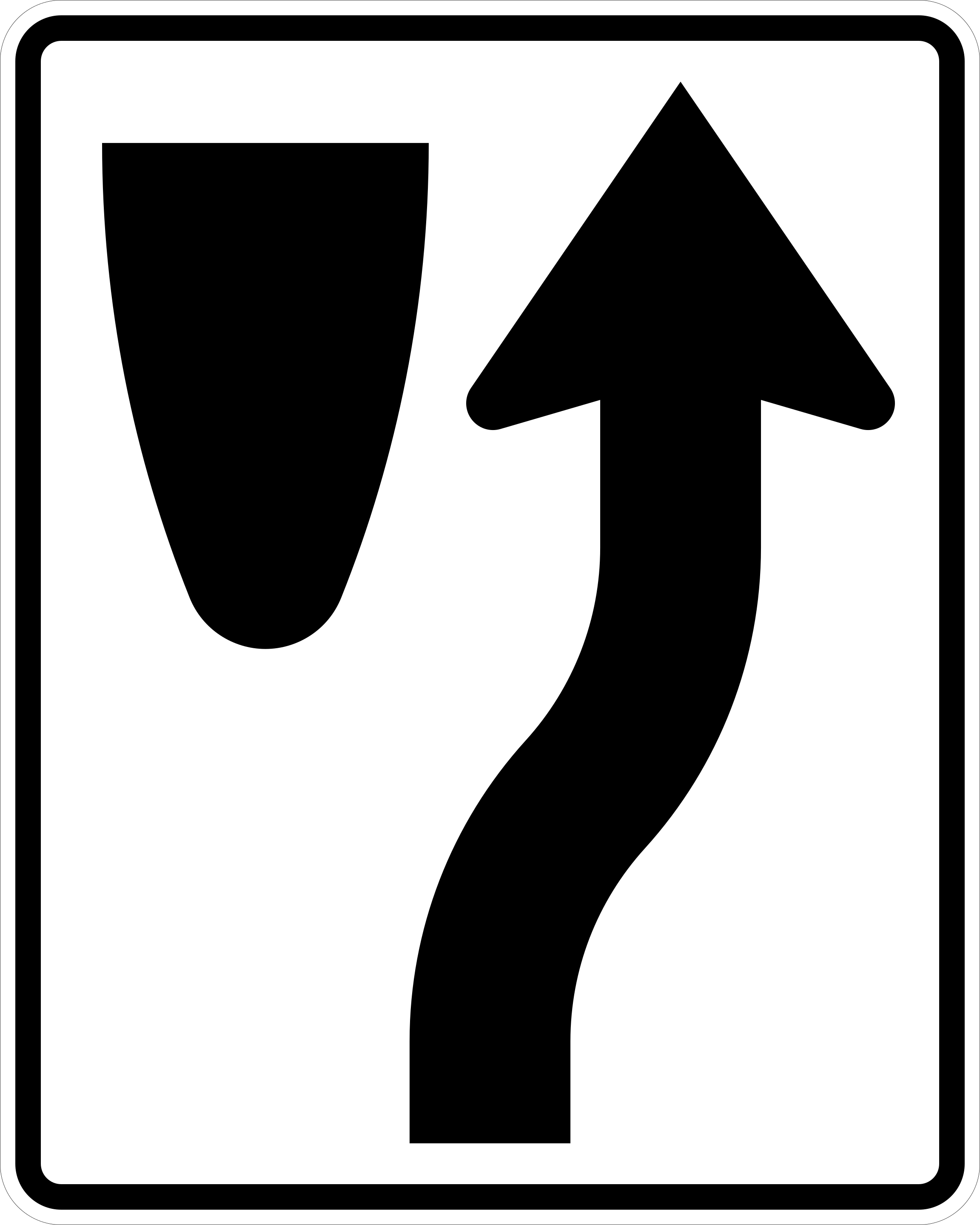
1. What roadway feature does a Keep Right sign indicate ahead?
- A traffic island or obstacle divides the road
- The right lane is reserved for passing
- A one-way roadway requires every turn to be right
- A railroad gate blocks the left shoulder
Show answer
A traffic island or obstacle divides the road. The Keep Right sign warns that a traffic island or other obstacle divides the road ahead. Drive to the right of that feature as the roadway directs. The passing choice confuses obstacle guidance with lane-use rules. The one-way answer invents a turn requirement, and the railroad gate answer names a hazard not associated with this sign. Look beyond the sign for the island or obstruction, then select a safe path around it without crossing into the opposing side of the roadway.
Study this in the handbook: Regulatory, destination and service signs
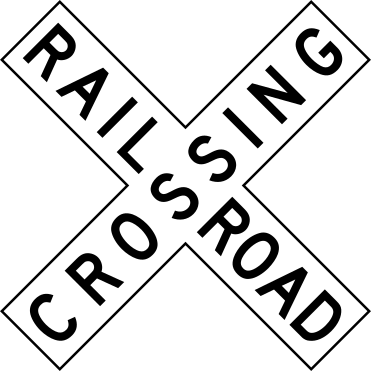
2. On a Wisconsin railroad crossbuck assembly, what may a sign below the X-shaped Railroad Crossing sign tell you?
- The speed limit for the next town
- The train's exact arrival time
- The number of tracks at the crossing
- The distance to the nearest hospital
Show answer
The number of tracks at the crossing. A Wisconsin railroad crossbuck assembly may include a separate sign listing how many tracks must be crossed. That number matters because the handbook says to check for more than one track before crossing, and not every multi-track crossing posts this sign. The sign does not promise an exact train arrival time, give a town speed limit, or identify hospital services. When the track count is posted, use it as a cue to keep looking and listening until every track is clear before driving through.
Study this in the handbook: Railroad crossing signs and rules
3. What happens to points on second or future convictions under Wisconsin GDL restrictions?
- They apply only after age 21
- They are erased
- They convert to driving hours
- They double
Show answer
They double. Wisconsin applies a stricter point consequence to second and later convictions while graduated driver license restrictions are in effect. The points double, rather than disappearing, becoming driving hours, or waiting until age 21. This rule is separate from the six-month extension that can follow a moving violation, a restriction violation, or a suspension or revocation. When studying GDL rules, connect repeated convictions with doubled points and keep the extension rule as a separate consequence.
Study this in the handbook: Points, seat belts, child seats and insurance
4. In a Wisconsin construction zone, when may you hold and use your cellphone while driving?
- Whenever you are below the posted speed limit
- Whenever traffic is stopped
- Only to report an emergency
- Only if you are 18 or older
Show answer
Only to report an emergency. Construction zones in Wisconsin carry two special rules: traffic fines double, and the handbook says a driver may use a cellphone there only to report an emergency. Driving below the limit or sitting in stopped traffic does not open a window for handheld calls or texts, and being an adult does not change the rule. Orange signs, cones and flags are the signal to slow down, keep both hands on the wheel and put the phone away until you are clear of the work area.
Study this in the handbook: Distracted and drowsy driving
5. What does Wisconsin require to reinstate a revoked license once the revocation period is over?
- Only a new vision test
- A letter from the arresting officer
- Proof of identity, a reinstatement fee, and possibly proof of financial responsibility
- Nothing, because it restores itself
Show answer
Proof of identity, a reinstatement fee, and possibly proof of financial responsibility. A revoked Wisconsin license can be reinstated only after the revocation period is over. The driver presents proof of identity, pays a reinstatement fee, and may need to file proof of financial responsibility with the DMV. The license does not restore itself when the time runs out. A vision test alone does not reinstate it, and no letter from the arresting officer is required by the handbook.
Study this in the handbook: Points, seat belts, child seats and insurance
6. How far away should you stop for a pedestrian using a guide dog or white cane?
- Within one foot of the crosswalk
- At least ten feet away
- Twenty feet away in every situation
- Only after the pedestrian reaches the center line
Show answer
At least ten feet away. Wisconsin gives special protection to pedestrians using a guide dog or carrying a white cane. Stop at least ten feet away and remain stopped until the person is off the roadway. The one-foot option leaves too little room, while twenty feet is not the stated minimum. Waiting for the center line also misses the rule because the pedestrian may still be approaching or crossing outside that exact location.
Study this in the handbook: Right of way
7. If the gas pedal sticks, which step does the Wisconsin handbook tell you to take with the car?
- Turn the ignition off while steering at speed
- Switch the car to neutral
- Pump the accelerator until it releases
- Shift into reverse to slow the car
Show answer
Switch the car to neutral. A stuck accelerator calls for switching the vehicle to neutral, then pulling off safely when possible and turning off the engine. The ignition choice skips the handbook's control step, while reverse gear can create a dangerous loss of control. Keep your eyes on the road and manage the vehicle toward a safe stopping place. Neutral removes engine drive while preserving your ability to steer and brake.
Study this in the handbook: Avoiding crashes, crash duties and roadside emergencies
8. What does a Wisconsin Road Construction Flagger Ahead sign tell drivers?
- The road has no workers but may have deer nearby
- The freeway shoulder is open to all large trucks
- A worker with a sign or flag is ahead, and drivers must follow directions
- Drivers may ignore signals if traffic is light
Show answer
A worker with a sign or flag is ahead, and drivers must follow directions. A Road Construction Flagger Ahead sign warns that a worker using a sign or flag is controlling traffic, and Wisconsin requires drivers to follow that worker's directions. It does not open a shoulder to large trucks or mark a deer area. Light traffic also does not let a driver disregard instructions. In a work zone, look for orange signs, slow early, watch the flagger's paddle or hand signals, and be prepared for traffic to stop or change lanes.
Study this in the handbook: Warning and construction signs
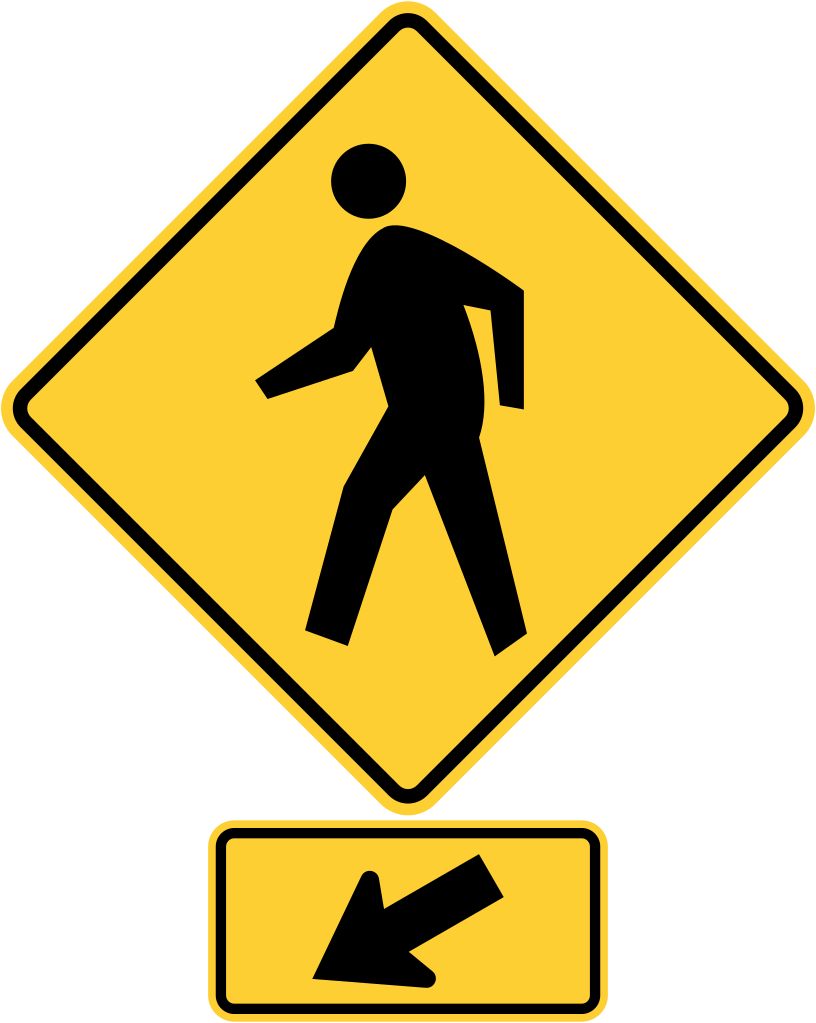
9. On a pedestrian crossing warning sign, what does the arrow below the pedestrian symbol show?
- Where the crossing is
- Where trucks must detour
- Where the road becomes one way
- Where parking begins
Show answer
Where the crossing is. For the pedestrian crossing warning sign, Wisconsin explains that the arrow in the rectangular sign below identifies where the crossing is. It is not a truck detour marker, a one-way roadway notice, or the start of a parking area. The pedestrian symbol warns about people crossing, and the arrow narrows your attention to the crossing location. When this sign appears, reduce speed, look to the marked crossing point, and be ready to yield to people entering it.
Study this in the handbook: Warning and construction signs
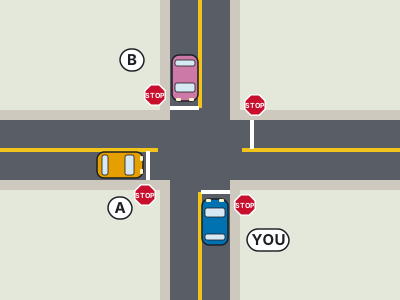
10. At a four-way stop, who has priority when vehicles arrive at different times?
- The vehicle with the brightest headlights
- The driver making a left turn
- The largest vehicle at the intersection
- The driver or bicyclist that arrived first
Show answer
The driver or bicyclist that arrived first. At a four-way stop, arrival order controls when the arrivals are separated. The driver or bicyclist who reached the stop first proceeds before later arrivals. A left turn does not create automatic priority, and vehicle size or headlight brightness has no role in this rule. If arrivals occur at the same time, Wisconsin gives the first move to the driver on the right. A practical habit is to notice who stopped before you and yield accordingly rather than assuming the right-hand vehicle always goes first.
Study this in the handbook: Right of way
11. What does a yellow X over a reversible lane mean in Wisconsin?
- The lane must be used for left turns only
- The lane is permanently closed to all traffic
- The lane is open only for motorcycles
- The lane is changing, so move to a green arrow lane
Show answer
The lane is changing, so move to a green arrow lane. For reversible lanes, Wisconsin uses special lights to show whether a lane is usable. A yellow X means the lane is changing and the driver should move to a lane marked by a green arrow. A red X, not yellow, marks a closed lane. Motorcycle-only and left-turn-only uses are separate lane controls and are not the reversible lane signal described here. The cue is an overhead X: prepare to leave that lane before the direction or use changes.
Study this in the handbook: Lane lines, crosswalks and special lanes
12. Which description identifies Wisconsin's Stop sign?
- An eight sided red sign with white letters
- A round blue sign with white arrows
- A yellow diamond with black lettering
- A downward pointing red and white triangle
Show answer
An eight sided red sign with white letters. The handbook describes the Stop sign as red, marked with white letters, and shaped with eight sides. That distinctive outline lets drivers recognize the command even when the wording is hard to read or the sign is viewed from behind. A downward triangle describes Yield, a yellow diamond is used for warnings, and a blue circular sign belongs to another sign family. When this shape is ahead, prepare for a full stop and wait until your route is clear before continuing.
Study this in the handbook: Regulatory, destination and service signs
13. Unless another limit is posted, what is the maximum speed in outlying parts of Wisconsin cities and villages?
- 25 mph
- 35 mph
- 45 mph
- 55 mph
Show answer
35 mph. The handbook sets 35 mph as the maximum in outlying parts of cities and villages when no speed limit is posted. The 25 mph figure applies to residential areas unless posted otherwise, so it describes a different road setting. The 45 mph and 55 mph choices exceed the stated default for these city and village outskirts. Treat the location description as the key cue: outlying municipal areas are not the same as residential streets or rural highways. Road and visibility conditions may still require driving below the maximum.
Study this in the handbook: Speed limits and the sight distance rule
14. An emergency vehicle with its siren on enters a Wisconsin roundabout while you are waiting outside. What should you do?
- Stop at the roundabout center island
- Enter first so the emergency vehicle can follow
- Pull over and allow it to pass before entering
- Sound the horn and continue into the circle
Show answer
Pull over and allow it to pass before entering. Roundabout entry must wait when an emergency vehicle with its siren on is using the circle. A driver who has not entered should pull over and allow it to pass. Entering first would place the ordinary vehicle in the emergency vehicle's path, while stopping in the circle can obstruct traffic. A horn does not replace yielding. If already inside, the handbook directs the driver to safely exit at the next right and then pull over. The key distinction is whether entry has happened yet.
Study this in the handbook: Traffic stops, deer and emergency vehicles in roundabouts
15. What is the youngest age at which a Wisconsin teen can get an instruction permit?
- 15, while enrolled in driver education with behind-the-wheel
- 14, with a parent's signature only
- 16, after finishing driver education
- 15 and a half, with no school enrollment
Show answer
15, while enrolled in driver education with behind-the-wheel. An applicant under 18 must pass the knowledge test, the highway signs test and the vision screening, be at least 15 years old, and be enrolled in a driver education program that includes the behind-the-wheel portion. Fourteen is too young, and a parent signature alone is not enough. Sixteen is the minimum age for the probationary license, not the permit, and enrollment rather than completion is what the permit needs. No age 15 and a half rule appears in the handbook.
Study this in the handbook: Sponsors and the instruction permit
16. When may you cross two solid yellow lines?
- Never, including for a driveway turn
- Whenever you want to pass a vehicle
- Only to change lanes at an intersection
- To turn into a driveway when it is safe
Show answer
To turn into a driveway when it is safe. Two solid yellow lines prohibit passing, but Wisconsin lists an exception for crossing into a driveway when it is safe. The broad passing choice ignores the no-passing rule, and the intersection-only choice narrows the stated exception incorrectly. A solid double line is therefore not an invitation to overtake. Look for a safe driveway opening, check traffic and pedestrians, and cross only for that permitted turn.
Study this in the handbook: Lane lines, crosswalks and special lanes
17. What does a flashing red arrow mean at a Wisconsin traffic signal?
- Speed up because cross traffic must yield
- Turn immediately without stopping
- Wait for a green arrow in every case
- Come to a full stop, then go when it is safe
Show answer
Come to a full stop, then go when it is safe. Wisconsin treats a flashing red arrow as a full stop requirement followed by movement only when safe. Turning immediately skips the required stop. Waiting for a green arrow in every case is too restrictive because the flashing red arrow permits proceeding after the stop when conditions allow. Speeding up misunderstands the signal and reduces reaction time. The cue is red plus flashing arrow: stop first, check traffic and pedestrians, then continue only if the path is clear.
Study this in the handbook: Traffic lights and arrows
18. If a vehicle starts skidding on a slippery road, which response follows Wisconsin guidance?
- Stay off the brake and steer where you want to go
- Brake hard and steer into oncoming traffic
- Close your eyes until the tires recover
- Turn sharply away from the intended path
Show answer
Stay off the brake and steer where you want to go. During a skid, stay off the brake and turn the steering wheel in the direction you want the vehicle to go. As the car begins to straighten, turn the wheel back the other way to regain control. Braking hard can worsen the loss of traction, and steering into oncoming traffic creates a second danger. Closing your eyes removes the visual guidance needed for correction. Keep your movements deliberate, look toward the safe path, and avoid a sudden overcorrection.
Study this in the handbook: Bad weather, skids, winter and rural roads
19. What does “right-of-way” tell drivers?
- Which vehicle has the largest engine
- Who goes first and who must wait
- When every driver may ignore pedestrians
- How fast a vehicle must travel
Show answer
Who goes first and who must wait. Right-of-way identifies which road user proceeds first and which one must wait. It does not measure engine size or set a vehicle speed. Drivers still have a duty to yield when needed to avoid hitting pedestrians, bicyclists, or other vehicles, even when they believe they have priority. The phrase is a decision cue at intersections and crossings: identify who should proceed, then remain prepared to stop if conditions change.
Study this in the handbook: Right of way
20. If a Wisconsin applicant is 18 or older, what tests can start the instruction permit process?
- Road test, emissions test, and insurance inspection
- Knowledge test, highway signs test, and vision screening
- Only the highway signs test
- Only a sponsor signature and vehicle registration
Show answer
Knowledge test, highway signs test, and vision screening. For an applicant who is 18 or older, Wisconsin says the process can start by passing the knowledge test, highway signs test, and vision screening. A road test comes later for licensing, not as the first permit step. Taking only the signs test leaves out two required screenings. A sponsor signature applies to applicants under 18, so it is the wrong condition here. The age cue is important: adult applicants begin with the testing and vision requirements listed for the permit.
Study this in the handbook: Sponsors and the instruction permit
QualitySpace is expanding to Wisconsin
We are a California-based independent insurance brokerage working on licensing in more states. We cannot help with Wisconsin insurance yet. Leave your email and we will let you know when we can.
Every question is written from the official Wisconsin Motorists' Handbook. Need paper? Printable WI practice test with answer key.
Last verified 2026-10-05. How we check every question · Study all 200 as flashcards
Frequently asked questions
How many questions are on this Wisconsin practice test?
This fixed set has 20 questions. It is test 2 of 10 from the 200 question Wisconsin bank. The real WI exam has a 15 question road sign section with 12 correct to pass, plus 50 knowledge questions with 40 correct to pass.
What is the passing score for the real Wisconsin test?
40 questions (80%) correctly to pass That figure comes from the official Wisconsin source cited on the DMV facts page.
How does this fixed test relate to the full Wisconsin bank?
Each numbered test is a fixed set of questions in a fixed order, so you can retake the same test later and compare. Every test mixes road signs and the other topics in about the same proportion as the full bank. Tests 1 to 10 together cover every question in the Wisconsin bank once. The full practice page mixes the whole bank at random.
Last verified 2026-10-05. See the Wisconsin DMV facts page for sourced state details.
Return to the full Wisconsin practice test · Study road signs