
Test 7 of 10 · 20 questions · Free 2026
WI Permit Practice Test 7
Jump to the test ↓A fixed 20 question set from the Wisconsin bank with answers and plain English explanations. The real WI exam has a 15 question road sign section with 12 correct to pass, plus 50 knowledge questions with 40 correct to pass; take the full length version on the main practice page.
Question 1 of 20 · 0 right so far
All 20 questions in test 7
Every question below comes from the Wisconsin question bank on this page. Open a question to see the correct answer and the explanation. Nothing here is hidden behind a signup.
1. Where does the Wisconsin handbook say parking is not allowed?
- Only on the left side of a one-way street
- On yellow curb markings or in front of fire hydrants
- Anywhere within one block of a business
- On every road with a paved shoulder
Show answer
On yellow curb markings or in front of fire hydrants. The handbook identifies yellow curb markings and areas in front of fire hydrants as places where parking is not allowed. The restriction is not a blanket ban on left-side parking, business districts, or paved shoulders. Drivers must also check for posted No Parking signs and keep the vehicle far enough from the travel lane to avoid interfering with traffic. Look at the curb and nearby hydrants before leaving the vehicle, then confirm that no sign adds another restriction.
Study this in the handbook: Turns, passing, backing and parking
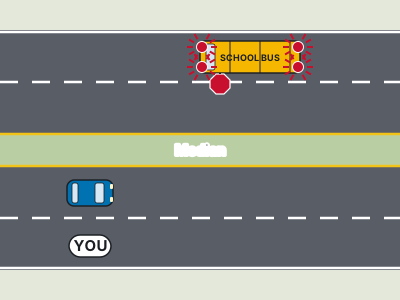
2. A school bus has flashing red lights on the other side of a divided highway. What is the rule for you?
- You must stop unless the highway has four lanes
- You must stop at least 20 feet away every time
- You may pass only after the bus driver waves you through
- You do not have to stop when you are on the opposite side of the divided roadway
Show answer
You do not have to stop when you are on the opposite side of the divided roadway. The handbook makes an exception for a divided highway or roadway when you are on the side opposite the stopped school bus. A divided highway has a barrier between lanes traveling in opposite directions, so the driver in the other direction does not have to stop. The general 20 foot rule still applies when the bus is on your side or the road is not divided. Lane count and a hand signal do not determine this exception. Identify the physical separation first, then decide whether your side is opposite the bus.
Study this in the handbook: Pedestrians, emergency vehicles and school buses
3. What does Wisconsin’s handbook say about assuming that the vehicle on the right always goes first?
- Do not make that assumption because each situation can differ
- Make that assumption at every intersection
- Use it only at four-way stops
- Ignore it whenever the road is wet
Show answer
Do not make that assumption because each situation can differ. Wisconsin’s handbook cautions that a vehicle on the right is not automatically first in every encounter. It says each situation can be different, so the driver must assess the intersection, other road users, and any signals or signs. The rule is not restricted to four-way stops, and weather does not erase the need for careful right-of-way judgment. The phrase always goes first is the trap. Treat the right-side rule as guidance for applicable uncontrolled situations, never as permission to stop checking the roadway.
Study this in the handbook: Right of way
4. What cell phone use is permitted for a Wisconsin instruction permit or probationary license holder while driving?
- Using any hands-free feature whenever desired
- Using the phone only to report an emergency
- Making personal calls if traffic is light
- Using the phone only while stopped at a red light
Show answer
Using the phone only to report an emergency. Instruction permit and probationary license holders have a narrow handbook allowance: they may use a cell phone while driving only to report an emergency. Hands-free operation does not expand that permission, and light traffic or a red light does not turn personal use into an emergency report. The safest ordinary choice is to wait until parked, but the tested exception is emergency reporting. Keep the license stage in view, since Wisconsin gives regular license holders different advice later in the same section.
Study this in the handbook: Alcohol, drugs and implied consent
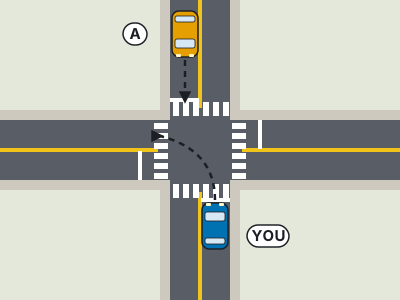
5. At a steady green light, what must you remember before making a left turn?
- Oncoming traffic has the right of way, so turn only when safe
- The green light gives an unconditional left turn
- You must wait for a red light before turning
- Vehicles behind you have priority over oncoming traffic
Show answer
Oncoming traffic has the right of way, so turn only when safe. A steady green light permits movement, but it does not give a left turning driver priority over approaching traffic. Oncoming vehicles have the right of way, so wait for a safe opening and watch for pedestrians. The signal does not create an unconditional turn, and there is no need to wait for red if the turn can be made safely during green. Keep the front wheels controlled, scan the opposing lane, and turn only after the conflict has cleared.
Study this in the handbook: Traffic lights and arrows
6. What special rule applies to traffic fines in construction areas?
- Fines double only after sunset
- Traffic fines are waived when workers are present
- Only parking fines double there
- Traffic fines double in these areas
Show answer
Traffic fines double in these areas. Wisconsin warns that traffic fines double in construction areas. The rule is not limited to parking, nighttime, or a waiver for active workers. Orange signs, cones, and flags signal a work area where you should slow down and watch for people, shifted lanes, and changing instructions. The safest response is to reduce speed early, obey the flagger, and leave room for workers and equipment.
Study this in the handbook: Warning and construction signs
7. What should a driver do at a steady yellow traffic light?
- Slow down and stop before entering if possible
- Accelerate so the signal cannot turn red first
- Stop in the intersection even after entering it
- Treat it exactly like a flashing red light
Show answer
Slow down and stop before entering if possible. A steady yellow means the signal is about to turn red. The driver should slow down and stop before entering the intersection when that can be done safely. Accelerating invites a late entry, while stopping in the intersection can obstruct traffic. A steady yellow is not governed by the same action as a flashing red, which requires a full stop before going on when it is safe. If the vehicle is already in the intersection, continue through rather than stopping there.
Study this in the handbook: Traffic lights and arrows
8. When should you add extra following distance beyond Wisconsin's four-second rule?
- When road or traffic conditions are adverse
- Only when driving below the posted speed limit
- Only when following a vehicle with one occupant
- Never, because four seconds is always enough
Show answer
When road or traffic conditions are adverse. Wisconsin's baseline is a four-second following gap, but the handbook says to add a second for each adverse condition, such as rain, snow, ice, or heavier traffic. The tempting fixed-gap choice treats four seconds as a universal answer and ignores changing conditions. Pick a stationary object, count through one thousand four, and increase the count when visibility, traction, or traffic makes stopping harder. The cue is simple: anything that lengthens your stopping distance calls for more space ahead.
Study this in the handbook: The four second rule and space around you
9. When making a left turn or U-turn in Wisconsin, which vehicles must you yield to?
- Only vehicles behind you
- Only parked vehicles
- Approaching vehicles
- No vehicles once your signal is on
Show answer
Approaching vehicles. Wisconsin's right-of-way list says a driver making a left turn or U-turn must yield to approaching vehicles. A turn signal communicates intent, but it does not make oncoming traffic wait. Parked vehicles and traffic behind you can affect safety, yet they are not the approaching-vehicle priority rule tested here. The cue is crossing or turning across another vehicle's path: slow, signal, keep the wheels straight while waiting, and turn only after approaching traffic leaves a safe gap.
Study this in the handbook: Right of way
10. What must a driver do if a police officer requests a prohibited alcohol concentration test?
- Agree to take the test
- Refuse unless a lawyer is present
- Take it only after reaching a police station voluntarily
- Substitute a passenger's breath sample
Show answer
Agree to take the test. Wisconsin's implied-consent section says a driver must agree to a requested prohibited alcohol concentration test. Refusing is not a harmless choice: the handbook says the officer must arrest the driver for violating the Implied Consent Law, with a loss of driving privileges for at least one year and other consequences. A passenger cannot provide the required sample, and delaying until a different location does not change the request. The cue is to understand that driving carries this testing obligation.
Study this in the handbook: Alcohol, drugs and implied consent
11. On a Wisconsin flex lane, what does a green arrow over the lane tell you?
- The lane is closing and you must merge
- The lane is open for use
- The lane is closed to all traffic
- Traffic must travel against the normal direction
Show answer
The lane is open for use. A green arrow over a flex or reversible lane means the lane is open and can be used. It does not mean that every vehicle must travel against the normal direction, and it is not a closure signal. A yellow X means the lane is closing and drivers must merge to the general purpose lanes. A red X means the lane is closed and cannot be used. Read the overhead indication before entering the lane, then continue to monitor it because the signal can change as traffic volumes or special events change the roadway arrangement.
Study this in the handbook: Lane lines, crosswalks and special lanes
12. When are deer most active according to the Wisconsin handbook?
- From 9 a.m. to 3 p.m.
- Only at noon on sunny days
- Only during heavy snow
- From sunset to sunrise
Show answer
From sunset to sunrise. The handbook warns that deer activity is highest from sunset to sunrise, when judging distance and speed is already harder. Midday sunshine is not the danger window described, and heavy snow is a weather hazard rather than the time pattern for deer. A fixed 9 a.m. to 3 p.m. period reverses the low-light risk. At dusk, overnight, and early morning, scan shoulders and fields, look for reflected eyes, slow down, and be ready to stop.
Study this in the handbook: Traffic stops, deer and emergency vehicles in roundabouts
13. About how long does the Wisconsin knowledge test take to complete?
- About 10 minutes
- About 45 minutes
- About 2 hours
- About 20 minutes
Show answer
About 45 minutes. The handbook says the knowledge test will take about 45 minutes to complete, and it tells applicants to allow enough time before the DMV service center closes. The test has 50 questions and 40 must be correct to pass. Ten and 20 minutes are too short for that length. Two hours overstates it. No appointment is needed for the knowledge test, and testing at a DMV customer service center is free.
Study this in the handbook: The vision, signs, knowledge and skills tests
14. If the parking brake causes a skid after brake failure, what should the driver do?
- Open the driver door
- Pump the accelerator
- Release the parking brake
- Turn sharply into oncoming traffic
Show answer
Release the parking brake. After a brake failure, Wisconsin advises pumping the brake pedal, then using the parking brake carefully. If the vehicle starts to skid, release the parking brake so the tires can regain traction and the driver can steer toward a safe stopping place. Pumping the accelerator increases speed, opening the door adds a hazard, and turning into oncoming traffic creates a second emergency. The cue is a skid after applying the parking brake: remove that braking input, keep the vehicle pointed where you need to go, and continue looking for a safe place to slow down.
Study this in the handbook: Avoiding crashes, crash duties and roadside emergencies
15. When turning at an intersection, when should you begin signaling?
- Only after entering the intersection
- About three seconds, or about 100 feet, before the turn
- About 10 feet before turning
- After the turn is complete
Show answer
About three seconds, or about 100 feet, before the turn. For a turn at an intersection, begin the signal about three seconds, or approximately 100 feet, before turning. That advance notice gives other drivers time to understand your plan and respond. Signaling after entering the intersection is late, and waiting until the maneuver ends gives no useful warning. The handbook gives a different timing cue for a turn after an intersection: signal once you cross the intersection. Remember the location of the turn before choosing the timing.
Study this in the handbook: The horn, headlights and turn signals
16. A Wisconsin permit holder under 18 practices with a licensed family friend who is 30. What must that person have?
- A commercial driver license
- A certificate as a driving instructor
- Written authorization from the minor's parent or guardian
- A second licensed adult in the back seat
Show answer
Written authorization from the minor's parent or guardian. Any licensed person 21 or older can supervise a permit holder, but when the permit holder is under 18 the accompanying person needs written authorization from the minor's parent or guardian before the vehicle is driven. A commercial license or an instructor certificate is not required for this route. A second adult in the back seat is not required; the handbook merely permits one extra licensed person 25 or older there once the learner is 16.
Study this in the handbook: Sponsors and the instruction permit
17. What should you do after a tire blowout while driving?
- Release the steering wheel so the tire can settle
- Brake hard and steer onto the shoulder immediately
- Turn sharply toward the centerline
- Hold straight, lift off the gas, and slow gradually
Show answer
Hold straight, lift off the gas, and slow gradually. A blowout can pull the vehicle or disturb its balance, so Wisconsin emphasizes control and gradual slowing. Hold the steering wheel to keep the vehicle straight, lift your foot from the gas, and reduce speed little by little. Once it is safe, pull off the road. Hard braking and an immediate sharp turn can produce a second loss of control. Keep both hands engaged and avoid abrupt inputs until the vehicle is slow enough to leave the travel lane safely.
Study this in the handbook: Avoiding crashes, crash duties and roadside emergencies
18. What warning does this sign give drivers approaching the roadway?

- A railroad crossing is immediately behind the sign
- The road is changing to two-way traffic
- A stop sign is ahead, so slow down enough to stop safely
- The lane ends and traffic must merge left
Show answer
A stop sign is ahead, so slow down enough to stop safely. Wisconsin describes this warning as advance notice of a stop sign. The driver should reduce speed early and be prepared to stop safely at the sign ahead. The choice “The road is changing to two-way traffic” describes a different warning for leaving a one-way roadway, while the railroad and lane-ending choices point to unrelated hazards. A useful driving cue is the small stop-sign shape shown beneath the arrow on the warning sign. Treat that shape as a reason to begin managing speed before reaching the intersection, rather than waiting until the stop sign is close.
Study this in the handbook: Warning and construction signs
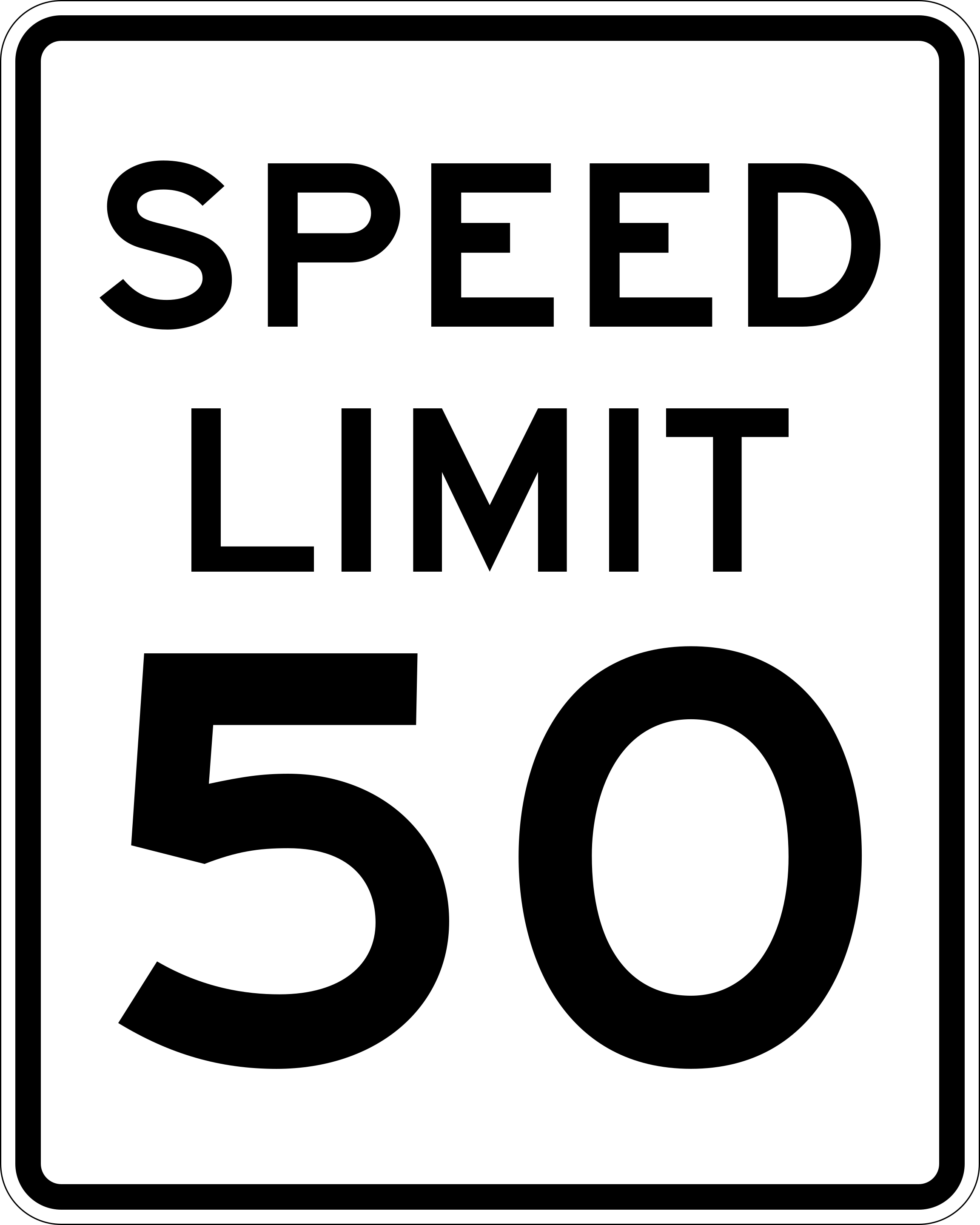
19. What does a Speed Limit sign indicate under Wisconsin guidance?
- The speed used only when the road is wet
- A suggested speed that may always be exceeded to pass
- The minimum speed required during daylight
- The maximum speed allowed in good driving conditions
Show answer
The maximum speed allowed in good driving conditions. A Wisconsin Speed Limit sign gives the maximum speed permitted in good driving conditions. It is not a suggestion that can be exceeded for passing, so the choice “A suggested speed that may always be exceeded to pass” conflicts with the handbook. The sign also does not establish a minimum daytime speed. Wet pavement is a reason to reassess conditions, not a trigger that limits the sign's meaning to rain. Keep the posted number in mind while scanning traffic, weather, and road surface, because safe travel may require a slower speed.
Study this in the handbook: Regulatory, destination and service signs
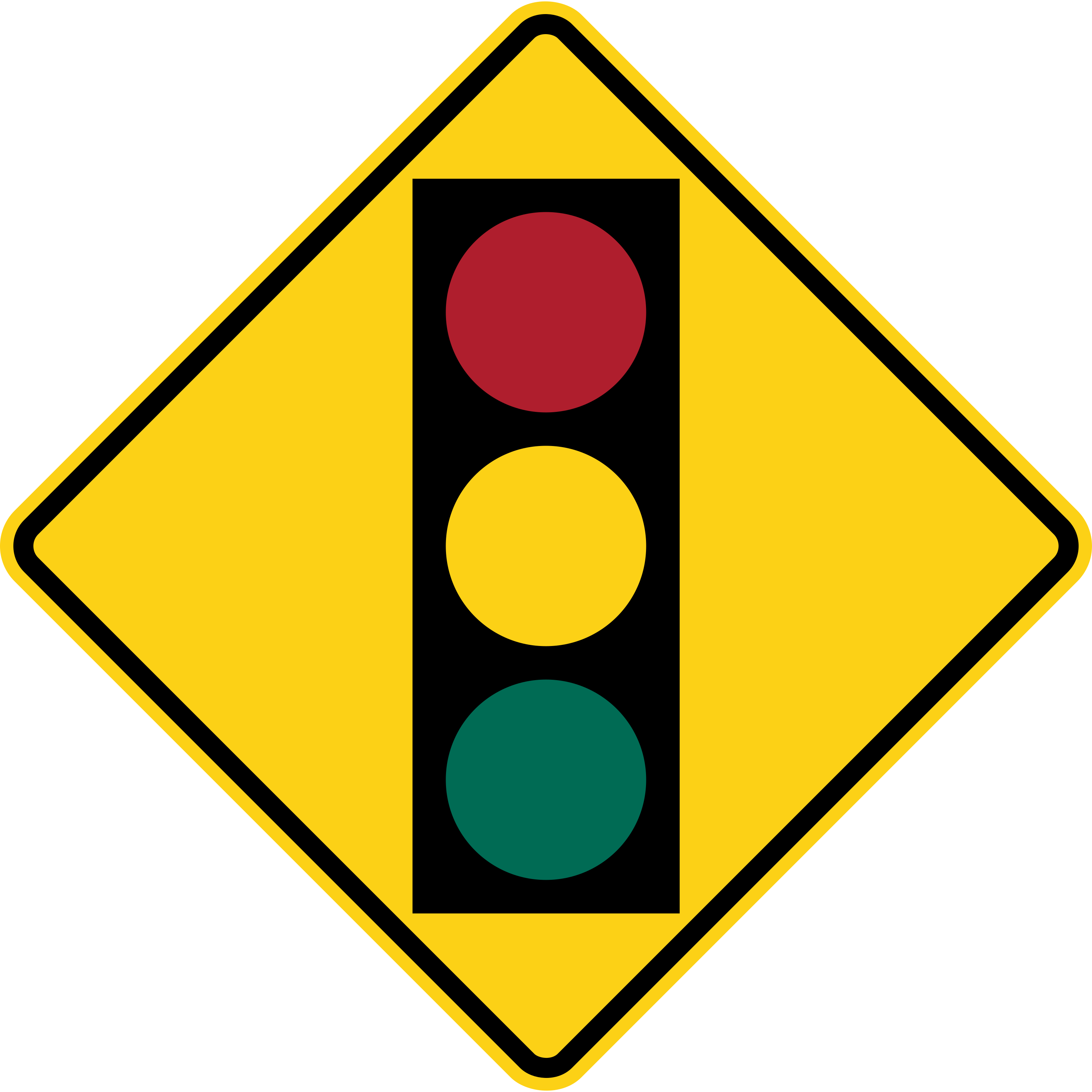
20. What category of Wisconsin road sign does this yellow diamond signal sign belong to?
- Service sign
- Destination sign
- Warning sign
- Route number sign
Show answer
Warning sign. The pictured signal sign is in Wisconsin's warning sign group. Warning signs are usually yellow with black symbols and most have a diamond shape, which matches this traffic signal symbol sign. Green or brown destination signs give directions and distances, while blue service signs point to services. Route number signs identify roads, not hazards ahead. When you see a yellow diamond with a symbol, read it as advance notice of a road condition that needs early attention.
Study this in the handbook: Warning and construction signs
QualitySpace is expanding to Wisconsin
We are a California-based independent insurance brokerage working on licensing in more states. We cannot help with Wisconsin insurance yet. Leave your email and we will let you know when we can.
Every question is written from the official Wisconsin Motorists' Handbook. Need paper? Printable WI practice test with answer key.
Last verified 2026-10-05. How we check every question · Study all 200 as flashcards
Frequently asked questions
How many questions are on this Wisconsin practice test?
This fixed set has 20 questions. It is test 7 of 10 from the 200 question Wisconsin bank. The real WI exam has a 15 question road sign section with 12 correct to pass, plus 50 knowledge questions with 40 correct to pass.
What is the passing score for the real Wisconsin test?
40 questions (80%) correctly to pass That figure comes from the official Wisconsin source cited on the DMV facts page.
How does this fixed test relate to the full Wisconsin bank?
Each numbered test is a fixed set of questions in a fixed order, so you can retake the same test later and compare. Every test mixes road signs and the other topics in about the same proportion as the full bank. Tests 1 to 10 together cover every question in the Wisconsin bank once. The full practice page mixes the whole bank at random.
Last verified 2026-10-05. See the Wisconsin DMV facts page for sourced state details.
Return to the full Wisconsin practice test · Study road signs