
Test 10 of 10 · 20 questions · Free 2026
WI Permit Practice Test 10
Jump to the test ↓A fixed 20 question set from the Wisconsin bank with answers and plain English explanations. The real WI exam has a 15 question road sign section with 12 correct to pass, plus 50 knowledge questions with 40 correct to pass; take the full length version on the main practice page.
Question 1 of 20 · 0 right so far
All 20 questions in test 10
Every question below comes from the Wisconsin question bank on this page. Open a question to see the correct answer and the explanation. Nothing here is hidden behind a signup.
1. How often must a Wisconsin driver license be renewed?
- Every eight years
- Every four years
- Every two years
- Every twelve years
Show answer
Every eight years. Wisconsin sets the renewal cycle at eight years. The handbook adds that you can renew up to a year before the expiration date, and a reminder notice arrives 45 to 60 days before your birthday in the year the license expires. For a probationary license, renewal time starts 90 days before it expires. Two, four and twelve years are not the stated cycle. Renewal can be done online or at a DMV service center.
Study this in the handbook: The probationary license and GDL restrictions
2. How long are Wisconsin GDL restrictions extended if the teen breaks one of them?
- Thirty days
- Six months
- One year
- Until age 21
Show answer
Six months. The graduated driver license restrictions are extended six months if the driver is convicted of a moving traffic violation, violates any of the restrictions, or has the license suspended or revoked for any reason. Thirty days and one year are not the handbook's figure. Age 21 is not involved, because the hour and passenger restrictions end once the driver turns 18. Points on second and later convictions also double, so each later conviction weighs more heavily on a new driver's record.
Study this in the handbook: The probationary license and GDL restrictions
3. In which situation does the Wisconsin handbook recommend using low beam headlights?
- Only when parked and idling
- When using windshield wipers
- Only when driving on a divided highway
- When no vehicle has a license plate
Show answer
When using windshield wipers. The handbook recommends using low beam headlights when you are using your windshield wipers, as well as when it is rainy, snowy, or foggy. Wipers signal reduced visibility, so headlights help you see and help others notice your vehicle. Parking lights are reserved for a parked, idling vehicle and are not a substitute while moving. Divided highways do not define the condition. A practical cue is to pair wet weather or active wipers with low beams.
Study this in the handbook: The horn, headlights and turn signals
4. When making a left turn, what must you leave room for?
- No traffic once your signal is on
- Only vehicles parked behind you
- A vehicle to pass on the shoulder
- Oncoming traffic to turn in front of you
Show answer
Oncoming traffic to turn in front of you. A left-turning driver must leave room for oncoming traffic to turn in front of the waiting vehicle. The turn signal communicates intent but does not remove the conflict or give the turning driver priority. Parked vehicles and traffic behind the vehicle are not the key path described here, and the shoulder is not a substitute for checking the intersection. Approach slowly, keep the wheels straight while waiting, and turn only after the path is clear.
Study this in the handbook: Turns, passing, backing and parking
5. If a Wisconsin crash has no injuries and the vehicle can move, what should the driver do when safe?
- Leave it blocking traffic until a tow truck arrives
- Move the vehicle off the road
- Drive away without exchanging information
- Stop in the middle of the road to take photos first
Show answer
Move the vehicle off the road. When there are no injuries and the vehicle can be moved, Wisconsin tells the driver to move it off the road when safe. Leaving it in traffic creates another hazard, and driving away without exchanging information skips duties after the crash. Stopping in the middle of the road for photos also conflicts with the instruction not to block traffic. The cue is a movable vehicle after a minor crash: clear the lane first, then exchange information and document what happened.
Study this in the handbook: Avoiding crashes, crash duties and roadside emergencies
6. What does a single dashed yellow line between opposing traffic lanes mean?
- Traffic travels in the same direction
- No vehicle may cross the line
- You may pass when it is safe
- The road is approaching a railroad crossing
Show answer
You may pass when it is safe. A single dashed yellow line separates traffic moving in opposite directions and permits passing when conditions make that maneuver safe. The no crossing choice confuses a dashed marking with a more restrictive solid line arrangement. Same direction lanes are divided by white markings in this handbook. The railroad choice describes neither the color rule nor the meaning of the pavement line. Before crossing, check the roadway, oncoming traffic, visibility, and available space instead of treating the dashed line as automatic permission.
Study this in the handbook: Lane lines, crosswalks and special lanes
7. What is the purpose of an acceleration lane on a high speed roadway?
- To reverse direction before the exit
- To stop before entering the highway
- To pass every vehicle in the right lane
- To speed up as you merge with traffic flow
Show answer
To speed up as you merge with traffic flow. An acceleration lane gives an entering driver room to build speed and merge with the traffic already moving on the highway. You still must find a safe gap and avoid forcing another driver to change speed or direction. It is not a stopping lane, a guaranteed passing lane, or a place to reverse. Match the flow as closely as conditions allow, check surrounding traffic, signal, and merge only when the gap is safe.
Study this in the handbook: Speed limits and the sight distance rule
8. Where can Wisconsin crosswalks sometimes be located besides intersections?
- Only inside parking garages
- Only on freeway entrance ramps
- In the middle of a street or block
- In lanes reserved for buses only
Show answer
In the middle of a street or block. Wisconsin explains that crosswalks are normally at intersections, but they can also appear in the middle of a street or block. Freeway ramps, parking garages, and bus-only lanes are not the handbook's listed alternate location. The point is that a driver should watch for marked pedestrian crossings away from standard intersections. The cue is pavement markings or crossing signs midblock: slow, scan both sides, and be ready for a pedestrian who may not be at a corner.
Study this in the handbook: Lane lines, crosswalks and special lanes
9. What is a crosswalk for?
- Emergency vehicles only
- Vehicles to stop and park
- Passing slower vehicles
- Pedestrians to walk safely across the intersection
Show answer
Pedestrians to walk safely across the intersection. A crosswalk marks a place intended for pedestrians to walk safely across an intersection. It does not create a parking area, a passing lane, or an emergency vehicle only zone. Drivers should watch for people using it and stop with the front wheels just before the solid white line rather than stopping on the crosswalk itself. Crosswalks are common at intersections, though the handbook notes that they can also appear in the middle of a street or block. When approaching one, scan for pedestrians and be prepared to yield so the marked crossing remains usable.
Study this in the handbook: Lane lines, crosswalks and special lanes
10. What does the pictured regulatory sign tell you to do?
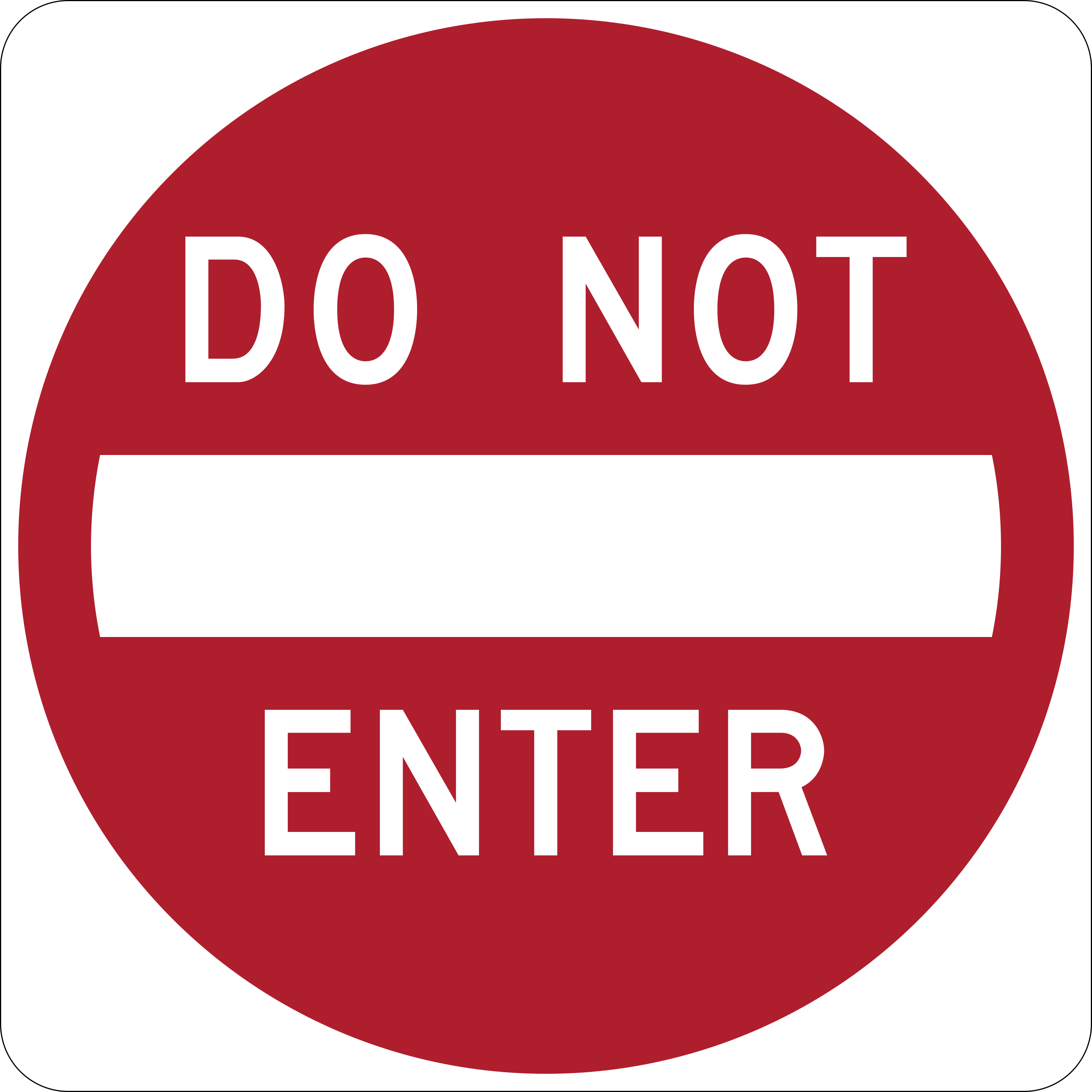
- Do not enter the roadway
- Enter only after sounding the horn
- Park outside the marked lane
- Use the roadway only for a U-turn
Show answer
Do not enter the roadway. The red and white message prohibits entering the roadway. Wisconsin identifies this sign at exit ramps where a driver could travel the wrong direction and on one-way streets. The choice “Enter only after sounding the horn” invents a horn condition, and the parking choice concerns vehicle placement rather than entry. The U-turn option also misreads a prohibition as a permitted maneuver. Look for this sign before crossing into a ramp or street, especially where the road layout could make the intended direction unclear.
Study this in the handbook: Regulatory, destination and service signs
11. On a Wisconsin No Turn sign, if the arrow points right, what action is barred?
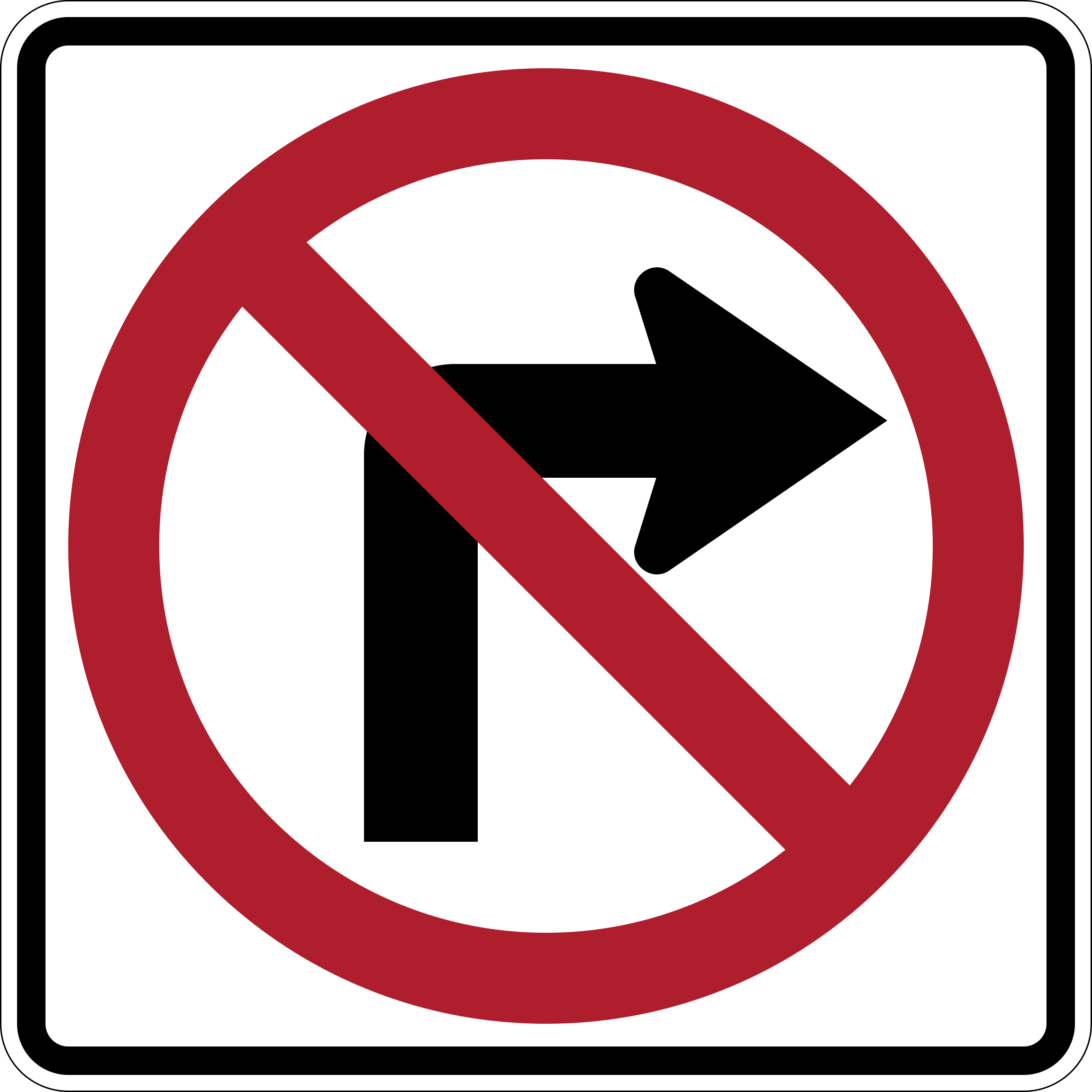
- Stopping before the crosswalk
- Going straight through the intersection
- Turning right
- Entering a one-way roadway
Show answer
Turning right. The sign identifies the forbidden movement by pointing in its direction. A right-pointing prohibition therefore bars a right turn, while it does not automatically ban going straight or stopping at the crosswalk. Entering a one-way roadway is controlled by roadway signs and direction, not by every turn prohibition. The tempting straight-ahead choice changes the arrow's meaning. Read the arrow as an instruction about the turn itself, then follow any other signal or lane marking that governs the remaining movements.
Study this in the handbook: Regulatory, destination and service signs
12. What should a driver do before using a prescription or non-prescription drug and then driving?
- Drive first to see whether it affects concentration
- Check the warning label for side effects
- Ignore the label if the medicine is familiar
- Use extra caffeine to cancel any warning
Show answer
Check the warning label for side effects. The handbook directs drivers to check a prescription or non-prescription drug's warning label for side effects before driving. If the label says not to operate heavy machinery, that warning includes motor vehicles. Driving first to test the effect creates the very risk the precaution is meant to prevent. Familiarity with a medicine and added caffeine do not override its instructions. Treat the label as a decision point, and arrange another ride when the warning makes driving unsafe.
Study this in the handbook: Alcohol, drugs and implied consent
13. How long does a Wisconsin driver under 18 still need a sponsor during the licensing process?
- Until turning 18, including the probationary phase
- Only until the instruction permit is issued
- Only for the first 30 days after the road test
- Until completing 10 hours of night driving
Show answer
Until turning 18, including the probationary phase. Wisconsin requires an adult sponsor for a driver under 18, and the need continues during the probationary phase until the driver turns 18. Getting the permit does not end sponsorship, and neither a 30 day period nor night practice hours replace the age requirement. The sponsor also accepts legal and financial responsibility tied to the minor driving. For a teen applicant, treat the sponsor signature as a continuing obligation, not a one-time formality at the first DMV visit.
Study this in the handbook: Sponsors and the instruction permit
14. What should a driver do when another vehicle is still in the intersection before the driver enters?
- Use the shoulder to get around it
- Enter immediately because the turn is permitted
- Proceed if the other vehicle is smaller
- Yield until the other vehicle clears
Show answer
Yield until the other vehicle clears. A vehicle that remains in the intersection has priority over a driver who has not entered it. Wait and yield until that vehicle clears, then recheck the path before moving. Entering immediately can force the other driver to brake or change direction. Vehicle size does not determine this right of way, and the shoulder is not a substitute lane for bypassing traffic. The handbook places pedestrians, bicyclists, and other drivers still in the intersection among those who should receive priority. Treat an occupied crossing area as a reason to pause, even when your own signal or intended movement appears favorable.
Study this in the handbook: Right of way
15. When may a driver enter a Wisconsin roundabout without waiting?
- Only after stopping inside the roundabout
- Whenever the driver signals a turn
- When there is no traffic in the roundabout
- When entering traffic is moving faster
Show answer
When there is no traffic in the roundabout. A driver does not need to wait to enter when the roundabout has no traffic. That exception does not authorize entering against circulating vehicles, stopping inside the circle, or relying on a turn signal to create priority. When traffic is present, slow down, yield as required, and enter only through a safe gap. The useful scan is simple: check the circulating roadway first, then decide whether the circle is empty or occupied.
Study this in the handbook: Roundabouts, metered ramps and funeral processions
16. When may Wisconsin driving privileges be suspended or revoked for demerit points?
- After 20 points within a single week
- After 4 points in any five-year period
- Only after points are earned on two licenses
- After 12 or more points within any 12-month period
Show answer
After 12 or more points within any 12-month period. The point-system threshold is 12 or more demerit points within any 12-month period. Reaching that number can suspend or revoke the driving privilege. Four points over five years is not the threshold described here, and the rule does not require points on two separate licenses. A one-week, 20-point condition changes the handbook's time window. Keep track of convictions and points promptly, because the rolling 12-month period matters when evaluating the record.
Study this in the handbook: Points, seat belts, child seats and insurance
17. What following-distance method does the Wisconsin handbook teach?
- Stay one car length behind at every speed
- Use a four-second gap, adding time for adverse conditions
- Follow within one second whenever traffic is light
- Match the vehicle ahead bumper to bumper
Show answer
Use a four-second gap, adding time for adverse conditions. The handbook's four-second method uses a stationary object as a reference. Pick a tree, sign, or house far ahead and count to one thousand four; reaching that object before finishing the count means you are going too fast. Rain, snow, ice, or heavier traffic calls for additional seconds. A fixed car length does not grow with speed, so it cannot provide a consistent margin. One second and bumper-to-bumper spacing leave little reaction room. The practical cue is to choose a fixed roadside object and count steadily while following.
Study this in the handbook: Speed limits and the sight distance rule
18. What must you do before crossing railroad tracks when warning lights are active?
- Wait until the lights stop flashing and the track is clear
- Drive around the gate if no train is visible
- Stop on the tracks to check the second rail
- Shift gears while crossing to gain speed
Show answer
Wait until the lights stop flashing and the track is clear. Active railroad warning lights mean you must wait until the lights stop flashing and the track is clear. Never drive around a gate, stop on the tracks, or shift gears while crossing. The handbook reminds drivers that trains move faster than they seem and that some crossings have more than one track. Before moving, look both ways and make sure there is enough room beyond the crossing for your entire vehicle.
Study this in the handbook: Railroad crossing signs and rules
19. How often are Wisconsin mile markers placed according to the handbook?
- Every one to two-tenths of a mile
- Only every ten miles
- Only at county borders
- Every five feet near intersections
Show answer
Every one to two-tenths of a mile. Wisconsin mile markers, also called reference markers, are placed every one to two-tenths of a mile. That frequent spacing helps identify a location during highway incidents and can improve emergency response. Ten miles and county borders are far too sparse for the locating purpose described. Five feet near intersections is not how highway reference markers work. The cue is a tall, thin blue or green marker with route, direction, and mile information: use it to report where you are.
Study this in the handbook: Regulatory, destination and service signs
20. How many answers must an applicant get right to pass Wisconsin's Knowledge test?
- 45 of 50
- 35 of 50
- 40 of 50
- 30 of 50
Show answer
40 of 50. Wisconsin requires 40 correct answers on the 50-question Knowledge test, which is an 80 percent passing score. A result of 35 correct answers is only 70 percent, so it falls short even though it shows substantial preparation. The 45-answer option sets a tougher standard than the handbook describes, while 30 answers is below the stated threshold. Keep the test structure separate from the Highway Signs test: the signs test has its own 15-question format and 12-answer requirement. Remember the pairing as 50 questions and 40 needed for the general traffic-law test.
Study this in the handbook: The vision, signs, knowledge and skills tests
QualitySpace is expanding to Wisconsin
We are a California-based independent insurance brokerage working on licensing in more states. We cannot help with Wisconsin insurance yet. Leave your email and we will let you know when we can.
Every question is written from the official Wisconsin Motorists' Handbook. Need paper? Printable WI practice test with answer key.
Last verified 2026-10-05. How we check every question · Study all 200 as flashcards
Frequently asked questions
How many questions are on this Wisconsin practice test?
This fixed set has 20 questions. It is test 10 of 10 from the 200 question Wisconsin bank. The real WI exam has a 15 question road sign section with 12 correct to pass, plus 50 knowledge questions with 40 correct to pass.
What is the passing score for the real Wisconsin test?
40 questions (80%) correctly to pass That figure comes from the official Wisconsin source cited on the DMV facts page.
How does this fixed test relate to the full Wisconsin bank?
Each numbered test is a fixed set of questions in a fixed order, so you can retake the same test later and compare. Every test mixes road signs and the other topics in about the same proportion as the full bank. Tests 1 to 10 together cover every question in the Wisconsin bank once. The full practice page mixes the whole bank at random.
Last verified 2026-10-05. See the Wisconsin DMV facts page for sourced state details.
Return to the full Wisconsin practice test · Study road signs