
Test 15 of 25 · 20 questions · Free 2026
WI Permit Practice Test 15
Jump to the test ↓A fixed 20 question set from the Wisconsin bank with answers and plain English explanations. The real WI exam has a 15 question road sign section with 12 correct to pass, plus 50 knowledge questions with 40 correct to pass; take the full length version on the main practice page.
Question 1 of 20 · 0 right so far
All 20 questions in test 15
Every question below comes from the Wisconsin question bank on this page. Open a question to see the correct answer and the explanation. Nothing here is hidden behind a signup.
1. In Wisconsin, a large truck is turning at a corner ahead. Why should nearby drivers leave it extra space?
- Trucks turn faster than cars on corners
- Trucks may stop and unload at every corner
- Buses always turn without signaling first
- Trucks and buses may cross the center line during a turn
Show answer
Trucks and buses may cross the center line during a turn. Leave extra space to large vehicles such as trucks and buses because they may cross the center line during a turn, swinging wide to keep their long trailers on the road. That swing is not speed, unloading, or missing signals. Give the truck its room, stay out of the swept path beside and behind it, and wait until its trailer clears before moving forward.
Study this in the handbook: Turns, passing, backing and parking
2. In Wisconsin, how should the shoulder belt be worn and adjusted?
- Under the arm, hanging loosely over the arm
- Behind the back, so only the lap belt shows
- Across the chest, with about a fist of space to your chest
- Tight enough that no space remains at all
Show answer
Across the chest, with about a fist of space to your chest. Wear the shoulder belt across your chest and adjust it so you can put your fist between the belt and your chest, snug without cutting in. Under the arm, behind the back, or cinched with zero space all defeat the belt timing in a crash or make it unwearable. A correctly placed shoulder belt spreads force over ribs and shoulder, the strongest path available.
Study this in the handbook: Points, seat belts, child seats and insurance
3. In Wisconsin, another vehicle keeps driving right beside yours on a multi-lane road. What should you do?
- Stay beside it for as many miles as possible
- Speed up and cut directly in front of it
- Move ahead or drop behind that vehicle when it is safe
- Slow suddenly so it must brake behind you
Show answer
Move ahead or drop behind that vehicle when it is safe. If a vehicle drives right next to you, move ahead or drop behind it when safe, because side-by-side travel removes both escape routes. Lingering beside another car, cutting in sharply, or braking suddenly all raise the chance of a side crash if either driver drifts. A small speed change opens a diagonal gap. Keep that stagger, especially beside trucks with wide blind spots.
Study this in the handbook: Speed limits and the sight distance rule
4. In Wisconsin, what extra information does a Road Work Ahead sign give besides warning of work?
- How many minutes traffic will be delayed by the work
- How many workers are on the crew that day
- Which detour route pays no tolls
- How far ahead the construction work is
Show answer
How far ahead the construction work is. A Road Work Ahead sign does more than warn that work exists. It tells you how far ahead the construction work is, so you can judge when to slow down or move over. It does not estimate delay time, count the crew, or describe tolls. Use the distance on the sign to plan an early, smooth speed change instead of braking hard at the work area.
Study this in the handbook: Warning and construction signs
5. In Wisconsin, a car is equipped with air bags. What seat belt rule still applies?
- Skip the belt on short trips in that car
- Wear the belt only on highway trips
- Wear your seat belt even though the vehicle has air bags
- Let the air bag replace the seat belt entirely in that car
Show answer
Wear your seat belt even though the vehicle has air bags. You still need to wear your seat belt even if your vehicle has air bags, because the belt duty does not end when a car has bags. Wisconsin law requires you and your passengers to wear seat belts at any age. Always fasten your seat belt before you start driving, and make sure everyone else in the car fastens theirs too. No trip length or road type removes that duty.
Study this in the handbook: Points, seat belts, child seats and insurance
6. In Wisconsin, how can a driver spot a mile marker along the highway?
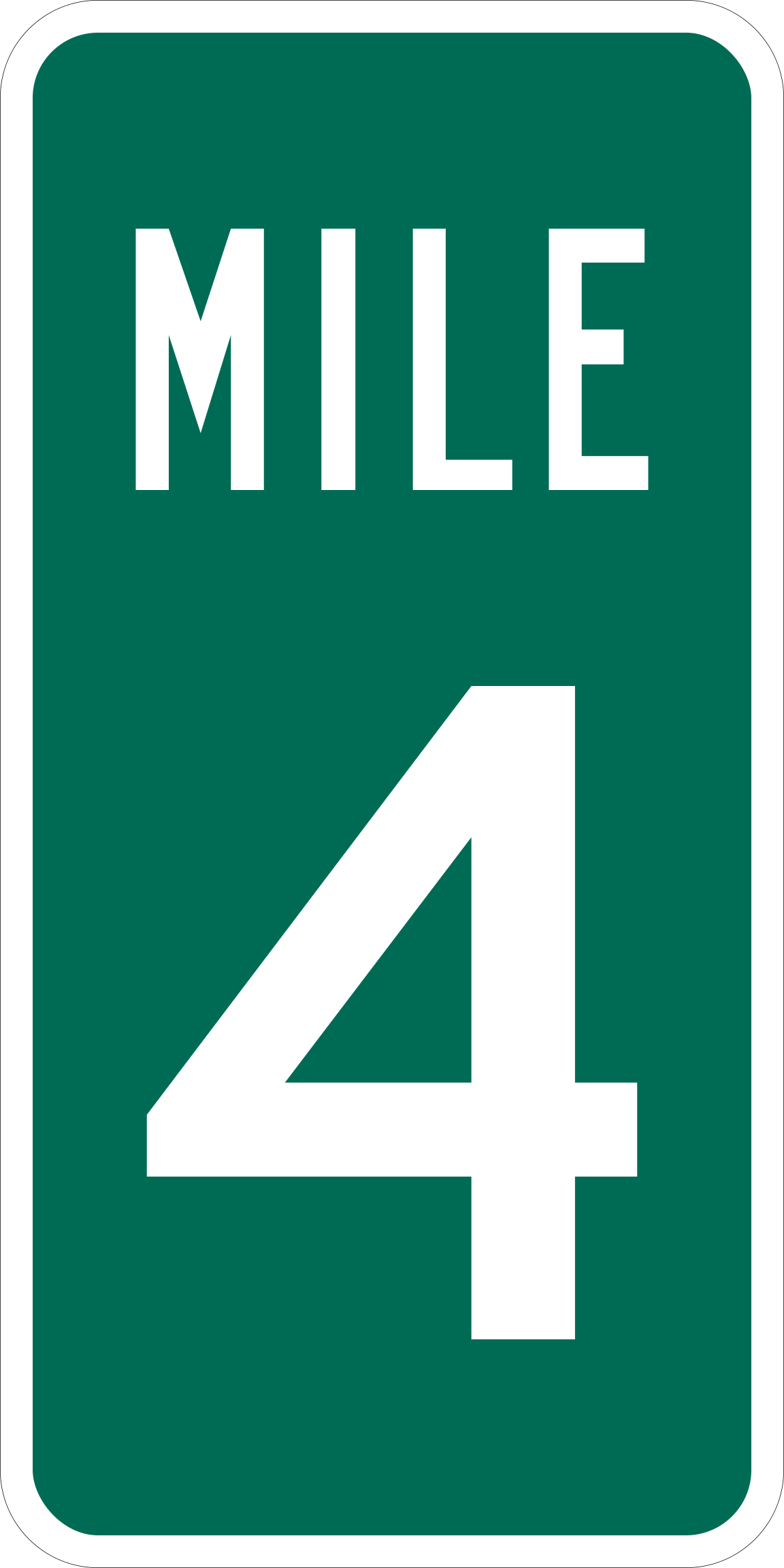
- A short, wide red triangle with white lettering
- A tall, thin blue or green rectangle with white lettering
- A round yellow sign with black lettering
- A square orange sign with black symbols
Show answer
A tall, thin blue or green rectangle with white lettering. A mile marker is a tall, thin rectangle in blue or green with white lettering, placed to help you locate where you are on the road. A red triangle belongs to yield or slow moving vehicle signing, a round yellow sign warns of a railroad crossing, and orange marks construction. When you need to state your location, look for the slim blue or green marker at the roadside.
Study this in the handbook: Regulatory, destination and service signs
7. In Wisconsin, you reach an intersection where the traffic signal has lost power and shows no lights. How should you treat it?
- Proceed without stopping, because a dark signal means go
- Proceed as if the signal were a stop sign
- Follow the car ahead through without your own stop
- Turn around and avoid the intersection in all cases
Show answer
Proceed as if the signal were a stop sign. A traffic signal that has lost power should be treated as a stop sign. Stop, yield as you would at a signed stop, and proceed when the way is clear. Rolling through because the signal is dark, copying the car ahead without stopping, or detouring around every dark signal all miss that treatment. Expect other drivers to be confused there, so enter slowly and watch every approach.
Study this in the handbook: Traffic lights and arrows
8. In Wisconsin, near homes and schools, what sudden pedestrian danger must drivers expect?
- Pedestrians always wait for a green light at every crossing
- Children cross only at marked crosswalks
- Adults always look twice before crossing
- Children or others may run into the road without looking
Show answer
Children or others may run into the road without looking. Be alert because children or others may run out into the road without looking, chasing a ball, a pet, or a friend. Crosswalks and signals guide many walkers, but they do not restrain an excited child. Slow where children gather, cover your brake near parked cars, and scan yards and driveways. The child you expect is the child you can stop for.
Study this in the handbook: Pedestrians, emergency vehicles and school buses
9. In Wisconsin, a person has been drinking and needs to get home. What safe choices are described?
- Ask a sober friend or family for a ride, or staff to call a cab
- Drive slowly on back roads to stay unnoticed
- Wait ten minutes, then drive regardless of feeling
- Drive with windows down to stay alert longer
Show answer
Ask a sober friend or family for a ride, or staff to call a cab. If you have been drinking, ask a sober friend or family member for a ride home, or ask a bartender to call you a cab, because time is the only thing that sobers you. Back roads, ten-minute waits, and open windows do not lower alcohol concentration. Plan the ride before the first drink when possible, and step in for friends the same way you hope they would for you.
Study this in the handbook: Alcohol, drugs and implied consent
10. In Wisconsin, rain is just beginning to fall on a dry road. What should the driver do?
- Speed up to get home before roads worsen
- Slow down as the rain, snow or hail starts
- Keep your speed, because wet road starts are safest
- Turn on high beams and hold the limit
Show answer
Slow down as the rain, snow or hail starts. Slow down when rain, snow or hail starts. That slow-down is listed among the conditions that call for reduced speed, alongside curved roads and hills. Racing home before the weather worsens, trusting the posted limit, or adding high beams does not answer the start of precipitation. Ease off early, lengthen the space ahead, and keep steering and braking gentle while the precipitation is beginning.
Study this in the handbook: Right of way
11. In Wisconsin, traffic ahead slows while you are crossing railroad tracks in a line of vehicles. Which action is prohibited?
- Slowing down before reaching the first rail ahead
- Looking both ways before starting across the tracks
- Waiting before the tracks for room on the far side
- Stopping on the railroad tracks while crossing
Show answer
Stopping on the railroad tracks while crossing. Stopping on the tracks is prohibited when crossing railroad tracks. If traffic ahead cannot clear your whole vehicle beyond the far rail, wait before the crossing instead of creeping onto the rails. Slowing on approach, looking both ways, and holding for far side room are all proper steps. The prohibition targets the stopped vehicle trapped on the rails when a train arrives.
Study this in the handbook: Railroad crossing signs and rules
12. In Wisconsin, which special hazards should a driver expect in rural farming areas?
- Sudden stops where freeway traffic merges at speed
- Roundabout lane signals over two lanes
- Reserved lanes for buses and car pools
- Slow moving tractors, farm equipment and livestock
Show answer
Slow moving tractors, farm equipment and livestock. Rural areas hold slow moving tractors, farm equipment and livestock that share the road at a fraction of highway speed. Freeway merge stops, roundabout signals, and reserved lanes belong to busier roads. Slow early when an orange triangle appears ahead, pass farm equipment only with a long clear view, and give livestock wide, quiet room. Patience on country roads prevents brutal speed-difference crashes.
Study this in the handbook: Bad weather, skids, winter and rural roads
13. In Wisconsin, how does a driver signal a right turn by hand when signals fail?
- Point the hand straight out the window
- Bend the elbow and point the hand up
- Point the hand down toward the ground
- Hold the hand flat over the roof
Show answer
Bend the elbow and point the hand up. For a right turn by hand, bend the elbow and point the hand up from the driver side window. A straight arm means a left turn, a downward hand means stopping or slowing, and a hand over the roof means nothing standard. Give the signal before braking for the turn so following drivers understand why you are slowing, then complete the turn from the proper lane.
Study this in the handbook: The horn, headlights and turn signals
14. In Wisconsin, you are passing a bicyclist traveling in the same direction on a two-lane road. How much room must you give the bicyclist?
- At least three feet of room when passing
- At least one foot, if your mirrors clear the rider
- At least ten feet, the blind pedestrian stopping distance
- No set room, if you slow down while passing by
Show answer
At least three feet of room when passing. When passing a bicyclist, give at least three feet of room. One foot puts the rider inside your mirror sweep and wind push, and slowing down alone does not satisfy the measured minimum. The ten foot figure belongs to stopping near a pedestrian with a guide dog or white cane. Wait until you can move over enough to clear the rider by three feet, then pass without crowding the rider back toward the curb.
Study this in the handbook: Motorcycles, bicycles and truck no zones
15. In Wisconsin, a driver sees a red X over one lane and a green arrow over the next lane. What does the red X mean?
- That lane is open only for making a left turn
- That lane will open in five minutes
- That lane is closed and must not be used
- That lane is reserved for buses only
Show answer
That lane is closed and must not be used. A red X over a reversible lane means that lane is closed to traffic in your direction and must not be used, while a green arrow marks an open lane. The red X does not create a turn-only lane, promise a timed opening, or reserve the lane for buses. Move to a lane with a green arrow well before the closed lane forces a sudden merge.
Study this in the handbook: Lane lines, crosswalks and special lanes
16. In Wisconsin, during parallel parking, when should the driver straighten the wheel?
- As soon as your rear tire touches the curb line
- Before your car begins moving backward at all
- When your front door passes the rear bumper of the car ahead
- Only after your car is fully parked parallel
Show answer
When your front door passes the rear bumper of the car ahead. Straighten your wheel once your front door passes the back bumper of the vehicle you are parking behind, then continue slowly straight back. That landmark tells you the front of your car has cleared the parked car nose-to-tail geometry. Curb contact is too late, pre-move straightening never starts the arc, and waiting until parked skips the middle stage entirely. Landmarks, not guesses, time each wheel change.
Study this in the handbook: The horn, headlights and turn signals
17. In Wisconsin, besides avoiding injury, what does a seat belt help a driver do in a crash?
- Stay positioned to control the car, and avoid being thrown out
- Steer the car after the air bag deploys by itself during a crash
- Replace the need for head restraints entirely
- Hold loose cargo in place behind the seats
Show answer
Stay positioned to control the car, and avoid being thrown out. A seat belt helps keep you in a position to control the vehicle during and after an impact, helps avoid injury, and helps keep you from being thrown from the vehicle. Steering by air bag after a crash, replacing head restraints, and holding cargo are not its described roles. Wisconsin law requires you and your passengers to wear seat belts at any age.
Study this in the handbook: Points, seat belts, child seats and insurance
18. In Wisconsin, before a vehicle is driven on public roads, what insurance must it have?
- Valid liability car insurance covering the vehicle
- Collision coverage for the vehicle body in every case
- Insurance only after the first crash has happened
- A home insurance policy naming the household drivers
Show answer
Valid liability car insurance covering the vehicle. A vehicle must have valid liability car insurance before it is driven in Wisconsin. That coverage must be in place ahead of the first trip, not arranged after a crash. Collision coverage for the vehicle body and unrelated household policies do not answer the liability requirement. A driver must also present proof of insurance when a police officer requests it during a stop.
Study this in the handbook: Points, seat belts, child seats and insurance
19. In Wisconsin, after a movable minor crash, what information must drivers exchange?
- Only first names and phone numbers
- Driver license, vehicle and insurance information from each driver
- Only the color and year of each car
- Only insurance information, with no license details
Show answer
Driver license, vehicle and insurance information from each driver. After a crash, get driver license information, vehicle information and insurance information from the other drivers involved. First names alone, car color notes, or insurance without license details leave claims and reports incomplete. Also record damages, write down how the crash happened, and collect witness information. Do the exchange off the road, calmly, and call police where injury, major damage, or impairment appears.
Study this in the handbook: Avoiding crashes, crash duties and roadside emergencies
20. In Wisconsin, while waiting to turn left, which people must the driver watch for on the left?
- Pedestrians crossing on the left side
- Vehicles turning in from the side street on the right
- Parked cars pulling out on the far side of the road
- Bicyclists resting beside parked cars only
Show answer
Pedestrians crossing on the left side. While turning left, check for pedestrians crossing on the left, because your turn ends exactly where they walk. Vehicles from the right and parked cars on the far side do not occupy that crossing path the same way. Scan the left crosswalk before you creep forward and again before you complete the turn. A pedestrian hidden by your door pillar appears late, so move your head to look around it.
Study this in the handbook: Turns, passing, backing and parking
Every question is written from the official Wisconsin Motorists' Handbook. Need paper? Printable WI practice test with answer key.
Last verified 2026-10-05. How we check every question · Study all 500 as flashcards
Frequently asked questions
How many questions are on this Wisconsin practice test?
This fixed set has 20 questions. It is test 15 of 25 from the 500 question Wisconsin bank. The real WI exam has a 15 question road sign section with 12 correct to pass, plus 50 knowledge questions with 40 correct to pass.
What is the passing score for the real Wisconsin test?
40 questions (80%) correctly to pass That figure comes from the official Wisconsin source cited on the DMV facts page.
How does this fixed test relate to the full Wisconsin bank?
Each numbered test is a fixed set of questions in a fixed order, so you can retake the same test later and compare. Every test mixes road signs and the other topics in about the same proportion as the full bank. Tests 1 to 25 together cover every question in the Wisconsin bank once. The full practice page mixes the whole bank at random.
Last verified 2026-10-05. See the Wisconsin DMV facts page for sourced state details.
Return to the full Wisconsin practice test · Study road signs