
Test 8 of 25 · 20 questions · Free 2026
OH Permit Practice Test 8
Jump to the test ↓A fixed 20 question set from the Ohio bank with answers and plain English explanations. The real OH exam is 40 questions, 75 percent to pass; take the full length version on the main practice page.
Question 1 of 20 · 0 right so far
All 20 questions in test 8
Every question below comes from the Ohio question bank on this page. Open a question to see the correct answer and the explanation. Nothing here is hidden behind a signup.
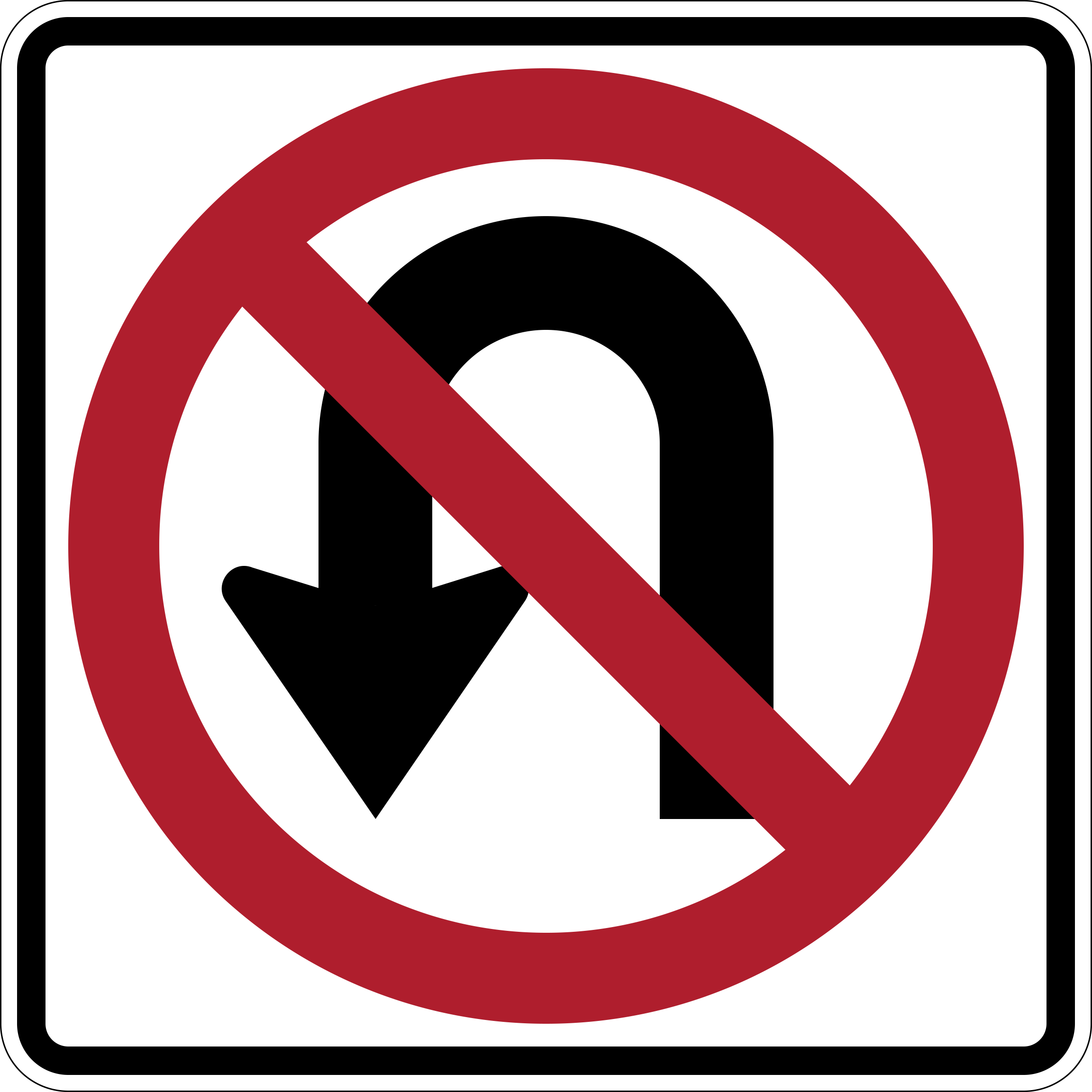
1. A red circle with a slash over a U-turn arrow appears at an intersection. What does the sign mean?
- U-turns are prohibited
- Left turns are prohibited
- The road is one-way
- U-turns are required
Show answer
U-turns are prohibited. The pictured U-shaped arrow identifies the movement, and the red slash marks that movement as prohibited. Therefore, a driver facing this sign may not make a U-turn at that location. A no-left-turn sign uses a left-turn arrow, while a one-way sign communicates permitted travel direction rather than banning a reversal. Do not interpret the slash as a general command to stop or as a ban on every turn. First identify the arrow, then apply the prohibition to that exact maneuver.
Study this in the handbook: Reasonable speed and the assured clear distance rule
2. Which Ohio drivers must wear safety belts under the mandatory safety belt usage law?
- Only drivers of commercial vehicles
- Only passengers under age 18
- Drivers and front-seat occupants of most passenger vehicles
- Only people in vehicles without air bags
Show answer
Drivers and front-seat occupants of most passenger vehicles. Ohio's mandatory safety belt law covers drivers and front-seat occupants of most passenger vehicles whenever they drive or ride on Ohio roadways. Air bags do not remove the need for a belt because the manual describes them as supplemental restraints. The rule is not limited to commercial vehicles or minors. A good pre-drive check is to confirm the driver and every front-seat occupant are buckled before the vehicle moves, regardless of whether the trip is short.
Study this in the handbook: Vehicle equipment, seat belts and child seats
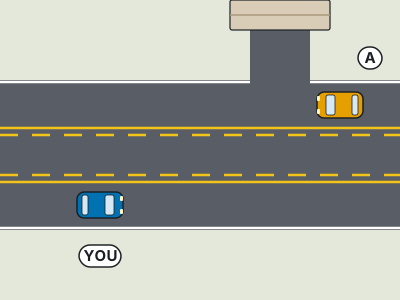
3. What is the center two way left turn lane reserved for?
- Passing slower vehicles in either direction
- Left turning vehicles traveling in either direction
- Merging onto the roadway at any speed
- Continuous travel when traffic is heavy
Show answer
Left turning vehicles traveling in either direction. The center two way left turn lane is reserved for vehicles preparing to make a left turn, whether they approach from one direction or the other. Ohio specifically says it is not a lane for passing, merging into traffic, or traveling through the area. Heavy traffic does not convert it into a regular lane. Look for the broken yellow lines and the left turn arrows, then enter only as part of a left turn and yield as required before crossing the opposing lanes.
Study this in the handbook: Right of way
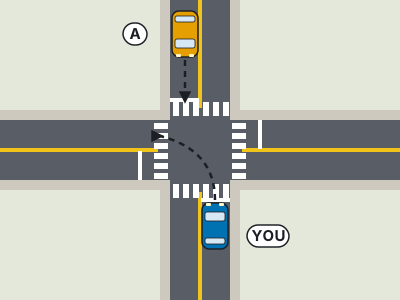
4. When turning left across an opposing traffic lane, what must the turning driver do?
- Accelerate to claim priority
- Yield to opposing traffic
- Turn first if the signal is green
- Yield only to trucks
Show answer
Yield to opposing traffic. A left turn crosses the path of vehicles traveling toward the driver, so the turning driver must yield to opposing traffic. A green signal does not automatically remove that conflict when oncoming vehicles are present. Vehicle type is not the deciding factor, and accelerating does not create right-of-way. The practical cue is to keep the wheels and vehicle controlled, wait for a safe gap, then complete the turn without making oncoming traffic brake.
Study this in the handbook: Right of way
5. Which samples may be used in an Ohio chemical test for alcohol or drugs?
- Only a tire-pressure reading
- Only a vehicle exhaust sample
- A written estimate from another driver
- Blood, breath, plasma, urine, or oral fluid
Show answer
Blood, breath, plasma, urine, or oral fluid. Ohio identifies several possible samples for determining alcohol or drug content: blood, breath, plasma, urine, or oral fluid. The passage does not limit testing to breath, and a tire-pressure reading, exhaust sample, or another driver’s written estimate is not one of the listed methods. This distinction matters when separating chemical-test procedures from the BAC thresholds that apply to commercial, under-21, and general drivers. Remember the five sample types as a group, then consider the officer’s physical findings as an additional source of evidence when impaired driving is suspected.
Study this in the handbook: Probationary license limits for drivers under 18
6. Traffic ahead on an Ohio multi-lane road is slow and the shoulder is wide and paved. May you pass on the shoulder?
- Yes, if the shoulder is paved
- No, never pass on the shoulder, paved or not
- Yes, if you keep under 25 mph
- Yes, but only on the right side
Show answer
No, never pass on the shoulder, paved or not. On multi-lane roads Ohio wants slower vehicles passed in the left-most lane, and only when the pass can be finished without interfering with traffic in either direction. The shoulder is never a passing lane. The digest is explicit that this holds whether the shoulder is paved or not. Shoulders are where disabled vehicles, pedestrians, and emergency responders stop, and drivers in the travel lanes do not expect anyone to come by on that side.
Study this in the handbook: Right of way
7. What financial responsibility document must accompany reinstatement after an Ohio 12-point suspension?
- A notarized apology letter
- A community service certificate
- A vehicle inspection waiver
- An SR-22 bond filed with the BMV
Show answer
An SR-22 bond filed with the BMV. Ohio lists filing an SR-22 bond with the BMV among the requirements for reinstating driving privileges after a 12-point suspension. The SR-22 is a certificate of financial responsibility, not an apology letter or proof of community service. An inspection waiver is unrelated to this reinstatement step. Pair the document with the other listed requirements: completing a remedial driving course and paying reinstatement fees.
Study this in the handbook: Probationary license limits for drivers under 18
8. What do guide signs help drivers find?
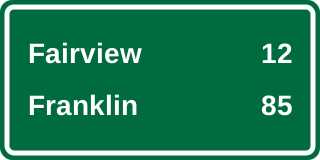
- Points of interest, services, intersecting roads, cities, and towns
- The mechanical condition of nearby vehicles
- The exact time a traffic light will change
- Only the legal BAC threshold for the driver
Show answer
Points of interest, services, intersecting roads, cities, and towns. Ohio says guide signs provide points of interest and services along the highway, information on intersecting roads, and directions to cities and towns. They help a driver plan a route or locate useful destinations. A guide sign does not report a driver’s alcohol limit, diagnose another vehicle, or predict the exact timing of a traffic signal. Look for the square or rectangular shape and the green, brown, or blue color group described for these signs. Read the information early so a route decision can be made without a sudden lane change.
Study this in the handbook: Reasonable speed and the assured clear distance rule
9. Which sign shape and color combination is normally used for warning signs in Ohio?
- Yellow with black lettering or symbols and diamond shaped
- Red circle with white letters and rectangular shaped
- Green background with white letters and circular shaped
- Blue background with yellow symbols and triangular shaped
Show answer
Yellow with black lettering or symbols and diamond shaped. Ohio says warning signs are usually yellow with black lettering or symbols and are diamond shaped. This visual pattern helps a driver recognize a possible hazard before reaching it. A red circle, green circle, or blue triangle describes a different combination than the one in the Ohio passage. Once the warning shape and color are recognized, read the symbol or words and adjust speed or lane position as needed. The sign’s appearance provides an early category cue, while its particular message identifies the roadway condition ahead.
Study this in the handbook: Regulatory, warning, work zone and guide signs
10. Why should a driver allow more space ahead on a wet or snow covered road?
- The tires grip better, so extra space is unnecessary
- The posted limit automatically increases in bad weather
- The vehicle takes longer to stop and is harder to turn without skidding
- The vehicle must remain in the left lane
Show answer
The vehicle takes longer to stop and is harder to turn without skidding. Ohio explains that a slippery roadway reduces tire grip. As a result, the vehicle needs longer to stop and becomes harder to turn without skidding, so the driver should reduce speed and add distance from the vehicle ahead. The other choices reverse or invent the rule: poor weather does not improve traction, change the posted limit upward, or require the left lane. The visual cue is a wet, snowy, or icy surface. Treat it as a reason to create more room before braking or steering.
Study this in the handbook: Reasonable speed and the assured clear distance rule
11. What is the purpose of a regulatory traffic sign in Ohio?
- To identify nearby lodging and restaurants
- To warn that a road surface may become slippery
- To show the route number of the highway ahead
- To regulate the movement of traffic and announce a traffic law
Show answer
To regulate the movement of traffic and announce a traffic law. Regulatory signs control how traffic may move and notify travelers about laws or regulations. A route number sign helps identify a roadway, but it is not the same kind of instruction. Service information belongs on guide signs, while a slippery-road message is a warning. When a sign gives a speed limit, lane requirement, or required stop, treat its message as a rule to follow. A useful memory cue is that regulatory signs regulate behavior, rather than merely describing a destination or possible hazard.
Study this in the handbook: Reasonable speed and the assured clear distance rule
12. Which procession does Ohio include among road users that drivers should yield to?
- Informal groups of commuting vehicles
- Funeral processions
- Vehicles with tinted windows
- Any three cars traveling together
Show answer
Funeral processions. Ohio’s right-of-way list includes funeral processions. The three-cars choice is wrong because ordinary vehicles traveling near each other do not become a protected procession. Look for the cue of vehicles traveling together for a funeral, often with headlights, flags, or an escort depending on local practice. Avoid cutting into the line, and let the procession continue through when yielding is required by the traffic situation.
Study this in the handbook: Reasonable speed and the assured clear distance rule
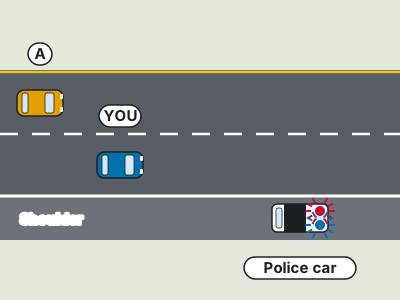
13. You approach a stopped authorized vehicle with warning lights activated, and changing lanes is unsafe. What should you do?
- Pass on the shoulder without reducing speed
- Maintain your speed because the stopped vehicle is off the roadway
- Stop beside the vehicle and wait for its operator to wave
- Slow down and proceed cautiously at a safe speed for conditions
Show answer
Slow down and proceed cautiously at a safe speed for conditions. Ohio's Move Over guidance requires an adjacent lane change when safe and requires slowing down when a lane change is unsafe. If you cannot move away, reduce speed and proceed with caution while keeping a safe speed for traffic conditions. Maintaining speed gives the roadside workers less time and space, stopping beside the vehicle creates a new obstruction, and the shoulder is not a high-speed passing lane. The cue is the activated warning lights: scan early, move over when practical, and otherwise make the passage slower and wider than normal.
Study this in the handbook: Emergency vehicles, Move Over and sharing the road
14. After a crash with an unattended vehicle, what must the driver do?
- Wait 24 hours before deciding whether to report it
- Leave only if the damage appears minor
- Report it to police or leave necessary information at the scene
- Move the unattended vehicle before leaving
Show answer
Report it to police or leave necessary information at the scene. Ohio requires a driver involved in a crash with an unattended vehicle to contact police or leave the needed information at the scene. The minor-damage choice is risky because the duty is not erased just because the driver thinks the damage is small. Look for the cue that no owner or driver is present. Leave contact and insurance details where they can be found, and notify law enforcement when reporting is needed.
Study this in the handbook: Vehicle emergencies and crashes
15. What do white pavement lines separate?
- Traffic traveling in opposite directions
- Traffic entering or leaving a shoulder
- Traffic traveling in the same direction
- Traffic approaching a pedestrian crossing
Show answer
Traffic traveling in the same direction. White pavement lines separate lanes whose traffic is moving in the same direction. The line may be solid or broken, and that pattern can affect lane changes, but the white color identifies the direction relationship. Opposing traffic is associated with a solid yellow line, so the opposite-directions answer reverses the two basic color meanings. A shoulder edge and a pedestrian crossing can have markings, yet neither describes the general purpose of white lane lines. When reading roadway paint, first ask whether the lanes carry traffic together or toward each other.
Study this in the handbook: Reasonable speed and the assured clear distance rule
16. When must an Ohio driver switch from high beams to lower beams?
- When an oncoming vehicle is approaching
- Only on rural roads
- Only after 9 p.m.
- Whenever the vehicle behind is closer than 100 feet
Show answer
When an oncoming vehicle is approaching. Ohio permits high beams when headlights are being used except when an oncoming vehicle is approaching. At that point, the driver must use lower beams so the approaching driver is not blinded. A fixed 9 p.m. time and a rural-road condition are not the stated triggers. The following-vehicle choice also changes the situation. Watch the opposing lane and dim when traffic approaches.
Study this in the handbook: Vehicle equipment, seat belts and child seats
17. What can an OVUAC violation result in for a driver under age 21?
- An automatic lifetime license with no fees
- A license suspension of three months to two years and a remedial driving course
- A warning only when the driver has no passengers
- A suspension of exactly seven days with no course
Show answer
A license suspension of three months to two years and a remedial driving course. Ohio says an OVUAC can result in a license suspension lasting three months to two years. The driver may also have to complete a remedial driving course, pay reinstatement fees, and retake the Driver License examination. The exact outcome is not a seven-day suspension, and the rule does not create a lifetime license or reduce the consequence to a warning when passengers are absent. The useful cue is the under-21 alcohol offense paired with several possible licensing requirements. Treat the suspension range and follow-up obligations as separate parts of the consequence, not as optional advice.
Study this in the handbook: Probationary license limits for drivers under 18
18. You fail the Ohio knowledge test at a Driver Exam Station. When can you retest?
- After 30 days
- After seven days, with a limit of three tries
- Immediately, as many times as you like that day
- After waiting one day; there is no limit on attempts, but only one per day
Show answer
After waiting one day; there is no limit on attempts, but only one per day. After failing Ohio's knowledge test, you must wait one day before retesting. There is no limit on the number of attempts, but only one test per day is allowed. Thirty days and seven days are not Ohio's waits, and there is no three try cap in person. Same day retakes are not allowed. Online testing through BMV Online Services is different: only two attempts are permitted in a six month period.
Study this in the handbook: Knowledge test, TIPIC and driver education
19. A 15-year-old Ohio TIPIC holder wants to practice driving. Who must sit in the front passenger seat?
- A parent, guardian, custodian, licensed driving instructor, or a person 21 or older acting in loco parentis
- Any licensed driver age 18 or older
- Any passenger with a TIPIC
- No one, during daylight
Show answer
A parent, guardian, custodian, licensed driving instructor, or a person 21 or older acting in loco parentis. A TIPIC holder under 16 in Ohio must have a parent, guardian, custodian, licensed driving instructor, or a person 21 or older acting in loco parentis in the front passenger seat. Any licensed driver 18 or older is not enough. Another permit holder cannot supervise, and there is no daylight exception. At 16 and 17, any licensed driver 21 or older may supervise, except from midnight to 6 a.m., when a licensed parent, guardian, or custodian is required.
Study this in the handbook: Knowledge test, TIPIC and driver education
20. What does Ohio require for a child who weighs less than 40 pounds?
- A regular safety belt
- A booster seat only if under age 2
- A child safety seat that meets federal standards
- No restraint if seated in back
Show answer
A child safety seat that meets federal standards. Ohio requires infants and children who are under age 4, or who weigh less than 40 pounds, or both, to ride in a child safety seat labeled as meeting federal standards. A regular belt is not enough for this group. Booster seats are for children at least 4 but under 8, so a booster only under age 2 gets the rule backwards. Back seat placement does not replace the restraint, and a rear facing seat must never face an active passenger air bag.
Study this in the handbook: Probationary license limits for drivers under 18
QualitySpace is expanding to Ohio
We are a California-based independent insurance brokerage working on licensing in more states. We cannot help with Ohio insurance yet. Leave your email and we will let you know when we can.
Every question is written from the official Digest of Ohio Motor Vehicle Laws. Need paper? Printable OH practice test with answer key.
Last verified 2026-10-05. How we check every question · Study all 500 as flashcards
Frequently asked questions
How many questions are on this Ohio practice test?
This fixed set has 20 questions. It is test 8 of 25 from the 500 question Ohio bank. The real OH exam asks 40 questions and you need 30 correct.
What is the passing score for the real Ohio test?
Applicants must answer 75 percent of the questions correctly to pass That figure comes from the official Ohio source cited on the DMV facts page.
How does this fixed test relate to the full Ohio bank?
Each numbered test is a fixed set of questions in a fixed order, so you can retake the same test later and compare. Every test mixes road signs and the other topics in about the same proportion as the full bank. Tests 1 to 25 together cover every question in the Ohio bank once. The full practice page mixes the whole bank at random.
Last verified 2026-10-05. See the Ohio DMV facts page for sourced state details.