
Printable OH Permit Practice Test
40 questions in the real OH exam format, 75 percent (30 of 40) to pass. Answer key on the last page. Last verified 2026-09-05 against the official Ohio driver manual.
1. A school bus stops with red lights flashing on an Ohio road with four or more lanes. Which traffic must stop?
- Only traffic going the same direction as the bus
- All traffic in both directions
- Only traffic coming toward the bus
- No one, as long as drivers slow to 20 mph
2. How many Ohio penalty points accumulated within two years cause the BMV to impose a point suspension?
- 9 points
- 6 points
- 12 or more points
- 18 points
3. This yellow right-angle arrow sign warns a driver about what condition ahead?

- A no passing zone ending
- A required right turn at every signal
- A one-way street ending
- A sharp right turn ahead
4. What does a round yellow sign with an X and the letters RR warn a driver about?

- A roundabout ahead
- A bicycle crossing
- A highway-railroad grade crossing
- A no-passing zone
5. Where does the Ohio digest tell drivers to place their hands on the steering wheel?
- At 10 and 2 o'clock near the top
- Both hands together at 12 o'clock
- One hand at the bottom center of the wheel
- At the 4 and 8 o'clock positions on opposite sides
6. What does Ohio say about driving while impaired by alcohol or drugs?
- It is allowed below .08% BAC
- It is allowed when medication is prescribed
- It is against the law
- It is prohibited only for commercial drivers
7. During the first 12 months of an Ohio probationary license, when may a driver operate between midnight and 6 a.m.?
- When accompanied by a parent or guardian
- When accompanied by any licensed friend age 18 or older
- When a sibling with a permit sits in front
- When the driver promises to return before 6 a.m.
8. A red circle with a slash over a U-turn arrow appears at an intersection. What does the sign mean?
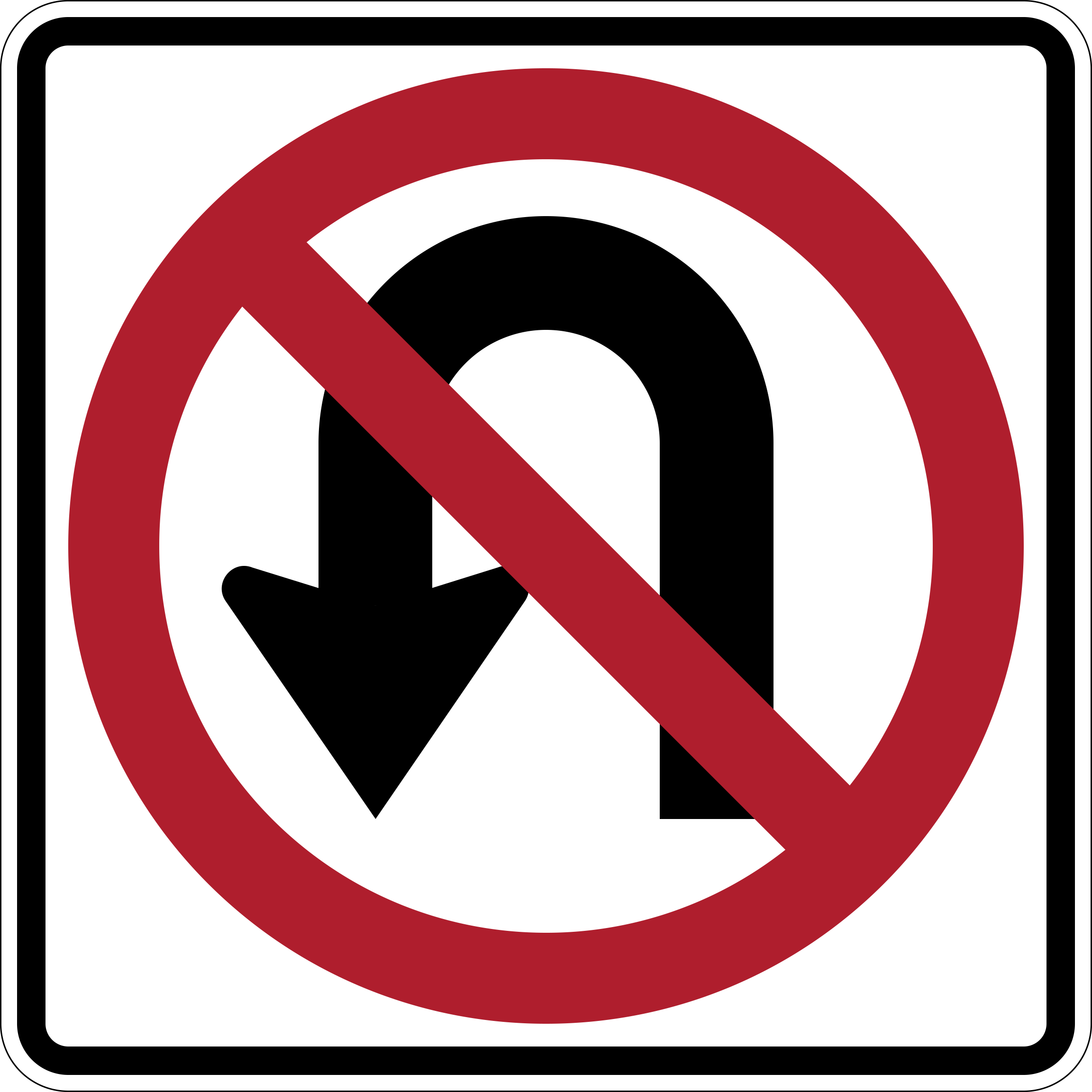
- U-turns are prohibited
- Left turns are prohibited
- The road is one-way
- U-turns are required
9. A 16-year-old Ohio driver is convicted of a traffic offense in the first months of licensing. What may be required?
- A permanent license revocation
- A parent or guardian must accompany the driver for six months or until age 17
- Only a written warning
- Retaking driver education
10. What should a driver do with lane position after entering an Ohio roundabout?
- Do not change lanes once inside
- Change lanes only at the center island
- Change lanes before every exit
- Stop and wait before changing lanes
11. A 16-year-old with an Ohio TIPIC is driving at 2 a.m. Which accompanying adult is required?
- Any licensed driver age 18 or older
- No adult if the trip is less than five miles
- A passenger age 16 or older with a valid ID
- A parent, guardian, or custodian who holds a valid Driver License
12. How should an Ohio driver park on a two-way street when no angled spaces are marked?
- Facing against traffic, as close as possible to the center line
- At any angle if one wheel touches the curb
- Facing the direction of traffic, parallel and no more than 12 inches from the right curb
- Parallel and no more than 36 inches from either curb
13. What is required when a school bus is stopped on a road with fewer than four lanes and its red lights are flashing?
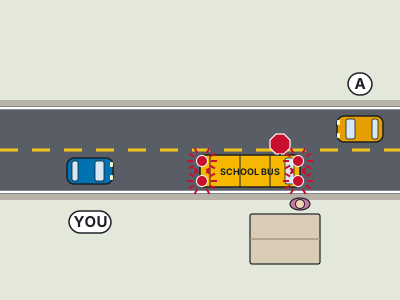
- Only traffic behind the bus must stop at least 5 feet away
- All traffic may proceed after slowing to 15 mph
- Oncoming traffic may pass if it uses the opposite shoulder
- Traffic approaching from either direction must stop at least 10 feet away
14. From what distance must an Ohio vehicle's horn be audible under the equipment rules?
- 200 feet
- 50 feet
- 500 feet
- 1,000 feet
15. What do Ohio work zone signs generally have as their background color?
- Orange
- Purple
- White
- Blue
16. How far from an intersection or crosswalk must you stay when parking in Ohio?
- At least 5 feet
- At least 10 feet
- At least 20 feet
- At least 50 feet
17. How much space should be between a properly adjusted driver's chest and the steering wheel?
- Exactly 6 inches
- At least 4 inches
- At least 10 inches
- No more than 2 inches
18. Which Ohio drivers must wear safety belts under the mandatory safety belt usage law?
- Only drivers of commercial vehicles
- Only passengers under age 18
- Drivers and front-seat occupants of most passenger vehicles
- Only people in vehicles without air bags
19. What does an Ohio crosswalk define?
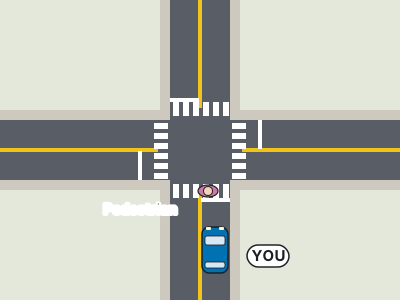
- A lane reserved for passing traffic
- A shoulder where vehicles may park
- A zone where bicycles must dismount
- The area where pedestrians may cross the roadway
20. A 25-year-old fails the Ohio driving test for the first time. What must they do before a second attempt?
- Complete an Abbreviated Adult Driver Training Course, unless they had approved driver education within the past year
- Wait 30 days and retest with no course
- Retake the knowledge test only
- Nothing; they may retest the same day
21. During which part of the year are studded tires legal on Ohio roads?
- Only from December 1 through March 1
- From November 1 through April 15
- All year, as long as the studs are under one inch
- Never, because Ohio bans studded tires
22. What additional consequences does Ohio impose on a person convicted of OVI five or more times in 20 years?
- A $100 fine only
- Jail time, possible vehicle immobilization or forfeiture, and placement on the Habitual OVI/OMWI Offender Registry
- A warning and a safety class
- A one-month suspension
23. An Ohio driver age 30 is caught holding a phone while driving for the first time in two years. What is the penalty?
- 2 points and a fine of up to $150
- 6 points and a $1,000 fine
- A 60-day suspension
- No penalty for a first offense
24. What roadway arrangement does this sign identify?
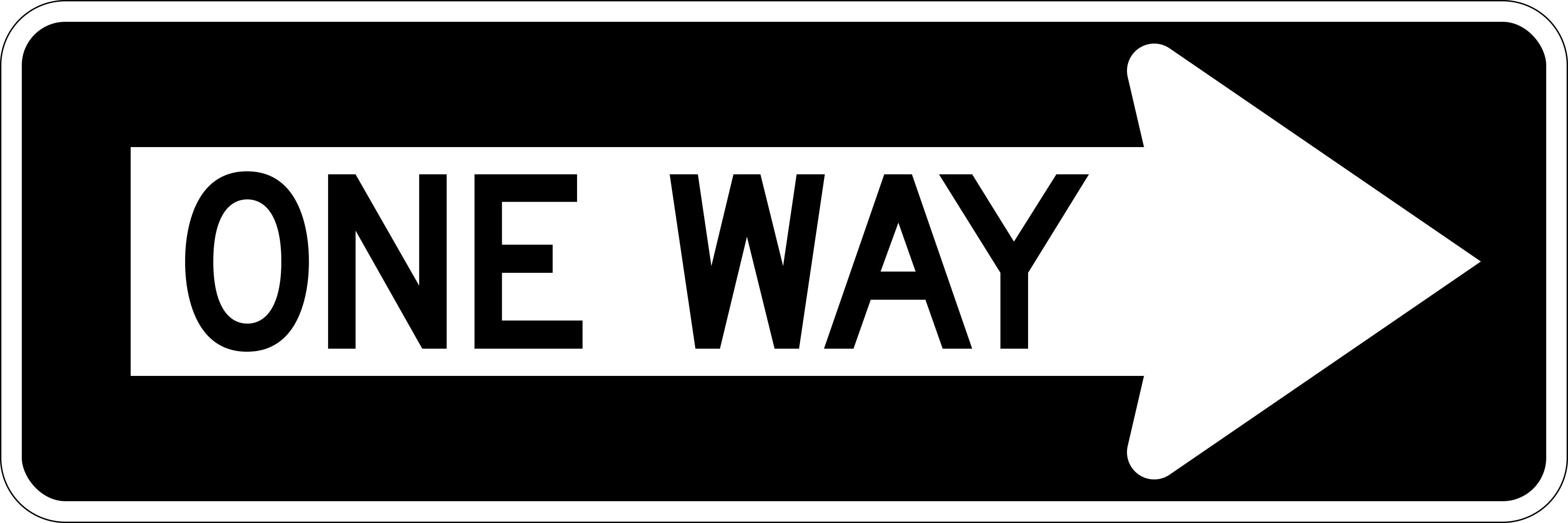
- A two-way road with a center turn lane
- A roadway reserved for buses only
- A road closed to all traffic
- A one-way road
25. An adult Ohio driver is convicted of a second handheld device violation within two years. What penalty applies?
- 2 points and a fine of up to $150
- 4 points and a fine of up to $500
- 3 points and a fine of up to $250
- A 60 day suspension and a $150 fine
26. Your Ohio vehicle starts accelerating out of control because the accelerator is stuck. What should you do first?
- Turn the engine off immediately while still at speed
- Pump the accelerator to free it while steering hard
- Shift into park while the car is still moving
- Turn on emergency flashers, shift to neutral, and look for an escape route
27. When the broken yellow line is in your lane and the solid yellow line is in the other lane, what may you do?
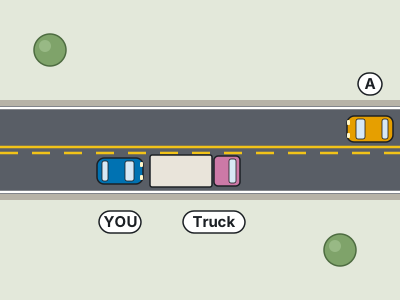
- Pass only after stopping completely in your lane
- Never pass under any condition
- Pass when it is safe to do so
- Drive on the painted line until the next intersection
28. What is the center two way left turn lane reserved for?
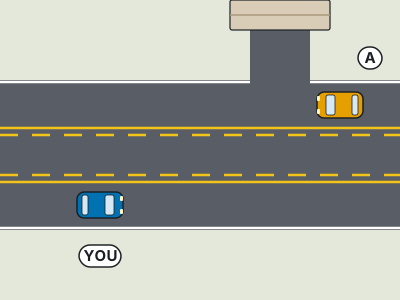
- Passing slower vehicles in either direction
- Left turning vehicles traveling in either direction
- Merging onto the roadway at any speed
- Continuous travel when traffic is heavy
29. At an intersection, another driver is already there before you arrive. Who should you yield to?
- The driver turning right
- The driver who sounds the horn
- The vehicle carrying more passengers
- The driver who is at or arrives before you
30. What must a driver do when entering a roundabout?
- Change lanes immediately after entering
- Enter clockwise because entering traffic has priority
- Stop in the circle before selecting an exit
- Yield to traffic already in the roundabout and travel counterclockwise
31. What is the Ohio rule for turning right at a red traffic signal?
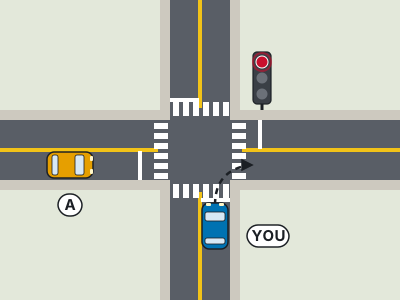
- Turn only after the signal changes to yellow
- Turn without stopping when no car is visible
- Stop completely, yield to crossing traffic and pedestrians, then turn unless prohibited
- Turn from any lane if the road is one way
32. What do the shape and color of a route number sign help identify?
- The number of parking spaces ahead
- The driver license class required
- The type of roadway
- The pavement material used on the route
33. What should you do if you miss your freeway exit?
- Stop and back up on the shoulder
- Use the median opening reserved for emergency vehicles
- Take the next exit
- Make a U-turn at the end of the ramp
34. What is Ohio’s legal drinking age?
- 18 years
- 21 years
- 20 years
- 19 years
35. When should an Ohio driver reduce speed for rain, snow, sleet, or ice?
- Only after the vehicle begins to skid
- At the first sign of any of those conditions
- Only when the posted limit is reduced
- Only on roads with curves
36. You are entering an Ohio freeway and see a merge sign. How should you find room to merge?

- Rely only on the inside rear-view mirror
- Look over your shoulder and use your outside mirrors to find a gap
- Stop at the end of the ramp until no vehicles are in sight
- Drive on the shoulder until a gap opens
37. In a work zone, what must a driver do when a flagger uses a sign to direct traffic?
- Stop only when a police officer is present
- Obey only the painted lane lines
- Proceed if no worker is in the lane
- Follow the flagger’s instructions
38. When turning left across an opposing traffic lane, what must the turning driver do?
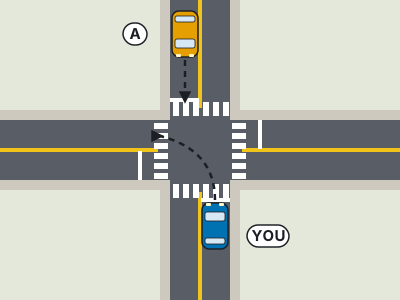
- Accelerate to claim priority
- Yield to opposing traffic
- Turn first if the signal is green
- Yield only to trucks
39. Which headlights should an Ohio driver use when driving in fog?
- Low beams, not high beams
- High beams, to light the fog more strongly
- No headlights until the fog clears
- Hazard lights instead of headlights
40. Which situation is identified as an example of aggressive driving in Ohio?
- Following another vehicle too closely
- Checking mirrors before changing lanes
- Reducing speed for poor weather
- Leaving a normal space before a turn
Answer key
- 1. A
- 2. C
- 3. D
- 4. C
- 5. D
- 6. C
- 7. A
- 8. A
- 9. B
- 10. A
- 11. D
- 12. C
- 13. D
- 14. A
- 15. A
- 16. C
- 17. C
- 18. C
- 19. D
- 20. A
- 21. B
- 22. B
- 23. A
- 24. D
- 25. C
- 26. D
- 27. C
- 28. B
- 29. D
- 30. D
- 31. C
- 32. C
- 33. C
- 34. B
- 35. B
- 36. B
- 37. D
- 38. B
- 39. A
- 40. A