
Test 9 of 10 · 20 questions · Free 2026
NM Permit Practice Test 9
Jump to the test ↓A fixed 20 question set from the New Mexico bank with answers and plain English explanations.
Question 1 of 20 · 0 right so far
All 20 questions in test 9
Every question below comes from the New Mexico question bank on this page. Open a question to see the correct answer and the explanation. Nothing here is hidden behind a signup.
1. After a drink, about how long does alcohol take to reach the brain?
- 1 to 2 minutes
- About 2 hours
- About 6 hours
- 20 to 40 minutes
Show answer
20 to 40 minutes. The manual says alcohol goes from the stomach into the blood and reaches the brain in 20 to 40 minutes. One to two minutes is far too fast, and two or six hours is far too slow. Once there, alcohol affects the parts of the brain that control judgment and skill. The manual compares it to a sunburn: by the time you feel it, it is already too late.
Study this in the handbook: Alcohol, drugs and DWI
2. How long should a person with epilepsy be stable and seizure free before being issued a New Mexico driver license?
- 1 month
- 3 months
- 6 months
- 5 years
Show answer
6 months. The manual says people with epilepsy should have frequent check ups, manage their medicine carefully, and be stable and seizure free for a 6 month period before being issued a license. One and three months are shorter than the stated period. Five years greatly overstates it. New Mexico also requires drivers with epilepsy, diabetes, heart conditions, and other medical problems to send MVD periodic medical statements signed by their physicians.
Study this in the handbook: Vision, fatigue, health and distraction
3. What do orange work area signs warn drivers may be present near the roadway?
- Workers or equipment operating on or near the roadway
- A permanent hospital service area
- A guaranteed lane for high occupancy vehicles
- A railroad crossing with no roadway activity
Show answer
Workers or equipment operating on or near the roadway. Orange work area signs identify construction, maintenance, or emergency operations and warn that people may be working on or near the roadway. They can also announce reduced speeds, detours, slow equipment, or changing surfaces. The hospital choice belongs to service information, not the orange work zone category. A high occupancy lane is a lane use rule, and a railroad warning has its own signs and signals. When an orange sign appears, expect workers and altered traffic movement, reduce speed as directed, and obey a flagger or other person controlling traffic.
Study this in the handbook: Warning, regulatory and guide signs
4. What should a driver do if a posted minimum speed is too fast to travel safely?
- Use another road
- Drive below the minimum in the same lane
- Stop in the travel lane
- Increase speed beyond the posted minimum
Show answer
Use another road. New Mexico advises drivers to use another road if the minimum posted speed is too fast for them. A minimum is intended to keep traffic moving, but it does not require a driver to continue on a road where that pace cannot be maintained safely. Driving below the minimum in the lane can create a hazard, and stopping in the travel lane is dangerous. Do not exceed the posted minimum simply to remain on the route. Choose a roadway whose speed requirements match the vehicle and conditions.
Study this in the handbook: Warning, regulatory and guide signs
5. What is the safest response when a tire suddenly goes flat while driving?
- Accelerate until the tire reshapes
- Brake hard and stop in the travel lane
- Hold the wheel firmly, slow gradually, and pull off safely
- Turn sharply toward the nearest shoulder
Show answer
Hold the wheel firmly, slow gradually, and pull off safely. A sudden flat tire can disturb steering, so the driver should hold the wheel tightly and keep the vehicle going straight. Ease off the gas, slow gradually, and use the brakes lightly before pulling off in a safe place. Hard braking can upset the vehicle, and a sharp turn toward the shoulder may cause a loss of control. Continuing at speed does not repair the tire and increases the chance of damage. Keep the vehicle out of the travel lane whenever possible, then use hazard protection and seek assistance.
Study this in the handbook: Vehicle emergencies and skids
6. Which checks are required before changing lanes?
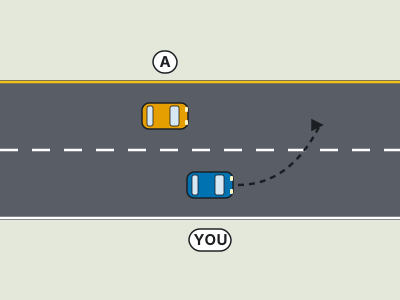
- The horn alone before crossing the lane line
- Only the rear-view mirror and a quick acceleration
- Hazard flashers without looking behind the vehicle
- Mirrors, a shoulder check for the blind spot, and a signal
Show answer
Mirrors, a shoulder check for the blind spot, and a signal. A safe lane change requires information from several viewing points. Check the rear-view and side mirrors, look over the shoulder in the direction of movement for a blind-spot vehicle, and signal the intended change. A mirror-only check can miss a vehicle beside the rear corner. Hazard lights and a horn do not tell you whether the destination lane is open. Look quickly so attention returns to the road ahead, then move only after the space is clear.
7. When a motorcycle rider is being passed from behind or by an oncoming vehicle, where should the rider stay within the lane?
- On the shoulder
- In the portion farthest from the passing vehicle
- In the center portion of the lane
- In the passing vehicle's lane
Show answer
In the center portion of the lane. The manual's motorcycle section says a rider being passed from behind or by an oncoming vehicle should stay in the center portion of the lane. That position leaves more room for a small steering error, an extended mirror, or the wind from a larger vehicle. Moving to the far side can invite the other vehicle to return too early, while the shoulder and the other lane remove the rider's safety margin. Hold a steady line, watch the passing vehicle, and avoid sudden movement until it is clear.
8. What following-distance method does the manual say works at any speed?
- A fixed one-car-length rule
- The three-second rule
- The ten-minute mirror rule
- Matching the speedometer number in feet
Show answer
The three-second rule. The manual uses the three-second rule to judge space behind the vehicle ahead at any speed. Watch the lead vehicle pass a fixed object, count the seconds until your vehicle reaches it, and drop back if you arrive before finishing the count. A fixed car length changes meaning as speed changes, and the mirror and speedometer formulas are not the method described. Increase the time gap beyond three seconds when conditions such as slippery roads, a trailer, or a railroad crossing call for more room.
Study this in the handbook: Following distance, passing and sharing the road
9. What does a red-painted curb indicate in New Mexico?
- A place where only short stops are permitted
- A fire zone where parking or standing is not permitted
- A loading zone for any vehicle at any time
- Handicap parking reserved for vehicles without permits
Show answer
A fire zone where parking or standing is not permitted. A red-painted curb marks a fire zone where parking or standing is not permitted. The short-stop rule belongs to a white curb, while a yellow curb indicates a loading zone or another restriction. Blue curb markings identify handicap parking only, subject to the required plate, tag, or sticker. Treat the red marking as a keep-clear area for emergency access. Do not pull over there simply because the stop will be brief, and do not confuse curb color with permission to wait in the vehicle.
Study this in the handbook: Parking rules and no parking zones
10. A vehicle ahead displays a slow-moving vehicle emblem. What does that marking tell you?
- The vehicle is traveling less than 25 mph
- The vehicle must be traveling at least 45 mph
- The vehicle is carrying hazardous materials
- The vehicle has priority over all following traffic
Show answer
The vehicle is traveling less than 25 mph. The reflective orange triangle identifies equipment, farm vehicles, or horse-drawn vehicles moving below ordinary traffic speed. It is a warning to increase your viewing distance and anticipate an unusually slow pace, not permission to rush around the vehicle. The hazardous-materials choice confuses this emblem with a different warning requirement. Use the marking as an early cue to ease off the accelerator, check for a safe passing area, and wait until you can see enough roadway to pass legally and safely.
Study this in the handbook: Warning, regulatory and guide signs
11. What should you do if a tire suddenly goes flat while driving?
- Stop in the travel lane and leave the vehicle there
- Turn sharply toward the shoulder and brake hard immediately
- Accelerate to keep the flat tire from touching the road
- Hold the steering wheel tightly, keep straight, and slow down gradually
Show answer
Hold the steering wheel tightly, keep straight, and slow down gradually. A flat tire can pull the vehicle away from its path, so steering control comes first. Grip the wheel, keep the vehicle straight, and reduce speed smoothly by easing off the accelerator and using the brakes lightly. A sharp turn or hard braking can produce a skid, especially before the driver has stabilized direction. Avoid stopping in a live lane when possible; guide the vehicle to a safe place off the roadway and use hazard awareness while pulling over.
Study this in the handbook: Vehicle emergencies and skids
12. If you are in an intersection when the yellow light comes on, what should you do?
- Turn around before crossing the intersection
- Stop in the intersection and wait for red
- Reverse to the stop line behind the vehicle
- Continue through the intersection
Show answer
Continue through the intersection. Once a vehicle is already inside the intersection, the manual says to continue through when the yellow light comes on. Stopping there can leave the vehicle blocking the intersection and expose it to conflicting movements. The stop in the intersection choice creates that hazard, while reversing is unsafe and may surprise traffic behind. Turning around is not a signal response. The separate rule for approaching a yellow light is to stop if a safe stop is possible. The important cue is the vehicle's position when yellow appears: already in the intersection means clear it rather than halt within it.
Study this in the handbook: Traffic signals and arrows
13. What do route number sign shapes and colors help identify?
- The tire pressure needed for that route
- The type of roadway, such as interstate, U.S., state, city, or county road
- The number of people required in the vehicle
- The distance needed to stop from 50 mph
Show answer
The type of roadway, such as interstate, U.S., state, city, or county road. Route number signs use shape and color to identify the kind of roadway a driver is following. The category may be interstate, U.S., state, city, or county road. Tire pressure, passenger count, and stopping distance come from other driving rules and are not what a route marker communicates. The cue is the route shield itself: match its design and number to your map or navigation plan so you stay on the intended road and avoid last-moment corrections.
Study this in the handbook: Warning, regulatory and guide signs
14. What factors should a driver consider when adjusting speed?
- The time of day, regardless of road conditions
- Only the posted number and the vehicle's color
- Adverse conditions, vehicle type, and accident prevention
- The speed of the nearest vehicle only
Show answer
Adverse conditions, vehicle type, and accident prevention. New Mexico says speed should be adjusted for adverse conditions, the type of vehicle, and accident prevention. A posted number is not the only consideration, because rain, ice, traffic, or a heavily loaded vehicle can reduce control. Vehicle color has no role in choosing a safe pace, and the nearest vehicle may itself be traveling too fast. Use the sign as a reference, then lower speed when the road, weather, visibility, vehicle handling, or surrounding traffic makes the posted pace unsafe.
Study this in the handbook: Speed limits
15. What license consequence does New Mexico's manual assign to a driver who reaches twelve or more points within twelve months?
- A seven-day warning suspension
- A mandatory vehicle inspection only
- A one-year license suspension
- Automatic removal of every point after one month
Show answer
A one-year license suspension. The point threshold is twelve or more points accumulated within a twelve-month period, and the stated consequence is a one-year suspension of the driver's license. The inspection choice addresses a vehicle condition rather than a driving record. Seven days understates the period, and points are not erased after one month by the rule described here. Keep both parts of the test in view: the number is twelve and the measuring window is twelve months.
Study this in the handbook: Renewal, points, seat belts and insurance
16. What subjects can regulatory signs address?
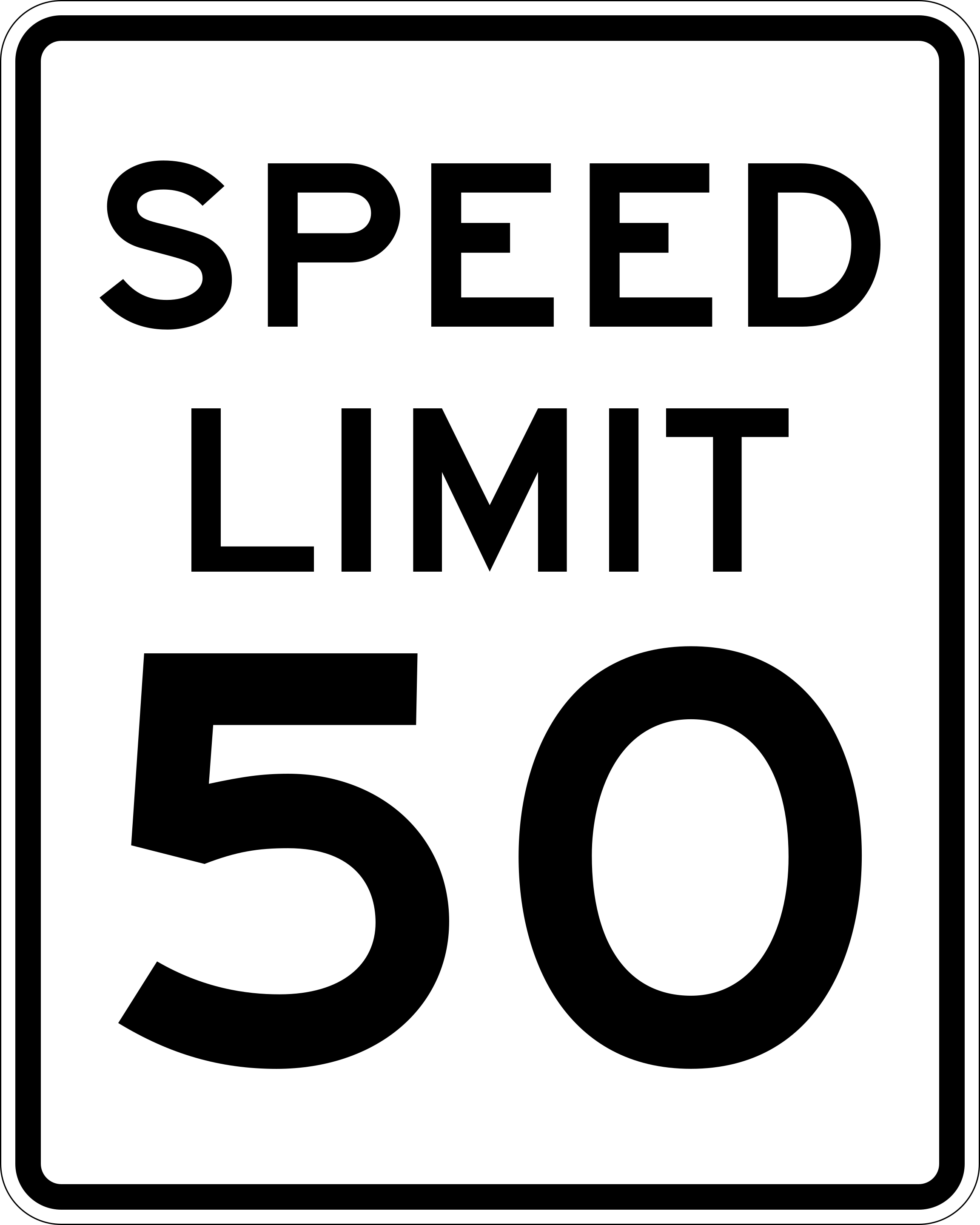
- Only the color of the pavement
- Only road construction worker locations
- Only the names of nearby towns
- Traffic direction, lane use, turning, speed, parking, and other special situations
Show answer
Traffic direction, lane use, turning, speed, parking, and other special situations. Regulatory signs provide rules for traffic direction, lane use, turning, speed, parking, and other special situations. They are not limited to construction warnings, place names, or pavement color. A driver should read the sign before entering the controlled area and combine it with the lane position and roadway markings. If a sign prohibits a movement or sets a limit, the driver must follow that instruction even when the road appears empty.
Study this in the handbook: Warning, regulatory and guide signs
17. What action belongs with the yield sign shown?
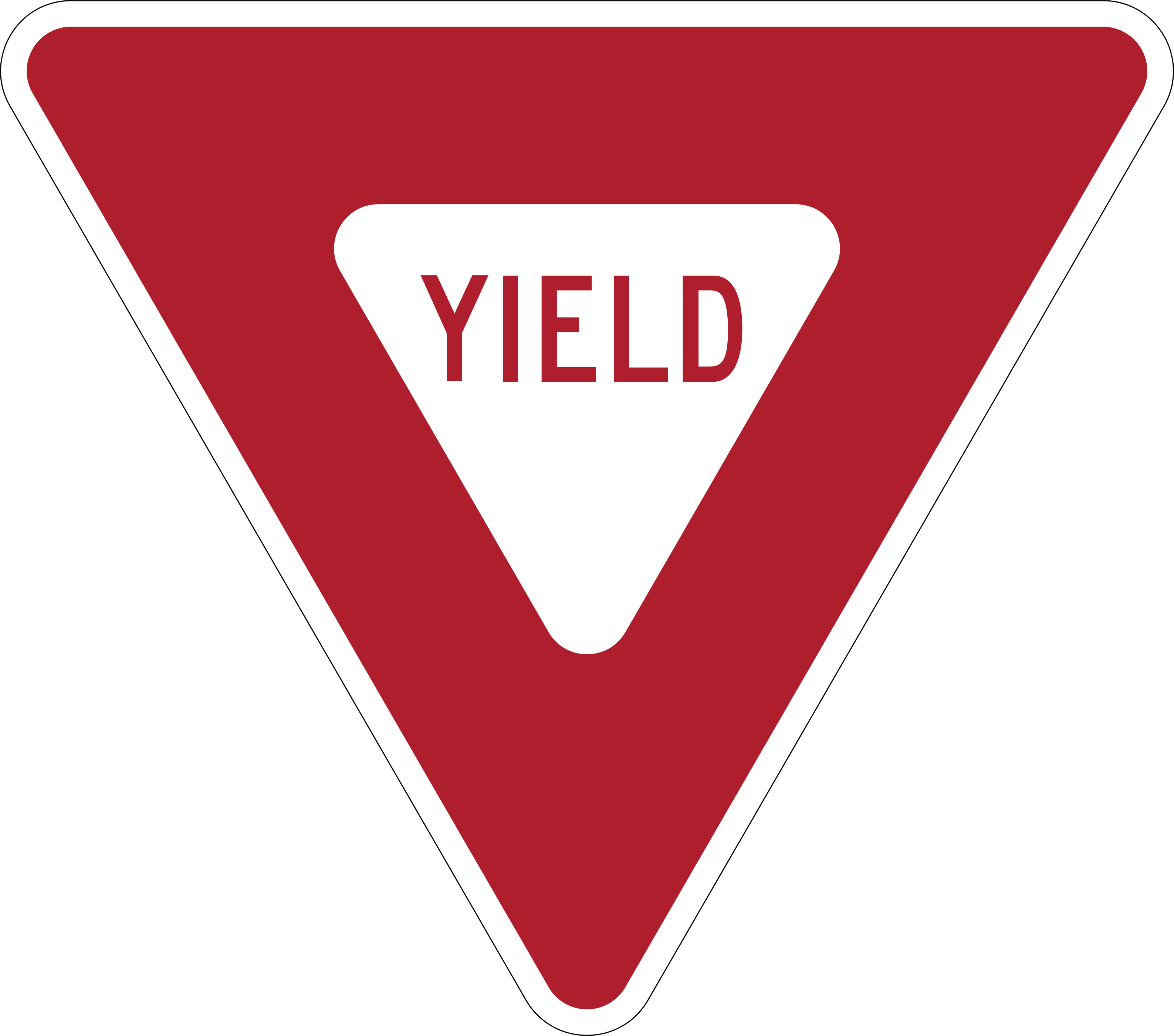
- Stop for exactly five seconds before entering
- Slow down and yield to traffic in the intersection or roadway
- Accelerate so vehicles behind you can enter first
- Yield only to vehicles approaching from the left
Show answer
Slow down and yield to traffic in the intersection or roadway. The downward triangle marks a yield requirement, not an automatic full-stop requirement. Slow down and give the right-of-way to traffic in the intersection you are crossing or the roadway you are entering. You may continue when the path is safe and clear. The five-second option invents a timing rule that the manual does not state, while the left-only option ignores traffic from the other direction. Use the sign as an instruction to reduce speed, scan both directions, and be prepared to stop if another road user has priority.
Study this in the handbook: Warning, regulatory and guide signs
18. When entering a road from a driveway, alley, or roadside, whom must you yield to?
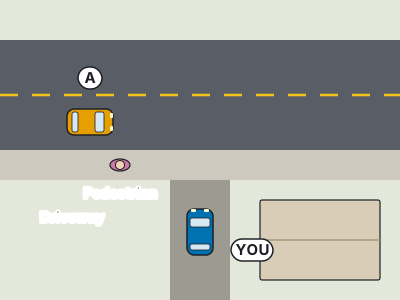
- Vehicles already on the main road
- Only vehicles turning left from the main road
- Only pedestrians carrying a white cane
- No one if you signal before entering
Show answer
Vehicles already on the main road. A driver entering from a driveway, alley, or roadside must yield to vehicles already using the main road. Signaling helps communicate, but it does not transfer priority to the entering vehicle. Limiting the duty to left-turning vehicles ignores through traffic, and the white cane rule is a separate absolute pedestrian right of way. The cue is entering from a private or roadside access point: pause, scan both directions, and wait for a gap that lets you join without forcing main-road traffic to brake or swerve.
Study this in the handbook: Right of way at intersections
19. Which of these can cost a New Mexico driver the driving privilege, according to the manual?
- Renewing the license 20 days after it expires
- Failing to settle a financial judgment against you for damages from a motor vehicle accident
- Driving 55 mph on a public highway with no other posted limit
- Parking 60 feet from a railroad crossing
Show answer
Failing to settle a financial judgment against you for damages from a motor vehicle accident. The manual lists failing to settle a financial judgment for damages resulting from a motor vehicle accident as a reason for losing driving privileges. Renewal is allowed up to 30 days after the license expires, so renewing 20 days late is within the window. Fifty five mph is the maximum on public highways unless posted otherwise, so that speed is legal. Parking must be at least 50 feet from a railroad crossing, and 60 feet satisfies that. Other listed reasons include a DWI conviction, refusing a chemical test, giving false information, and having too many points.
Study this in the handbook: Permits and the graduated license
20. What do no-passing signs and pavement markings help identify?
- Where passing is allowed, begins, ends, or is not allowed
- Where drivers may park on either side of the road
- Where headlights may be turned off at night
- Where a vehicle may ignore oncoming traffic
Show answer
Where passing is allowed, begins, ends, or is not allowed. No-passing signs work with pavement markings to show where passing is permitted, where a passing zone starts or ends, and where passing is not allowed. They do not create parking permission, lighting rules, or immunity from oncoming traffic. The tempting mistake is to treat a sign as a general advisory instead of a lane-use control. Before moving left to pass, look for the posted sign, the centerline pattern, and enough clear sight distance. Passing is legal only when both the markings and conditions allow it.
Study this in the handbook: Warning, regulatory and guide signs
QualitySpace is expanding to New Mexico
We are a California-based independent insurance brokerage working on licensing in more states. We cannot help with New Mexico insurance yet. Leave your email and we will let you know when we can.
Every question is written from the official New Mexico Driver Manual. Need paper? Printable NM practice test with answer key.
Last verified 2026-10-05. How we check every question · Study all 208 as flashcards
Frequently asked questions
How many questions are on this New Mexico practice test?
This fixed set has 20 questions. It is test 9 of 10 from the 208 question New Mexico bank.
How does this fixed test relate to the full New Mexico bank?
Each numbered test is a fixed set of questions in a fixed order, so you can retake the same test later and compare. Every test mixes road signs and the other topics in about the same proportion as the full bank. Tests 1 to 10 together cover 200 of the 208 questions in the New Mexico bank, each once. The full practice page mixes the whole bank at random.
Last verified 2026-10-05. See the New Mexico DMV facts page for sourced state details.
Return to the full New Mexico practice test · Study road signs