
Printable NM Permit Practice Test
40 questions from the New Mexico question bank. Answer key on the last page. Last verified 2026-09-05 against the official New Mexico driver manual.
1. What shape and colors identify a yield sign?
- A downward-pointing triangle that is red and white with red letters
- An eight-sided red sign with white letters
- A blue circle with a white arrow
- A green rectangle with black lettering
2. A learner with a New Mexico instructional permit is practicing in a car. Where must the supervising licensed driver sit?
- In the back seat behind the learner
- In the right front seat
- In any seat as long as the supervisor is awake
- Outside the vehicle giving directions
3. What do red circle-and-slash signs such as the one shown generally do?
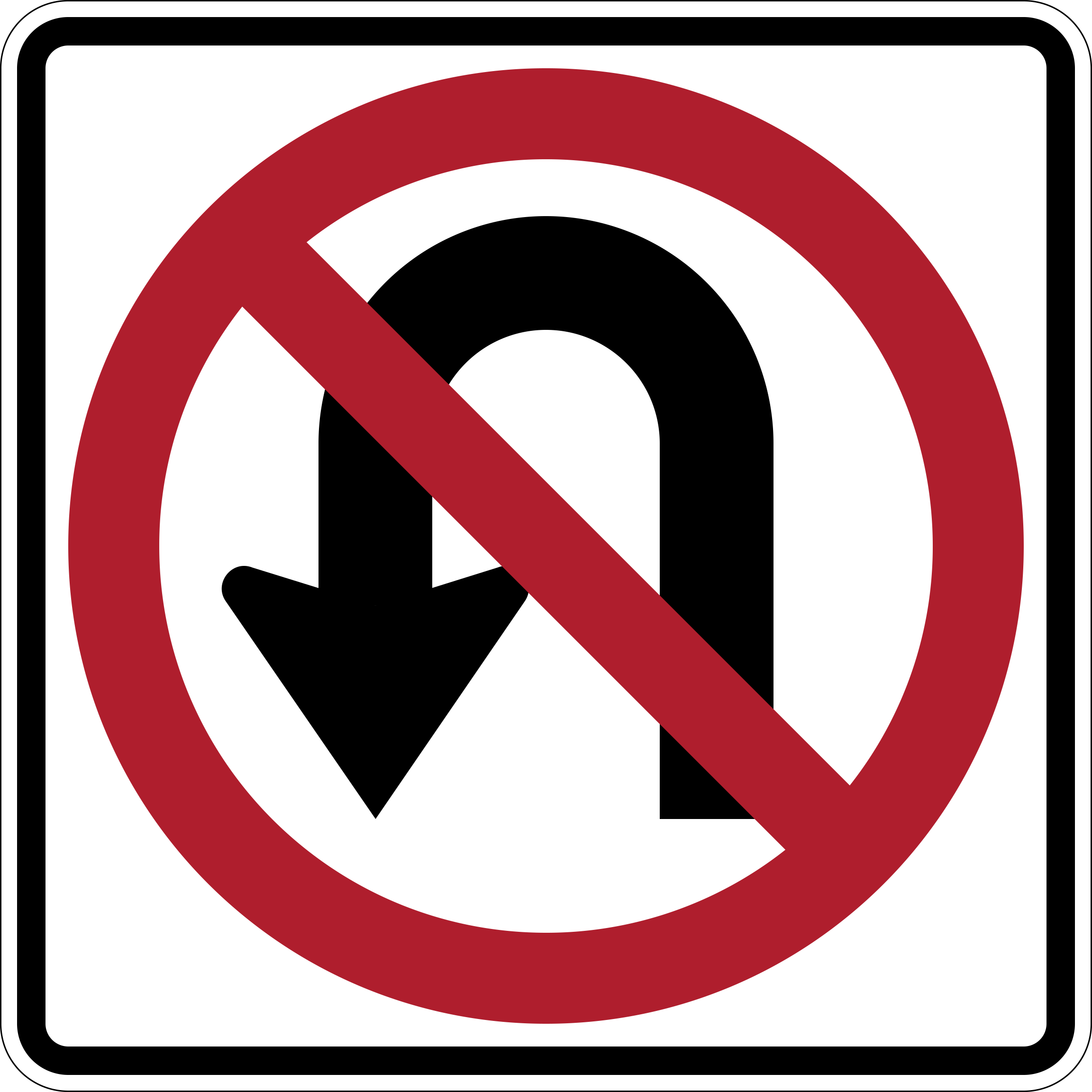
- Prohibit the pictured action, such as a U-turn
- Recommend the pictured action during heavy traffic
- Identify a route number for a state highway
- Mark a service available at the next exit
4. In a heavy rain, at about what speed can your tires lose all traction with the road?
- About 15 mph
- About 25 mph
- About 80 mph
- About 50 mph
5. In a reversible lane, what does a steady yellow X mean?
- The lane is open for normal travel all day
- The lane use is changing, so move out when safe
- The lane is reserved only for buses
- The lane may be used only for parking
6. A driver turning left at an intersection faces an oncoming vehicle going straight. Who yields?
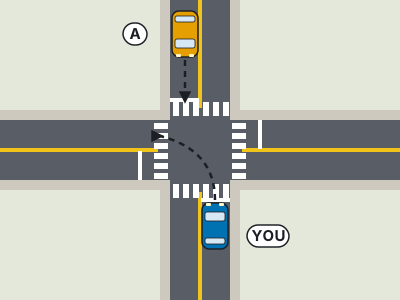
- Neither driver when both have a green light
- The oncoming driver going straight
- The driver who entered the intersection second
- The driver turning left
7. How fast do farm tractors, animal-drawn vehicles, and roadway maintenance vehicles usually travel?
- 25 mph or less
- About 45 mph
- The posted limit in every case
- At least 55 mph
8. How does New Mexico handle a ticket for driving without insurance or without vehicle registration?
- It adds 12 points and an automatic one-year suspension
- It carries no points but requires the driver to appear in court
- It adds points, the same way a speeding ticket does
- It is a warning only and never goes to court
9. After a drink, about how long does alcohol take to reach the brain?
- 1 to 2 minutes
- About 2 hours
- About 6 hours
- 20 to 40 minutes
10. When conditions are rainy, icy, or foggy, how should a driver treat a posted maximum speed?
- Treat it as a target speed that must be maintained
- Increase speed briefly to clear the bad weather
- Reduce speed when the conditions make the posted maximum unsafe
- Ignore the limit only when visibility is reduced
11. How long does a DWI conviction remain on a New Mexico driving record?
- Three years
- Seven years
- Twenty-five years
- Ten years
12. What does a red arrow at a New Mexico traffic signal require a driver to do?
- Continue straight without stopping
- Turn after yielding to oncoming traffic
- Stop and wait without traveling in the arrow's direction
- Treat it as a flashing yellow signal
13. What is the lowest BAC threshold for New Mexico's under-21 alcohol driving rule?
- .02%
- .05%
- .08% only
- .12%
14. What must a driver do before moving from a stop sign into the intersection?
- Wait for crossing vehicles and pedestrians to clear
- Move immediately because the stop sign gives priority
- Yield only to vehicles approaching from the left
- Proceed if the driver has waited two seconds
15. If your headlights suddenly fail at night, what should you try first?
- Try the headlight switch a few times
- Keep driving with only the parking brake ready
- Turn off all vehicle lights immediately
- Brake hard in the travel lane
16. What extra document is required for an instructional permit applicant under 18?
- A work schedule signed by an employer
- A notarized statement from every passenger
- A consent form signed by a parent or guardian
- A court order authorizing night driving
17. What should a driver do during a sudden stop in a vehicle equipped with ABS?
- Use only the parking brake
- Pump the pedal rapidly until the vehicle stops
- Release the pedal whenever it vibrates
- Press the brake pedal hard and keep pressing it
18. What do destination signs show drivers?
- Whether a vehicle has liability insurance
- Only the speed that applies in a work zone
- The exact place where passing becomes illegal
- Directions and distance to places such as cities, airports, or state lines
19. How long should a person with epilepsy be stable and seizure free before being issued a New Mexico driver license?
- 1 month
- 3 months
- 6 months
- 5 years
20. What can happen in New Mexico if a vehicle is driven without the required liability insurance?
- Nothing, if the driver pays for damages later
- Non-issuance or suspension of the registration, surrender of the plates, and possible criminal penalties
- A written warning only
- Two points and no other action
21. What does an HOV lane sign tell drivers?
- The lane may be used by any vehicle at every hour
- The lane is reserved for vehicles with more than one person, with signs giving the required number and times
- The lane is only for vehicles carrying hazardous materials
- The lane marks a place where drivers must stop
22. If a vehicle breaks down on a highway, what should the driver do when it is possible?
- Get the vehicle off the road and away from traffic
- Leave it in the travel lane with the engine off
- Stand behind it and wave at approaching vehicles
- Stop just beyond a hill so it is out of sight
23. A New Mexico provisional licensee needs to drive home from a job at 1:00 AM. What document makes this late drive allowed?
- A copy of a recent pay stub
- A signed statement from a police officer
- A signed statement from the licensee's employer
- No document, because working teens are fully exempt
24. What is the usual shape of the advance warning sign before a railroad crossing?
- A round yellow sign with an X and black RR letters
- An eight-sided red sign
- A blue rectangle with a white hospital symbol
- A green rectangle showing a route number
25. What does a flashing red signal require at an intersection?
- Priority over all cross traffic
- The same response as a green light
- A slow roll without stopping if no vehicle is visible
- A complete stop before proceeding when it is safe
26. What does the Four Second Sight Distance Rule tell a driver to do?
- Speed up whenever an object is visible four seconds away
- Slow down if the vehicle reaches the object before four seconds finish
- Use four seconds only when following a motorcycle
- Count four seconds after crossing a stop line
27. What minimum liability coverage amount is listed for bodily injury to two or more people in one accident?
- $10,000
- $25,000
- $100,000
- $50,000
28. What does a dashed white line between lanes traveling in the same direction allow?
- Changing lanes when it is safe
- Passing into opposing traffic
- Parking beside the line
- Ignoring lane signals above the road
29. What do orange work area signs warn drivers may be present near the roadway?
- Workers or equipment operating on or near the roadway
- A permanent hospital service area
- A guaranteed lane for high occupancy vehicles
- A railroad crossing with no roadway activity
30. What should a driver do when a yellow arrow appears while turning in its direction?
- Continue with the protection of a green arrow
- Prepare to stop and yield to oncoming traffic before turning
- Turn without checking for approaching vehicles
- Treat the arrow as a flashing red signal
31. If pumping failed brakes does not work, how should you use the parking brake?
- Ignore it and keep driving to a repair shop
- Yank it hard to lock the rear wheels
- Use it only after the vehicle has stopped
- Pull the parking brake handle slowly
32. Which tests must a New Mexico provisional license applicant pass in addition to the vision screening?
- No additional test after holding the permit
- Only a motorcycle skills test
- A fuel economy test and a parking meter test
- A written test and a road test
33. A New Mexico instructional permit holder is learning to ride a motorcycle. Where must the licensed supervising driver be?
- Following the learner
- Riding as a passenger on the learner's motorcycle
- Riding ahead of the learner to lead the way
- Waiting at the end of the practice route
34. When standard traffic signal lights are mounted together, where is the green light located?
- Beside the red light
- In the middle
- At the top
- At the bottom
35. How does the New Mexico manual describe the shape and color of a stop sign?
- Round and yellow with black letters
- Eight-sided and red with white letters
- Downward-pointing triangle with red letters
- Square and blue with white letters
36. What validity period and renewal window does the manual give for a New Mexico driver license?
- Eight years only, renewable up to six months early
- Two or four years, renewable only during the final week
- Four or eight years, renewable up to 90 days early or 30 days late
- One year, renewable only after the license expires
37. When may a driver turn right at a steady red light?
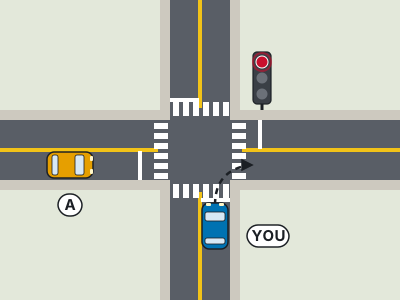
- Only after the signal has been red for one minute
- Whenever the driver slows and sees no car nearby
- After a full stop, if safe and no sign prohibits the turn
- Before stopping if the intended road is empty
38. When entering a traffic circle, whom must you yield to?
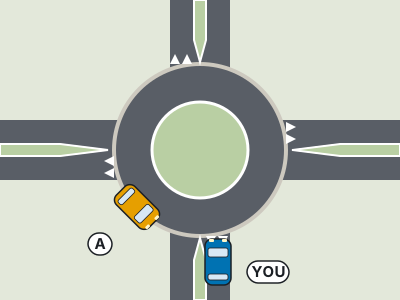
- No one, because entering traffic has priority
- Only drivers waiting outside the circle
- Vehicles behind you approaching the entrance
- Drivers already in the circle
39. What should a driver do if a posted minimum speed is too fast to travel safely?
- Use another road
- Drive below the minimum in the same lane
- Stop in the travel lane
- Increase speed beyond the posted minimum
40. What does a green arrow permit, assuming the driver continues to check for people and other hazards?
- A turn against the arrow
- A U-turn in any lane
- A turn in the arrow's direction
- Movement without yielding to pedestrians
Answer key
- 1. A
- 2. B
- 3. A
- 4. D
- 5. B
- 6. D
- 7. A
- 8. B
- 9. D
- 10. C
- 11. C
- 12. C
- 13. A
- 14. A
- 15. A
- 16. C
- 17. D
- 18. D
- 19. C
- 20. B
- 21. B
- 22. A
- 23. C
- 24. A
- 25. D
- 26. B
- 27. D
- 28. A
- 29. A
- 30. B
- 31. D
- 32. D
- 33. A
- 34. D
- 35. B
- 36. C
- 37. C
- 38. D
- 39. A
- 40. C