
Key points
The maximum in a posted school zone is 15 mph.
Source: Handbook p. 12
“15 mph within a school zone, with a posted speed limit”
New Mexico Driver Manual, Handbook p. 12The maximum in business or residential areas is 30 mph unless posted otherwise.
Source: Handbook p. 12
“30 mph in business or residential areas, unless posted otherwise”
New Mexico Driver Manual, Handbook p. 12The maximum on public highways is 55 mph unless posted otherwise.
Source: Handbook p. 12
“55 mph on public highways, unless posted otherwise”
New Mexico Driver Manual, Handbook p. 12The maximum on rural interstate highways is 75 mph unless posted otherwise.
Source: Handbook p. 12
“75 mph on rural interstate highways, unless, posted otherwise”
New Mexico Driver Manual, Handbook p. 12Never drive slower than a posted minimum; with no minimum posted, do not interfere with the normal flow of traffic.
Source: Handbook p. 12
“No one should drive at a speed less than the minimum posted speed limit. If no minimum is posted, drive so that you do not interfere with regular traffic flow.”
New Mexico Driver Manual, Handbook p. 12If a posted minimum speed is too fast for you, use another road.
Source: Handbook p. 7
“If the minimum posted speed is too fast for you, you should use another road.”
New Mexico Driver Manual, Handbook p. 7Drive the posted maximum only in ideal conditions, and slow down when conditions require it.
Source: Handbook p. 6
“The maximum limit should be driven only in ideal driving conditions and you must reduce your speed when conditions require it.”
New Mexico Driver Manual, Handbook p. 6Adjust your speed for bad conditions, for your type of vehicle, and to avoid crashes.
Source: Handbook p. 13
“Speed should be adjusted for adverse conditions and for the type of vehicle and to avoid accidents.”
New Mexico Driver Manual, Handbook p. 13
Numbers to know
| Number | What it means | Manual |
|---|---|---|
| 15 mph | school zone with a posted limit | Handbook p. 12 |
| 30 mph | business or residential areas unless posted | Handbook p. 12 |
| 55 mph | public highways unless posted | Handbook p. 12 |
| 75 mph | rural interstate highways unless posted | Handbook p. 12 |
Recognize these signs
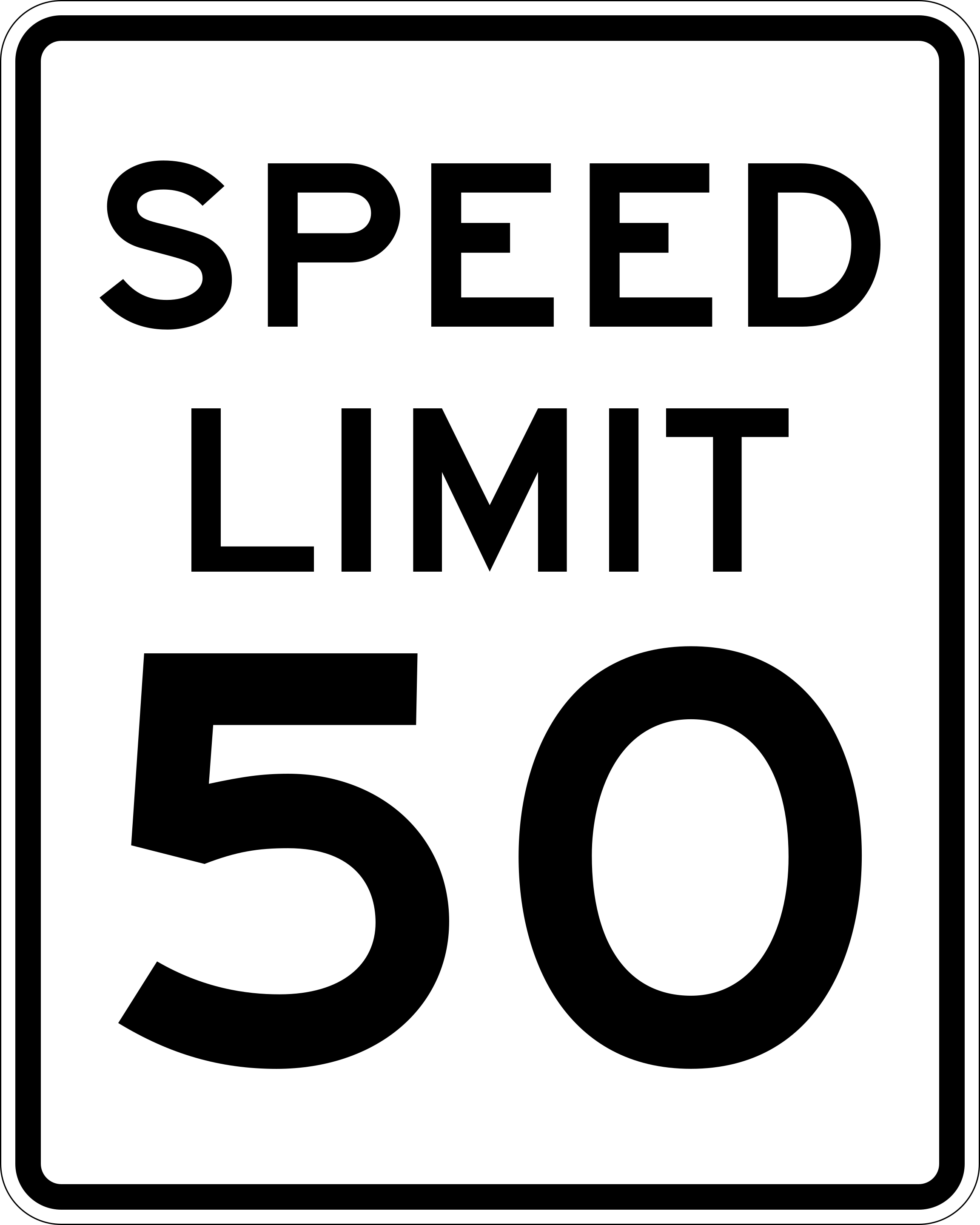
Speed limit 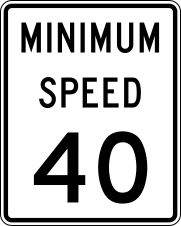
Minimum speed
3 questions from the New Mexico practice test
1. What is the maximum speed listed for a rural interstate highway unless posted otherwise?
- 75 mph
- 60 mph
- 70 mph
- 55 mph
Show answer
75 mph. The manual lists 75 mph as the maximum speed for rural interstate highways unless a different limit is posted. The 55 mph figure applies to public highways, while 60 and 70 mph are not the listed rural interstate maximums in this table. A posted limit still controls, and drivers must adjust for traffic, weather, vehicle type, and safety. Identify the road category before recalling the number because the manual assigns different maxima to school zones, business or residential areas, public highways, and rural interstates.
2. If no minimum speed is posted, how should a driver choose a speed?
- Drive so regular traffic flow is not interrupted
- Drive at the lowest possible speed on every road
- Match the fastest vehicle regardless of conditions
- Stop until another vehicle provides a pace
Show answer
Drive so regular traffic flow is not interrupted. When no minimum speed is posted, the manual directs drivers to travel so they do not interfere with regular traffic flow. That does not mean choosing the fastest vehicle's speed or ignoring weather and road conditions. Driving unnecessarily slowly can cause vehicles to bunch up and pass, while stopping in the lane creates a separate hazard. Choose a pace that is safe for the conditions and compatible with ordinary traffic. Keep right when traveling slower than other vehicles, and allow faster traffic to pass safely.
3. When conditions are rainy, icy, or foggy, how should a driver treat a posted maximum speed?
- Treat it as a target speed that must be maintained
- Increase speed briefly to clear the bad weather
- Reduce speed when the conditions make the posted maximum unsafe
- Ignore the limit only when visibility is reduced
Show answer
Reduce speed when the conditions make the posted maximum unsafe. A posted maximum is based on ideal driving conditions, not a promise that the same speed is safe in every situation. Rain, snow, ice, and fog reduce traction or visibility, so the driver must slow down as conditions require. The attractive but unsafe choice “Treat it as a target speed that must be maintained” turns a ceiling into a required pace. A useful cue is to evaluate the road before relying on the number on the sign: if the surface is slick or the view is limited, choose a lower speed that leaves room to react.
Practice this topic
Lock it in with speed limits questions from the free New Mexico practice test. Every answer comes with a plain English explanation.
Source: the New Mexico Driver Manual, Rules of the Road. This lesson is a plain English summary, not the law itself; where it differs, the manual and the statute govern. Last checked 2026-09-27.