
Test 10 of 10 · 20 questions · Free 2026
MS Permit Practice Test 10
Jump to the test ↓A fixed 20 question set from the Mississippi bank with answers and plain English explanations.
Question 1 of 20 · 0 right so far
All 20 questions in test 10
Every question below comes from the Mississippi question bank on this page. Open a question to see the correct answer and the explanation. Nothing here is hidden behind a signup.
1. At a flashing red light, what must happen before the driver proceeds?
- Stop completely, then proceed cautiously while following intersection yielding rules
- Slow only if another vehicle is approaching
- Continue without stopping when the cross street is empty
- Turn left immediately before the signal changes
Show answer
Stop completely, then proceed cautiously while following intersection yielding rules. A flashing red signal requires a complete stop, followed by cautious movement under the ordinary right-of-way rules for an intersection. Merely slowing does not satisfy the signal, and an empty-looking cross street is not permission to roll through without stopping. The rule does not grant a special left-turn privilege. Use the same deliberate sequence as a stop-controlled intersection: stop fully, look for traffic and pedestrians, yield where required, and proceed only when the way is safe.
Study this in the handbook: Traffic Signals and Arrows
2. What jail term does Mississippi list for a second DUI offense within five years?
- Up to 48 hours
- Not less than 1 year nor more than 5 years
- No jail, only a fine
- Not less than 5 days nor more than 6 months
Show answer
Not less than 5 days nor more than 6 months. A second DUI within five years is still a misdemeanor, but the jail range rises to not less than 5 days and not more than 6 months, with a $600 to $1,500 fine and a one year suspension. Up to 48 hours is the first offense. One to five years in state custody belongs to a third or later offense, which is a felony. Jail is part of the penalty, not just a fine.
Study this in the handbook: DUI and Implied Consent
3. What does Mississippi require of the windshield regarding stickers?
- Stickers are allowed anywhere below the mirror
- It must be free of any signs or unofficial stickers
- Only the passenger side may carry stickers
- Any sticker under 6 inches is allowed
Show answer
It must be free of any signs or unofficial stickers. Your windshield must be free of any signs or unofficial stickers. The manual adds that vehicles registered in Mississippi may not have signs, posters, stickers, or glassy material that causes a mirrored effect on the windows, and it advises against hanging decorative items from the rearview mirror. Placement below the mirror, on the passenger side, or a size limit does not create an exception. The window tint compliance decal is an official item that the manual places in the lower left corner of the windshield.
Study this in the handbook: Night Driving, Rain and Skids
4. At a two-way stop, which traffic has the right-of-way?
- Cross traffic without stop signs
- The vehicle that reaches the stop sign last
- A vehicle turning across the traffic lane
- Only vehicles signaling a left turn
Show answer
Cross traffic without stop signs. At a two-way stop, cross traffic without stop signs has the right-of-way. Vehicles facing stop signs must wait until the way is clear before proceeding. The choice “A vehicle turning across the traffic lane” describes a vehicle that must yield when turning across the traffic lane, while arriving last does not create priority. A turn signal also does not override the stop-control rule. Identify which approaches actually have stop signs, then let the uncontrolled cross traffic pass before moving through the intersection.
Study this in the handbook: Right of Way at Intersections
5. A pentagon-shaped sign is used for which Mississippi roadway warning?
- A railroad crossing ahead
- A school crossing or school zone warning
- A no-passing zone ahead
- A general guide sign for services
Show answer
A school crossing or school zone warning. The pentagon identifies school crossing signs and warnings of school zones ahead. A round sign warns of a railroad crossing, a pennant warns of a no-passing zone, and a horizontal rectangle generally serves as a guide sign. When a pentagon appears, expect children or school activity and scan carefully for people near the roadway. Shape is the key cue here, not the color or a guess based on the nearest destination. Slow early enough to respond to a child who enters unexpectedly.
Study this in the handbook: Sign Shapes and Colors
6. If you are already in an intersection when an emergency vehicle approaches, what does the manual direct you to do?
- Stop in the intersection and wait for the emergency vehicle to steer around you
- Proceed through the intersection, then pull to the extreme right shoulder
- Turn left immediately into the nearest driveway
- Continue at the same speed until the emergency vehicle changes lanes
Show answer
Proceed through the intersection, then pull to the extreme right shoulder. The manual gives a specific intersection instruction: continue through the intersection, then pull over to the extreme right shoulder. Stopping in the intersection can block the emergency vehicle and other traffic. A sudden driveway turn creates a new conflict, while maintaining speed does not yield the needed path. If possible, make the move calmly and remain stopped until the emergency vehicle has passed. The key sequence is clear the intersection first, then move right and wait.
Study this in the handbook: Emergency Vehicles
7. What courtesy does Mississippi recommend when a funeral procession is traveling along the road?
- Pass the procession on the shoulder whenever possible
- Cut between the vehicles to reach the next turn sooner
- Yield the right-of-way to the procession
- Force the lead vehicle to stop before proceeding
Show answer
Yield the right-of-way to the procession. Mississippi describes yielding to a funeral procession as common courtesy, even though the manual says it is not required by law. That means a driver should be patient and avoid interrupting the line. Cutting between vehicles or using the shoulder creates unpredictable conflicts for the procession and other road users. Forcing the lead vehicle to stop is the opposite of courtesy. Slow down, maintain a safe gap, and wait for a clear opportunity to continue without splitting the group.
Study this in the handbook: School Buses and Pedestrians
8. When ridden on Mississippi public roads, how are bicycles classified for traffic purposes?
- As recreational equipment with no right to use travel lanes
- As pedestrians who must stay on sidewalks
- As vehicles whose riders have the same rights and responsibilities as motor-vehicle drivers
- As emergency vehicles that always receive priority
Show answer
As vehicles whose riders have the same rights and responsibilities as motor-vehicle drivers. The manual gives a bicycle vehicle status when it is ridden on a public road. That means the cyclist must follow applicable traffic rules and receives the corresponding roadway rights. Calling the rider a pedestrian would change the legal treatment and is why the choice “As pedestrians who must stay on sidewalks” is incorrect. A cyclist still must act predictably, signal turns, and share space safely, so vehicle status does not create unlimited priority over other road users.
Study this in the handbook: Bicycles and Large Vehicles
9. What following-distance guideline does the Mississippi manual give for a vehicle traveling 40 miles per hour?
- At least two car lengths
- At least three car lengths
- At least six car lengths
- At least four car lengths
Show answer
At least four car lengths. The following guideline assigns at least one car length for every ten miles per hour. At forty miles per hour, that produces at least four car lengths. Two or three lengths leave less room than the stated relationship, while six is not the figure shown for that speed. The purpose is to create time and space when the vehicle ahead changes speed suddenly and to improve the view around it. Increase the gap further behind a large truck or bus, where visibility is reduced.
Study this in the handbook: Following Distance and Stopping
10. What maximum speed applies to any vehicle in a Mississippi school zone according to the manual?
- 35 mph
- 25 mph
- 15 mph
- 45 mph
Show answer
15 mph. The manual gives one school-zone maximum for any vehicle: fifteen miles per hour. The word any matters because the limit is not raised for a passenger car, a larger vehicle, or a time when the road seems quiet. Forty-five miles per hour is the separate school-bus maximum. Reduce speed promptly when the school-zone setting calls for it, and watch carefully for children.
Study this in the handbook: Mississippi Speed Limits
11. What is the minimum age to apply for a Regular Learner's Permit in Mississippi?
- 17 years old
- 14 years old
- 16 years old
- 15 years old
Show answer
15 years old. The Regular Learner's Permit begins at age fifteen, so a fourteen-year-old is not yet eligible for this permit. Fourteen is associated with the Temporary Learner's Permit for a high school student enrolled in an approved driver education course. The permit choice therefore depends on both age and permit type. After receiving the regular permit, the applicant must observe the supervision and holding-period requirements before advancing.
Study this in the handbook: Learner's Permits and the Regular License
12. A 5 year old in Mississippi is 4 feet 2 inches tall and weighs 50 pounds. What does state law require?
- A belt-positioning booster seat
- A lap belt only
- No restraint in the back seat
- Holding the child on an adult's lap
Show answer
A belt-positioning booster seat. Children at least 4 but under 7 who are shorter than 4 feet 9 inches or weigh less than 65 pounds must ride in a belt-positioning booster seat that meets safety standards. This child is under both limits. A lap belt alone is allowed only for extra booster-age children when the rear seat has just two lap and shoulder belts. Riding unrestrained is never allowed, and an adult's lap is not a restraint of any kind. The manual also recommends that children always ride in the back seat.
Study this in the handbook: Seat Belts, Child Seats and Distractions
13. After a Mississippi crash, which information must involved drivers exchange?
- Name, address, license plate number, and insurance information
- Only a first name and the vehicle's paint color
- The other driver's medical history and employment record
- A promise to repair the vehicle without documenting identities
Show answer
Name, address, license plate number, and insurance information. Drivers involved in a reportable crash should exchange identifying and insurance details: name, address, license plate number, and insurance information. A first name cannot reliably identify a driver, and private medical or employment records are not the requested exchange. A repair promise also leaves both parties without proof of who was involved or what coverage exists. Record the information calmly, and obtain the same details for your own protection.
Study this in the handbook: Accidents, Breakdowns and Insurance
14. A child is three years old. What restraint does Mississippi law require?
- An adult lap belt without any child restraint
- A belt-positioning booster seat only if the child weighs 65 pounds
- A properly secured child passenger restraint device meeting safety standards
- No restraint when the child rides in the rear seat
Show answer
A properly secured child passenger restraint device meeting safety standards. Children under four years old must be secured in a child passenger restraint device, commonly called a car seat, that meets applicable safety standards. A booster seat is addressed for an older age group with height or weight conditions, so that option does not describe a three-year-old's baseline requirement. Rear-seat placement does not remove the restraint duty. Choose a correctly installed device appropriate for the child's size and follow its instructions.
Study this in the handbook: Seat Belts, Child Seats and Distractions
15. If a traffic officer gives a direction that conflicts with a signal, what must the driver do?
- Proceed only after turning on hazard flashers
- Obey the signal and disregard the officer
- Wait for another driver to decide which instruction applies
- Follow the officer's direction
Show answer
Follow the officer's direction. When an officer is directing traffic, drivers must follow that person's directions even if a nearby sign or signal appears to say something else. The officer is managing the immediate traffic pattern, often because ordinary control devices do not fit the situation. Ignoring the direction can place vehicles into a path the officer is trying to clear. Slow down, watch the officer's gestures, and proceed only as directed.
Study this in the handbook: Traffic Signals and Arrows
16. What does a DO NOT ENTER sign prohibit?
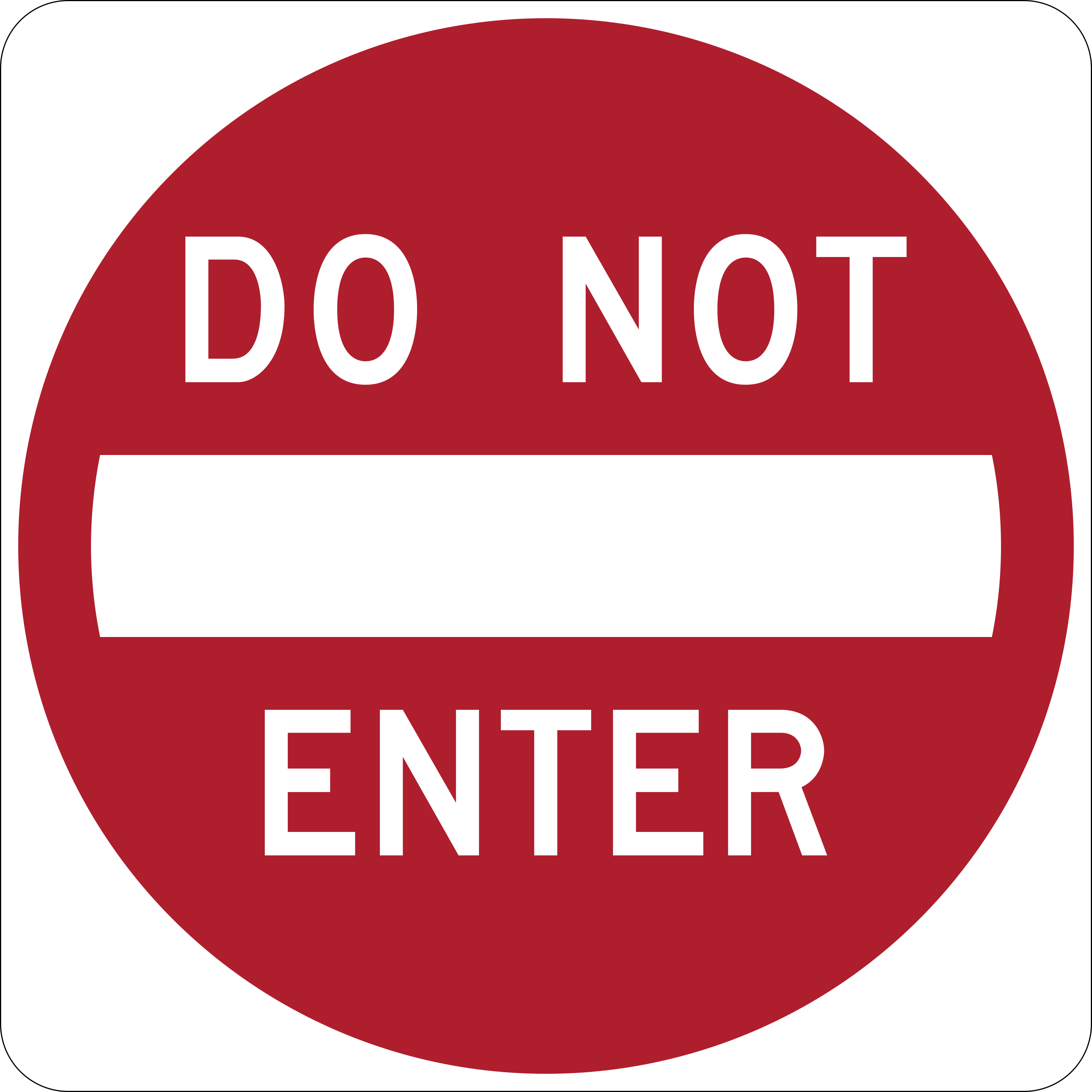
- Turning left at the next intersection only
- Entering that lane of travel
- Passing the vehicle immediately ahead
- Parking beside the sign during daylight
Show answer
Entering that lane of travel. Whether the sign carries words or only the white bar across the red circle, it means you may not enter that lane of travel. The sign does not target one turning movement, a passing maneuver, or a time-limited parking restriction. Treat the display as a direction warning that your intended path is closed to entry, often because traffic is moving toward you or the lane is an exit. Stop before entering the prohibited path, check for a safe legal route, and never use the sign as permission to continue cautiously.
Study this in the handbook: Regulatory and Warning Signs
17. What does a NO LEFT TURN sign prohibit?
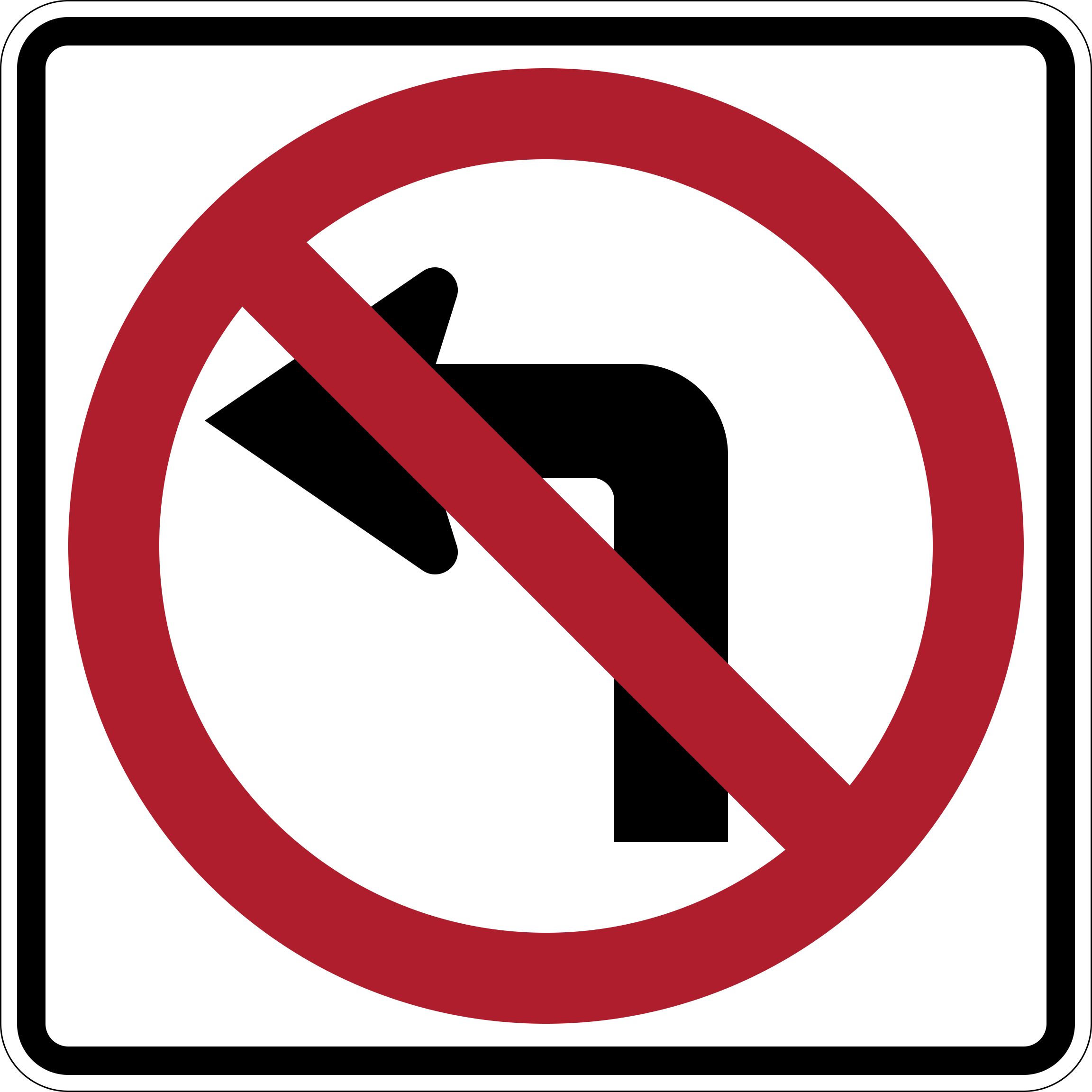
- Left turns at that intersection
- Every U-turn on the entire roadway
- Driving straight through the intersection
- Right turns after a complete stop
Show answer
Left turns at that intersection. This regulatory sign specifically says that left turns are not allowed at the intersection. It does not automatically prohibit every U-turn along the roadway, block straight travel, or ban right turns after a stop. Focus on the arrow shown by the red slash and the location named by the manual. A driver approaching the intersection should select a legal alternative, such as continuing straight and finding another permitted route, rather than trying to reinterpret the symbol as a general no-entry message. The pictured movement provides the quickest recognition cue.
Study this in the handbook: Regulatory and Warning Signs
18. What information do destination, direction, and distance markers provide?
- The weight limit for trucks
- The location of the nearest repair shop only
- A prohibition on turning
- The distance to towns and cities
Show answer
The distance to towns and cities. Destination, direction, and distance markers tell drivers how far away towns and cities are. They are guide signs that support route planning, not regulatory signs that prohibit a maneuver or specify a truck's weight limit. The repair-shop choice is too limited because the signs identify destinations generally. Read the place names and mileage before choosing a lane or exit, and allow enough time to prepare for the route rather than making a sudden move after passing the marker.
19. What cellphone activity does the Mississippi manual say is not allowed while driving?
- Keeping both hands on the wheel during a call
- Using a hands-free device for an urgent call
- Texting on a cellphone while driving
- Pulling over before making a necessary call
Show answer
Texting on a cellphone while driving. The manual specifically prohibits texting on a cellphone while driving. It recommends a hands-free device if a phone call is necessary and says the driver's hands should remain on the wheel, so those options describe safer conduct rather than the prohibited activity. Pulling over before calling also removes the driving distraction. The key cue is the task being performed while the vehicle is moving: composing or sending text messages is not allowed. Avoiding the activity protects attention from shifting between the road and the phone, especially when traffic conditions change suddenly.
Study this in the handbook: Night Driving, Rain and Skids
20. Which occupants must wear a properly fastened safety seat belt under Mississippi law?
- Only the driver and front passenger
- Drivers and all passengers, whether seated in front or back
- Only passengers under age 18
- Only occupants traveling on an interstate
Show answer
Drivers and all passengers, whether seated in front or back. The state rule covers the driver and every passenger in a motor vehicle, and it applies in both seating rows. The front-seat-only option omits rear occupants, while an age-based requirement invents a limitation that the manual does not give. The interstate choice also narrows a rule that applies wherever the vehicle is being operated. Before moving, make a quick cabin check: driver, front passenger, and back-seat riders should all be buckled. The requirement is about proper fastening, not merely having a belt available beside the seat.
Study this in the handbook: Seat Belts, Child Seats and Distractions
QualitySpace is expanding to Mississippi
We are a California-based independent insurance brokerage working on licensing in more states. We cannot help with Mississippi insurance yet. Leave your email and we will let you know when we can.
Every question is written from the official Mississippi Driver's Manual. Need paper? Printable MS practice test with answer key.
Last verified 2026-10-05. How we check every question · Study all 210 as flashcards
Frequently asked questions
How many questions are on this Mississippi practice test?
This fixed set has 20 questions. It is test 10 of 10 from the 210 question Mississippi bank.
How does this fixed test relate to the full Mississippi bank?
Each numbered test is a fixed set of questions in a fixed order, so you can retake the same test later and compare. Every test mixes road signs and the other topics in about the same proportion as the full bank. Tests 1 to 10 together cover 200 of the 210 questions in the Mississippi bank, each once. The full practice page mixes the whole bank at random.
Last verified 2026-10-05. See the Mississippi DMV facts page for sourced state details.
Return to the full Mississippi practice test · Study road signs