
Key points
Pedestrians in crosswalks, marked or not, always have the right of way, and so do vehicles already in the intersection.
Source: Handbook p. 44
“In crosswalks, PEDESTRIANS ALWAYS HAVE RIGHT-OF-WAY, whether the crosswalk is marked or not. Vehicles already inside an intersection also have right-of-way.”
Mississippi Driver's Manual, Handbook p. 44Yield to bicycles exactly as you would to any other vehicle.
Source: Handbook p. 44
“You must yield to BICYCLES exactly as you would to any other vehicle.”
Mississippi Driver's Manual, Handbook p. 44After stopping at a stop sign or signal, yield to any vehicle or pedestrian in the intersection.
Source: Handbook p. 45
“You MUST YIELD THE RIGHT-OF-WAY TO ANY VEHICLE OR PEDESTRIAN IN THE INTERSECTION.”
Mississippi Driver's Manual, Handbook p. 45At a four way stop the first to arrive goes first; if you arrive together, the vehicle on the right goes first.
Source: Handbook p. 45
“The first vehicle to arrive has rightof-way. If multiple vehicles arrive at the same time, the vehicle on the right has right-of-way.”
Mississippi Driver's Manual, Handbook p. 45At a two way stop, cross traffic without stop signs has the right of way.
Source: Handbook p. 45
“At a two-way stop, the cross-traffic with no stop signs has the right-of-way.”
Mississippi Driver's Manual, Handbook p. 45At a two way stop, if two stopped vehicles arrive together, the one going straight goes first.
Source: Handbook p. 45
“If two vehicles arrive at the same time, the vehicle intending to travel straight across has right-of-way”
Mississippi Driver's Manual, Handbook p. 45Entering from a driveway, stop and yield to oncoming traffic even with no stop sign.
Source: Handbook p. 45
“you must stop and yield to oncoming traffic, even if no stop sign is present.”
Mississippi Driver's Manual, Handbook p. 45At a roundabout, yield to traffic already inside the circle.
Source: Handbook p. 45
“At a roundabout or traffic circle, YIELD to oncoming traffic already inside the circle.”
Mississippi Driver's Manual, Handbook p. 45
Recognize these signs

Stop 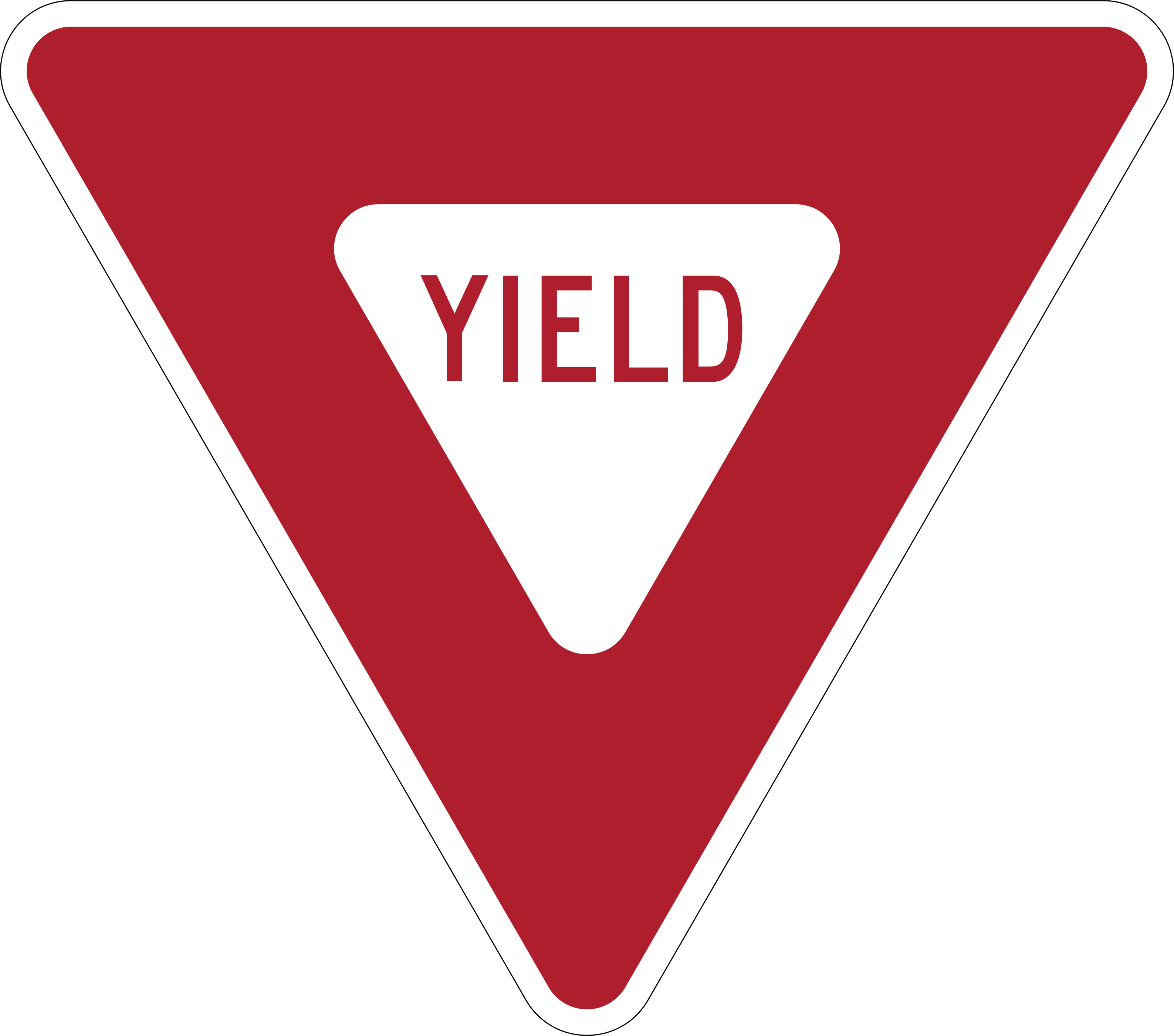
Yield 
Roundabout
3 questions from the Mississippi practice test
1. At a four-way stop, what happens when multiple vehicles arrive at the same time?
- The vehicle on the left has the right-of-way
- The vehicle on the right has the right-of-way
- The largest vehicle goes first
- The driver who stopped most loudly goes first
Show answer
The vehicle on the right has the right-of-way. At a four-way stop, arrival order normally determines priority. When multiple vehicles reach the stop at the same time, the vehicle on the right has the right-of-way. Vehicle size and noise have no role in the manual's rule. Do not slam on the brakes to claim first arrival; approach under control, identify the vehicle to your right, and yield when that rule assigns it priority.
2. At a two-way stop, two vehicles arrive together after cross traffic has cleared. Who has priority?
- The vehicle intending to travel straight across
- The vehicle intending to turn across the traffic lane
- The vehicle closest to the stop sign, regardless of direction
- Neither vehicle until a police officer arrives
Show answer
The vehicle intending to travel straight across. When two vehicles arrive at a two-way stop together, the one intending to travel straight across has the right-of-way. A vehicle turning across the traffic lane must wait and yield. The rule applies after the stop and once cross traffic has cleared; it does not erase the duty to check the intersection. The turning driver should remain stopped until the straight-moving vehicle has passed safely.
3. When entering a public road from a driveway or other entrance without a stop sign, what must the driver do?
- Accelerate into the roadway because entering traffic has priority
- Stop and yield to oncoming traffic before proceeding when safe
- Yield only to vehicles approaching from the left
- Proceed without stopping whenever the entrance is private
Show answer
Stop and yield to oncoming traffic before proceeding when safe. A driveway or other entrance does not grant a vehicle priority over traffic already using the street or highway. The entering driver must stop and yield, even when no stop sign has been installed. The choice “Accelerate into the roadway because entering traffic has priority” reverses the relationship between entering and established traffic. Look in both directions, wait for a safe opening, and remember that a private entrance changes neither the duty to yield nor the need for caution.
Practice this topic
Lock it in with right of way questions from the free Mississippi practice test. Every answer comes with a plain English explanation.
Source: the Mississippi Driver's Manual, Intersections and Right-of-Way. This lesson is a plain English summary, not the law itself; where it differs, the manual and the statute govern. Last checked 2026-09-27.