
Key points
Green means directional guidance and permitted movement; yellow is a general warning.
Source: Handbook p. 18
“GREEN: Directional guidance and permitted movement. HORIZONTAL RECTANGLE: Usually for guide signs. YELLOW: General warning.”
Mississippi Driver's Manual, Handbook p. 18Red means stop or prohibition, and the octagon is used only for stop signs.
Source: Handbook p. 18
“RED: Stop or prohibition. If you see red on a traffic device, STOP. OCTAGON: Exclusively for STOP signs.”
Mississippi Driver's Manual, Handbook p. 18The equilateral triangle is used only for yield signs.
Source: Handbook p. 18
“EQUILATERAL TRIANGLE: Exclusively for YIELD signs.”
Mississippi Driver's Manual, Handbook p. 18A diamond warns only of existing or possible hazards.
Source: Handbook p. 18
“DIAMOND: Exclusively to warn of existing or possible hazard on or adjacent to roadway.”
Mississippi Driver's Manual, Handbook p. 18A pentagon marks school crossings and school zones ahead.
Source: Handbook p. 18
“PENTAGON: School crossing signs and warning of school zones ahead.”
Mississippi Driver's Manual, Handbook p. 18A round sign warns of a railroad crossing ahead.
Source: Handbook p. 18
“ROUND: Warning of railroad crossing ahead.”
Mississippi Driver's Manual, Handbook p. 18A pennant warns of a no passing zone ahead; blue means motorist services.
Source: Handbook p. 18
“PENNANT: Warning of NO PASSING ZONE ahead. BLUE: Motorist services guidance.”
Mississippi Driver's Manual, Handbook p. 18A vertical rectangle is usually a regulatory sign such as a speed limit.
Source: Handbook p. 18
“VERTICAL RECTANGLE: Usually used for regulatory signs (such as speed limits).”
Mississippi Driver's Manual, Handbook p. 18
Numbers to know
| Number | What it means | Manual |
|---|---|---|
| 8 | standard sign shapes and colors (eight) | Handbook p. 18 |
Recognize these signs
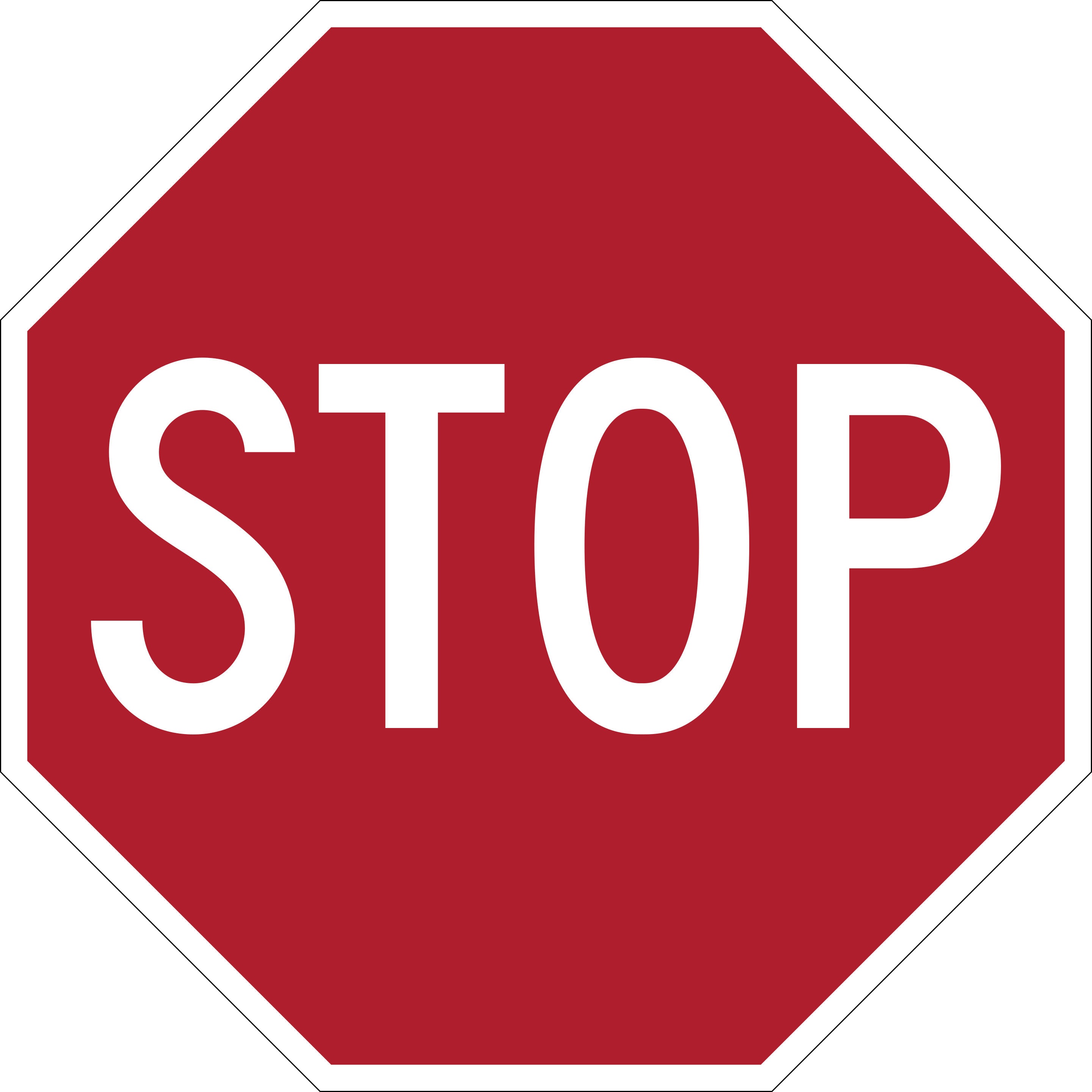
Stop 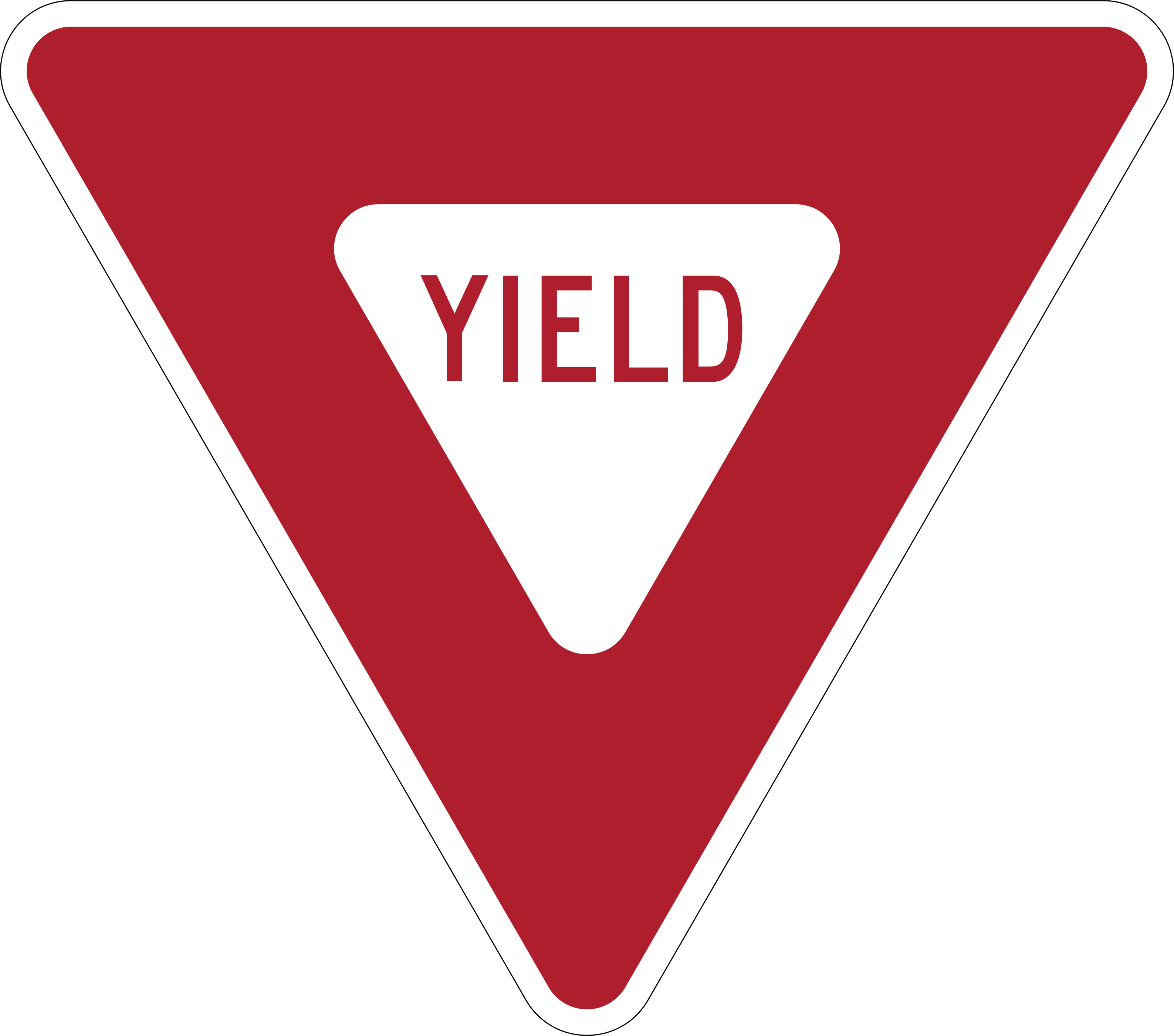
Yield 
School 
Railroad crossing ahead 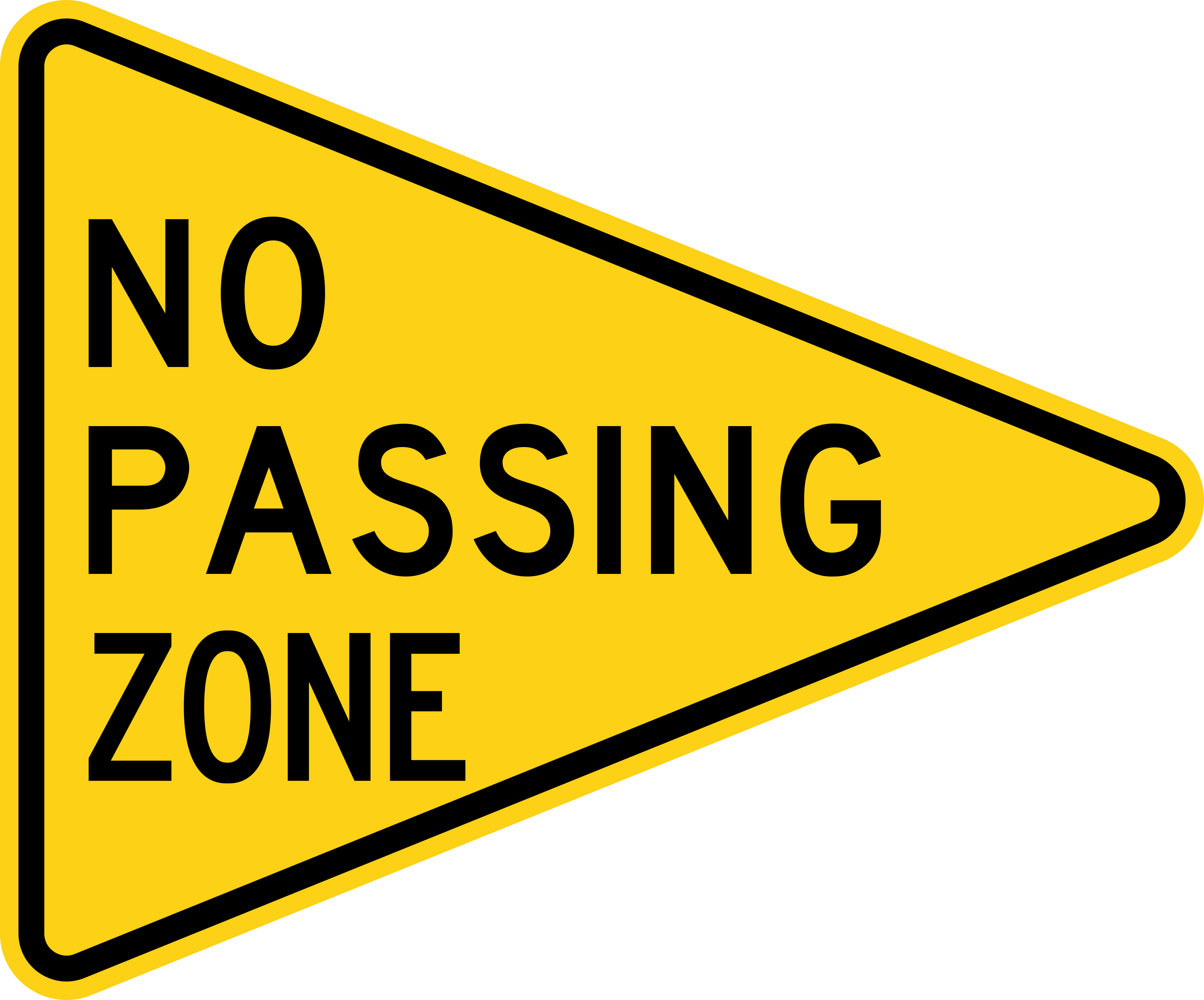
No passing zone
3 questions from the Mississippi practice test
1. What does red on a Mississippi traffic device generally indicate?
- Directional guidance and permitted movement
- Motorist services guidance
- Construction or maintenance warning
- Stop or prohibition
Show answer
Stop or prohibition. Red is used for stopping or prohibition on Mississippi traffic devices. That signal can require a driver to stop or warn that a movement is forbidden, depending on the device and its message. Blue points toward motorist services, orange identifies construction or maintenance warnings, and green provides directional guidance or indicates permitted movement. Treat red as an immediate instruction to look for the associated control and obey it before proceeding. The useful cue is the color itself, but read the symbol or words too, since the exact command comes from the complete traffic device.
2. Which traffic sign shape is used exclusively for stop signs?
- Pentagon
- Octagon
- Circle
- Pennant
Show answer
Octagon. The octagon is reserved exclusively for stop signs, so its shape remains useful when distance, glare, or weather makes the wording hard to read. A pentagon identifies school crossings or school zones, a circle warns of a railroad crossing, and a pennant marks a no-passing zone. Seeing an octagon should trigger preparation for a complete stop before entering the intersection. After stopping, check for traffic and pedestrians before proceeding. Shape recognition provides an early cue, but it does not replace the required stop.
3. Which sign shape is reserved exclusively for a yield sign?
- An equilateral triangle
- A five-sided pentagon
- A circular sign
- A pennant
Show answer
An equilateral triangle. The yield sign has a unique shape: an equilateral triangle. Its outline helps drivers recognize the need to give other roadway users the right of way before reading the message. A pentagon is associated with school crossings and school zones, while a round sign warns of a railroad crossing ahead. A pennant warns of a no passing zone. Use the triangle as a quick recognition cue, then reduce speed and prepare to yield to traffic or pedestrians.
Practice this topic
Lock it in with road signs questions from the free Mississippi practice test. Every answer comes with a plain English explanation.
Source: the Mississippi Driver's Manual, Traffic Signs and Signals. This lesson is a plain English summary, not the law itself; where it differs, the manual and the statute govern. Last checked 2026-09-27.