
Test 1 of 10 · 20 questions · Free 2026
VT Permit Practice Test 1
Jump to the test ↓A fixed 20 question set from the Vermont bank with answers and plain English explanations. The real VT exam is 20 questions, 80 percent to pass; take the full length version on the main practice page.
Question 1 of 20 · 0 right so far
All 20 questions in test 1
Every question below comes from the Vermont question bank on this page. Open a question to see the correct answer and the explanation. Nothing here is hidden behind a signup.
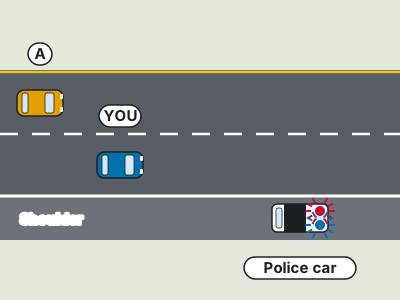
1. What must you do when approaching a stopped police or emergency vehicle with flashing lights if you cannot change lanes safely?
- Stop in the travel lane until the lights are turned off
- Maintain the posted speed because a lane change is impossible
- Slow down to 20 mph below the speed limit to go by
- Accelerate past before another vehicle reaches the scene
Show answer
Slow down to 20 mph below the speed limit to go by. When you approach a law enforcement, emergency, or repair vehicle with a flashing light on the side of the road, Vermont law says to proceed with caution and change lanes away from it as soon as it is safe. If you are unable to change lanes, the manual says you must slow down to 20 mph below the speed limit in order to go by the stopped vehicles. Holding the posted speed or accelerating ignores that rule, and stopping in the travel lane is not what the law requires and can create a rear end risk for traffic behind you.
Study this in the handbook: Emergency vehicles, Move Over and police stops
2. How might a deer react to a vehicle's headlights, according to the Vermont manual?
- It always runs away from the road
- It may freeze in the light, or bound toward its habitat at up to 40 miles per hour
- It lies down until the vehicle passes
- It is unaffected by headlights
Show answer
It may freeze in the light, or bound toward its habitat at up to 40 miles per hour. The light from vehicle headlights may cause a deer to temporarily freeze and be unable to get out of the way, or it may bound at speeds up to 40 miles per hour toward its habitat. That means a deer on the opposite side of the road from its habitat may turn and bolt in front of a vehicle. Animals travel in pairs, so expect a second one after you see the first, and use extra caution in late evening, at night and in early morning.
Study this in the handbook: Bicyclists, motorcycles, trucks and animals
3. How should a driver approach a stopped snowplow with flashing lights?
- Sound the horn and maintain speed
- Follow closely so other traffic cannot pass
- Proceed with caution and yield the right of way
- Move into oncoming traffic to get around it
Show answer
Proceed with caution and yield the right of way. A snowplow with flashing lights is a state, city, or town maintenance vehicle working on the highway. Vermont tells approaching drivers to proceed cautiously and yield the right of way. Following closely can put you in the plow’s work area, while a horn does not replace the duty to slow and yield. Entering oncoming traffic creates a separate hazard. The visual cue is the maintenance vehicle at work with lights flashing, which calls for patience, space, and a controlled approach.
Study this in the handbook: Traffic lights, arrows and roundabouts
4. When a vehicle of model year 2011 or newer is sold in Vermont, who must sign the odometer statement?
- The seller only
- The buyer only
- Both the seller and the buyer
- A DMV clerk
Show answer
Both the seller and the buyer. Federal law states that the numbers on an odometer must not be altered and that an odometer statement must be signed by the seller and the purchaser when the vehicle is sold. Vermont requires the statement on all sales of vehicles model year 2011 or newer. The statement protects buyers from rolled back mileage. The odometer itself must work properly and be visible to the driver.
5. What does a solid green arrow mean for left-turning traffic in Vermont?
- Left turns must yield to oncoming traffic with a green light
- Left turns have the right of way while oncoming traffic has a red light
- The signal is treated as a flashing yellow arrow
- Drivers must stop before entering the intersection
Show answer
Left turns have the right of way while oncoming traffic has a red light. A solid green arrow gives left turns the right of way, while oncoming traffic faces a red light. That differs from a flashing yellow arrow, which allows a left turn only after yielding and finding a safe gap. A stop is not required by the solid green arrow itself, although the driver must still operate safely. Look at the arrow rather than assuming every green display has the same meaning, especially when opposing traffic is present.
Study this in the handbook: Traffic lights, arrows and roundabouts
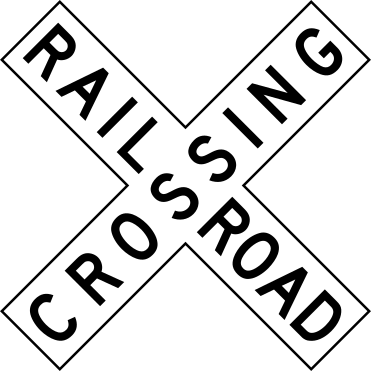
6. What should a driver do at a crossbuck sign before crossing the railroad tracks?
- Speed up so the vehicle clears the tracks quickly
- Stop only when a second vehicle is waiting
- Slow down, look both ways, and listen for trains
- Pass another vehicle while crossing if the lane is open
Show answer
Slow down, look both ways, and listen for trains. A crossbuck marks the railroad tracks, so drivers should slow down, look both ways, and listen before crossing. Speeding reduces the time available to detect a train, and waiting for another vehicle is not a substitute for the driver's own search. Passing at a railroad crossing is unlawful, even when the lane appears open. Check for gates, flashing lights, and multiple tracks as well. A train hidden by another train remains a serious possibility.
Study this in the handbook: Road signs
7. What shape and colors are Vermont warning signs usually?
- Triangular and orange or purple
- Circular and blue or white
- Rectangular and red or black
- Diamond-shaped and yellow or green
Show answer
Diamond-shaped and yellow or green. Vermont warning signs are usually diamond-shaped and yellow or green. Their appearance helps a driver recognize a warning even when the wording is difficult to read. The other combinations describe shapes and colors that are not the manual’s usual warning-sign pattern. Do not treat the color and shape as permission to stop, pass, or turn by themselves. Use them as an early recognition cue, then read the message or symbol and slow down for the hazard ahead. This visual habit is especially useful when weather, dirt, or distance makes the lettering hard to see.
Study this in the handbook: Road signs
8. What happens to fines for speeding in a Vermont work zone?
- They are doubled
- They are waived if workers are not visible
- They are reduced by half
- They are unchanged from ordinary speeding fines
Show answer
They are doubled. Vermont doubles fines for speeding in a work zone. The rule is tied to the designated work-zone setting, not to whether a driver can see workers at the exact moment of the violation. A waiver, reduction, or unchanged penalty would understate the consequence printed in the manual. The study cue is to slow to the posted work-zone speed, adjust for weather, follow the signs, and remember that work-zone rules apply around the clock.
Study this in the handbook: Speed limits and safe speeds
9. On a four-lane highway, what is required when a stopped emergency vehicle displays flashing lights?
- Change lanes if possible and safe, while proceeding with caution
- Keep the same lane and maintain normal speed
- Stop in the travel lane regardless of surrounding traffic
- Pass the vehicle on the shoulder without slowing
Show answer
Change lanes if possible and safe, while proceeding with caution. For a stopped police or emergency vehicle with flashing lights, drivers must proceed with caution and slow down. On a four-lane highway, the manual adds a lane change when it can be completed safely. Normal speed leaves workers and responders exposed, and stopping in the travel lane can create a rear-end hazard. The shoulder is not a permission to pass quickly. Check traffic, move away when safe, and reduce speed if a lane change cannot be made.
Study this in the handbook: Traffic lights, arrows and roundabouts
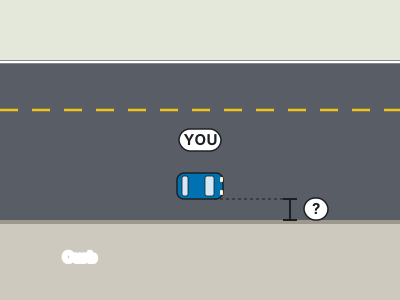
10. If a vehicle is parked on a two-lane Vermont road, how close must its right wheels be to the road edge or curb?
- Within 6 inches
- Within 36 inches
- Within 24 inches
- Within 12 inches
Show answer
Within 12 inches. On a two-lane road, Vermont requires the right wheels of a parked vehicle to be within 12 inches of the right side of the road or curb. The one-foot distance keeps the vehicle out of the travel path while avoiding an unnecessary claim that it must touch the curb. The one-way-road rule also uses 12 inches, but references the side of that road. The cue is one foot from the edge and facing the traffic flow.
Study this in the handbook: Parking rules
11. Before driving, which preparation is listed in Vermont's driver-readiness checks?
- Adjust the mirrors and fasten the safety belt
- Open the doors briefly to test the locks
- Leave the headlights off until entering traffic
- Release the parking brake before adjusting the seat
Show answer
Adjust the mirrors and fasten the safety belt. The readiness routine includes adjusting the seat and mirrors, testing both brakes, adjusting and fastening the safety belt, locking the doors, and turning on the headlights. The mirror-and-belt choice names two actual checks, while leaving headlights off conflicts with the listed preparation. A practical cue is to complete the cabin setup before moving: see clearly, secure occupants, confirm braking, lock up, and illuminate the vehicle. These checks reduce preventable problems before the car enters traffic and make them easy to remember as a start-of-drive routine.
Study this in the handbook: Stopping, braking and following distance
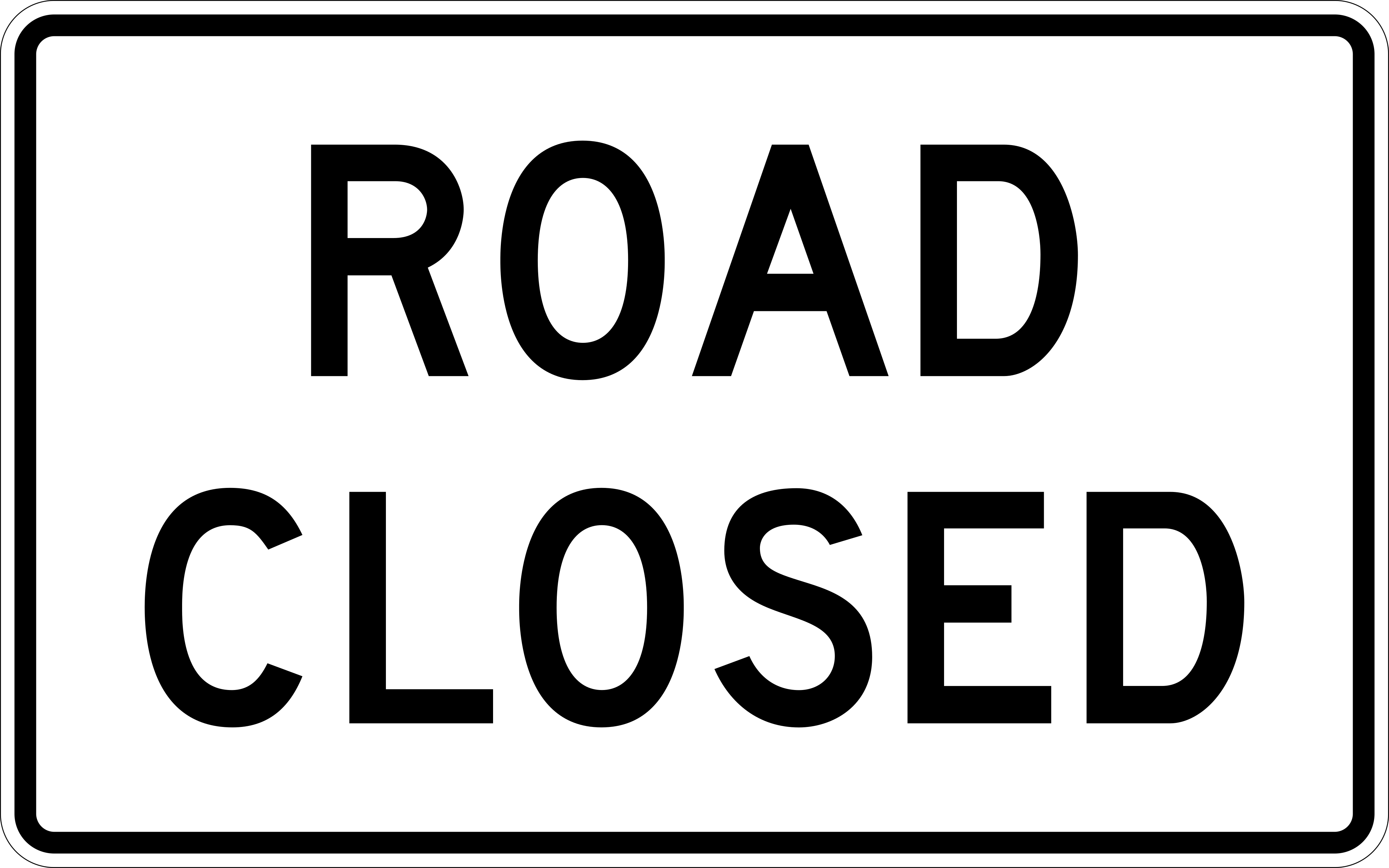
12. What general meaning should a driver recognize from a rectangular white regulatory sign?
- It identifies a scenic attraction
- It states something drivers must or must not do
- It gives a warning about wildlife only
- It marks a temporary detour in every case
Show answer
It states something drivers must or must not do. Rectangular signs with white backgrounds are regulatory signs in Vermont. They tell drivers what they must or must not do, including speed limits, turning rules, passing laws, and other directions. A scenic attraction is informational, and a wildlife warning belongs to the warning category. A white rectangle is not automatically a temporary detour marker. When wording is difficult to read, the shape and color still provide a useful category cue, but the displayed instruction remains binding.
Study this in the handbook: Turn signals and turning
13. What must a driver do when facing a solid red left turn arrow?
- Enter the intersection and wait there for green
- Turn after yielding to oncoming traffic
- Proceed straight through the intersection
- Stop and wait without entering to turn
Show answer
Stop and wait without entering to turn. A solid red arrow requires a left turning driver to stop and wait. Do not enter the intersection to turn while that arrow is displayed. Yielding and turning describes a different permissive signal, while proceeding straight or waiting inside the intersection disregards the red arrow's restriction. Stay behind the stop line, monitor the signal, and move only when a legal indication permits the movement. The word solid matters: a flashing indication can have a different rule, but a steady red arrow is a clear command to remain out of the intersection.
Study this in the handbook: Traffic lights, arrows and roundabouts
14. How long must a Vermont teen hold a Learner's Permit before getting a Junior Driver's License?
- At least one year
- Six months
- 90 days
- Two years
Show answer
At least one year. Vermont requires an individual to possess a Learner's Permit for at least one year before obtaining a Junior Driver's License. Six months is a different Vermont figure: the clean record period without permit recalls, suspensions, or revocations right before the junior license. Two years is the clean driving record needed before applying for the permit itself, and 90 days is the length of several junior recalls. The Junior Driver's License is issued at 16 or 17 after passing the required examination.
Study this in the handbook: Learner's Permit and Junior Driver's License
15. How many points does Vermont assess for failing to yield to a pedestrian in a crosswalk?
- 4 points
- 2 points
- 6 points
- 10 points
Show answer
4 points. Failing to yield the right of way to a pedestrian in a crosswalk is 4 points in Vermont, the same as failing to obey a police officer. Two points is the value for a stop sign or red light violation or for driving without a license. Ten points is not a single offense value; it is the total that triggers a letter saying the driving privilege is to be suspended. Six points is not the value the point list gives for this offense. Points received within 2 years decide how long a suspension lasts.
Study this in the handbook: Insurance, points and phone laws
16. A Vermont driver under 21 is asked by an officer to take a preliminary breath test and refuses. How does the law treat the refusal?
- As no offense at all
- As a request for a lawyer, which delays the test
- As a parking ticket
- As a violation of the underage BAC law itself
Show answer
As a violation of the underage BAC law itself. Under Vermont's under 21 law, an officer with reasonable grounds may request a preliminary breath test, and refusing it is considered a violation of the 0.02 BAC rule itself. The statute also says there is no statutory right to counsel before this test, so asking for a lawyer does not delay it. Refusal is not a free pass and is not a parking matter.
17. What vision standard must a Vermont applicant meet at the license vision screening?
- 20/70
- 20/20
- 20/40
- 20/100
Show answer
20/40. If the results of the screening determine that your vision does not meet the required standard of 20/40, you will be referred to an eye doctor of your choice and expense for further testing, and the doctor must be a licensed optometrist or ophthalmologist. That eye doctor then completes an evaluation to decide whether any restrictions should be placed on the driving privilege. Perfect 20/20 vision is not required to drive.
Study this in the handbook: Tests, renewals and license rules
18. In fatal crashes between cars and large trucks, who does the Vermont manual say usually caused the crash?
- The truck driver in most cases
- In more than 70 percent, the driver of the other vehicle, not the truck driver
- Both drivers equally
- Road conditions in most cases
Show answer
In more than 70 percent, the driver of the other vehicle, not the truck driver. In more than 70 percent of fatal crashes involving automobiles and trucks, it was the driver of the other vehicle, not the truck driver, who caused the crash, and in four out of five fatal truck crashes the driver of the other vehicle was killed. The manual says many of these crashes could be avoided if motorists knew about truck limitations: the bigger the truck, the bigger its blind spots, the more room it needs to maneuver, and the longer it takes to stop and to pass. Stay out of the No-Zones around the front, back, and sides.
Study this in the handbook: Bicyclists, motorcycles, trucks and animals
19. What is prohibited once a driver is inside a multi-lane Vermont roundabout?
- Yielding to pedestrians
- Using a turn signal to exit
- Checking mirrors before exiting
- Changing lanes
Show answer
Changing lanes. Drivers may not change lanes once they are in a multi-lane roundabout. Lane assignment signs and pavement markings should be read before entry so the correct lane is selected in advance. Signaling to exit, checking mirrors and blind spots, and yielding to pedestrians remain important actions. The lane-change choice is prohibited because a circulating vehicle can conflict with traffic beside it. Slow down before entry, commit to the assigned lane, and exit only when the path is clear.
Study this in the handbook: Traffic lights, arrows and roundabouts
20. What should a driver do when a pedestrian crosses carelessly outside a marked crosswalk?
- Continue because pedestrians lose all priority
- Yield and use caution
- Pass the pedestrian closely after honking
- Stop only if the pedestrian is in a school zone
Show answer
Yield and use caution. The manual tells drivers to yield even when a pedestrian crosses carelessly, such as stepping into traffic between parked vehicles or crossing where there is no marked crosswalk. The driver's duty to prevent a collision does not disappear because the pedestrian made a poor choice. Honking and squeezing past could increase the danger, and the rule is not limited to school zones. The cue is to slow, watch the person's path, and leave room to stop.
Study this in the handbook: Right of way rules
QualitySpace is expanding to Vermont
We are a California-based independent insurance brokerage working on licensing in more states. We cannot help with Vermont insurance yet. Leave your email and we will let you know when we can.
Every question is written from the official Vermont Driver's Manual. Need paper? Printable VT practice test with answer key.
Last verified 2026-10-05. How we check every question · Study all 200 as flashcards
Frequently asked questions
How many questions are on this Vermont practice test?
This fixed set has 20 questions. It is test 1 of 10 from the 200 question Vermont bank. The real VT exam asks 20 questions and you need 16 correct.
What is the passing score for the real Vermont test?
You must answer at least 16 questions correctly to pass the test (16 of 20) That figure comes from the official Vermont source cited on the DMV facts page.
How does this fixed test relate to the full Vermont bank?
Each numbered test is a fixed set of questions in a fixed order, so you can retake the same test later and compare. Every test mixes road signs and the other topics in about the same proportion as the full bank. Tests 1 to 10 together cover every question in the Vermont bank once. The full practice page mixes the whole bank at random.
Last verified 2026-10-05. See the Vermont DMV facts page for sourced state details.