
Key points
You can tell a sign's general meaning by its shape and color, even if it is covered by dirt or snow.
Source: Handbook p. 32
“You can tell what road signs mean by the shape and color as well as the wording. If the sign is covered by dirt, snow, or anything else, you should know the general meaning (regulatory, warning, information) of the sign by its shape.”
Vermont Driver's Manual, Handbook p. 32A stop sign has 8 sides: stop, scan and yield, then go.
Source: Handbook p. 32
“A stop sign has 8 sides. It means you must stop scan the intersection, honor the right of way, and then proceed.”
Vermont Driver's Manual, Handbook p. 32Stop before the stop line, the crosswalk (marked or unmarked) or the intersecting road, whichever comes first.
Source: Handbook p. 32
“You are required to stop before the stop line, crosswalk (marked or unmarked) or the intersecting road, whichever comes first.”
Vermont Driver's Manual, Handbook p. 32Yield signs are upside down triangles: slow down, search, and enter only if clear.
Source: Handbook p. 32
“Yield right-of-way signs are the shape of an upside down triangle, and they mean you should slow down, search and enter only if the way is clear of pedestrians, bicyclists and vehicles.”
Vermont Driver's Manual, Handbook p. 32A circular sign with an X and RR means a railroad crossing ahead.
Source: Handbook p. 32
“Circular signs with a large X and the letters RR indicate there is a railroad crossing ahead.”
Vermont Driver's Manual, Handbook p. 32Crossbuck signs at railroad crossings show where the tracks are, and smaller signs below show how many tracks there are.
Source: Handbook p. 33
“Crossbuck signs are at all railroad crossings. They indicate where the tracks are. Slow down, look both ways, and listen for trains before crossing. The smaller signs below the crossbuck indicate how many tracks there are at the crossing.”
Vermont Driver's Manual, Handbook p. 33Warning signs are usually diamond shaped and yellow or green.
Source: Handbook p. 33
“Warning signs are placed where there is danger at all times, and a driver needs to slow down. They are usually diamond-shaped and yellow or green.”
Vermont Driver's Manual, Handbook p. 33A downward arrow under a school or pedestrian sign marks a crosswalk.
Source: Handbook p. 33
“A downward arrow under a school or pedestrian sign indicates a crosswalk or crossing area.”
Vermont Driver's Manual, Handbook p. 33Rectangular white regulatory signs tell you what you must or must not do.
Source: Handbook p. 34
“Rectangular signs with white backgrounds indicate what things a driver must or must not do.”
Vermont Driver's Manual, Handbook p. 34A flagger has legal authority to control traffic and must be obeyed.
Source: Handbook p. 36
“A flagger has the legal authority to control traffic and must be obeyed.”
Vermont Driver's Manual, Handbook p. 36
Recognize these signs
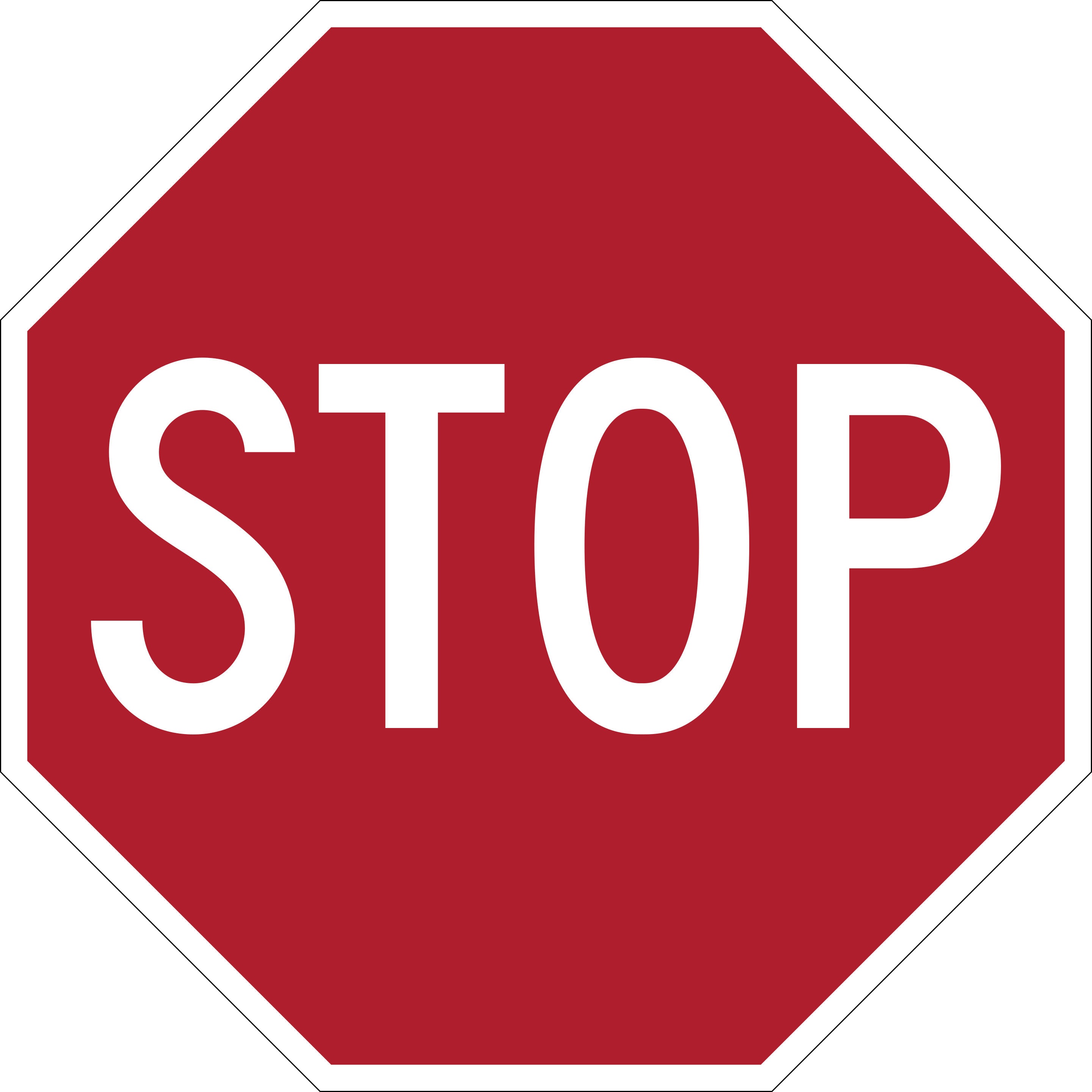
Stop 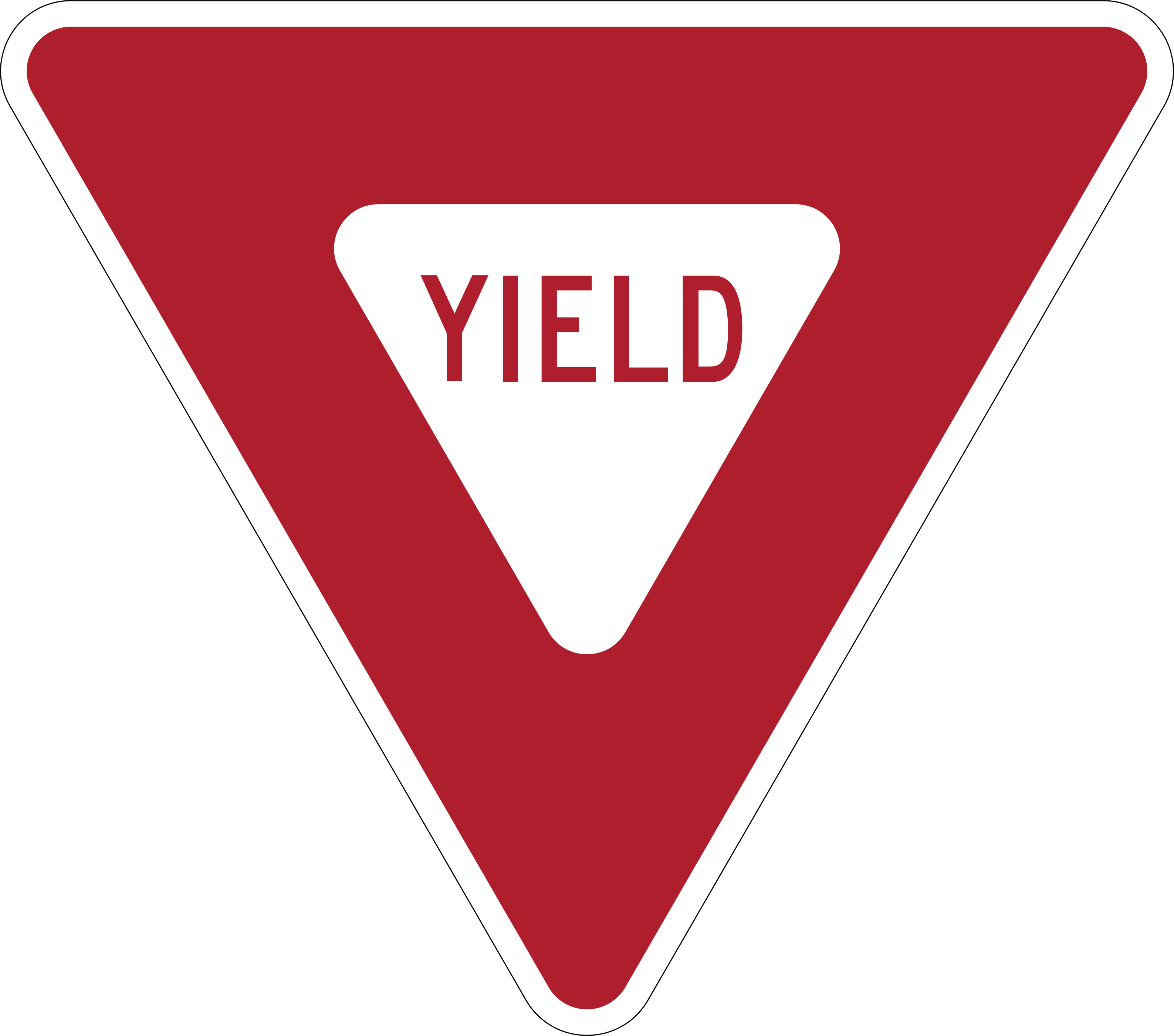
Yield 
Railroad crossing ahead 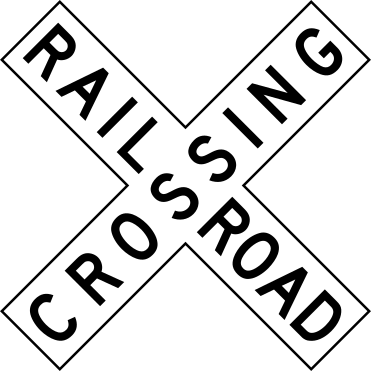
Railroad crossbuck 
Slow moving vehicle 
School 
Divided highway 
Divided highway ends 
Lane ends 
Slippery when wet 
Pedestrian crosswalk 
Deer crossing
3 questions from the Vermont practice test
1. How many sides does a Vermont stop sign have?
- Eight
- Six
- Four
- Twelve
Show answer
Eight. The stop sign is an eight-sided shape. Its outline helps communicate the required action even if dirt, snow, or another obstruction makes the lettering hard to read. A six-sided sign, a rectangle, or a twelve-sided sign does not match the manual’s description. Shape recognition should lead to the full stop procedure: stop before the stop line, crosswalk, or intersecting road, whichever comes first, then scan and honor the right of way before moving.
2. What is the usual shape and color of a Vermont warning sign?
- A yellow or green diamond
- A red circle
- A white rectangle
- An orange octagon
Show answer
A yellow or green diamond. Warning signs identify danger ahead and are usually diamond shaped with yellow or green backgrounds. A red circle is not the general warning format described here, and a white rectangle usually carries information or a rule rather than the broad warning pattern. An orange octagon is not the manual’s warning design. When dirt, snow, or darkness obscures wording, recognizing the diamond outline and yellow or green color can still alert you to slow down and prepare for a curve, unsafe intersection, dip, or another hazard.
3. What does a Vermont crossbuck sign indicate?
- A school crossing with a required speed of 15 mph
- The beginning of a no-passing zone
- The location of railroad tracks
- A lane reserved for buses and bicycles
Show answer
The location of railroad tracks. Crossbuck signs are placed at railroad crossings and indicate where the tracks are. They do not mark a passing restriction, set a school-zone speed, or reserve a lane. At the crossing, the manual directs drivers to slow down, look both ways, and listen for trains before crossing. The cue is crossbuck equals tracks: identify the crossing early, check for trains, and remember that smaller signs below it show how many tracks the crossing has.
Practice this topic
Lock it in with road signs questions from the free Vermont practice test. Every answer comes with a plain English explanation.
Source: the Vermont Driver's Manual, Chapter 7: Driving Safely and Studying for Your Permit. This lesson is a plain English summary, not the law itself; where it differs, the manual and the statute govern. Last checked 2026-09-27.