
Test 8 of 10 · 20 questions · Free 2026
SD Permit Practice Test 8
Jump to the test ↓A fixed 20 question set from the South Dakota bank with answers and plain English explanations.
Question 1 of 20 · 0 right so far
All 20 questions in test 8
Every question below comes from the South Dakota question bank on this page. Open a question to see the correct answer and the explanation. Nothing here is hidden behind a signup.
1. A South Dakota Instruction Permit holder was convicted of a traffic violation four months ago. What does that block?
- Getting a Restricted Minor's Permit until six months pass without a conviction
- Only night driving
- Retaking the knowledge test
- Nothing, as long as the fine is paid
Show answer
Getting a Restricted Minor's Permit until six months pass without a conviction. To obtain a Restricted Minor's Permit, the applicant must be at least 14, complete the Instruction Permit requirements, pass the driving test, and not have been convicted of a traffic violation during the six months before applying. A conviction four months ago falls inside that window. Paying the fine does not erase the conviction for this purpose. The same six month clean record rule applies to minors seeking an Operator's License.
Study this in the handbook: Instruction and Restricted Minor's Permits
2. What does a red circle with a red slash over a symbol tell you?
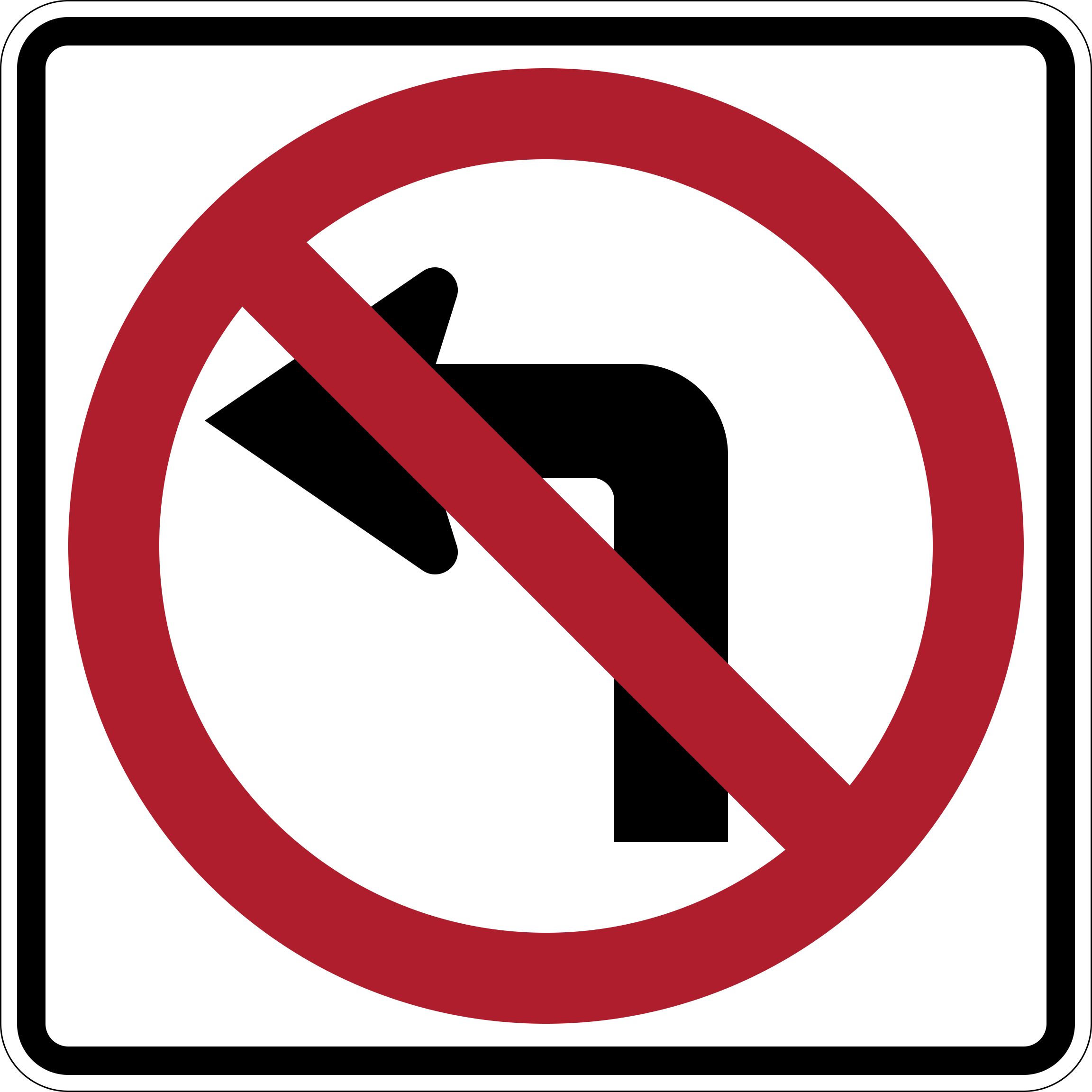
- The pictured action is recommended in heavy traffic
- The pictured action is prohibited by that sign
- The pictured action is allowed after a full stop
- The sign gives route information for services
Show answer
The pictured action is prohibited by that sign. South Dakota uses the red circle and slash on regulatory signs to show a banned movement, such as a no turn or no parking symbol. Treating it as permission after stopping changes the message completely. The cue is the red slash drawn directly over the symbol: it cancels that action at that location. Do not treat the sign as advice; it is a legal instruction tied to the location where it is posted.
Study this in the handbook: Regulatory, stop, yield and guide signs
3. What should a driver do during an enforcement stop to acknowledge the officer?
- Open the driver door while moving
- Flash high beams repeatedly
- Turn on the right turn signal
- Wave both hands out the window
Show answer
Turn on the right turn signal. During an enforcement stop, turn on your right turn signal to show the officer you recognize their presence and intend to yield. Flashing high beams or waving hands can be confusing and does not guide your vehicle to a safer stopping location. The driver door choice is dangerous because the vehicle is still moving. The cue is patrol lights behind you: signal right, move safely to the right shoulder, and choose a place that keeps both vehicles away from traffic.
Study this in the handbook: Crashes, emergency vehicles and traffic stops
4. Two vehicles approach an unsigned intersection at different times. Who should yield under South Dakota right-of-way guidance?
- The driver who arrives first
- The driver who arrives later
- The driver on the wider road every time
- The driver turning right from the cross street
Show answer
The driver who arrives later. At an intersection without a controlling signal or sign, arrival order matters. South Dakota says to yield to the driver who is already there or who arrives before you. The wider-road option may be tempting on a rural route, but the manual rule quoted here is based on who reaches the intersection first. Use the cue of timing: if another vehicle is at the intersection before your vehicle arrives, let that vehicle go before entering.
Study this in the handbook: Right of way, funerals and intersections
5. If another vehicle hits you from the rear, what should you do with your body?
- Lean forward and unlock your seatbelt
- Turn sideways toward the center console
- Press against the seat back and place your head on the head restraint
- Stand on the brake before bracing yourself
Show answer
Press against the seat back and place your head on the head restraint. In a rear impact, your body is thrown backward, so press yourself against the seat back and put your head against the head restraint. That position helps reduce neck movement and keeps you ready to control the vehicle. Leaning forward and unbuckling removes the restraint protection you need during the crash sequence. The cue is a rear impact or unavoidable hit from behind: brace back, protect your head and neck, and be ready to brake afterward.
Study this in the handbook: Crashes, emergency vehicles and traffic stops
6. What speed should you expect from a farm tractor with a slow-moving vehicle triangle?
- The same speed as other rural traffic
- At least 35 mph
- About the posted minimum speed
- Less than 25 mph
Show answer
Less than 25 mph. The orange slow-moving vehicle triangle means the vehicle is traveling below 25 mph. A 35 mph answer is a tempting wrong number, but South Dakota uses 25 mph for this emblem. When you see the reflective triangle on a tractor or wagon, expect your closing speed to be high, ease off early, and look for turn clues before deciding whether passing is available.
Study this in the handbook: Warning, railroad and work zone signs
7. How long must a South Dakota minor hold an instruction permit continuously before moving to the next stage?
- 30 days
- 275 days, or 180 days with successful completion of an approved driver education course
- 90 days
- One full year
Show answer
275 days, or 180 days with successful completion of an approved driver education course. Minors at least 14 but under 18 must hold a valid instruction permit continuously for 275 days. The period drops to 180 days for a minor who successfully completes an approved driver education course with a score of 80 percent or better. The permit itself is valid for five years, or until the expiration of the documents authorizing the applicant's presence in the United States, whichever comes first. Thirty and ninety days are far shorter than the law requires.
Study this in the handbook: Instruction and Restricted Minor's Permits
8. What does this ONE WAY arrow tell you about traffic on that street?
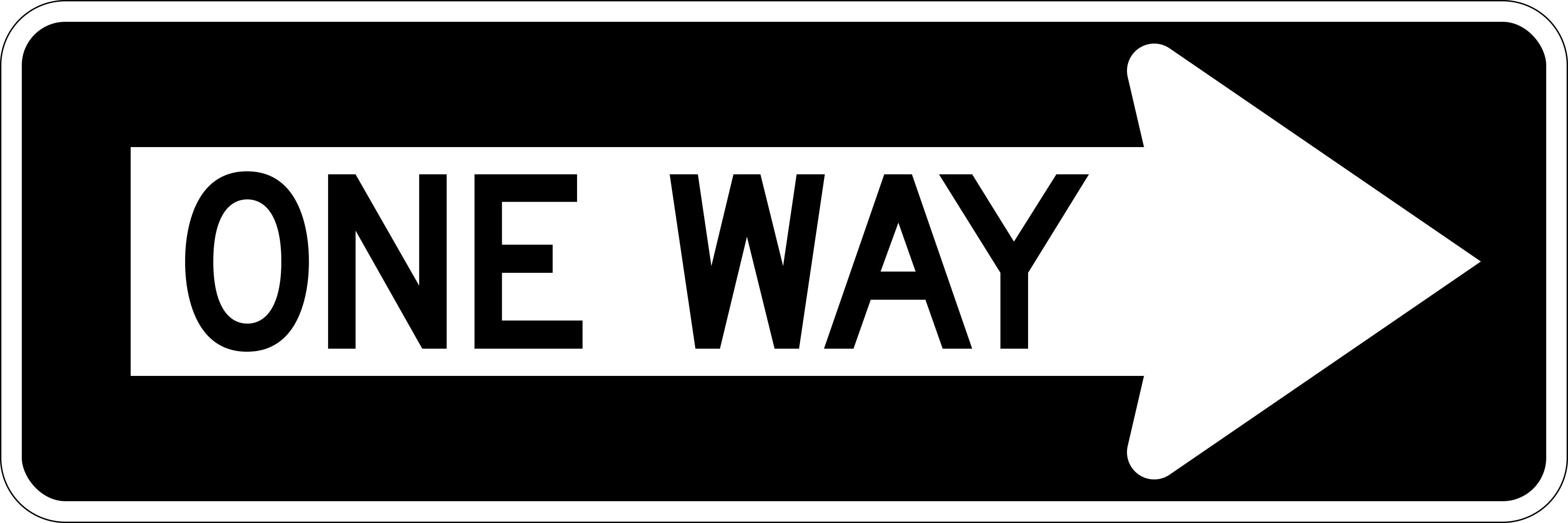
- Traffic flows only in the arrow's direction
- Drivers may choose either direction after stopping
- The arrow marks a recommended detour
- Only trucks must follow the arrow
Show answer
Traffic flows only in the arrow's direction. A one-way sign tells you that traffic is allowed only in the direction shown by the arrow. The detour choice is wrong because South Dakota treats this as direction control, not route advice. The cue is the black arrow paired with ONE WAY; line up your turn or lane position so your vehicle moves with that arrow and never against it.
Study this in the handbook: Regulatory, stop, yield and guide signs
9. How does South Dakota classify a first DWI offense (BAC 0.08% or more)?
- A petty offense
- A Class 2 misdemeanor
- A Class 1 misdemeanor punishable by a fine, up to one year in jail, or both
- A Class 6 felony
Show answer
A Class 1 misdemeanor punishable by a fine, up to one year in jail, or both. A first DWI is a Class 1 misdemeanor punishable by a fine, imprisonment up to one year, or both, and the driver loses the license for a minimum of 30 days. The Class 2 misdemeanor label belongs to Zero Tolerance offenses for drivers under 21. A Class 6 felony is a third DWI. A petty offense is how South Dakota treats child restraint violations, not drunk driving.
Study this in the handbook: Alcohol, zero tolerance and implied consent
10. What does the South Dakota manual advise about passing a line of several vehicles?
- You should pass only one vehicle at a time as a general rule
- South Dakota allows passing only on gravel shoulders
- Multiple passes are allowed only within city limits
- You must wait for the driver behind to honk first
Show answer
You should pass only one vehicle at a time as a general rule. The manual advises passing only one vehicle at a time as a general rule. Multiple vehicles require a much longer opening and leave you exposed in the passing lane longer, especially if an oncoming vehicle appears or one of the vehicles ahead moves. The city limits choice invents an exception that is not part of the rule. A concrete cue is the length of the line ahead: if you cannot complete one clean pass and return safely, wait.
Study this in the handbook: Following distance, passing and large vehicles
11. What is the purpose of South Dakota warning signs?
- To identify nearby restaurants and hospitals
- To mark laws about parking and lane use only
- To tell drivers about possible danger or a special roadway situation ahead
- To show the route number for a state highway
Show answer
To tell drivers about possible danger or a special roadway situation ahead. Warning signs prepare drivers for hazards or unusual roadway conditions ahead, often giving time to slow or stop. Service signs identify places like gas or hospitals, so that choice belongs to a different sign family. Look for yellow diamond signs and symbols showing curves, crossings, merging traffic, animals, or slippery pavement. Warning signs give time to adjust before the hazard, which is why early recognition is more useful than last-second braking.
Study this in the handbook: Warning, railroad and work zone signs
12. Why should you keep space between your car and the vehicle ahead?
- It lets you ignore changing traffic signals
- It gives you more time to react to road users
- It guarantees the driver behind will slow down
- It makes passing legal in marked no-passing zones
Show answer
It gives you more time to react to road users. South Dakota frames following distance as a space cushion that gives you time to adjust and react. It does not make passing legal where signs or markings prohibit it, and it cannot guarantee what the driver behind will do. Use the cue of changing brake lights, motorcycles, bicycles, or poor weather ahead; those conditions call for more room, not less.
Study this in the handbook: Following distance, passing and large vehicles
13. When a stop line is placed before a crosswalk, which marking must be obeyed first?
- The far edge of the crosswalk
- The center of the intersection
- The curb line beyond the pedestrians
- The stop line
Show answer
The stop line. When there is a stop line before a crosswalk, stop at the stop line first. That position keeps the crosswalk clear and leaves room for pedestrians to cross. The far edge choice would put the vehicle into or beyond the pedestrian area before stopping. A practical cue is the first solid white line across your lane: stop before that line, then look for people in the crosswalk and traffic in the intersection.
Study this in the handbook: Pavement markings and signaling
14. How can a South Dakota driver revoke an organ donor designation?
- Only by court order
- It cannot be changed once made
- Only by writing to the hospital
- By removing the designation from the driver license or ID
Show answer
By removing the designation from the driver license or ID. The organ donor designation on a South Dakota license or ID is voluntary and can be amended or revoked. The manual says that if you wish to amend or revoke your designation you may do so by removing the organ donor designation from your driver license or ID, and it points to South Dakota Codified Law Chapter 34-26 for details. No court order or hospital letter is needed, and the choice is not permanent.
Study this in the handbook: License rules, insurance and the point system
15. What shape and color combination usually identifies a warning sign in South Dakota?
- A yellow diamond with black letters or symbols
- A blue rectangle with white symbols
- A green rectangle with white distance information
- A red triangle pointing downward
Show answer
A yellow diamond with black letters or symbols. Warning signs usually use a yellow diamond with black lettering or symbols to call attention to possible danger ahead. The red downward triangle is reserved for yield signs, so choosing it would confuse a warning with a right of way control. When scanning ahead, use shape first and then color: a diamond tells you to prepare for a hazard, while the message or symbol tells you what kind of hazard is coming.
Study this in the handbook: Warning, railroad and work zone signs
16. If another driver is tailgating you and there is no right lane, what should you do?
- Slowly reduce speed when the road ahead is clear and passing is legal
- Brake hard to make the driver back away
- Drive partly on the shoulder until the vehicle passes
- Speed up so the following driver cannot pass
Show answer
Slowly reduce speed when the road ahead is clear and passing is legal. When no right lane is available, South Dakota advises waiting for a clear, legal passing area and then reducing speed gradually so the tailgater can pass. Hard braking is specifically unsafe because it increases rear-end crash risk. Use the cue of an open legal passing zone ahead, and keep your own braking smooth. If there is a right lane, moving right is preferred; without one, create a lawful opportunity for the driver to go around.
Study this in the handbook: Following distance, passing and large vehicles
17. You are turning right on red in South Dakota. What must you do before proceeding?
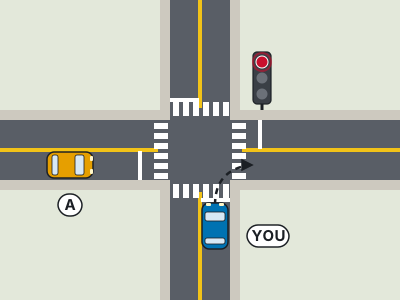
- Yield only to cars, then complete the turn
- Roll through if the nearest lane is open
- Stop, then yield to traffic including pedestrians, bicyclists, and cars
- Turn without stopping when no sign prohibits it
Show answer
Stop, then yield to traffic including pedestrians, bicyclists, and cars. A right turn on red is allowed only after a complete stop and only when it is safe. South Dakota adds that the driver must yield to all traffic, including pedestrians, bicyclists, and cars. The no-sign choice is incomplete because absence of a prohibition does not remove the stop and yield duties. The cue is the red light itself: stop first, scan the crosswalks and lanes, then turn while staying in your lane.
Study this in the handbook: Traffic signals and arrows
18. What can happen if you drive much slower than other vehicles in South Dakota traffic?
- You are exempt from signaling
- You automatically have the right-of-way
- You must move to the left lane
- You can be ticketed for impeding traffic
Show answer
You can be ticketed for impeding traffic. Driving far below the traffic pace can create backups and risky passing, so South Dakota warns that it can lead to an impeding-traffic ticket. The right-of-way choice is incorrect because moving slowly does not give a driver priority over others. A practical cue is a line forming behind you: if vehicles are bunching up, use a safe pullout or a slower road instead of forcing everyone to pass around you.
Study this in the handbook: Controlling speed
19. What must an applicant for a South Dakota Operator’s License have passed?
- A commercial vehicle skills test
- Only the knowledge test
- Only a road-sign recognition test
- Vision, knowledge, and driving tests
Show answer
Vision, knowledge, and driving tests. An Operator’s License requires passing the vision, knowledge, and driving tests. The knowledge-only answer is incomplete because South Dakota separately requires the road skills portion for the full operator credential. A commercial skills test is for a different license class, not the standard Operator’s License. Use the cue of license level: a permit begins with vision and knowledge, but the operator credential adds the driving test before independent privileges are issued.
Study this in the handbook: Instruction and Restricted Minor's Permits
20. What license consequence can follow refusal to take a BAC test in South Dakota?
- A warning with no license action
- Loss of the driver license for one year
- A 10-day permit extension
- Only a higher insurance premium
Show answer
Loss of the driver license for one year. Refusing a requested BAC test carries its own license consequence in South Dakota. The manual says refusal can cost the driver the license for one year. The warning-only answer is wrong because implied consent laws attach a penalty to refusal, separate from any later DWI charge. The cue is the officer’s lawful test request: refusing does not avoid consequences and may create a distinct one-year loss of driving privileges.
Study this in the handbook: Alcohol, zero tolerance and implied consent
QualitySpace is expanding to South Dakota
We are a California-based independent insurance brokerage working on licensing in more states. We cannot help with South Dakota insurance yet. Leave your email and we will let you know when we can.
Every question is written from the official South Dakota Driver License Manual. Need paper? Printable SD practice test with answer key.
Last verified 2026-10-05. How we check every question · Study all 202 as flashcards
Frequently asked questions
How many questions are on this South Dakota practice test?
This fixed set has 20 questions. It is test 8 of 10 from the 202 question South Dakota bank.
How does this fixed test relate to the full South Dakota bank?
Each numbered test is a fixed set of questions in a fixed order, so you can retake the same test later and compare. Every test mixes road signs and the other topics in about the same proportion as the full bank. Tests 1 to 10 together cover 200 of the 202 questions in the South Dakota bank, each once. The full practice page mixes the whole bank at random.
Last verified 2026-10-05. See the South Dakota DMV facts page for sourced state details.
Return to the full South Dakota practice test · Study road signs