
Key points
Warning signs are usually yellow with black lettering or symbols and diamond shaped.
Source: Handbook p. 33
“These signs are usually yellow with black lettering or symbols and are diamond shaped.”
South Dakota Driver License Manual, Handbook p. 33Some warning signs, such as school and pedestrian crossings, may be fluorescent yellow.
Source: Handbook p. 33
“Some warning signs may be fluorescent yellow, such as school zones, school crossing, and pedestrian crossing.”
South Dakota Driver License Manual, Handbook p. 33A round yellow sign with an X and RR warns you to slow down, look and listen for a train.
Source: Handbook p. 33
“A round yellow warning sign with an “X” symbol and black “RR” letters is placed along the road before a highwayrailroad grade crossing. The sign cautions to slow down, look, and listen for a train”
South Dakota Driver License Manual, Handbook p. 33When crossing lights flash, you must stop. Do not drive around a lowered gate.
Source: Handbook p. 34
“When the lights are flashing, you must stop. At some crossings there is also a crossing gate that will lower when a train is coming. Do not drive around the gate.”
South Dakota Driver License Manual, Handbook p. 34The railroad ENS number is usually on a blue sign on or near the crossing sign.
Source: Handbook p. 34
“The ENS number is typically located on a blue sign on the railroad crossing sign or near the crossing”
South Dakota Driver License Manual, Handbook p. 34Work zone signs are orange with black letters, diamond or rectangular in shape.
Source: Handbook p. 34
“These are generally diamond or rectangular shaped and orange with black letters or symbols.”
South Dakota Driver License Manual, Handbook p. 34You must follow a flagger's instructions in a work zone.
Source: Handbook p. 34
“In work zones, traffic may be controlled by a person with a sign or flag to tell you which direction to travel, to slow down, or to stop. You must follow their instructions.”
South Dakota Driver License Manual, Handbook p. 34Fines for speeding in a work zone may be doubled.
Source: Handbook p. 34
“Fines for speeding in a work zone may be doubled.”
South Dakota Driver License Manual, Handbook p. 34A reflective orange triangle on a vehicle means it travels less than 25 mph.
Source: Handbook p. 36
“A reflective orange triangle on the rear of a vehicle means it is travelling less than 25 mph.”
South Dakota Driver License Manual, Handbook p. 36
Numbers to know
| Number | What it means | Manual |
|---|---|---|
| 25 mph | slow moving vehicle emblem speed | Handbook p. 36 |
Recognize these signs

Railroad crossing ahead 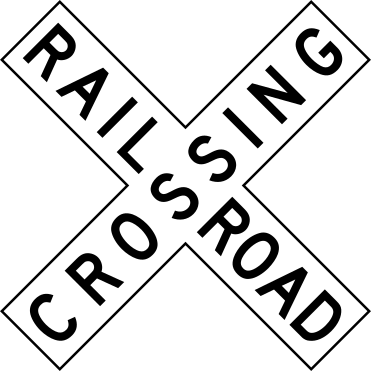
Railroad crossbuck 
Cross road ahead 
Right curve 
Merging traffic 
Added lane 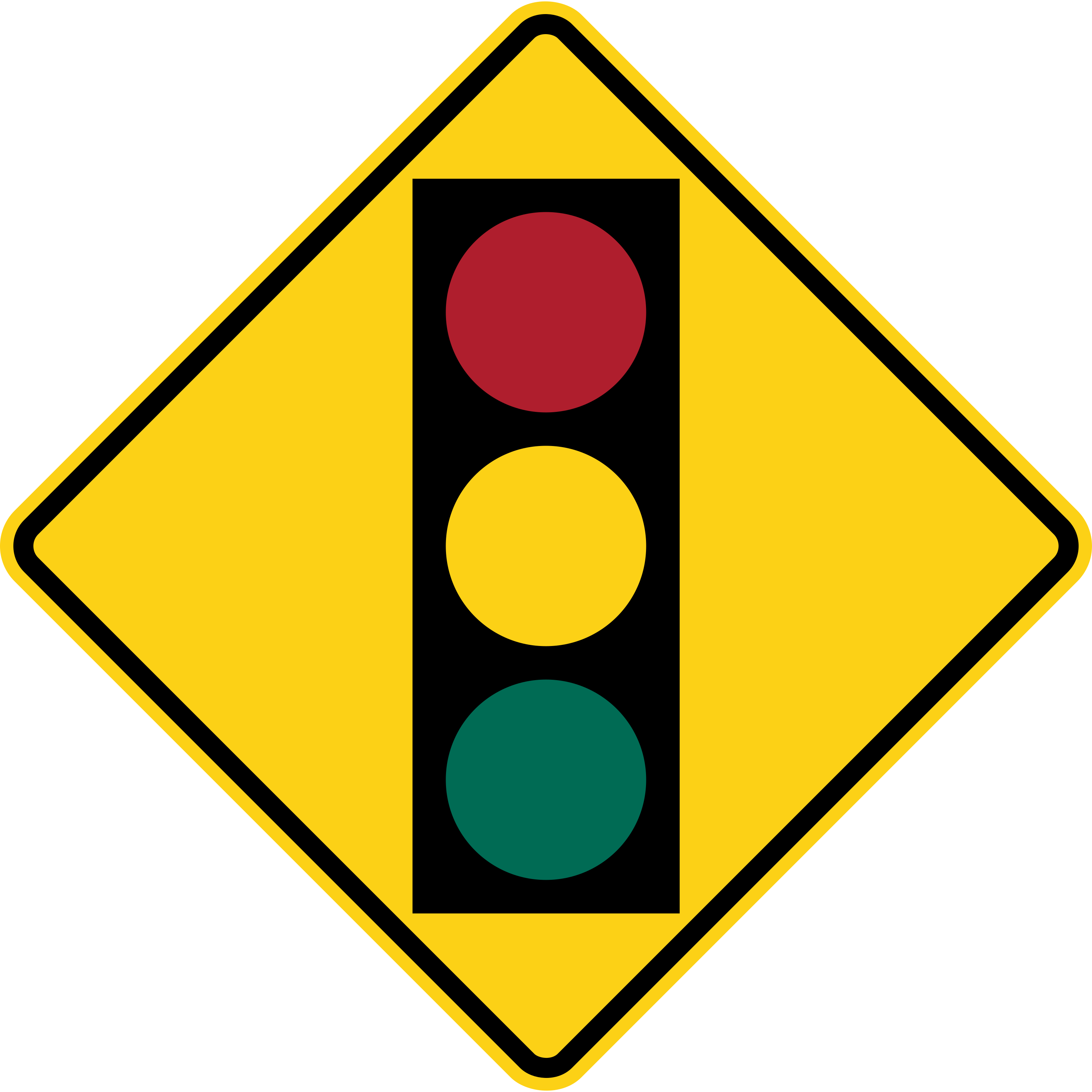
Traffic signal ahead 
Stop sign ahead 
Slippery when wet 
Deer crossing 
Slow moving vehicle 
Flagger ahead
3 questions from the South Dakota practice test
1. What shape and color combination usually identifies a warning sign in South Dakota?
- A yellow diamond with black letters or symbols
- A blue rectangle with white symbols
- A green rectangle with white distance information
- A red triangle pointing downward
Show answer
A yellow diamond with black letters or symbols. Warning signs usually use a yellow diamond with black lettering or symbols to call attention to possible danger ahead. The red downward triangle is reserved for yield signs, so choosing it would confuse a warning with a right of way control. When scanning ahead, use shape first and then color: a diamond tells you to prepare for a hazard, while the message or symbol tells you what kind of hazard is coming.
2. What information is shown on an Emergency Notification System sign at a railroad crossing?
- The engineer's radio channel and train schedule
- A dispatch phone number and DOT crossing number
- The nearest highway speed limit and mile marker
- A detour map for oversized vehicles
Show answer
A dispatch phone number and DOT crossing number. The ENS sign gives drivers a direct emergency dispatch number and a DOT number that identifies the exact crossing. That lets railroad personnel locate a blocked or damaged crossing quickly and warn trains. The train schedule choice is wrong because the sign is for reporting problems, not predicting arrivals. A useful cue is the blue sign near the crossing: use both numbers if a vehicle is stuck, gates malfunction, or tracks are blocked.
3. What do orange work zone signs warn drivers about?
- Construction, maintenance, or emergency operations ahead
- Railroad crossings with multiple tracks
- Tourist destinations and recreation areas
- Hospital and rest area services nearby
Show answer
Construction, maintenance, or emergency operations ahead. Orange work zone signs alert you that construction, maintenance, or emergency operations are ahead. They are not service signs, which use blue backgrounds for gas, hospitals, rest areas, and similar stops. Treat orange as a cue to reduce speed, expect workers or equipment, and watch for lane changes or rough surfaces. The service choice is wrong because it describes conveniences rather than a temporary road hazard.
Practice this topic
Lock it in with road signs questions from the free South Dakota practice test. Every answer comes with a plain English explanation.
Source: the South Dakota Driver License Manual, Rules of the Road. This lesson is a plain English summary, not the law itself; where it differs, the manual and the statute govern. Last checked 2026-09-27.