
Test 1 of 10 · 20 questions · Free 2026
SD Permit Practice Test 1
Jump to the test ↓A fixed 20 question set from the South Dakota bank with answers and plain English explanations.
Question 1 of 20 · 0 right so far
All 20 questions in test 1
Every question below comes from the South Dakota question bank on this page. Open a question to see the correct answer and the explanation. Nothing here is hidden behind a signup.
1. After a crash involving an unattended parked vehicle, what must you do if you cannot find the owner?
- Drive away if the damage appears minor
- Leave identifying and crash information where the owner can find it
- Wait 24 hours before notifying anyone
- Move the parked vehicle before leaving a note
Show answer
Leave identifying and crash information where the owner can find it. If you damage unattended property and cannot locate the owner, South Dakota says to contact law enforcement and leave information where the owner can find it. Driving away because damage looks minor is still leaving the scene without the required notice. The cue is an empty parked vehicle after contact: stop, try to locate the owner, call the nearest law enforcement agency, and leave your name, license, plate, date, time, and damage information.
Study this in the handbook: Crashes, emergency vehicles and traffic stops
2. How should a driver respond to deer eyes reflecting beside the road?
- Speed up before more deer reach the pavement
- Swerve toward the shoulder to scare the deer away
- Slow down, blow the horn, and be ready to stop
- Dim all lights and coast past silently
Show answer
Slow down, blow the horn, and be ready to stop. If headlights reflect in deer eyes beside the road, slow down, blow the horn, and prepare to stop. The manual also says to always watch for more than one deer, so one reflection can mean more animals nearby. Swerving toward the shoulder is wrong because it can send you off the road or into another hazard. Scan the roadside at dusk and dawn for reflecting eyes, and reduce speed early when you see them.
Study this in the handbook: Night, winter, deer and work zones
3. At a flashing red traffic light, what action is required?
- Treat it like a yield sign and roll through if clear
- Stop only when pedestrians are in a marked crosswalk
- Proceed without stopping because cross traffic has yellow
- Come to a complete stop, then go when safe
Show answer
Come to a complete stop, then go when safe. A flashing red light has the same meaning as a stop sign. You must come to a complete stop and may proceed only when the way is safe. Rolling through as though it were a yield sign skips the full stop that South Dakota requires. The cue is the red flash: treat the intersection like a stop controlled approach, check cross traffic and pedestrians, and move only after yielding where needed.
Study this in the handbook: Traffic signals and arrows
4. A South Dakota driver under 21 has a BAC of 0.03%. Which statement matches the manual?
- The driver is legal because BAC is below 0.08%
- The driver may be arrested for alcohol impairment under the underage rule
- The driver can only be cited for possession, not driving
- The driver is legal if no crash occurred
Show answer
The driver may be arrested for alcohol impairment under the underage rule. For drivers under 21, South Dakota allows arrest for alcohol impairment at 0.02%, so 0.03% is already over that underage threshold. The adult 0.08% number is the tempting mistake; it applies to DWI evidence for adults, not as a safe harbor for minors. The crash choice also misses the point because the rule is triggered by BAC and age. The cue is the driver’s birthday: under 21 means the much lower alcohol limit controls.
Study this in the handbook: Alcohol, zero tolerance and implied consent
5. How must vehicles in a South Dakota funeral procession identify themselves?
- They must use hazard flashers only
- They must have headlights on
- They must display a temporary permit in the windshield
- They must honk before each intersection
Show answer
They must have headlights on. Vehicles following in a funeral procession are required to have headlights on. That lighting helps other drivers recognize the group and avoid cutting into it. Hazard flashers may seem noticeable, but the manual specifies headlights, not a different warning device. The practical cue is a line of vehicles moving together with headlights illuminated; after the first vehicle has handled traffic controls, do not insert your vehicle into the procession or break it apart.
Study this in the handbook: Right of way, funerals and intersections
6. If your brakes fail while driving and the parking brake does not stop you, what should you do next?
- Turn off the engine and look for a safe place to slow to a stop
- Shift to park while moving at highway speed
- Keep driving until the brakes cool down
- Pump the accelerator to restore hydraulic pressure
Show answer
Turn off the engine and look for a safe place to slow to a stop. For brake failure, South Dakota first describes using the parking brake carefully. If that fails, turn off the engine and look for a safe place where the vehicle can slow to a stop off the roadway. Keeping the trip going is wrong because the manual says not to continue without working brakes. The cue is loss of stopping power after the parking brake attempt: aim for an escape path, reduce speed, and get out of traffic.
Study this in the handbook: Skids, brake failure and other vehicle emergencies
7. A South Dakota driver is convicted of failure to yield the right of way in Iowa. How does South Dakota treat the conviction?
- It is ignored because it happened in another state
- It counts only if the driver was on an interstate
- It is recorded but never assessed points
- Points are assessed just as if it were committed in South Dakota
Show answer
Points are assessed just as if it were committed in South Dakota. South Dakota assesses points on out-of-state convictions just as if they were committed in South Dakota, so a failure to yield conviction in Iowa carries the same 4 points it would at home. The offense is not ignored, and there is no interstate-only rule or record-only treatment. Keep in mind that the state assesses no points for speeding, standing, parking, equipment, size or weight violations, wherever they occur. A driver who reaches the suspension threshold through out-of-state points may ask for a hearing before the suspension.
Study this in the handbook: License rules, insurance and the point system
8. How long is a South Dakota driver's first point system suspension?
- A 30 day suspension
- A 6 month suspension
- A 60 day suspension
- A 1 year suspension
Show answer
A 60 day suspension. South Dakota's periods of suspension under the point system are 60 days for a first suspension, 6 months for a second, and 1 year for any later suspension. Thirty days is not on this table; it is the minimum license loss for a first DWI and a first Zero Tolerance offense. Six months and one year are the escalated periods for repeat point suspensions.
Study this in the handbook: License rules, insurance and the point system
9. A South Dakota driver's license was suspended (not revoked). What is needed to reinstate it?
- Full vision, knowledge, and driving tests every time
- A $225 fee and a court hearing
- An application fee and a $50 reinstatement fee, with no testing unless the license has expired
- Nothing, it reinstates automatically
Show answer
An application fee and a $50 reinstatement fee, with no testing unless the license has expired. Following a suspension, South Dakota requires no testing unless the license has expired, only an application fee and a $50 reinstatement fee. A revocation is stricter: vision and knowledge tests are required along with the application fee and a $50 to $225 reinstatement fee, which is where the $225 figure comes from. Reinstatement is never automatic after a withdrawal of the privilege.
Study this in the handbook: License rules, insurance and the point system
10. When entering a roundabout, what is the safe entry rule?
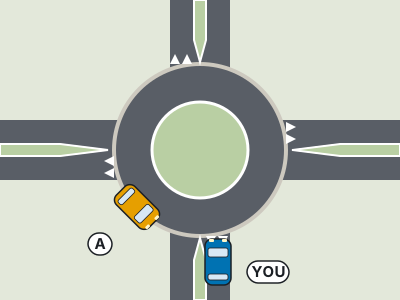
- Enter only when there is a safe gap in traffic
- Stop inside the circle to choose your exit
- Force circulating traffic to yield to your vehicle
- Accelerate across the truck apron
Show answer
Enter only when there is a safe gap in traffic. South Dakota lists roundabout entry as a slow, yielding maneuver followed by entry only when a usable gap appears. Forcing traffic already in the circle reverses the rule and raises crash risk. The cue is traffic approaching from the left within the circle; wait for a gap, then enter and keep speed low. Do not stop inside the roundabout unless traffic conditions force it; keep moving toward your exit after entering.
Study this in the handbook: Turns, U turns and roundabouts
11. What condition should your windshield wipers be in before driving in rain or snow?
- They may be skipped if the windshield is recently cleaned
- They only need to function on the driver's side
- They should work well and clear water properly
- They should be replaced only after winter ends
Show answer
They should work well and clear water properly. South Dakota treats wipers as part of keeping the vehicle safe to operate. They should be in good condition, and blades that do not clear water well should be replaced. The driver's-side-only choice is too narrow because poor clearing anywhere can reduce visibility. Use the cue of streaking, skipping, or water left on the glass; those signs mean maintenance is needed before bad weather driving.
Study this in the handbook: Vision, fatigue, distraction and aggressive driving
12. On a two-lane South Dakota highway, you approach a stopped vehicle using amber, yellow, or blue warning lights. If the posted limit is above 20 mph, how much must you slow?
- At least 20 mph below the posted speed limit
- Exactly 5 mph below the posted speed limit
- To 45 mph in every case
- Only enough to avoid crossing the centerline
Show answer
At least 20 mph below the posted speed limit. On a two-lane highway, South Dakota substitutes a speed reduction for the lane-change rule. If the posted limit is above 20 mph, drivers must slow at least 20 mph below that limit before passing the stopped vehicle. The 5-mph choice applies only when the posted limit is 20 mph or less, so it changes the condition. The cue is the posted number: above 20, subtract 20 before you pass with caution.
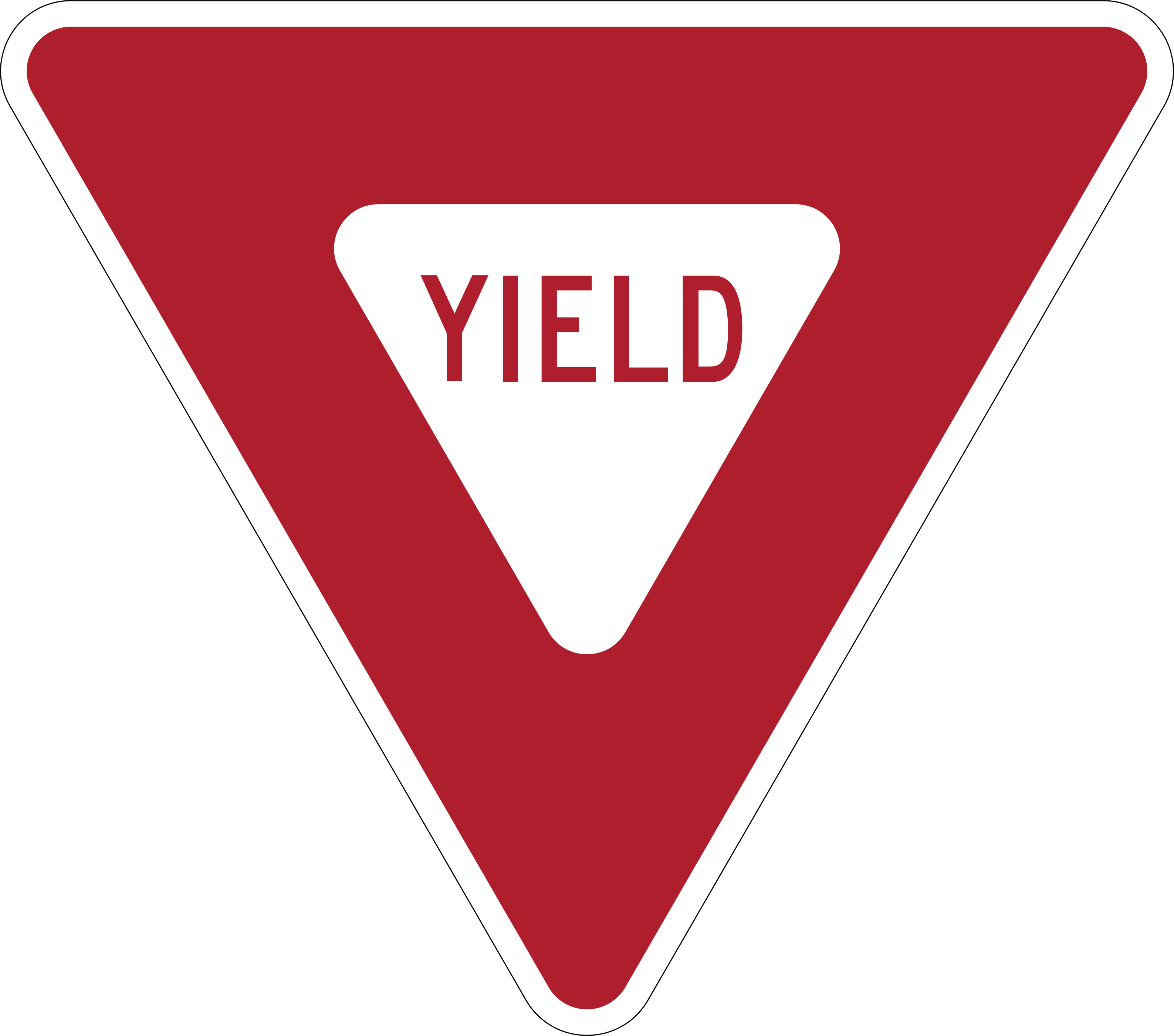
13. What action does this red and white downward-pointing triangle require?
- Accelerate to join traffic before the intersection
- Enter only after a green arrow appears
- Stop for thirty seconds even when the road is empty
- Slow down and yield to traffic in the intersection or roadway
Show answer
Slow down and yield to traffic in the intersection or roadway. The yield sign tells a driver to slow and give right-of-way to traffic in the intersection being crossed or the roadway being entered. A fixed thirty-second stop is not the South Dakota rule; stopping may be needed, but only because traffic conditions require it. Use the inverted triangle as the cue to check both approaches early and be ready to wait.
Study this in the handbook: Regulatory, stop, yield and guide signs
14. A DO NOT ENTER sign belongs to which South Dakota sign group?
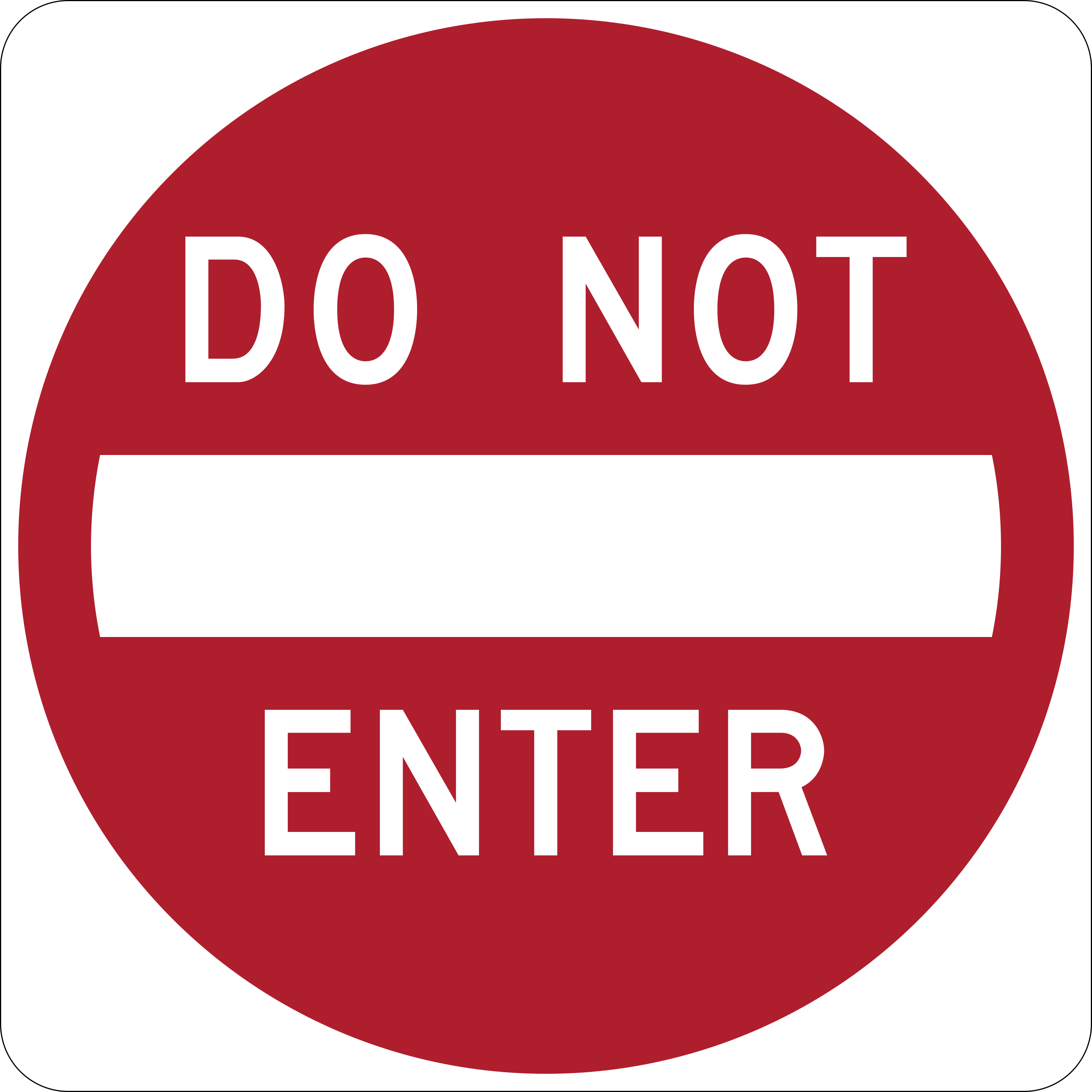
- Regulatory signs for laws that must be obeyed
- Guide signs for distances and services
- Warning signs for possible danger ahead
- Work zone signs for temporary detours only
Show answer
Regulatory signs for laws that must be obeyed. South Dakota lists Do Not Enter among common regulatory signs. Regulatory signs communicate laws about direction, lane use, turning, speed, parking, and similar duties. Calling it a warning sign misses the stronger message: the driver is being told not to enter that path. The cue is the red and white command face, which should make you stop before committing to the wrong roadway.
Study this in the handbook: Regulatory, stop, yield and guide signs
15. Which passenger car is exempt from the listed South Dakota child restraint and youth seatbelt provisions?
- A pickup being driven less than five miles from home
- A passenger car made before 1966 with no seatbelts installed
- A car carrying only passengers age twelve or younger
- A vehicle with air bags for every seating position
Show answer
A passenger car made before 1966 with no seatbelts installed. South Dakota's exemption is narrow: the listed child restraint and youth seatbelt provisions do not apply to passenger cars manufactured before 1966 that have not been equipped with seatbelts. Air bags do not create an exemption, since the manual says belts still matter with air bags. The cue is the vehicle's age and original or current belt equipment, not trip length or passenger age alone.
Study this in the handbook: Seat belts, child seats and driving position
16. What does this STOP AHEAD warning sign prepare you for?

- A stop sign ahead
- A yield sign after the next curve
- A minimum speed zone
- A lane reserved for buses
Show answer
A stop sign ahead. The South Dakota warning sign table names Stop Sign Ahead as a common warning sign. A minimum speed zone would be shown by a regulatory speed sign, not this advance warning. The cue is the small stop symbol on the yellow sign; begin checking your mirror and reducing speed so the actual stop sign does not require a hard last-second brake.
Study this in the handbook: Warning, railroad and work zone signs
17. For a driver 21 or older, what BAC does the South Dakota manual say is evidence of driving under the influence of alcohol?
- 0.12% or more
- 0.02% or more
- 0.04% or more
- 0.08% or more
Show answer
0.08% or more. For drivers who are not under the special underage rule, South Dakota uses 0.08% BAC or more as evidence of driving under the influence of alcohol. The 0.02% option belongs to drivers under 21 and should not be confused with the adult DWI threshold. The cue is the driver’s age bracket: adults should remember 0.08% as the evidence level, while also recognizing that unsafe impairment can begin before that point.
Study this in the handbook: Alcohol, zero tolerance and implied consent
18. What do pavement markings do for drivers?
- Apply only to pedestrians and not to drivers
- Replace every traffic signal at intersections
- Mark only decorative boundaries on highways
- Give directions or warnings and show lane or stopping rules
Show answer
Give directions or warnings and show lane or stopping rules. Pavement markings are roadway instructions. They divide lanes, show passing and lane-use rules, mark crosswalks, and identify where to stop. Calling them decorative ignores their traffic-control role. The cue is paint on the road surface, such as arrows, words, stop lines, lane lines, and crosswalk bars. Treat markings as part of the control system along with signs and lights, especially where lanes split or turn.
Study this in the handbook: Warning, railroad and work zone signs
19. What do the shape, color, symbols, and words of traffic signs help you identify?
- The age of the driver who installed it
- The type of information the sign provides
- The exact fine for every possible violation
- The vehicle weight of the nearest truck
Show answer
The type of information the sign provides. South Dakota tells drivers to read a sign's shape, color, symbols, and words as clues to the information it gives. Those features do not tell you who installed it or every fine amount. The cue is the sign's visual family: color and shape help separate warnings, regulations, services, destinations, and railroad information. When uncertain, classify the sign by its visual category before deciding whether it warns, directs, prohibits, or guides.
Study this in the handbook: Warning, railroad and work zone signs
20. Which of these can cost a South Dakota driver their license under the state's point system?
- Getting a parking ticket
- Buying a second vehicle
- Having too many points on the driving record
- Moving to a new address
Show answer
Having too many points on the driving record. The list of reasons a South Dakota license can be suspended, revoked or cancelled includes having too many points on your driving record, as dictated by the current point system. Other listed reasons include failing to maintain proof of insurance, a conviction for driving while intoxicated, refusing a chemical test, driving during a court prohibition, and a traffic violation committed before age 16 by a permit holder. Parking tickets, vehicle purchases and moves are not on the list.
Study this in the handbook: License rules, insurance and the point system
QualitySpace is expanding to South Dakota
We are a California-based independent insurance brokerage working on licensing in more states. We cannot help with South Dakota insurance yet. Leave your email and we will let you know when we can.
Every question is written from the official South Dakota Driver License Manual. Need paper? Printable SD practice test with answer key.
Last verified 2026-10-05. How we check every question · Study all 202 as flashcards
Frequently asked questions
How many questions are on this South Dakota practice test?
This fixed set has 20 questions. It is test 1 of 10 from the 202 question South Dakota bank.
How does this fixed test relate to the full South Dakota bank?
Each numbered test is a fixed set of questions in a fixed order, so you can retake the same test later and compare. Every test mixes road signs and the other topics in about the same proportion as the full bank. Tests 1 to 10 together cover 200 of the 202 questions in the South Dakota bank, each once. The full practice page mixes the whole bank at random.
Last verified 2026-10-05. See the South Dakota DMV facts page for sourced state details.
Return to the full South Dakota practice test · Study road signs