
Test 6 of 10 · 20 questions · Free 2026
ND Permit Practice Test 6
Jump to the test ↓A fixed 20 question set from the North Dakota bank with answers and plain English explanations.
Question 1 of 20 · 0 right so far
All 20 questions in test 6
Every question below comes from the North Dakota question bank on this page. Open a question to see the correct answer and the explanation. Nothing here is hidden behind a signup.
1. What service fee does North Dakota charge each time a temporary registration permit is bought or renewed?
- No fee
- $50
- $100
- A $10 service fee in addition to the registration fee
Show answer
A $10 service fee in addition to the registration fee. A temporary registration permit is an option when the vehicle license from another state is still current and you plan to be in North Dakota only a short time. Permits are available for six months or 12 months, and a $10 service fee is charged in addition to the registration fee each time a permit is purchased or renewed. The vehicle registration card must be carried in the vehicle at all times.
Study this in the handbook: Residency, license classes and insurance
2. What does the round yellow railroad advance warning sign tell you about the road ahead?

- You are nearing a railroad crossing
- A roundabout entrance is mandatory
- A bicycle lane is ending
- A hospital entrance is nearby
Show answer
You are nearing a railroad crossing. The round railroad advance warning sign indicates that a railroad crossing is near. Its shape and yellow background distinguish it from a roundabout, bicycle-lane, or hospital message. The warning is about the upcoming crossing, so reduce speed, look and listen, and remain able to stop if a train is present. Waiting until the tracks are visible can leave too little stopping distance. Treat the sign as an early planning cue for a rail hazard rather than as a direction to turn.
Study this in the handbook: Warning, school and work zone signs
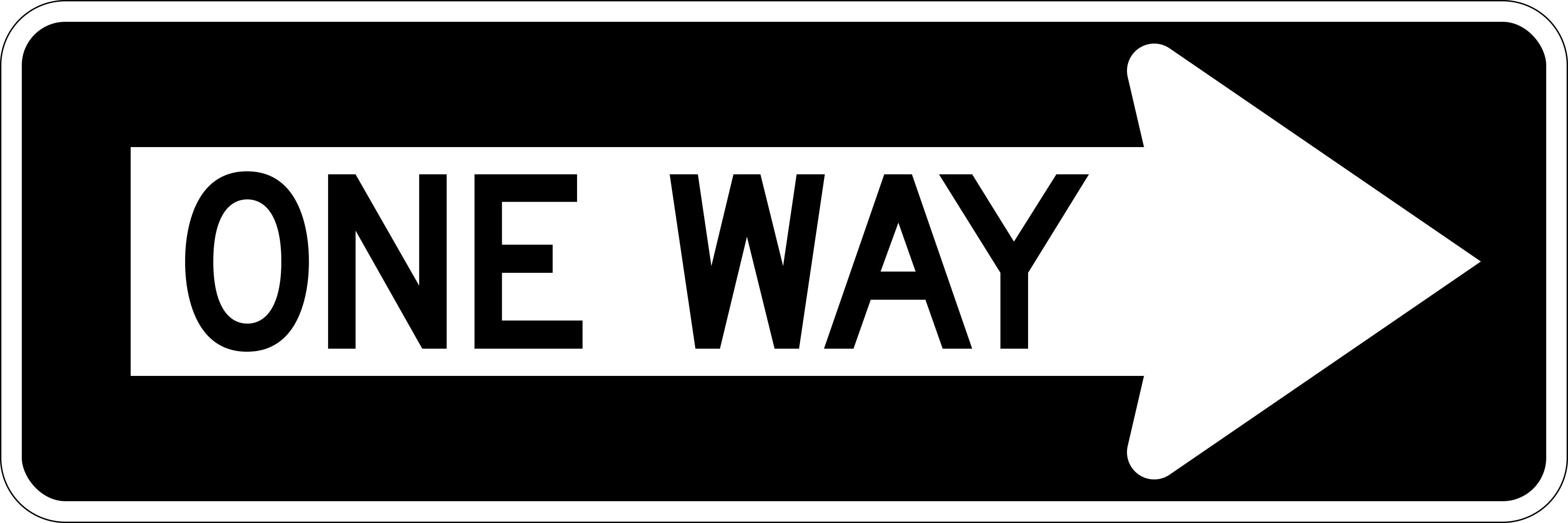
3. In what direction may traffic travel on the road shown by this ONE WAY sign?
- Only toward the nearest shoulder
- In either direction when the center is clear
- In the direction shown by the arrow only
- Only during daylight hours
Show answer
In the direction shown by the arrow only. A One Way sign means traffic on that particular road flows only in the arrow's direction. The clear-center option would permit opposing movement and defeats the one-way control. Shoulder position and daylight do not change the sign's instruction. Follow the arrow even when no other vehicle is visible, and watch for lane markings or turn restrictions that apply at the same location. A simple cue is to read the arrow as the permitted travel direction for every vehicle entering that road.
Study this in the handbook: Regulatory and guide signs
4. Under current North Dakota law, what minimum fee applies to speeding 1 to 10 mph over the limit in a highway construction zone while construction workers are present?
- $80
- $40
- $150
- $250
Show answer
$150. Under North Dakota Century Code section 39-06.1-06, speeding in a highway construction zone carries a $150 fee for one through ten miles per hour over the posted speed, plus $2 for each mile per hour beyond ten over the limit. The fee applies only when construction workers are present and the posted sign states Minimum Fee $150. The 2025 driver manual still prints an $80 minimum, but the statute sets $150, and $40 is the school zone base fee.
5. Which conduct is specifically prohibited while driving under North Dakota’s distracted-driving rule?
- Adjusting a mirror before moving
- Texting or failing to maintain control because of an impairing unnecessary activity
- Listening to a navigation instruction
- Checking the fuel gauge at a stoplight
Show answer
Texting or failing to maintain control because of an impairing unnecessary activity. North Dakota prohibits texting while driving and also prohibits failing to maintain control because of an activity that is not necessary to vehicle operation and impairs, or would reasonably be expected to impair, safe operation. Adjusting a mirror before moving, listening to navigation, or checking a gauge at a stoplight is not the conduct described by this item. The key cue is the combination of an electronic message or an unnecessary activity with impaired vehicle control, not merely any action performed inside the vehicle.
Study this in the handbook: Points, texting and other penalties
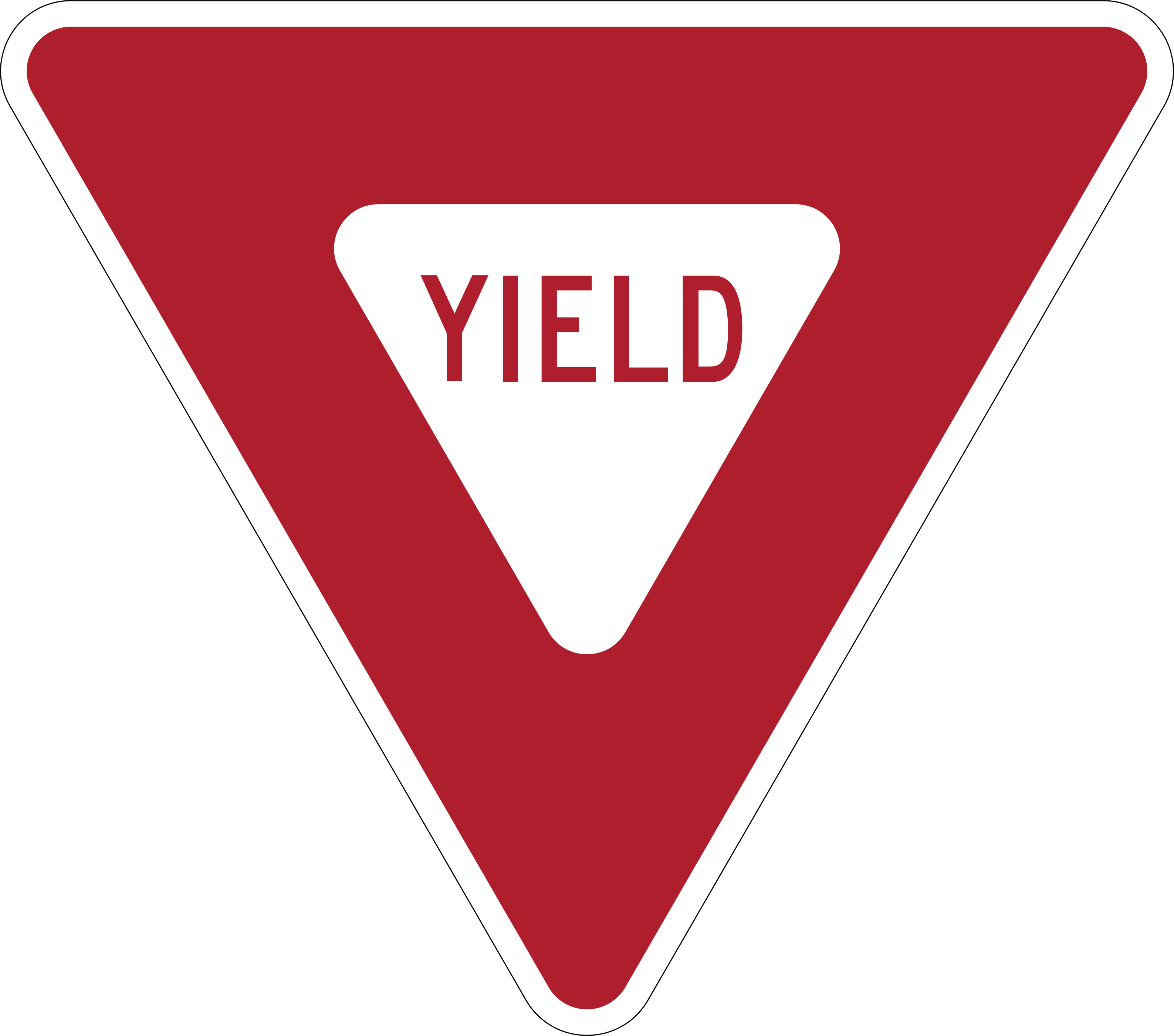
6. What action does this yield sign require before you enter the roadway?
- Maintain speed and claim priority
- Slow down and stop if necessary so you can yield the right of way
- Stop for exactly five seconds every time
- Proceed first if your vehicle is larger
Show answer
Slow down and stop if necessary so you can yield the right of way. The yield sign assigns right of way to other traffic and requires the driver to slow down. Stopping is necessary when it is needed to yield safely, but the sign does not demand a fixed stop on every approach. Maintaining speed ignores the warning, and vehicle size never creates priority. Look for traffic and pedestrians, reduce speed early, and be prepared to stop before entering the conflict area. Think of the sign as a right-of-way instruction with a conditional stop, not as an automatic full-stop command.
Study this in the handbook: Regulatory and guide signs
7. Why should a driver keep both hands on the steering wheel?
- To prevent the brake lights from coming on
- To make the vehicle use less fuel
- To keep the headlights aimed higher
- To be ready for evasive action
Show answer
To be ready for evasive action. Keeping both hands on the wheel prepares you to steer quickly if traffic, debris, or another hazard requires evasive action. The fuel-saving choice confuses steering control with vehicle efficiency, and hand placement has no effect on how the headlights aim or when the brake lights illuminate. The manual connects two-handed control with the possibility that an unexpected maneuver may be needed. Treat both hands on the wheel as a readiness habit whenever the vehicle is moving, especially where a sudden correction could be necessary.
Study this in the handbook: Points, texting and other penalties
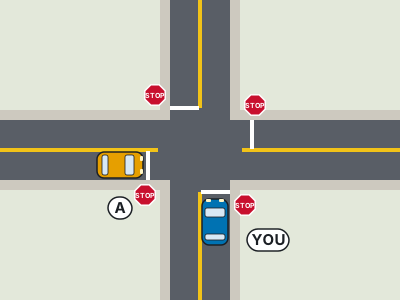
8. At a four-way stop, another driver goes out of turn. What should you do?
- Go anyway, since it was your turn
- Yield to that vehicle so you do not cause a crash
- Sound your horn and enter the intersection
- Back up to give the other driver more room
Show answer
Yield to that vehicle so you do not cause a crash. At a four-way stop, the vehicle that stops first goes first. If another vehicle goes out of turn, yield to it so that you do not cause a crash. Insisting on your turn is how crashes happen, and a horn does not make entering safe. This follows the handbook's general advice to drive defensively and always be ready to yield to those who do not follow the right-of-way rules.
Study this in the handbook: Pavement markings and passing
9. What should you do if a tire drops from the pavement onto the shoulder?
- Accelerate onto the shoulder to regain speed
- Swerve sharply back onto the pavement immediately
- Brake hard while turning toward traffic
- Grip the wheel, ease off the accelerator, and return gently after slowing
Show answer
Grip the wheel, ease off the accelerator, and return gently after slowing. A tire leaving the pavement can pull the vehicle toward the shoulder, but a sharp steering correction may cause a loss of control. Hold the steering wheel, ease off the accelerator, and avoid hard braking while you slow. After control is restored, check behind, signal, and guide the vehicle gently back onto the pavement when safe. The immediate swerve and hard-braking choices add sudden forces. Think stabilize first, then reenter with a clear path.
Study this in the handbook: Points, texting and other penalties
10. How far before meeting oncoming traffic should you dim your headlights?
- At least 500 feet
- At least 100 feet
- At least 300 feet
- Only after the other driver flashes first
Show answer
At least 500 feet. North Dakota directs drivers to dim headlights at least 500 feet before meeting traffic. The 300 foot figure applies when following another vehicle, so switching those numbers is a common mistake. One hundred feet is not the stated distance, and waiting for the other driver to react risks glare for both motorists. Make the change early enough to protect the approaching driver’s vision, and use the right edge of the road as a visual reference if an oncoming vehicle fails to dim its lights.
Study this in the handbook: Warning, school and work zone signs
11. At what times does the North Dakota manual tell drivers to pay close attention for deer?
- From noon until sunset
- Only at midnight
- Only during heavy snowfall
- At dawn and dusk
Show answer
At dawn and dusk. The manual highlights dawn and dusk as times to pay close attention for deer, then advises slower speeds where deer crossing signs are posted. Midnight is not the exclusive danger period, and the guidance is not limited to snowfall or afternoon hours. Low light can make animals harder to detect, so scan the roadside and moderate speed before entering a marked crossing zone. The cue is the paired phrase dawn and dusk.
Study this in the handbook: Night, winter and deer
12. What should a driver do in an area marked with deer crossing signs?
- Keep the posted speed no matter the visibility
- Drive at a slower speed and watch for animals
- Swerve toward the shoulder if a deer appears
- Stop in the lane before reaching the sign
Show answer
Drive at a slower speed and watch for animals. Posted deer crossing signs call for slower travel and active scanning for animals. Maintaining speed regardless of visibility ignores the manual's warning, while swerving can create a collision with another vehicle or roadside object. Stopping in the lane is also not the general instruction. Reduce speed early, keep your eyes moving, and leave yourself time to respond if an animal enters the roadway.
Study this in the handbook: Warning, school and work zone signs
13. On which roads does North Dakota's move over instruction specifically require extra care around a parked emergency or maintenance vehicle?
- The Interstate system or a multilane highway
- Only residential streets
- Only gravel roads outside towns
- Any driveway beside a public road
Show answer
The Interstate system or a multilane highway. The instruction applies when an emergency, law enforcement, or North Dakota Department of Transportation maintenance vehicle is parked on the Interstate system or a multilane highway with emergency or work lights flashing. It does not single out residential streets, gravel roads, or driveways. Once the roadway condition is identified, prepare to move to the opposite lane and continue with due caution. The road type and flashing lights work together as the recognition cue.
Study this in the handbook: Right of way rules
14. Which of these speeds up how fast your body gets rid of alcohol?
- Drinking coffee
- Nothing; only time
- Taking a cold shower
- Exercising
Show answer
Nothing; only time. Time is the only way to remove alcohol from the bloodstream. The process is slow, and drinking coffee, taking a cold shower, or exercising will not make it faster. The more you drink, the longer it takes to sober up. The handbook adds that alcohol slows reactions, impairs vision, interferes with concentration, dulls judgment, and creates a false sense of confidence, so wait until the alcohol is gone instead of trying a quick fix.
Study this in the handbook: Seat belts, child seats and heatstroke
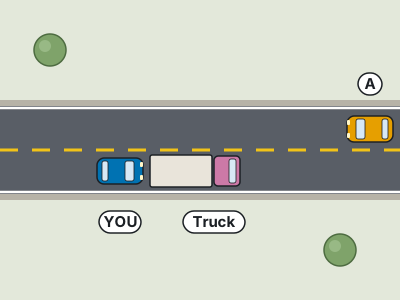
15. When may a driver cross a broken yellow center line on a two way road?
- Only to park facing the opposite direction
- Whenever the driver wants to avoid a stop sign
- To turn left or pass another vehicle when permitted
- Never, because yellow lines always prohibit crossing
Show answer
To turn left or pass another vehicle when permitted. A broken yellow center line on a two lane, two way road may be crossed for a left turn or to pass another vehicle when the pass is legal and safe. It is not a general escape from a stop sign, a parking instruction, or an absolute barrier. Before crossing, check sight distance, signs, traffic, and the space needed to return. Yellow does not automatically mean never, but the broken marking also does not make every maneuver permissible.
Study this in the handbook: Traffic signals and arrows
16. When changing lanes, which sequence is required by the manual?
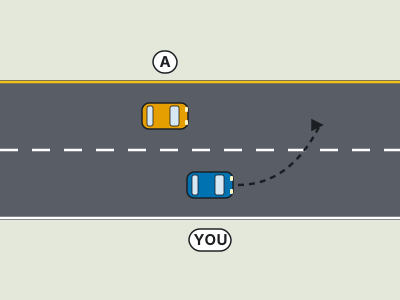
- Make sure the lane is clear, signal, and change only one lane at a time
- Signal after crossing the line, then move across two lanes together
- Change lanes in an intersection whenever traffic is light
- Rely on mirrors alone because shoulder checks are unnecessary
Show answer
Make sure the lane is clear, signal, and change only one lane at a time. A safe lane change begins with confirming that the destination lane is clear and signaling the movement. The manual adds that drivers should check mirrors and look over a shoulder for blind spots, avoid changing lanes within an intersection when possible, and move only one lane at a time. Signaling late, crossing two lanes in one sweep, or trusting mirrors alone removes important checks. The manual also says to keep a safe following distance from the vehicle ahead while planning any lane change.
Study this in the handbook: Following distance, lane changes and headlights
17. When should a North Dakota child move from a car seat to a booster seat?
- At age 2
- When the child asks
- At 20 pounds
- When at least 40 pounds and at least 4 years of age
Show answer
When at least 40 pounds and at least 4 years of age. Children should be at least 40 pounds and at least 4 years of age to move from a car seat to a booster seat, and children under age 13 should ride in the back seat even if the vehicle has no air bag. Never place a rear facing infant seat in front of an air bag, never let children ride in a pickup cargo area, and never buckle two children into one belt.
Study this in the handbook: Points, texting and other penalties
18. According to the North Dakota manual, when do air bags work best?
- When everyone is buckled and children 12 and younger are restrained in the back seat
- When seat belts are not used
- When occupants sit close to the dashboard
- Only in side impact crashes
Show answer
When everyone is buckled and children 12 and younger are restrained in the back seat. Air bags are designed to provide supplemental protection for belted front seat occupants in a frontal crash, and they work best when everyone is buckled and children, especially those age 12 and younger, are properly restrained in the back seat. Lap and shoulder belts must always be used with an air bag to protect occupants in side impact and rollover crashes. Never place a rear facing infant seat in front of an air bag.
Study this in the handbook: Seat belts, child seats and heatstroke
19. What court penalty does North Dakota set for a second DUI conviction within seven years?
- $500 fine
- $750 fine and two days
- $1,000 fine, 10 days in jail, and at least 12 months in the 24/7 Sobriety Program
- $2,000 fine and one year and one day
Show answer
$1,000 fine, 10 days in jail, and at least 12 months in the 24/7 Sobriety Program. A second conviction within seven years brings a $1,000 fine, 10 days in jail, and at least 12 months in the 24/7 Sobriety Program as a mandatory condition of probation, plus a 365 day suspension. The $500 fine is a basic first conviction, $750 and two days is a first conviction at .16% or more, and $2,000 with a year and a day is a fourth or later offense.
Study this in the handbook: Alcohol, BAC and implied consent
20. A 14-year-old gets a North Dakota instruction permit. How long must it be held before the road test (or waiver)?
- Six months or until age 18, whichever comes first
- Exactly 30 days
- 12 months or until age 16, whichever comes first, but no less than six months
- Two years
Show answer
12 months or until age 16, whichever comes first, but no less than six months. For applicants who are 14 or 15, North Dakota requires holding the permit for 12 months or to age 16, whichever comes first, but no less than six months, before the road test or waiver. The six months or age 18 rule is for applicants who are 16 or 17. Thirty days and two years do not appear in the rule. Applicants under 16 also need at least 50 hours of supervised practice in variable conditions.
Study this in the handbook: Instruction permits and licenses for minors
Every question is written from the official North Dakota Noncommercial Driver License Manual. Need paper? Printable ND practice test with answer key.
Last verified 2026-10-05. How we check every question · Study all 205 as flashcards
Frequently asked questions
How many questions are on this North Dakota practice test?
This fixed set has 20 questions. It is test 6 of 10 from the 205 question North Dakota bank.
How does this fixed test relate to the full North Dakota bank?
Each numbered test is a fixed set of questions in a fixed order, so you can retake the same test later and compare. Every test mixes road signs and the other topics in about the same proportion as the full bank. Tests 1 to 10 together cover 200 of the 205 questions in the North Dakota bank, each once. The full practice page mixes the whole bank at random.
Last verified 2026-10-05. See the North Dakota DMV facts page for sourced state details.
Return to the full North Dakota practice test · Study road signs